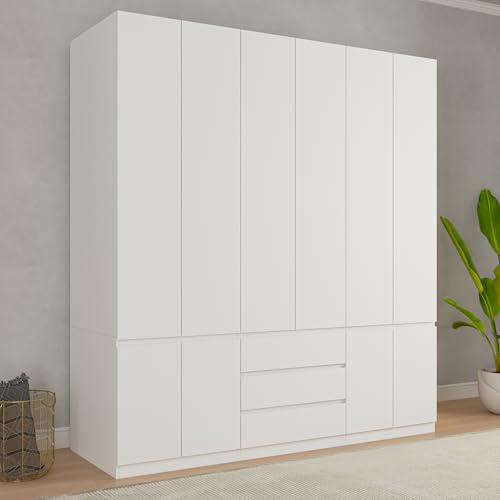
Solid Wood Armoire with Shelves and Drawers
A complete guide to choosing a tall wooden cabinet that combines hanging space, adjustable shelves, and drawer storage in one piece of bedroom furniture.
Why this piece matters: A solid wood armoire with shelves and drawers solves a common bedroom problem. It gives you hanging space for garments, open shelves for folded items and baskets, and drawers for smaller accessories. Instead of buying three separate pieces, you get one tall cabinet that consolidates storage. This guide explains the construction, wood types, layout options, and measurement steps so you can choose with confidence.
What Is a Solid Wood Armoire with Shelves and Drawers?
A solid wood armoire is a freestanding cabinet built from timber rather than particleboard or thin veneer over engineered core. The phrase "with shelves and drawers" describes the interior layout. Inside the doors, you typically find a mix of three zones:
- Hanging zone — a full-height or partial-height rod for shirts, dresses, and jackets.
- Shelf zone — fixed or adjustable shelves for folded clothing, linens, storage baskets, and boxes.
- Drawer bank — a stack of drawers, often at the bottom, for socks, undergarments, jewelry, and small accessories.
This mixed layout is what separates an armoire from a plain wardrobe or a standard dresser. If you are still comparing furniture categories, our guide on dresser vs armoire explains where each piece fits best. For a broader look at tall cabinets, see the tall bedroom cabinet with drawers overview.
Why Choose Solid Wood Over Engineered Wood
Solid wood construction matters more in a tall armoire than in a low dresser. A tall cabinet carries more load, has longer door panels, and is more sensitive to flex and humidity changes. Here is how the main material categories compare.
| Material Category | Durability | Best For | Notes |
|---|---|---|---|
| Solid hardwood (oak, maple, cherry, walnut) | High — dense grain, holds screws and joinery well | Long-term investment pieces; heavy daily use | Heavier; may show natural grain variation |
| Solid softwood (pine, cedar) | Moderate — lighter and softer, dents more easily | Entry-level to mid-range armoires; casual bedrooms | Lighter to move; often finished in painted or natural looks |
| Engineered wood with veneer (MDF, particleboard) | Moderate to low — depends on core density and joinery | Essential tier and temporary setups | Can be stable if well made, but less repairable |
If you want to go deeper on wood species, our pages on solid pine dresser, natural oak dresser, and walnut wood dresser cover grain, hardness, and finish behavior. The same species considerations apply to a tall armoire.
Choosing the Right Wood Species
Each species brings a different balance of hardness, weight, grain pattern, and color. For a tall cabinet with doors and drawers, hardness matters because drawer runners and door frames take repeated stress.
Oak
Oak is dense, open-grained, and highly durable. It resists wear well and is a common choice for premium and high-end tier armoires. White oak is especially stable; red oak has a warmer tone. Oak takes stains and clear finishes predictably.
Maple
Maple is hard, fine-grained, and light in color. It suits modern and minimalist interiors. Because the grain is subtle, maple shows scratches more readily than oak, but it is excellent for painted finishes and clean lines.
Cherry
Cherry is moderately hard and darkens with age and light exposure. It is often used in traditional and French country styles. If you want a cabinet that develops patina over time, cherry is a strong candidate.
Walnut
Walnut is dense, dark, and rich in figure. It sits in the premium to luxury tier and pairs well with brass or black hardware. Walnut is heavier, so check floor support and delivery access before ordering a large unit.
Pine
Pine is a softwood with a casual, knotty character. It is lighter and easier to move, which helps in apartments and upstairs bedrooms. Pine dents more easily, so it suits starter tier and mid-tier pieces rather than heavy daily commercial use.
Quick tip on grain direction
On tall doors, vertical grain lines look more balanced and resist warping better than wide horizontal panels. Ask whether the door frames are stile-and-rail construction with floating panels — this design allows the wood to expand and contract without cracking.
Interior Layout: How Shelves and Drawers Work Together
The interior configuration determines how usable the armoire feels day to day. There is no single best layout, but there are common patterns worth understanding.
Hanging Above, Drawers Below
This is the most common layout. A full-height hanging rod occupies the upper section, and a drawer bank fills the lower third or half. It works well for shirts, dresses, and jackets above, with folded items and accessories below. The drawer bank also adds structural rigidity to the base.
Side-by-Side Split
One door opens to a hanging section; the other opens to shelves and drawers. This suits couples who share a cabinet or anyone who wants quick access to both hanging and folded storage without opening one wide door. It also reduces the door swing width, which helps in tight rooms.
Shelves on Top, Drawers on Bottom, Hanging in the Middle
Some armoires place open shelves at eye level, a short hanging rod below, and drawers at the base. This layout is useful for bedrooms where you want display space for baskets, books, or folded knitwear.
Adjustable shelves add flexibility. A shelf that can move in one-inch increments lets you switch between tall baskets and low stacks of folded clothes. If you plan to store linens, measure the height of your largest folded stack before choosing a fixed-shelf model. For related storage ideas, see chest of drawers with shelves and dresser with hutch.
Sizing and Fit: Measure Before You Buy
A tall armoire is less forgiving than a low dresser. Measure the following before ordering:
- Wall width — leave at least a few inches on each side for door swing and airflow.
- Ceiling height — confirm the cabinet fits upright with clearance for any crown molding.
- Door swing — double doors need more forward clearance than a single door.
- Drawer extension — drawers need space to pull out fully; avoid placing the armoire directly against a bed or wall opposite.
- Delivery path — measure stairwells, hallways, and doorways. A tall cabinet may need to be carried upright.
For narrow rooms, a shallow depth dresser for small spaces or a tall skinny dresser may be a better fit than a deep armoire. If you need drawer storage only, a tall wood dresser with deep drawers offers similar capacity without door swing.
Doors, Hardware, and Finish Details
Door style affects both appearance and function. Raised-panel doors suit traditional and French country interiors. Flat or shaker-style doors fit modern and transitional rooms. Glass doors can display folded linens but show clutter, so they work best when the interior is styled.
Hardware is a small detail with a large visual impact. Brass and gold pulls warm up dark wood; black hardware creates contrast on light finishes. If you plan to change hardware later, check the boring distance and screw spacing before ordering replacements. Our guides on pull handles for dresser drawers and mid-century cabinet pulls explain common standards.
Finish choice matters for maintenance. A clear lacquer or conversion varnish protects against moisture and wear. Painted finishes hide grain and suit cottage or farmhouse looks. Natural oil finishes feel tactile but need periodic re-oiling.
Matching the Armoire to Your Bedroom Style
A tall armoire often becomes a focal point, so style consistency matters. Here are common pairings:
- Traditional / French country — cherry or oak with raised panels, carved details, and brass hardware. Consider a French country chest of drawers nearby for a cohesive set.
- Modern / minimalist — maple or walnut with flat doors, integrated pulls, and a low-profile base. A shaker style dresser pairs well without visual clutter.
- Rustic / farmhouse — pine or distressed oak with visible knots and simple iron hardware. A distressed dresser or distressed chest complements the look.
- Mid-century — walnut with tapered legs and minimal ornament. Pair with a mid-century 6 drawer dresser for a consistent era feel.
Organizing the Interior for Daily Use
A well-planned interior saves time every morning. Start by sorting your wardrobe into three groups: hanging items, folded items, and small accessories. Then assign zones.
- Hanging zone — keep frequently worn items at eye level; place seasonal garments higher or lower.
- Shelf zone — use matching baskets or bins to contain loose items and keep sightlines clean. Label the front of each bin.
- Drawer zone — use dividers for socks, undergarments, and jewelry. A shallow top drawer works well for accessories; deeper lower drawers suit knitwear and linens.
If jewelry is a priority, look for a model with a felt-lined top drawer or a hidden compartment. Our pages on dresser with hidden jewelry drawer and dresser with hidden jewelry storage show how these features are typically integrated.
Buying Checklist: What to Verify Before You Order
Use this checklist to evaluate any solid wood armoire with shelves and drawers:
- Construction — dovetail or mortise-and-tenon joints at stress points; floating panels in doors; solid wood drawer sides.
- Drawer runners — metal side-mount or under-mount slides; soft-close is a plus for bedroom use.
- Shelf adjustability — pinned or notched supports; confirm the number of positions.
- Back panel — a solid or thick panel adds rigidity to a tall cabinet.
- Anti-tip hardware — essential for tall furniture, especially in homes with children.
- Finish warranty — a clear statement on coverage for cracking, peeling, or fading.
- Assembly requirements — flat-pack vs pre-assembled; check whether tools are included.
Safety note
Tall armoires should be anchored to the wall. Even a solid wood cabinet can tip if a child climbs on open drawers or if doors are left open. Use the supplied anti-tip strap and secure it into a wall stud.
When an Armoire May Not Be the Best Choice
An armoire with shelves and drawers is versatile, but it is not the right answer for every room. Consider alternatives if:
- You have a walk-in closet — a dresser closet combo or built-in system may use space more efficiently.
- The room is very small — a narrow set of drawers for bedroom or low profile dresser keeps sightlines open.
- You need mostly drawer storage — a solid wood 9 drawer dresser offers more drawer capacity without door swing.
- You need a nursery solution — a nursery dresser or crib and dresser set is designed around child safety and changing needs.
Ready to Compare Options?
Browse recommended solid wood armoires and storage cabinets, then check availability and features for your bedroom.
View Recommended ArmoiresFrequently Asked Questions
What is a solid wood armoire with shelves and drawers?
It is a freestanding storage cabinet built from solid wood that combines a hanging section, open or adjustable shelves, and a bank of drawers in one unit. This mixed layout lets you store hanging clothes, folded items, and accessories together.
How is an armoire different from a dresser or wardrobe?
A dresser is primarily a low drawer unit, while an armoire is a tall cabinet with doors that can include hanging space, shelves, and drawers. A wardrobe typically focuses on hanging storage, whereas an armoire with shelves and drawers mixes several storage types in one piece.
Which solid wood species work best for an armoire?
Oak, maple, cherry, walnut, and pine are common choices. Oak and maple are dense and durable, cherry and walnut offer rich grain and color, and pine is lighter and softer. The best species depends on the look you want and the structural demands of a tall cabinet.
How much space do I need for a solid wood armoire?
Allow room for the cabinet footprint plus clearance for door swing and drawer extension. Measure ceiling height, wall width, and walking space before buying. Tall armoires also need enough clearance to stand upright during delivery and assembly.