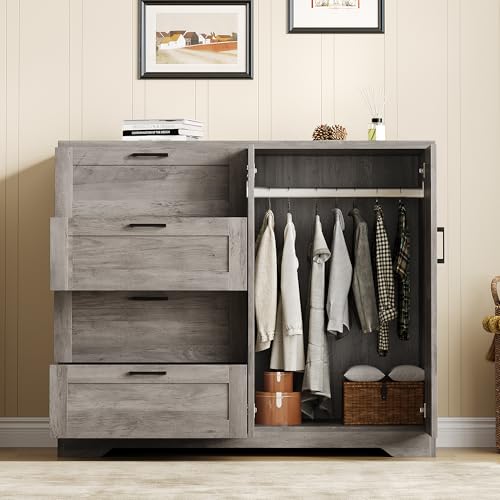
Dresser vs Armoire: Which One Is Right for You?
Both dressers and armoires offer valuable storage, but they serve different purposes. Let's break down the key differences to help you choose the perfect piece for your bedroom.
Jump to Decision GuideWhen it comes to bedroom storage, two classic furniture pieces often compete for space: the dresser and the armoire. While both provide essential organization, they differ significantly in design, functionality, and footprint. Understanding these differences will help you make a confident purchase that fits your lifestyle and space.
Dresser vs Armoire: At a Glance
| Feature | Dresser | Armoire |
|---|---|---|
| Primary Function | Horizontal storage for folded clothes, accessories | Vertical storage with hanging space for garments |
| Typical Dimensions | Width: 36–72″, Depth: 18–24″, Height: 30–42″ | Width: 30–48″, Depth: 20–26″, Height: 60–84″ |
| Storage Capacity | Drawers for folded items, some have a top surface | Hanging rod, shelves, and sometimes drawers |
| Footprint | Low, wide – uses floor space horizontally | Tall, narrow – uses vertical space |
| Best For | Foldable clothing, undergarments, accessories | Hanging dresses, suits, coats, and bulky items |
| Style | Modern, traditional, rustic, mid-century | Classic, antique, French provincial, contemporary |
| Price Range | $300–$1,500 | $500–$2,500 |
In-Depth Comparison: Dresser vs Armoire
What Is a Dresser?
A dresser is a low, wide piece of furniture with multiple drawers stacked horizontally. It's designed primarily for folded clothing, such as t-shirts, sweaters, jeans, and underwear. The top surface also offers a convenient spot for display or daily essentials. Dressers are available in a wide range of styles, from modern dressers to rustic dressers, making them versatile for any bedroom decor. If you're looking for a piece that maximizes drawer space without taking up too much vertical room, a dresser is an excellent choice.
When choosing a dresser, consider the number of drawers you need. Options range from 3-drawer dressers for compact spaces to 9-drawer dressers for larger families. The dresser size guide can help you determine the right dimensions for your room. Dressers are also available in various materials, such as oak dressers, walnut dressers, and painted dressers, allowing you to match your personal style.
What Is an Armoire?
An armoire is a tall, freestanding wardrobe with doors that open to reveal hanging space, shelves, and sometimes drawers. Originally used to store armor (hence the name), today's armoires are perfect for hanging dresses, suits, coats, and other garments that wrinkle easily. Many armoires also feature built-in mirrors or jewelry compartments. They are an ideal solution for bedrooms without built-in closets, providing a elegant and functional storage alternative.
Armoires come in various styles, from antique armoires to modern armoires. If you're considering an armoire, you might also explore related pieces like wardrobes or armoires (the term is often used interchangeably). For bedrooms with limited floor space, a tall, narrow armoire can provide significant storage without consuming too much square footage.
Key Differences at a Glance
- Storage Type: Dressers excel at folded items; armoires are designed for hanging garments.
- Footprint: Dressers are wide and low, while armoires are tall and narrow.
- Price: Armoires tend to be more expensive due to their larger size and additional features.
- Style: Both are available in a variety of finishes and designs to suit any decor.
✅ Dresser Pros
- Easy access to folded clothes
- Wide top surface for display or TV
- Available in many drawer configurations
- Generally more affordable than armoires
- Great for small bedroom storage
❌ Dresser Cons
- Limited hanging storage
- Requires floor space horizontally
- May not fit in narrow rooms
✅ Armoire Pros
- Excellent for hanging clothes
- Tall design saves floor space
- Can include mirrors and additional storage
- Adds a classic, elegant look
- Ideal for closet alternatives
❌ Armoire Cons
- More expensive than most dressers
- Can be heavy and difficult to move
- May not fit in rooms with low ceilings
- Less accessible for everyday items
How to Choose: Dresser or Armoire?
Choose a dresser if:
- You primarily have folded clothes (t-shirts, sweaters, jeans, underwear).
- You need easy access to everyday items.
- You have a wide wall space but limited height.
- You prefer a modern or minimalist look.
- You're on a budget and want affordable storage.
Choose an armoire if:
- You have many hanging garments (dresses, suits, coats).
- Your bedroom lacks a closet or built-in wardrobe.
- You want a statement piece that adds elegance.
- You have limited floor space but plenty of vertical room.
- You appreciate additional features like mirrors or jewelry drawers.
Still unsure? Check out our complete dresser buying guide and our armoire buying guide for more detailed advice.
Other Factors to Consider
Room Size: Measure your space carefully. A dresser works well in rooms with ample floor space, while an armoire is better for rooms with higher ceilings. If you have a small bedroom, consider a narrow dresser or a tallboy chest as a hybrid solution.
Style and Decor: Both pieces come in a variety of materials and finishes. For a cohesive look, match your choice with existing furniture. Natural wood dressers and painted armoires are popular options. You can also explore dresser and nightstand sets or dressers with mirrors to complete your bedroom ensemble.
Budget: Dressers are generally more budget-friendly, with prices ranging from $300 to $1,500. Armoires typically cost between $500 and $2,500, depending on size and material. If you're looking for a middle ground, consider a chest of drawers or a highboy chest, which combines drawer storage with a taller profile.
Functionality: Think about what you'll store. If you have a mix of folded and hanging items, you might even consider both pieces. For example, a dresser for everyday clothes and an armoire for special occasion garments. Explore our bedroom storage category for more organization ideas.
Final Verdict
The choice between a dresser and an armoire ultimately depends on your storage needs, room size, and personal style. A dresser is a practical, versatile choice for most bedrooms, offering easy access to folded clothes and accessories. An armoire, on the other hand, provides elegance and vertical storage for hanging garments, making it ideal for rooms without closets.
Both pieces are excellent additions to any bedroom. By evaluating your priorities and using this guide, you can make an informed decision that enhances both the functionality and aesthetics of your space. For more comparisons, check out our guides on dresser vs chest of drawers, dresser vs wardrobe, and dresser vs nightstand.