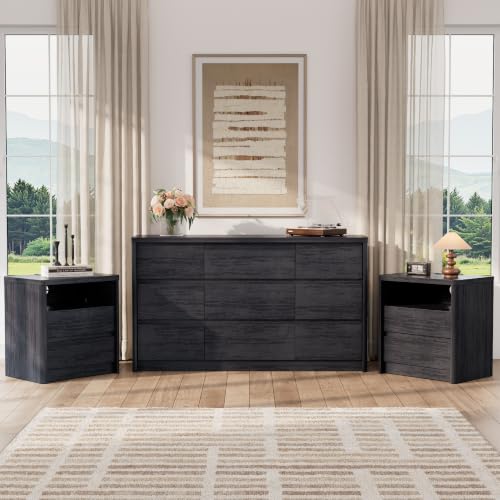
Dresser vs Nightstand: Which Bedroom Storage Piece Do You Need?
Two of the most common bedroom furniture pieces, yet they serve very different purposes. This guide breaks down the differences in size, storage, placement, and function so you can decide what your room truly needs.
Quick answer: A nightstand is a small bedside companion for everyday essentials, while a dresser is a large storage workhorse for clothing and linens. Most bedrooms benefit from both, but if you must choose one, base the decision on your storage volume, floor space, and daily routine.
What Is a Nightstand?
A nightstand, also called a bedside table, is a compact piece placed beside the bed. Its primary job is to keep items you need within arm's reach while you sleep or rest: a lamp, phone, book, glasses, a glass of water, and perhaps medication. Because of its small footprint, a nightstand is designed for accessibility rather than volume.
Typical nightstands stand at roughly bed-height so you can reach the top surface without sitting up. They usually feature one or two drawers, sometimes an open shelf, and occasionally a cabinet door. If you are specifically comparing storage-led options, our guide on a dresser versus nightstand breakdown covers the same core distinction in more depth, and our broader dresser type overview helps you see where bedside pieces fit in the wider furniture family.
What Is a Dresser?
A dresser is a wide, low storage unit built around multiple drawers, typically used for folded clothing, bedding, towels, and other household linens. It usually sits against a wall, often opposite the bed or along a clear stretch of wall space. Dressers range from compact three-drawer units suitable for a small room to large six- or nine-drawer pieces that anchor an entire bedroom.
Because of its drawer depth and width, a dresser holds far more than a nightstand. Many buyers pair a dresser with a mirror above it or use the top surface for decoration, a lamp, or even a television. If you are exploring layout options, our guide on placing a dresser as a TV stand combo shows how one piece can multitask without losing its storage role.
Dresser vs Nightstand: Side-by-Side Comparison
| Feature | Nightstand | Dresser |
|---|---|---|
| Primary purpose | Bedside essentials within reach | Folded clothing and linen storage |
| Typical size | Compact, roughly bed-height | Wide and low, or tall and narrow |
| Storage capacity | Low to moderate | Moderate to high |
| Drawer count | Usually one to two | Typically three to nine or more |
| Best placement | Directly beside the bed | Against a free wall, often opposite the bed |
| Mobility | Easy to move | Heavier, less frequently moved |
| Common materials | Solid wood, engineered wood, metal | Solid wood, engineered wood, metal, rattan |
| Best for | Small rooms and bedside routines | Rooms needing serious clothing storage |
The Key Differences That Matter
1. Storage Volume
This is the single biggest difference. A nightstand holds a handful of personal items, while a dresser stores the bulk of a wardrobe that does not hang. If your closet is small or you prefer folded clothing, a dresser is non-negotiable. If your closet is generous and you only need a place for a phone and a book, a nightstand alone may be enough.
2. Footprint and Room Fit
Nightstands are designed to flank a bed without crowding it, so they suit nearly every bedroom size. Dressers need clear wall space and enough room to open drawers fully. In tight rooms, a narrow dresser can work well, and our guide on dressers for small spaces covers compact configurations that still deliver meaningful storage.
3. Placement Logic
Nightstands live beside the bed by definition. Dressers are more flexible: they can sit opposite the bed, along a side wall, inside a walk-in closet, or even in a hallway. If you are short on floor area, a dresser for the closet can free up bedroom space entirely.
4. Daily Function
A nightstand supports your nighttime routine, while a dresser supports your getting-ready routine. One is about convenience at arm's length, the other about organized volume. That functional split is why so many bedrooms use both pieces rather than treating them as substitutes.
5. Surface Area
Dresser tops offer a broad surface for decor, a lamp, or a mirror, and some designs include shelves on top for extra display or storage. Nightstand tops are small by design and usually reserved for a lamp and a few personal items.
Which One Should You Choose?
The right answer depends on your room and your habits. Use the scenarios below as a practical decision guide.
Choose a nightstand if:
- Your closet already handles most of your clothing storage.
- You want a landing spot for a lamp, phone, book, and glasses.
- Your bedroom is compact and floor space is limited.
- You sleep in a shared room and need a personal bedside surface.
Choose a dresser if:
- You need to store folded clothing, bedding, or towels.
- Your closet is small or you prefer not to hang everything.
- You have a clear wall area where drawers can open fully.
- You want a surface for a mirror, lamp, or decorative display.
Editorial note: In most primary bedrooms, the strongest setup is a dresser for volume plus a nightstand on each side of the bed for daily convenience. If you are furnishing from scratch, plan the dresser first because it is the harder piece to place, then fit nightstands into the remaining bedside space.
When to Use Both Together
Using both is not redundant. The nightstand handles the bedside layer, and the dresser handles the wardrobe layer. Together they create a complete bedroom storage system with clear zones. Matching sets are common, and our guide on dressers with matching nightstands explains how to coordinate finishes and proportions without making the room feel like a showroom.
If space is limited, consider a dresser that includes a bedside-adjacent function, such as a dresser with a mirror and nightstand set, or split the difference with a compact dresser under 30 inches wide paired with a slim nightstand.
Shopping Considerations for Both Pieces
Whether you buy a dresser, a nightstand, or both, focus on construction quality and drawer mechanics over surface appearance. Solid wood and well-reinforced engineered wood both perform well when joints and drawer glides are sound. Full-extension drawers make deep storage far more usable, and our guide on full-extension drawers explains why that feature matters.
Also verify stability. Dressers, especially taller models, should be anchored to the wall for safety, and any piece placed near a bed should have no sharp protruding hardware at mattress height. For style direction, our dresser style guide can help you match both pieces to the rest of the room.
Frequently Asked Questions
Can a nightstand replace a dresser?
Only in very small rooms or where the closet already handles clothing storage. A nightstand cannot hold a full wardrobe's worth of folded items, so treating it as a dresser substitute usually leads to clutter.
Can a dresser replace a nightstand?
Physically yes, if the dresser is low enough to serve as a bedside surface, but it is inefficient. You lose the convenient bedside drawer and the dresser's storage gets consumed by everyday items.
Do I need two nightstands?
For a shared bed, symmetry and practicality favor two. For a single sleeper, one nightstand on your preferred side is often sufficient.
What size nightstand matches a standard bed?
A nightstand top should sit roughly level with or slightly below the mattress surface. As a rule of thumb, keep the nightstand narrower than about one-third of the bed width so it does not crowd the sleeping area.
Which piece should I buy first?
Buy the dresser first. It has a larger footprint and stricter placement requirements, so securing its spot early prevents layout problems later. Nightstands are easier to fit into the remaining bedside space.
Ready to Furnish Your Bedroom?
Explore recommended dressers and bedside storage options, then compare features to find the right fit for your space.
Compare Bedroom Storage Options