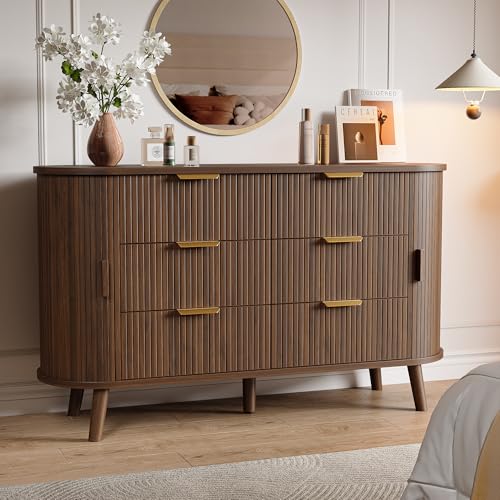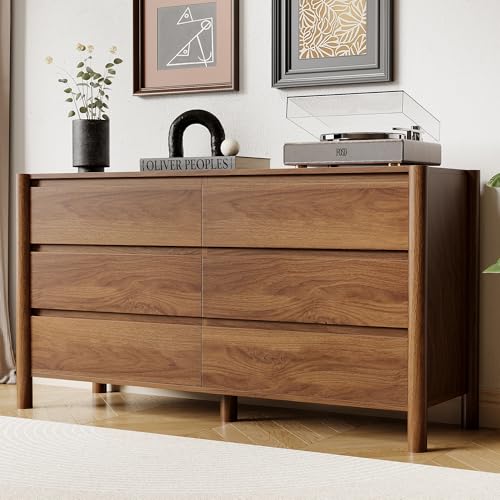
Mid Century Dressers: The Ultimate Guide to Retro Elegance
Discover the timeless appeal of mid century modern design. From iconic tapered legs to warm walnut finishes, learn how to choose a dresser that blends vintage character with modern functionality.
READ THE BUYING GUIDEWhat Makes a Mid Century Dresser So Enduring?
The mid century modern movement (roughly 1945-1969) revolutionized furniture design with its emphasis on clean lines, organic curves, and functional simplicity. A mid century dresser isn't just a storage piece; it's a design statement that brings warmth, sophistication, and a touch of nostalgia to any bedroom. Unlike the heavier, ornate styles of earlier eras, these dressers celebrate the natural beauty of wood and the elegance of uncluttered form.
Whether you're furnishing a new home or adding a vintage accent, understanding the hallmarks of this style will help you make an informed choice. This guide covers everything from signature design elements to material quality, sizing, and how to integrate a mid century piece into your existing décor. For a broader overview of different furniture categories, explore our dresser types guide.
Signature Design Elements to Look For
Authentic mid century dressers share several distinctive visual traits. Recognizing these features ensures you're selecting a piece that truly embodies the era's aesthetic, rather than a modern reinterpretation that misses the mark.
Tapered & Splayed Legs
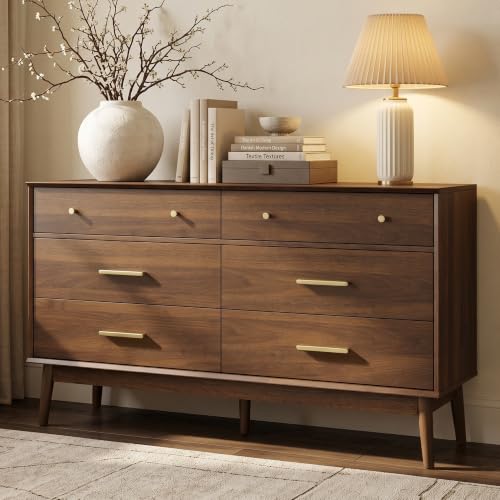
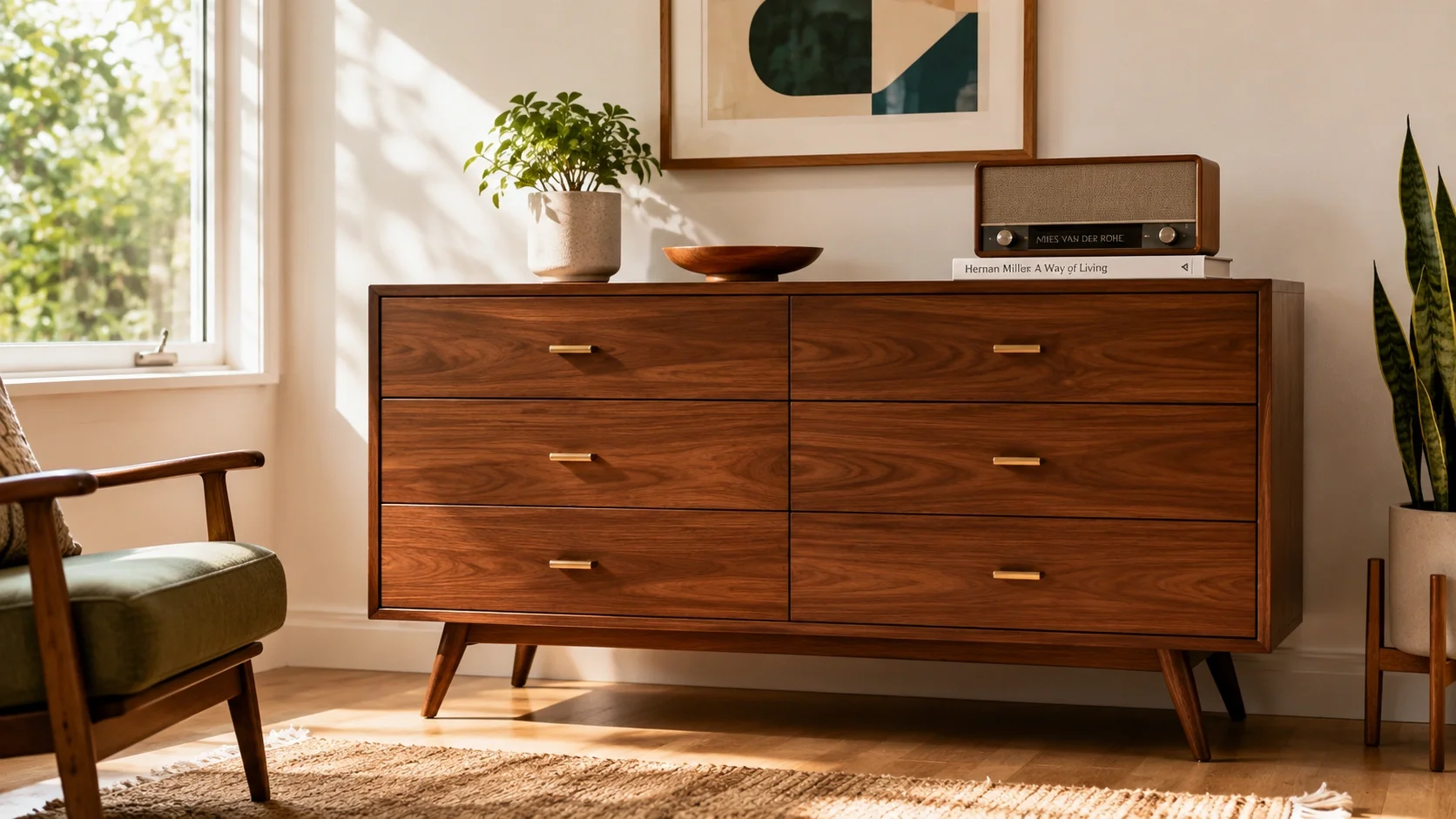
Perhaps the most recognizable feature. Legs are typically angled outward, often made of solid wood or metal, giving the dresser a light, floating appearance. This contrasts sharply with the blocky, grounded bases of traditional furniture.
Clean, Uncluttered Lines
Horizontal emphasis, smooth drawer fronts, and minimal ornamentation define the look. You'll rarely see heavy carvings, moldings, or applied decoration. The beauty comes from proportion and material contrast.
Rich Wood Tones & Grain
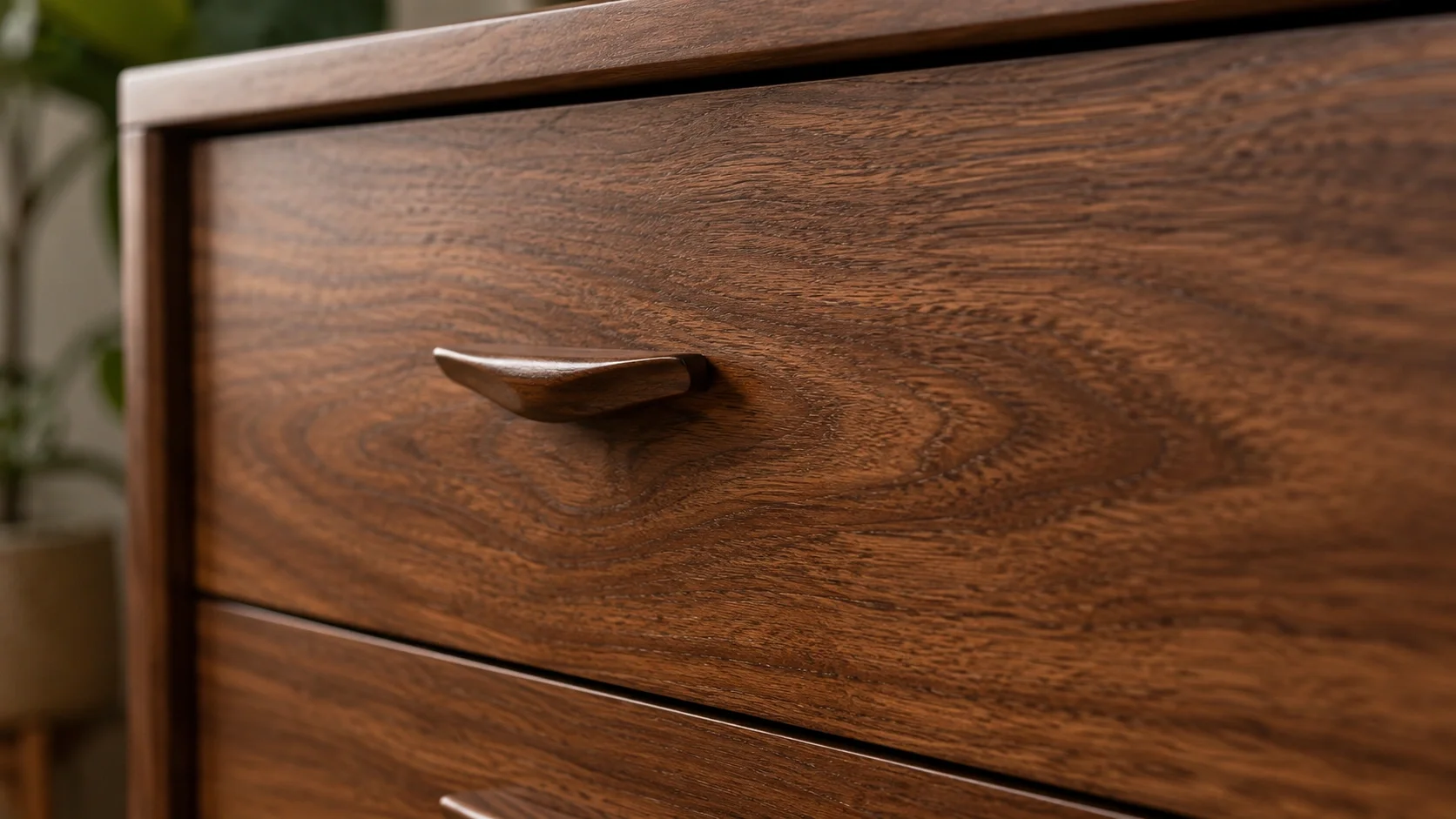
Walnut, teak, rosewood, and oak are staples. The grain is often highlighted with oil finishes rather than painted over, celebrating the organic patterns of the wood itself. See our guide on walnut dressers for a deep dive into the most popular choice.
Geometric & Minimal Hardware
Long, horizontal bar pulls, simple round knobs, or recessed finger pulls in brass, wood, or black metal are common. Hardware is functional but also acts as a subtle geometric accent. For more on this, check out our dresser handles guide.
The combination of these elements results in a piece that feels both retro and surprisingly contemporary, which is why it works so well in modern homes. Many people pair a mid century dresser with a dresser with mirror to complete a cohesive vanity area.
Materials, Craftsmanship, and What to Pay
When shopping for a mid century dresser, material quality directly impacts longevity, aesthetics, and price. Understanding the difference between solid wood, veneer, and modern engineered alternatives will help you set realistic expectations and budget appropriately.
Solid Wood vs. Veneer
True vintage pieces and high-end reproductions often feature solid wood construction, particularly for frames and legs. However, mid century designers famously used book-matched veneers over solid wood or plywood cores. This wasn't a cost-cutting measure; it allowed for striking, symmetrical grain patterns and prevented warping. A high-quality vintage veneer is a sign of craftsmanship, not inferiority. To understand this better, read our comparison of solid wood vs engineered options.
Common Wood Species
Walnut is the quintessential mid century choice, loved for its rich chocolate-brown color and striking grain. Teak offers a warm, golden-orange hue and exceptional durability, especially popular in Scandinavian designs. Rosewood (now rare and expensive) features dramatic, high-contrast grain. Oak provides a lighter, more rustic feel and is common in more affordable vintage pieces. You can explore specific material guides such as oak dressers or our general materials & finishes section.
💡 What Should You Expect to Pay?
Authentic Vintage (restored): Expect to invest $800–$2,500 for a genuine 1950s-60s piece in good condition from a reputable dealer. Rare woods or designer pieces (like Lane or Broyhill Brasilia) can fetch $3,000+.
Quality Reproductions (new): Well-made new dressers in the mid century style typically range from $600–$1,800, depending on solid wood content and brand. Big-box options with laminate can be under $400 but often lack the warmth and durability.
Finding the Right Size for Your Space
Mid century dressers come in a variety of footprints, from compact lowboys to expansive long dressers. Before falling in love with a piece, measure your wall space and consider your storage needs.
- Long & Low (60"–72" wide): The classic "lowboy" silhouette. Perfect for large bedrooms or as a media console alternative. Offers generous surface area for décor or a TV. Check out our wide dressers guide for more options.
- Tall & Narrow (30"–40" wide): Often called a "highboy" or gentleman's chest. Ideal for smaller bedrooms or awkward corners where floor space is limited. Provides vertical storage without overwhelming the room. See tall dressers.
- Standard Six-Drawer (50"–60" wide): The most versatile size, offering a balance of storage and footprint. Works in most master bedrooms. This is a common format for a 6 drawer dresser.
- Compact & Narrow (under 30" wide): A great solution for apartments, nurseries, or as a nightstand alternative. Explore dressers for small spaces if you're working with limited room.
Consider the height of the dresser in relation to your bed and other furniture. A low dresser (around 30" tall) creates an airy, open feel, while a taller highboy draws the eye upward. For more guidance on dimensions, refer to our dresser size guide.
How to Style and Care for Your Dresser
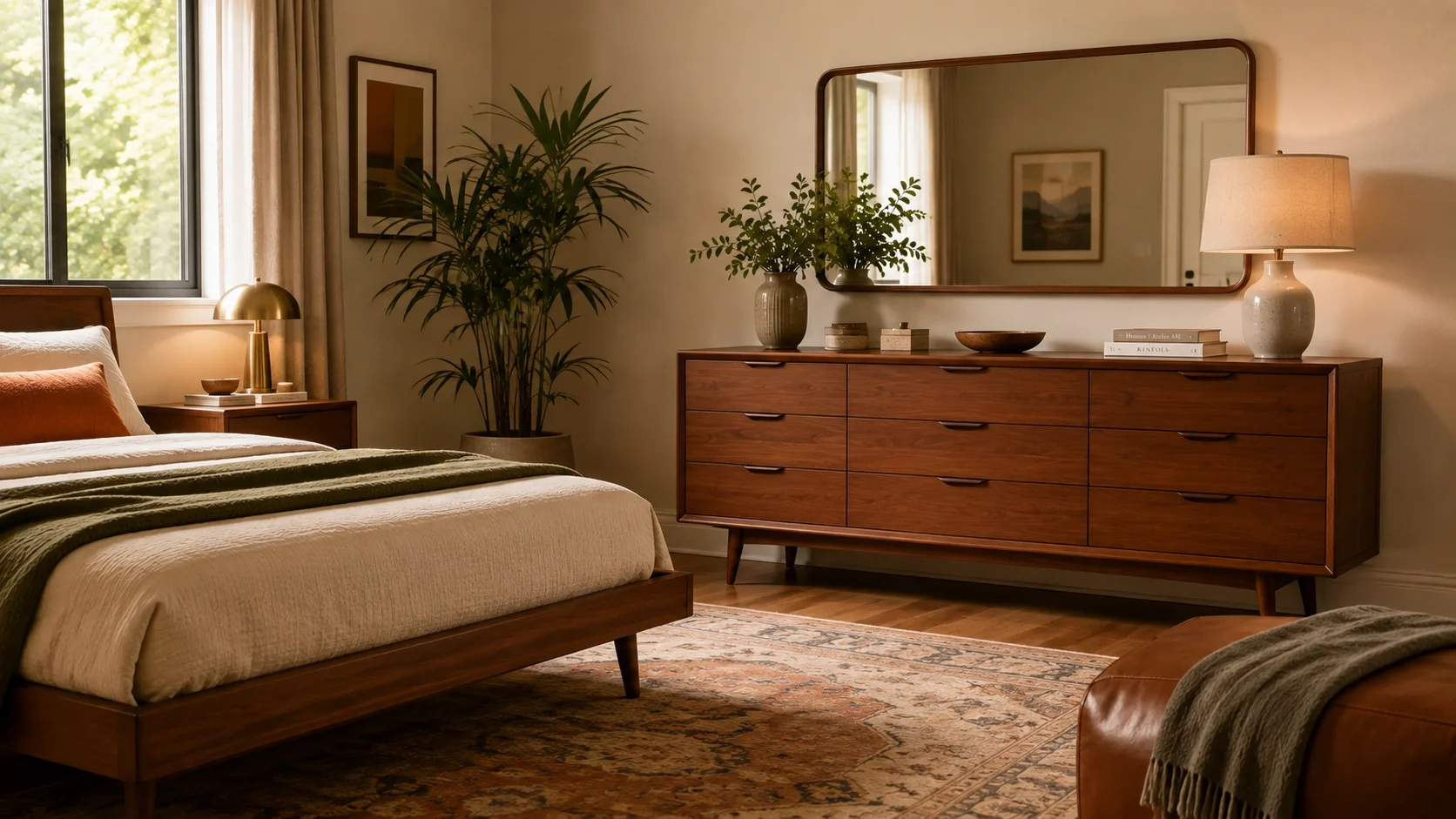
Integrating a mid century dresser into your home is about balance. The clean lines pair well with a variety of styles, from minimalist and Scandinavian to eclectic and even modern farmhouse.
Styling Tips
Keep the surface relatively uncluttered to let the design breathe. A single sculptural vase, a stack of art books, a vintage table lamp with a fiberglass shade, or a trailing plant all complement the aesthetic. If you want to lean into the retro vibe, consider pairing your dresser with geometric-patterned textiles or abstract wall art. For broader inspiration, visit our room ideas page.
Simple Maintenance
Dust regularly with a soft, dry cloth. Avoid silicone-based sprays and harsh chemicals, which can damage oil finishes or veneer. For vintage pieces, an occasional application of a high-quality wood oil (like tung or linseed) can rejuvenate the finish. If you're buying a vintage piece that needs some love, our guide on how to refinish a dresser is a great resource.
Frequently Asked Questions About Mid Century Dressers
Is a mid century dresser a good investment?
Authentic, well-preserved pieces from reputable makers (like Lane, Drexel, or Broyhill) often hold or increase in value, making them a solid investment for vintage furniture enthusiasts. Even quality reproductions offer good long-term value due to their timeless design and durable construction.
How do I know if a vintage mid century dresser is authentic?
Look for dovetail joints on drawers, solid wood frames, and maker's marks inside drawers or on the back. The underside of the dresser often reveals the original wood and construction quality. Be wary of pieces that feel unusually light or have visible staples and particle board, which often indicate a later reproduction.
Can I use a mid century dresser as a TV stand?
Yes! A long, low mid century dresser is a popular and stylish alternative to a traditional media console. Just ensure the dresser is sturdy enough to support your TV's weight, and consider cable management solutions to keep the clean lines looking tidy. A wide dresser is ideal for this purpose.
What's the difference between a lowboy and a highboy?
A lowboy is a short, wide dresser, typically with two to three rows of drawers, often used with a mirror above. A highboy (or tallboy) is a tall, narrow chest of drawers that maximizes vertical storage. Both are common in mid century design. For more on the latter, see our tallboy chests guide.