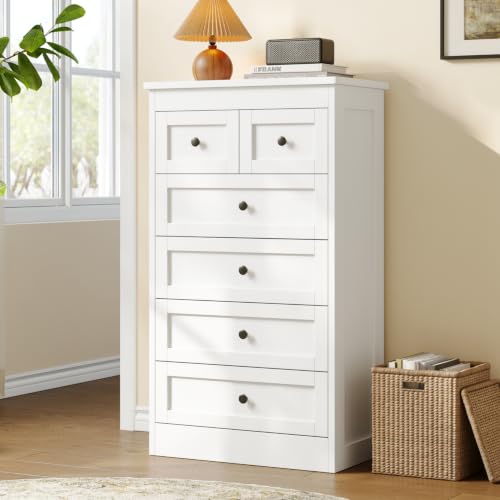
Dressers for Small Spaces
Smart, space-saving storage that keeps your bedroom organized without crowding your floor. Learn how to choose a compact dresser that fits your room and your routine.
Explore the GuideWhy small-space dressers matter: In apartments, dorms, guest rooms, and compact bedrooms, every square foot counts. The right dresser for small spaces maximizes vertical storage, keeps walkways clear, and doubles as a functional surface. This guide walks you through dimensions, styles, drawer layouts, and practical placement so you can choose with confidence.
What Makes a Dresser Right for a Small Space?
Not every compact dresser is truly space-saving. A piece works well in a small room only when its footprint, drawer mechanics, and height all cooperate with the way you move through the space. Before browsing styles, it helps to understand the four factors that matter most: width, height, drawer depth, and door clearance.
Width is the first constraint. A dresser that is too wide can block a closet door, pinch a walkway, or make the room feel cramped. Height is the second: tall dressers, often called tallboy chests, deliver many drawers in a footprint of just a few square feet. Drawer depth matters for linens, sweaters, and bulky clothing, while door and drawer swing determine how much clearance you need in front of the piece.
If you are still comparing furniture types, our overview of the difference between a dresser and a chest of drawers is a useful starting point. For rooms with very tight dimensions, models listed in our collection of dressers less than 30 inches wide are designed specifically for narrow walls and awkward corners.
Key Features to Look For
Compact Footprint
A footprint of roughly 30 inches wide or less keeps walkways and closet doors usable. Narrow dressers slide into corners and short walls that full-size pieces cannot.
Vertical Storage
Tall dressers use wall height instead of floor area. A tallboy chest can hold the same clothing volume as a wide dresser while taking up far less room.
Full-Extension Drawers
Drawers that pull out completely let you reach the back without wasted space. This is especially valuable in shallow dressers where every inch of depth counts.
Mixed Storage
Models with open shelves, cubbies, or a mix of drawer sizes adapt to different items. A dresser with open shelves and drawers keeps folded clothes and display items together.
Closet-Friendly Design
A dresser that fits in a closet frees up bedroom floor space entirely. Shallow depth and smooth drawer action are essential here.
Dual-Purpose Surfaces
In a studio or guest room, a dresser TV stand combo turns a single piece of furniture into storage plus entertainment space.
How to Choose a Dresser for a Small Room
1. Measure Before You Browse
Start with a simple floor plan. Measure the width of the wall where the dresser will sit, the distance to the nearest door, and the depth of the room. Then check the swing of closet doors and room doors. A dresser that is a few inches too wide can turn a comfortable room into a tight one.
- Measure the wall width available for the dresser.
- Leave at least 24 inches of clearance in front of the piece for drawers to open.
- Confirm that closet doors and room doors can open fully.
- Check ceiling height if you are considering a tall dresser.
2. Choose the Right Height
In a small bedroom, a tall dresser usually beats a wide one. A tallboy chest stacks drawers vertically and uses wall space that would otherwise be empty. For rooms with sloped ceilings or windows low on the wall, a mid-height dresser may be the better fit. Our dresser style guide explains how height affects both function and visual balance.
3. Prioritize Drawer Layout
The number and size of drawers matter as much as the outer dimensions. A model with many small drawers can organize accessories, socks, and folded tops efficiently, while one or two deep drawers handle bulky items. Look for a dresser with different size drawers if your wardrobe mixes small accessories and thick sweaters.
4. Consider Multi-Purpose Pieces
In small spaces, furniture that serves two purposes is a real advantage. A dresser that doubles as a desk suits a studio apartment or a teen bedroom. In a guest room, a dresser table with drawers can act as both storage and a bedside surface. For shared rooms, a dresser with drawers on both sides can be accessed from either side of the bed.
5. Match the Style to the Room
A compact dresser should not feel like a compromise. Modern, minimalist, and Scandinavian styles work well in small rooms because clean lines and light finishes make tight spaces feel larger. Browse our dresser styles collection to find a look that matches your bedroom, or explore the broader dresser type overview if you are still deciding between a chest, a wide dresser, and a combination piece.
Quality Tiers Compared
The table below uses universal quality descriptors to help you compare dressers for small spaces without focusing on any specific figure. Use it to understand what each tier typically delivers in construction and drawer performance.
| Tier | Best For | Typical Construction | Drawer Performance |
|---|---|---|---|
| Entry-level | Dorms, guest rooms, starter apartments | Engineered wood panels with laminate or painted finish | Basic side-mounted glides; smooth enough for light use |
| Mid-range | Primary bedrooms in apartments and small homes | Solid wood fronts with engineered wood carcass | Improved glides or ball-bearing slides; better alignment |
| Premium | Small bedrooms where furniture is a long-term choice | Mostly solid wood with dovetail or reinforced joinery | Full-extension, soft-close slides; consistent drawer travel |
| Luxury | Design-led compact rooms and custom layouts | Solid hardwood, hand-finished surfaces, premium hardware | Heavy-duty full-extension slides with precise alignment |
Placement Ideas for Tight Bedrooms
Where you place a dresser affects how spacious the room feels. A few practical arrangements work well in most small bedrooms:
- Corner placement: A narrow dresser in a corner uses dead space and keeps the center of the room open.
- Behind the door: A shallow dresser can sit on the wall behind the entry door, as long as the door swing clears the drawers.
- Inside the closet: A dresser that fits in a closet removes storage from the bedroom floor entirely.
- Under a window: A low, wide dresser can work as a window-side storage bench in rooms with low sills.
- Paired with a nightstand: Matching sets keep a small room visually calm; see dressers with matching nightstands.
Small-Space Dresser Checklist
- Width fits the wall with room for door swing and walkway.
- Height uses vertical space without blocking windows or vents.
- Drawers extend fully so the back of each drawer is usable.
- At least one drawer is deep enough for bulky clothing.
- Finish and style make the room feel larger, not busier.
- Anti-tip hardware is included or available for tall models.
Mistakes to Avoid
Small rooms punish oversized furniture quickly. The most common mistakes are buying a dresser that is too wide for the wall, ignoring door clearance, and choosing drawers that only open partway. A dresser that cannot open fully wastes the storage you paid for. Another frequent error is overlooking height: a tall dresser can hold far more in the same floor area, but it needs to be anchored for safety, especially in households with children.
Finally, avoid treating surface space as free storage. In a small bedroom, the top of the dresser is often the only horizontal surface available, so plan for it. A small tray or organizer keeps everyday items contained. If you need more dedicated storage, consider a dresser with lots of storage that combines drawers, shelves, and cabinets in one compact footprint.
Frequently Asked Questions
What is the best dresser for a small bedroom?
The best dresser for a small bedroom balances vertical storage with a compact footprint. Narrow tallboy chests, models under 30 inches wide, and designs with full-extension drawers and open shelving tend to work best because they maximize usable space without crowding walkways.
How wide should a dresser be for a small space?
For tight rooms, aim for a dresser that is 30 inches wide or less. This leaves enough clearance for doors, closets, and circulation. If you have a little more room, a model up to 40 inches wide can still work well in a compact bedroom.
Can a dresser fit inside a closet?
Yes. A dresser that fits in a closet is a smart solution for small bedrooms because it frees up floor space in the room itself. Measure the closet depth and door swing first, then choose a shallow or narrow model with drawers that open fully.
What is better for small spaces: a tall dresser or a wide dresser?
Tall dressers generally suit small spaces better because they use vertical room instead of floor area. A tallboy chest gives you multiple drawers in a footprint of just a few square feet, while a wide dresser can block walkways and doors.
Ready to Find Your Compact Dresser?
Browse our curated selection of space-saving dressers and storage pieces below. Each option is chosen for small bedrooms, apartments, dorms, and guest rooms where every inch matters.
View Recommended Dressers