Walnut Wood Dresser: The Complete Guide
Discover why walnut wood dressers are prized for their rich color, striking grain, and lasting durability. Learn how to choose, style, and care for a solid walnut dresser that fits your bedroom perfectly.
START THE GUIDEWhy walnut stands out: Walnut is a dense hardwood known for its deep chocolate and coffee tones, elegant grain, and excellent stability. A walnut wood dresser is more than storage — it is a long-term investment that anchors a bedroom's design. This guide covers wood grades, construction, finishes, styles, and styling ideas so you can buy with confidence.
What Makes Walnut Wood a Premium Choice?
Walnut (often American black walnut) is a closed-grain hardwood with a tight, uniform structure. It is prized by furniture makers because it machines and joins beautifully, resists warping, and takes finishes exceptionally well. Compared with oak or pine, walnut is denser and generally more dimensionally stable, which matters for drawer fronts that need to slide smoothly for years.
Its natural color ranges from honey-toned heartwood to deep chocolate, often with subtle purple or grey undertones. Over time, walnut lightens slightly with sun exposure — a natural patina many owners appreciate. Because the grain is so expressive, a walnut dresser often works as a focal point without needing heavy decoration.
Solid Walnut vs. Walnut Veneer: What to Know
Not every walnut dresser is made the same. Understanding construction is the single most important step before buying.
- Solid walnut: Thick lumber used across drawer fronts, frame, and often sides. Durable, repairable, and ages gracefully. Typically premium or luxury tier.
- Walnut veneer: A thin walnut layer over engineered wood (MDF or plywood). More uniform appearance, stable in humidity, and common in mid-range furniture. Quality depends heavily on the substrate and edge banding.
- Walnut-finished: A non-walnut wood stained to imitate walnut. Can look good but will not have the same grain depth or durability.
If you want a piece that lasts decades, look for solid walnut drawer fronts and dovetail joinery. Veneer is a reasonable choice if you prioritize a consistent grain pattern and a lighter overall weight. For a broader comparison of construction types, see our high-quality solid wood dresser guide.
Walnut Dresser Tiers: A Relative Comparison
The table below uses a consistent quality-tier classification rather than numeric figures. Use it to understand where a given walnut dresser sits in the market.
| Tier | Typical Construction | Best For |
|---|---|---|
| Entry-level | Walnut veneer over engineered wood; basic drawer slides | First apartment, guest room, style-focused buyers |
| Mid-range | Veneer with solid walnut edges; smooth ball-bearing slides | Family bedrooms, everyday use, balanced durability |
| Premium | Solid walnut fronts and frame; dovetail drawers; soft-close | Long-term primary bedroom, design-conscious homes |
| Luxury | All solid walnut, hand-finished, custom joinery | Heirloom furniture, designer interiors, collectors |
As a rule, mid-range models usually offer noticeably smoother drawer mechanisms than entry-level builds, while premium tiers add solid-wood joinery and refined finishes. If you are planning a full bedroom refresh, our dresser buying guide can help you balance priorities across the room.
Popular Walnut Dresser Styles
Walnut's warm, dark tone pairs with several design languages. Consider these directions:
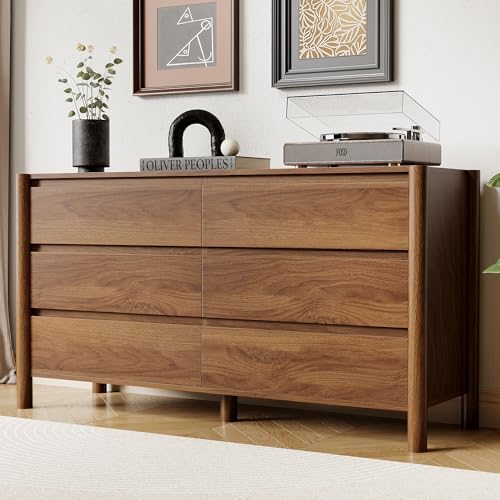
- Mid-century modern: Clean lines, tapered legs, and flat-front drawers. The most iconic walnut pairing. See our mid-century modern 4-drawer dresser overview.
- Scandinavian: Lighter walnut finishes, minimal hardware, and rounded edges.
- Modern contemporary: Handleless fronts, integrated pulls, and matte finishes.
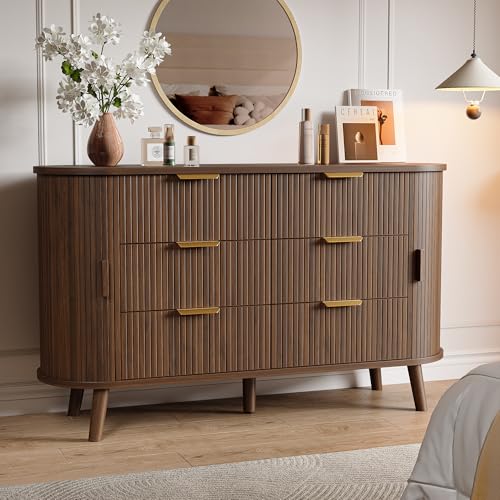
- Traditional / transitional: Walnut with brass pulls, subtle moldings, and bracket feet.
For a full exploration of drawer configurations, browse our chest of drawers guide or compare six-drawer dresser options if you need generous capacity.
Size and Drawer Configuration
Walnut dressers come in many footprints. Match the piece to your room and storage habits:
- Narrow spaces: A tall skinny dresser maximizes vertical storage in compact rooms.
- Wide bedrooms: A wide dresser with deep drawers gives generous surface area and capacity.
- Low-profile aesthetics: A low-profile dresser keeps sightlines open and works well under windows.
- Full bedroom sets: Pair with a matching dresser and nightstand set for a cohesive look.
Always measure your space and doorways before ordering. Consider drawer depth and slide quality — deeper drawers are useful for bulky items, but shallow drawers keep clothing organized.
Finishes and Hardware for Walnut Dressers
Walnut accepts a range of finishes, each shifting its character:
- Natural oil: Deepens the grain and feels warm; needs periodic re-oiling.
- Satin lacquer or polyurethane: Protective, easy to clean, and common on mid-range pieces.
- Matte finish: Modern and understated; hides fingerprints well.
- Brass or gold hardware: Complements walnut's warmth. See our gold-handle style reference for contrast ideas.
- Black hardware: Adds a graphic, contemporary edge.
If you plan to upgrade hardware later, review our pull handles for dresser drawers guide for sizing and style tips.
Caring for a Walnut Wood Dresser
- Dust with a soft, dry cloth weekly; avoid harsh cleaners.
- Keep out of direct sunlight to slow natural lightening.
- Use coasters and felt pads to prevent rings and scratches.
- Re-oil oiled finishes every 6–12 months depending on dryness.
- Maintain indoor humidity around 40–50% to reduce seasonal movement.
Styling a Walnut Dresser
Walnut's rich tone pairs beautifully with warm neutrals, cream, sage, and muted blues. Keep decor restrained so the grain remains the star. A single mirror, a table lamp, and a small ceramic vessel are often enough. For more inspiration, explore our bedroom storage ideas or room ideas hub.
If your bedroom is compact, a shallow-depth dresser in walnut can deliver the look without crowding the room.
Frequently Asked Questions
Is walnut wood good for a dresser?
Yes. Walnut is a dense, durable hardwood that resists warping and holds joinery well, making it an excellent long-term investment. Its rich color and striking grain also give it strong decorative appeal.
What is the difference between solid walnut and walnut veneer?
Solid walnut uses thick lumber throughout the drawer fronts and frame, while walnut veneer applies a thin walnut layer over engineered wood. Solid walnut is more durable and repairable; veneer offers a more consistent look and is common in mid-tier furniture.
Does walnut furniture fade over time?
Walnut naturally lightens slightly with exposure to sunlight. You can slow this by keeping the dresser out of direct sun and applying a UV-protective finish or occasional furniture oil.
How do I style a walnut wood dresser?
Pair walnut with warm neutrals, cream, sage green, or brass accents. Keep decor minimal so the grain remains the focal point, and consider a mirror or simple lamp on top.