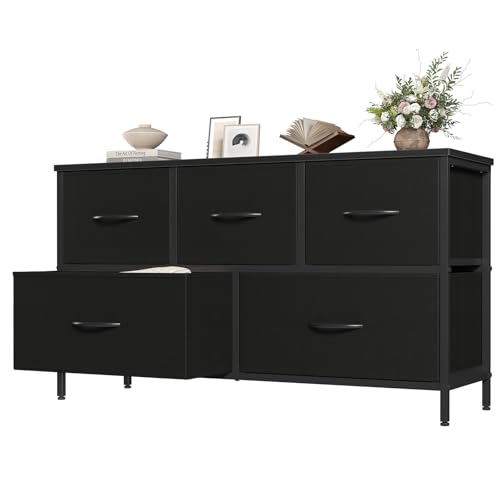
Dresser and Nightstand Sets: Complete Buying Guide
Everything you need to choose a coordinated dresser and nightstand set that fits your space, style, and storage needs — from sizing and materials to drawer counts and long-term durability.
Start ExploringWhy buy a matching set? A coordinated dresser and nightstand set brings visual harmony to a bedroom while simplifying your shopping decisions. Instead of hunting for pieces that share similar proportions, finishes, and hardware, a set delivers a cohesive foundation for your room. This guide walks you through the practical considerations — size, material, drawer configuration, and style — so you can choose with confidence.
What Is a Dresser and Nightstand Set?
A dresser and nightstand set is a coordinated group of bedroom storage furniture designed to share the same design language. Most sets include a main dresser and one or two matching nightstands, though many collections expand to include a chest of drawers, mirror, or full bedroom suite.
These sets are popular because they eliminate guesswork. When you buy a coordinated collection, you get consistent wood tones, hardware finishes, and drawer detailing that read as intentional rather than accidental. For anyone furnishing a bedroom from scratch, a set is often the most efficient starting point.
If you are still deciding between individual pieces versus a coordinated collection, our dresser and nightstand pairing guide covers the trade-offs in more detail. You can also browse the full dresser and nightstand sets collection to see how different configurations compare.
Types of Dresser and Nightstand Sets
Not every set is built the same way. Before you shop, it helps to understand the common configurations so you can match the set to your room layout and storage needs.
Dresser + Single Nightstand
Best for smaller bedrooms or guest rooms where floor space is limited. The single nightstand pairs with a bed on one side, leaving the other side open for a chair or reading nook.
Dresser + Two Nightstands
The classic symmetrical layout for primary bedrooms. Two matching nightstands flank the bed, while the dresser anchors the opposite wall for balanced visual weight.
Dresser + Nightstand + Chest
A three-piece expansion for larger rooms or households with significant clothing storage needs. The chest adds vertical storage without consuming much additional floor space.
Full Bedroom Suite
Includes the bed frame alongside the dresser and nightstands. This is the most cohesive option, though it requires committing to a single design direction for the entire room.
If you prefer a more flexible approach, a dresser, nightstand, and chest set gives you extra storage while retaining the coordinated look. For tighter spaces, a dresser with a matching nightstand keeps things simple.
How to Size a Dresser and Nightstand Set
Sizing is the most common source of buyer regret. A set that looks balanced in a showroom can overwhelm a small bedroom or feel undersized in a spacious primary suite. Use the following framework before you commit.
1. Measure the room first
- Record the length of every wall where furniture could sit.
- Note doorway widths and hallway turns — these determine what can physically be delivered.
- Mark bed placement, then measure the remaining clearance on each side.
2. Match nightstand height to the mattress
Nightstands should sit level with or slightly below the top of the mattress — generally within a few inches. A nightstand that is noticeably taller or shorter than the bed creates an awkward visual break and makes reaching for items less comfortable.
3. Give the dresser breathing room
Leave at least 24 to 30 inches of walking clearance in front of dresser drawers when fully extended. In compact rooms, consider a dresser designed for small spaces or a compact dresser and nightstand pairing that preserves floor area.
4. Check proportional balance
A dresser that is much wider than the bed can dominate the room. As a rule of thumb, a dresser between 60 and 72 inches wide suits a queen or king bed well, while a 48- to 58-inch dresser works better alongside a full or twin bed.
Materials and Build Quality
The material of a dresser and nightstand set determines how long it lasts, how it ages, and how much maintenance it requires. Most sets fall into three broad categories.
Solid wood
Solid wood sets — particularly oak, walnut, maple, and mahogany — are the most durable option. They can be sanded and refinished, which extends their service life considerably. These sets sit in the mid-range to luxury tiers and are best treated as a long-term investment. Grain variation means no two pieces are identical, which many buyers consider a feature rather than a flaw.
Engineered wood with veneer
Particleboard or MDF cores wrapped in wood veneer offer a stable, uniform surface at a more accessible position in the market. Quality varies widely — look for fully wrapped edges and reinforced drawer boxes. These sets occupy the entry-level to mid-range tiers and suit renters or buyers furnishing a first home.
Metal and mixed materials
Steel frames with wood or glass accents bring an industrial or modern character. Metal sets are generally resistant to humidity changes and require minimal maintenance. They pair well with contemporary interiors and are often found in the entry-level to mid-range tiers.
For a deeper comparison of construction standards, our dresser quality guide explains what to inspect in drawer joinery, glide mechanisms, and finish durability. If you are weighing solid wood against engineered options, the complete dresser buying guide breaks down the trade-offs.
Market Tiers for Dresser and Nightstand Sets
The following table uses universal quality descriptors rather than absolute figures. Use it to understand where a set sits in the market and what construction features you can reasonably expect at each tier.
| Tier | Typical Construction | Best For | Drawer Mechanism |
|---|---|---|---|
| Entry-level / essential tier | Engineered wood with printed or thin veneer, stapled or cam-lock joinery | Guest rooms, rentals, first apartments | Basic side-mounted rollers |
| Mid-range / balanced tier | Engineered core with thicker veneer, dovetail or reinforced drawer boxes | Primary bedrooms, everyday family use | Undermount or ball-bearing slides |
| Premium / high-end tier | Solid wood frames, hardwood drawer sides, corner-block reinforcement | Long-term primary bedroom furnishing | Full-extension soft-close slides |
| Luxury / flagship tier | Kiln-dried hardwood, hand-finished surfaces, traditional joinery | Statement bedrooms, heirloom-quality collections | Hand-fitted wooden or premium metal slides |
Sets in the premium and luxury tiers are worthwhile investments when you plan to keep the furniture for a decade or more. Entry-level and mid-range sets are a solid choice for the tier when the priority is a coordinated look without a long-term commitment.
Choosing a Style That Fits Your Bedroom
The style of your set should relate to the room's architecture and your existing decor. Here are the most common directions and what each communicates.
Modern and contemporary
Clean lines, minimal ornamentation, and often a floating or plinth base. Modern sets suit rooms with neutral palettes and streamlined furniture. A mid-century modern double dresser is a good reference point for this direction.
Traditional and transitional
Detailed moldings, bracket feet, and classic hardware. Transitional sets soften traditional forms with cleaner surfaces, making them adaptable to both older homes and newer builds.
Farmhouse and rustic
Weathered finishes, plank detailing, and simple cup pulls. These sets bring warmth to casual bedrooms and pair naturally with natural textiles and wood-toned floors.
Color-led collections
White, grey, and brown sets remain the most versatile. A white dresser and nightstand set brightens compact rooms, while a grey set offers a softer alternative to stark black or white. Wood-toned sets such as a wood dresser and nightstand set are the most timeless choice.
Drawer Count and Storage Configuration
The number and depth of drawers determine how useful a dresser actually is in daily life. Think about what you plan to store before choosing a configuration.
- Deep drawers suit bulky items such as sweaters, jeans, and bedding. A double dresser with deep drawers is a strong option for households with heavy clothing storage needs.
- Shallow drawers work better for folded shirts, underwear, and accessories. Pair them with a drawer organizer to keep small items from sliding around.
- Mixed configurations combine both depths in a single piece, which is usually the most practical arrangement for a primary bedroom.
For nightstands, one or two drawers is typical. A single-drawer nightstand with an open shelf accommodates books and a lamp, while a two-drawer nightstand hides more clutter. If you need more guidance on keeping drawers functional, see the drawer dividers guide.
Hardware and Finish Considerations
Hardware is the detail that ties a set together. Matching knobs and pulls across the dresser and nightstands reinforce the coordinated look, and swapping hardware later is one of the simplest ways to refresh a set.
If you are considering a change, browse dresser knobs and drawer pulls to see how a different finish can shift the character of the whole set. Gold and brass tones warm up dark wood, while matte black reads as more contemporary. Our dresser hardware guide explains how to measure hole spacing before ordering replacements.
Color Options for Dresser and Nightstand Sets
Color is often the deciding factor for buyers who have already narrowed down size and material. The most common directions are:
- White — brightens small rooms and reads as clean and airy. See the white dresser and nightstand set options.
- Grey — a versatile neutral that works with both warm and cool palettes. Explore the grey dresser and nightstand set range.
- Brown and natural wood — the most timeless choice, particularly in oak and walnut. Browse the brown dresser and nightstand set collection.
- Gold and metallic accents — typically applied as hardware rather than a full finish. See the gold-accented dresser and nightstand set options.
If you want to experiment with a bolder direction, the dresser color ideas guide covers painted finishes and two-tone approaches.
Set vs Individual Pieces: Which Should You Choose?
A coordinated set is not the only path to a cohesive bedroom. Buying a dresser and nightstands separately gives you more control over proportions and lets you mix styles intentionally.
Choose a set when:
- You are furnishing the room from scratch and want a fast, reliable starting point.
- You value visual consistency over individual piece selection.
- You want matching hardware and finishes without hunting for compatible options.
Choose individual pieces when:
- One wall needs a specific width that a pre-configured set does not offer.
- You already own a bed or chest you want to keep and complement.
- You enjoy layering styles and prefer a collected look over a matched one.
For a deeper comparison, the dresser and nightstand set overview and the dresser and nightstand combo guide both explore how to balance matching and mixing.
Room Layout Ideas for Dresser and Nightstand Sets
How you position the set matters as much as which set you buy. Three layouts work well in most bedrooms:
The symmetrical arrangement
Place the bed against the center of the primary wall, with a nightstand on each side. Position the dresser on the opposite wall or offset to one side. This is the most balanced layout and suits rooms with a clear focal wall.
The corner arrangement
In compact rooms, angle the dresser into a corner and use a single nightstand beside the bed. This frees up a continuous wall for a wardrobe or desk. A dresser and bedside table set is a natural fit for this layout.
The walk-in closet extension
If your bedroom is tight but you have a walk-in closet, a double-sided dresser for a walk-in closet can move primary storage out of the sleeping area, leaving the bedroom for a smaller set and nightstands.
Nightstand Types That Pair Well with a Dresser Set
Nightstands vary in footprint and function. The right choice depends on how much you keep at the bedside.
- Two-drawer nightstands — the most common pairing. They hide small items and keep the bedside surface clear.
- Single-drawer nightstands with an open shelf — a good middle ground for books and a reading lamp.
- Bedside tables — lighter and often narrower than full nightstands, useful in tight gaps. A dresser and bed-side table set is a practical compact option.
- Side tables — more decorative and less storage-focused. A dresser and side table set works when storage needs are minimal.
If you need two matching nightstands rather than one, the dresser and two-nightstand set configuration is the standard choice for a primary bedroom.
Care and Maintenance for Your Set
Proper care extends the life of any dresser and nightstand set, regardless of tier.
- Dust with a soft, dry cloth weekly to prevent buildup in drawer grooves.
- Avoid placing the set in direct sunlight, which can fade finishes and dry out solid wood.
- Keep humidity stable — extreme swings cause wood to expand and contract, stressing joints.
- Lubricate drawer slides annually with a silicone-based product, not oil-based lubricants that attract dust.
- Tighten hardware every six months to prevent loosening from daily use.
For deeper restoration work, see the dresser restoration guide. If you are refreshing a set rather than replacing it, the dresser makeover ideas collection covers refinishing and repainting projects.
Frequently Asked Questions
What is included in a dresser and nightstand set?
A typical set includes one dresser and one or two matching nightstands. Some collections add a chest of drawers, mirror, or bed frame to complete the bedroom.
Should a dresser and nightstand match exactly?
Matching finishes and hardware create a cohesive look, but exact matching is not required. Coordinating wood tones or complementary styles can work equally well in a well-planned bedroom.
How do I choose the right size for a dresser and nightstand set?
Measure your available wall space, doorway clearances, and the height of your bed. Nightstands should sit level with or slightly below the mattress top, while the dresser should leave comfortable walking room — generally 24 to 30 inches in front of open drawers.
Are wood dresser and nightstand sets more durable?
Solid wood sets generally offer greater durability and repairability than engineered wood. Mid-range and premium solid wood collections often feature reinforced joinery and smoother drawer mechanisms. Engineered wood sets in the mid-range tier can also be durable when the drawer boxes are reinforced.
Can I buy a dresser and nightstand separately instead of as a set?
Yes. Buying separately gives you more control over sizing and lets you mix styles. A set is faster and more visually consistent, while individual pieces suit rooms with unusual dimensions or an existing furniture collection.
What drawer mechanism should I look for?
Undermount or ball-bearing slides are the practical standard for mid-range sets. Full-extension soft-close slides are typical of premium and luxury tiers. Basic side-mounted rollers appear in entry-level sets and are serviceable but less smooth over time.
Final Checklist Before You Buy
- Measure wall space, doorways, and walking clearance.
- Confirm nightstand height against your mattress.
- Decide how many drawers you need and at what depth.
- Choose a material tier based on how long you plan to keep the set.
- Check that hardware finishes are consistent across the dresser and nightstands.
- Verify delivery access — especially for wide dressers on upper floors.
- Read the assembly requirements if you are ordering an engineered wood set.
For a broader view of how a set fits into your overall bedroom plan, explore the dresser and nightstands collection or the dresser sets range. If you are also considering a bed frame, the dresser and bed pairing guide explains how to coordinate proportions.