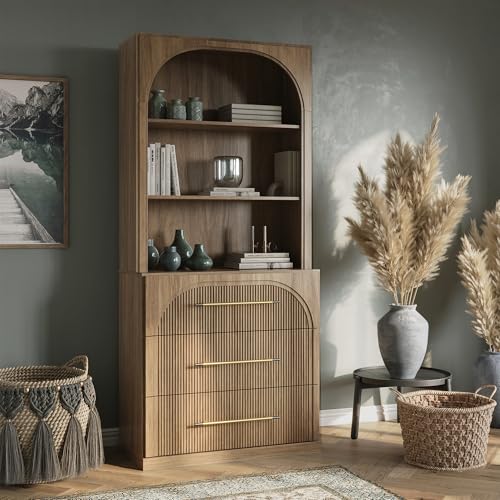
Dresser with Hutch: Complete Buying Guide
Discover how a dresser with hutch combines generous drawer storage with open shelving to maximize your bedroom organization. Learn about styles, materials, and key features before you choose.
What Is a Dresser with Hutch?
A dresser with hutch is a two-part furniture piece that pairs a traditional drawer unit with an attached upper shelving section. The lower portion functions as a standard dresser for clothing and personal items, while the hutch adds open shelves, cubbies, or small cabinets for display and additional storage. This combination creates a vertical storage solution that makes efficient use of wall space without requiring a separate bookshelf or wall unit.
Unlike a standalone chest of drawers, a hutch dresser offers a distinct advantage: it keeps frequently used items at eye level while keeping clothing and linens tucked away below. This makes it particularly useful in bedrooms where floor space is limited but vertical space is available. If you are exploring broader storage options, our guide to storage dressers covers other configurations that prioritize capacity and organization.
Key Insight: A dresser with hutch typically measures between 60 to 72 inches in total height when the hutch is attached, making it one of the tallest bedroom storage solutions available. This vertical design is ideal for rooms with high ceilings and limited floor area.
Benefits of Choosing a Dresser with Hutch
Combining two furniture functions into one piece offers several practical advantages for bedroom organization and interior design. Understanding these benefits can help you determine whether a hutch dresser suits your space and lifestyle.
Maximized Vertical Storage
The hutch adds usable shelf space above the dresser without consuming additional floor area. This is especially valuable in smaller bedrooms, apartments, or dorm rooms where every square foot counts. The upper shelves can hold books, decorative items, plants, or frequently accessed accessories.
Unified Design Aesthetic
Because the hutch and dresser are designed as a matched set, the proportions, finish, and hardware are coordinated. This creates a cohesive look that is often more polished than pairing a separate dresser with a standalone bookshelf. For those who appreciate coordinated bedroom furniture, a solid wood bedroom dresser set can extend this unified approach across the entire room.
Enhanced Organization
The combination of closed drawers and open shelves supports a natural organization system. Clothing, linens, and bulky items go in the drawers, while display items, books, and daily essentials occupy the shelves. This separation reduces clutter on the dresser top and keeps frequently used items within easy reach.
Space-Saving Alternative to Multiple Pieces
Instead of purchasing a dresser, a bookshelf, and a display cabinet separately, a dresser with hutch consolidates these functions into a single footprint. This approach simplifies furniture arrangement and can make a room feel less crowded. If you are furnishing a compact space, you may also find our guide to shallow dressers for small bedrooms useful for understanding depth considerations.
Types of Dresser with Hutch Configurations
Dresser hutches come in several configurations, each suited to different storage needs and room layouts. The right choice depends on how much open shelving you need, the height of your ceilings, and the overall style of your bedroom.
| Configuration | Best For | Key Features | Typical Tier |
|---|---|---|---|
| Open Shelf Hutch | Display and decor | Multiple open shelves, no doors | Entry-level to mid-range |
| Cubby Hutch | Organized storage | Divided compartments, baskets | Mid-range |
| Mirror Hutch | Dressing and grooming | Attached mirror, side shelves | Mid-range to premium |
| Cabinet Top Hutch | Hidden storage | Small doors, adjustable shelves | Premium |
| Bookcase Hutch | Book lovers and students | Tall shelves, adjustable heights | Mid-range to premium |
Each configuration serves a distinct purpose. An open shelf hutch is ideal for displaying decorative objects and keeping everyday items accessible. A cubby hutch with baskets offers a tidy way to store smaller items out of sight. Mirror hutches combine storage with a functional dressing area. Cabinet-top hutches provide concealed storage for items you prefer to keep behind closed doors.
If you are specifically interested in a hutch that includes a mirror for dressing, our guide to small chests of drawers with mirror explores compact options that serve a similar function in a smaller footprint.
Materials and Construction Quality
The material of your dresser with hutch determines its durability, visual warmth, and long-term performance. Solid wood remains the gold standard for furniture that is expected to last for decades, while engineered wood offers a more accessible entry point into this furniture category.
Solid Wood Hutches
Solid wood construction—whether oak, maple, pine, or walnut—provides superior strength and a natural grain pattern that ages gracefully. A high-quality solid wood dresser with a matching hutch represents a long-term investment in bedroom furniture. Solid wood can be sanded and refinished if it becomes scratched or if you want to change the finish color.
Engineered Wood and Veneer
Engineered wood with a veneer finish offers a smooth, uniform appearance and is often used in mid-range hutch dressers. While not as durable as solid wood, high-quality veneers can provide excellent visual appeal and are less susceptible to seasonal expansion and contraction. For those considering an unfinished option that can be painted or stained to match a specific decor scheme, an unfinished dresser may be worth exploring.
Hardware and Drawer Mechanisms
The quality of drawer glides and hardware significantly affects daily usability. Mid-range and premium hutch dressers typically feature metal drawer glides with smooth operation, while entry-level models may use simpler mechanisms. Soft-close drawers and dovetail joinery are hallmarks of higher-tier construction. If you are updating an existing piece, pull handles for dresser drawers can refresh the look and improve functionality.
Size and Space Planning
Before selecting a dresser with hutch, measure your available wall space and ceiling height carefully. These pieces are taller than standard dressers and require adequate clearance to avoid feeling cramped.
A typical dresser base measures 30 to 36 inches in height, with the hutch adding another 30 to 40 inches. Total height often ranges from 60 to 76 inches. Width varies widely, from compact 36-inch units to expansive 72-inch models. Depth is usually consistent with standard dressers, around 18 to 20 inches.
Consider the following when planning your space:
- Ceiling clearance: Ensure at least 6 to 12 inches of space above the hutch for visual breathing room and access to the top shelf.
- Door and window placement: Avoid blocking windows or swinging doors with the hutch.
- Walkway clearance: Maintain at least 30 inches of clear floor space in front of the dresser for comfortable access to drawers.
- Anchor safety: Tall furniture should be anchored to the wall, especially in homes with children. Our guide to children's dressers covers safety considerations for family-friendly furniture.
For rooms with limited depth, a narrow set of drawers for bedroom paired with a slim hutch may be more appropriate than a full-depth combination unit.
Style Considerations for Dresser Hutches
The style of your dresser with hutch should harmonize with your existing bedroom decor while reflecting your personal taste. Several design traditions lend themselves particularly well to the hutch configuration.
Traditional and French Country Styles
Hutch dressers are a natural fit for traditional bedroom decor. French country and provincial styles often feature hutches with arched tops, decorative molding, and ornate hardware. A French country chest of drawers with a matching hutch creates a romantic, elegant bedroom centerpiece.
Modern and Mid-Century Styles
Clean-lined modern hutches typically feature open shelving with minimal ornamentation. Mid-century modern designs may incorporate tapered legs, warm wood tones, and geometric shelf configurations. A mid-century 6-drawer dresser with a complementary hutch offers a retro-inspired look that remains contemporary.
Farmhouse and Rustic Styles
Farmhouse hutch dressers often feature beadboard backing, distressed finishes, and simple open shelves. These pieces fit naturally into relaxed, country-inspired bedrooms. For those who appreciate weathered textures, a distressed dresser with a hutch adds character and warmth.
If you prefer a painted finish, a white dresser with small drawers on top demonstrates how a tiered drawer configuration can provide display space without a full hutch, offering a middle ground between a standard dresser and a full hutch combination.
Dresser with Hutch vs. Other Storage Solutions
Understanding how a hutch dresser compares to alternative bedroom storage furniture helps clarify whether it is the right choice for your needs.
| Furniture Type | Storage Profile | Best For | Footprint |
|---|---|---|---|
| Dresser with Hutch | Drawers + open shelves | Combined clothing and display | Medium, vertical |
| Standard Dresser | Drawers only | Clothing and linens | Medium, horizontal |
| Chest of Drawers | Tall drawer stack | Compact clothing storage | Small, vertical |
| Armoire | Hanging + drawers + shelves | Full wardrobe storage | Large, tall |
| Dresser Bookshelf Combo | Drawers + bookcase | Books and clothing | Medium to large |
If your primary need is hanging space for clothing, an armoire or solid wood armoire with shelves and drawers may serve you better than a hutch dresser. If you need a dedicated book display area alongside clothing storage, a dresser bookshelf combination serves a similar function with a different emphasis. And if you are outfitting a nursery, a nursery dresser with a hutch can provide both baby clothing storage and display space for decorative items.
How to Organize a Dresser with Hutch
The dual-function nature of a hutch dresser creates natural organizational zones. Assigning specific categories to each area keeps the piece tidy and functional.
Drawer Organization
Use the dresser drawers for clothing, linens, and items you prefer to keep out of sight. Top drawers can hold delicates, accessories, or jewelry—consider a dresser with hidden jewelry drawer for secure storage. Middle drawers work well for folded shirts and pants, while bottom drawers accommodate bulkier items like sweaters and bedding.
Hutch Shelf Organization
The open shelves of the hutch are best suited for items that benefit from visibility and easy access. Use baskets or bins on lower shelves for small items, and reserve upper shelves for display objects, books, or decorative pieces. A mix of functional storage and aesthetic display keeps the hutch looking intentional rather than cluttered.
Top Surface Utilization
The dresser top beneath the hutch provides a convenient surface for a mirror, lamp, or decorative tray. Keep this area relatively clear to avoid visual clutter and to maintain easy access to the shelves above. For more ideas on maximizing drawer efficiency, see our dresser organization guide.
Frequently Asked Questions About Dresser Hutches
What is the difference between a dresser with hutch and a standard dresser?
A standard dresser consists of a drawer unit with a flat top surface. A dresser with hutch adds an attached upper section with open shelves, cubbies, or small cabinets. The hutch provides additional vertical storage and display space without increasing the floor footprint.
Can a hutch be removed from a dresser?
In many cases, yes. Some hutch dressers are designed with detachable upper sections that can be removed if you prefer a standard dresser configuration. However, not all models offer this flexibility. Check the product specifications or assembly instructions to confirm whether the hutch is separable.
How tall is a dresser with hutch?
Most dresser with hutch combinations measure between 60 and 76 inches in total height. The dresser base is typically 30 to 36 inches, with the hutch adding 30 to 40 inches. Always measure your ceiling height and account for clearance above the hutch before purchasing.
Is a dresser with hutch suitable for a small bedroom?
Yes, provided the width and depth fit your available space. Because the hutch adds vertical storage rather than horizontal footprint, it can actually be a space-efficient choice for small bedrooms. A narrow white dresser with a slim hutch can maximize storage in a compact room without overwhelming the space.
What should I look for in a quality dresser with hutch?
Prioritize solid wood construction or high-quality veneers, metal drawer glides with smooth operation, dovetail joinery on drawer boxes, and sturdy hutch attachment hardware. Higher-tier models typically offer soft-close drawers and adjustable shelving. For a broader perspective on evaluating dresser quality, consult our dresser buying guide.
Can I use a dresser with hutch in a nursery?
Yes, but safety is paramount. Always anchor the dresser and hutch to the wall using the provided anti-tip kit. Avoid placing heavy items on high shelves, and ensure the hutch is securely attached. A crib and dresser set that includes a hutch can provide coordinated nursery storage, but always verify that the furniture meets current safety standards.
Ready to Find Your Perfect Dresser with Hutch?
Explore our curated selection of dresser with hutch options below. Each piece is chosen for its storage capacity, construction quality, and design appeal.
View Recommended Models