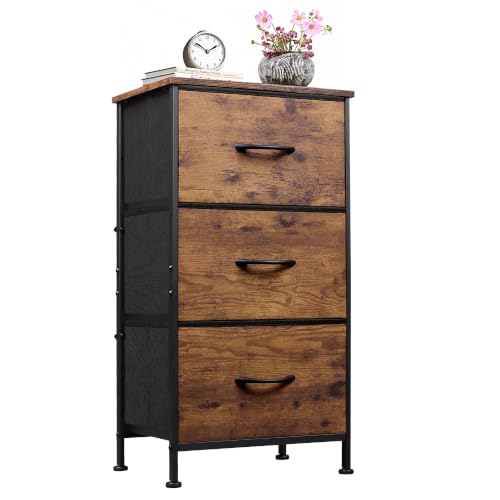
Shallow Depth Dressers for Small Spaces
When floor space is tight, every inch counts. A shallow depth dresser lets you keep full bedroom storage without crowding the room, blocking walkways, or sacrificing style. Here is everything you need to choose the right slim dresser for your space.
Start With The Buying GuideWhat Is a Shallow Depth Dresser?
A shallow depth dresser is a storage piece whose front-to-back measurement is noticeably smaller than the typical bedroom dresser. While most standard dressers sit between 18 and 20 inches deep, a shallow or slim dresser usually measures 15 inches or less, and the slimmest designs come in around 11 to 13 inches.
The term describes the footprint, not the style. Shallow dressers appear in modern, mid-century, farmhouse, Scandinavian, and industrial designs. What they share is a reduced depth that allows the piece to sit in narrow rooms, along short walls, or in hallways where a full-depth dresser simply would not fit.
Because the depth is reduced, manufacturers often compensate with height or drawer count. This is why many slim dressers are tall, with four to six drawers stacked vertically. If you are exploring compact storage in general, our guide to a shallow dresser for a small bedroom covers related layouts and placement ideas.
Why Choose a Slim Dresser for a Small Space?
Small rooms fail for one of two reasons: there is not enough storage, or there is too much furniture for the available floor area. A shallow dresser addresses both problems at once.
- Preserves walkway clearance. A dresser that is six to eight inches shallower frees up meaningful floor space in front of the unit, so drawers open without forcing you against the bed.
- Fits short walls. Narrow rooms and alcoves often have walls that are too short for a wide dresser. A slim, taller unit uses vertical space instead of horizontal space.
- Reduces visual bulk. Lower depth reads as lighter in a room, which matters in compact bedrooms where heavy furniture can feel oppressive.
- Works around door swings. Shallow units are easier to place near doors and closets because they intrude less into the swing path.
- Pairs well with other storage. Slim dressers combine naturally with closet systems, under-bed storage, and wall shelving. See our guide to a dresser and closet combo for a hybrid approach.
Standard vs Shallow Dresser Depths
Understanding the depth ranges helps you filter products quickly and avoid ordering a piece that is technically slim but still too deep for your layout.
| Depth Category | Typical Depth Range | Best For |
|---|---|---|
| Ultra-slim | 11 to 13 inches | Hallways, narrow alcoves, closets, dorm rooms |
| Shallow | 14 to 16 inches | Small bedrooms, apartments, secondary rooms |
| Standard | 17 to 20 inches | Primary bedrooms with normal clearance |
| Deep | 21 inches and above | Large bedrooms, family storage, bulky items |
As a practical rule, measure the distance from the wall to the nearest obstruction, then subtract 24 to 30 inches for standing clearance. The remaining figure is your maximum dresser depth. If that number is 16 inches or less, you are firmly in shallow dresser territory.
Depth also affects drawer function. Very shallow drawers are excellent for folded tops and accessories but poor for bulky knitwear or bedding. If you need both, consider a chest of drawers with shelves so open shelving handles bulkier items while shallow drawers handle folded clothing.
Best Rooms and Layouts for Shallow Dressers
Small Bedrooms
This is the most common use case. A slim dresser along a short wall or beside the bed keeps the center of the room open. In rooms under roughly ten feet wide, depth is usually the limiting dimension, not width, so a shallow unit paired with a tall profile delivers the most storage per square foot of floor space.
Apartments and Studios
In studio apartments, the dresser often doubles as a media or entry piece. A low-profile shallow dresser can sit under a window or serve as a TV stand. Our guide to an entertainment dresser for the bedroom shows how to combine storage with media use without adding another piece of furniture.
Nurseries and Children's Rooms
Shallow dressers are popular in nurseries because they leave more floor space for play and movement. For families, look for units with anti-tip hardware and rounded edges. Explore options in our nursery dressers collection and the broader children's dressers category.
Dorm Rooms and Guest Rooms
In temporary or shared spaces, a slim dresser is easy to move and fits against walls that are frequently shared with other furniture. A dorm dresser is often built to this shallow profile by design.
Closets and Hallways
A shallow dresser can turn a walk-in closet or a wide hallway into functional storage. The slimmest models, sometimes called a tall skinny dresser for closet use, fit where a standard unit would block passage.
Buying Checklist for Shallow Depth Dressers
Before you order, run through these checks. They prevent the most common mistakes buyers make with slim dressers.
Measure First
- Measure wall length and available depth, including baseboards and trim.
- Confirm drawer extension clearance in front of the unit.
- Check ceiling height if the unit is tall, and door swing paths.
- Note outlet and vent locations that the dresser may cover.
Evaluate Build Quality
- Look for solid wood or high-grade engineered panels, not thin particleboard.
- Check drawer glides: metal ball-bearing slides last longer than basic roller slides.
- Confirm drawer boxes are joined, not stapled, at the corners.
- Inspect the back panel, which is often the weakest part of slim dressers.
Match Your Storage Needs
- Count drawer height, not just drawer number. Deep drawers matter for bulky items.
- Decide whether you need a mix of drawer sizes or uniform drawers.
- Consider a dresser with a hidden jewelry drawer if accessories are a priority.
- Think about whether a mirror or hutch would help, as in a dresser with hutch setup.
Consider Tier and Finish
- Entry-level tier: basic glides, lighter panels, simpler joinery.
- Mid-range tier: better slides, reinforced corners, more consistent finishes.
- Premium tier: solid wood construction, soft-close glides, durable coatings.
- Finish choice matters in small rooms: light finishes visually expand space, dark finishes add weight.
If you are still comparing categories, our dresser selection guide explains how to balance tier, build quality, and storage needs without overcommitting on any one factor.
How to Maximize Storage in a Shallow Dresser
The main concern with shallow dressers is capacity. In practice, slim dressers hold more than buyers expect when the interior is organized deliberately.
- Fold vertically, not in stacks. File-style folding lets you see every item and uses the full drawer height.
- Use dividers. Drawer dividers keep small items from sliding into wasted corners.
- Reserve deep drawers for bulky items. If your slim dresser has one deeper drawer, dedicate it to knitwear or linens.
- Rotate seasonal clothing. Store off-season items elsewhere and keep the dresser for current wear.
- Add vertical storage nearby. Wall shelves or a dresser bookshelf combination can absorb overflow.
For a full system, see our guide to drawer organization ideas and the dresser organization guide. Both are written for real-world bedrooms rather than idealized showrooms.
If your room is especially tight, a low profile dresser may work better than a tall slim unit, because it keeps sightlines open and can double as a surface. Compare that with a tall skinny dresser if you need maximum vertical capacity in a narrow footprint.
Safety and Stability for Slim Dressers
A shallow dresser can be tall relative to its depth, which shifts the center of gravity. This is manageable, but it requires attention.
- Anchor to the wall. Use anti-tip straps or brackets on every tall or slim dresser, especially in homes with children or pets.
- Distribute weight low. Place heavier items in lower drawers to improve stability.
- Do not overload top drawers. Heavy top drawers raise the center of gravity and stress the glides.
- Check the base. A wide, level base improves stability. Avoid placing slim dressers on thick carpet without leveling.
- Keep the top clear of climbing hazards. In children's rooms, avoid placing tempting items on top of the unit.
Safety standards for clothing storage furniture have improved in recent years, and reputable manufacturers now include anchoring hardware. If you are buying for a nursery, review our nursery dresser guidance before purchasing.
Frequently Asked Questions
What depth counts as a shallow dresser?
Most standard dressers are 18 to 20 inches deep. A shallow dresser is generally 15 inches deep or less, with the slimmest models measuring around 11 to 13 inches. Anything under 16 inches is usually considered slim enough for tight spaces.
Do shallow dressers hold enough clothing?
Yes, when chosen correctly. Shallow drawers work best for folded tops, undergarments, accessories, and linens. Pairing a slim dresser with taller drawer stacks or a closet combo system often provides more usable capacity than one deep traditional dresser.
How much clearance should a dresser have in front?
Allow at least 24 to 30 inches of clearance in front of the dresser so drawers can open fully and you can stand comfortably. In very tight rooms, drawers that open at least three-quarters of the way still work if clearance is limited.
Are shallow dressers stable and safe?
A well-built shallow dresser is stable, but because it can be tall relative to its depth, wall anchoring is strongly recommended. Anti-tip straps are especially important in homes with children or pets.
Can a shallow dresser work in a closet?
Yes. Closets are one of the best uses for slim dressers because depth is usually the limiting factor. A short chest of drawers for closet use fits under hanging clothes and keeps folded items accessible.