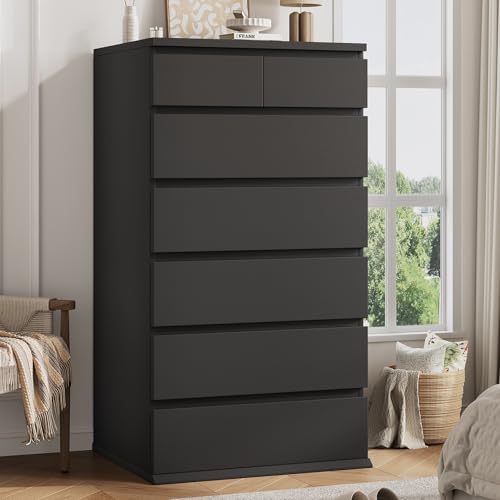
Tall Wood Dresser with Deep Drawers: The Complete Guide
Everything you need to know about choosing a tall wooden dresser with deep drawers — sizes, materials, drawer depth, organization, and room fit — so you can make a confident, well-informed decision.
A tall wood dresser with deep drawers is one of the most practical storage pieces you can add to a bedroom. It combines a compact footprint with generous vertical capacity, which makes it an excellent fit for rooms where floor space is limited but storage needs are high. Unlike a low, wide dresser that spreads across a wall, a tall dresser stacks storage upward and uses the height of the room efficiently.
If you are researching this category, you likely already know you want wood construction and deep drawers. The real questions are usually about which wood type to choose, how deep drawers actually measure, how tall is too tall, and how to organize such a dresser for everyday use. This guide answers those questions in detail so you can move from research to a confident purchase.
For readers still comparing broad categories, our overview of tall and wide dressers for bedroom layouts can help you decide whether vertical or horizontal storage suits your room better. If you already know you want the vertical format, keep reading.
Why Choose a Tall Wood Dresser with Deep Drawers?
Deep drawers change how a dresser works in daily life. A shallow drawer is fine for folded shirts and small accessories, but deep drawers can hold bulkier items such as sweaters, jeans, bedding, and seasonal clothing without jamming. When you combine deep drawers with a tall frame, you get a storage tower that holds a surprising amount of volume in a footprint of roughly two to three feet in width.
Wood construction matters here as well. A tall dresser carries more weight and experiences more torque when drawers are pulled open, especially the lower drawers that may hold heavy items. Solid wood and well-engineered wood composites provide the structural rigidity that tall, deep-drawer designs need. This is why the combination of tall height, deep drawers, and wood construction is so popular among buyers who want a long-term storage solution rather than a short-lived piece.
Key Advantages at a Glance
- Compact floor footprint with high vertical storage capacity
- Deep drawers hold bulky clothing, bedding, and seasonal items
- Wood construction supports the weight of loaded deep drawers
- Fits well in small bedrooms, closets, and studio apartments
- Vertical format leaves wall space for mirrors, art, or lighting
Choosing the Right Wood for a Tall Dresser
The wood species affects durability, weight, grain appearance, and how the dresser ages. A tall dresser with deep drawers should be built from a wood that can handle sustained load without warping. Here is how the common options compare.
- Oak: Dense, hard, and highly durable. Oak has a pronounced grain and works well for heavy-use dressers. It is a strong choice for a tall frame with deep, load-bearing drawers.
- Walnut: A premium hardwood with rich color and fine grain. Walnut is stable and strong, and it often appears in high-end tier dressers where the finish is part of the appeal. Our guide to a walnut wood dresser explores this material in depth.
- Pine: Softer and more prone to denting, but it has a warm, casual look. Pine is common in entry-level and mid-range pieces. A solid pine dresser can work well in low-traffic rooms but may need more care in a tall, heavily loaded configuration.
- Maple and birch: Hard and fine-grained, often used for painted or natural finishes. These species offer good durability without the strong grain of oak.
- Engineered wood with wood veneer: Stable and uniform, often used for the sides and back panels of tall dressers. Solid wood is typically reserved for the frame, drawer fronts, and structural members.
For buyers who want the most robust option, look for a high-quality solid wood dresser where the drawer boxes, runners, and frame are all solid wood rather than particleboard. This matters more in a tall dresser because the bottom drawers bear the most weight and stress.
Understanding Drawer Depth: What "Deep" Really Means
Drawer depth is measured from the front of the drawer box to the back. In the furniture industry, a standard dresser drawer is often around 12 to 14 inches deep, while a deep drawer typically measures 16 inches or more. Some tall dressers with deep drawers reach 18 to 20 inches of interior depth, which is enough to store folded sweaters in stacks or a full set of bedding.
There are a few practical points to keep in mind when evaluating deep drawers:
- Exterior vs. interior depth: The exterior drawer front may be 18 inches, but the interior box might be shorter. Always check interior dimensions if the listing provides them.
- Drawer extension: Deep drawers that only pull out partway are frustrating. Full-extension metal runners let you reach the back of the drawer easily. This is one of the clearest differences between entry-level and mid-range or premium tiers.
- Weight rating: Deep drawers hold more weight. Look for drawer runners with a higher load rating and drawer boxes with reinforced joints, especially on the bottom drawers of a tall dresser.
- Depth vs. room clearance: A deep drawer needs more clearance when open. In a narrow room, make sure the open drawer does not block a doorway or walkway.
If deep storage is your main priority, our dedicated guide to a dresser with large deep drawers covers drawer box construction and capacity in more detail. For a comparison of the tall white alternative, see the tall white dresser with deep drawers guide.
Height and Size: How Tall Should Your Dresser Be?
A dresser is generally considered "tall" when it stands between 45 and 60 inches high. Tall dressers with deep drawers often cluster in the 48 to 56 inch range. The right height depends on who uses it and where it sits.
| Height Range | Typical Use | Best For |
|---|---|---|
| 40–45 inches | Low tall / transitional | Bedrooms where the dresser sits under a window or beside a bed |
| 45–50 inches | Standard tall | Most adult bedrooms; top surface remains easy to reach |
| 50–56 inches | Tall chest | Small rooms that need maximum vertical storage |
| 56–60+ inches | Extra-tall chest | Closets, dressing areas, and users who are comfortable reaching high |
Width is the other key dimension. Tall wood dressers with deep drawers typically range from 30 to 42 inches wide. A narrower width of 30 to 36 inches fits well in small bedrooms and along short walls. If you need a slimmer profile for a closet, a tall skinny dresser for closet is a better match than a standard-width tall dresser.
Depth of the overall piece is usually 17 to 20 inches. Make sure this fits your room layout and leaves enough walking space. In tight bedrooms, a shallow depth dresser for small spaces may be a better choice if deep drawers are not essential.
Drawer Count and Configuration
Most tall wood dressers with deep drawers use four to six drawers. A common layout is four large drawers stacked vertically, or a five-drawer setup with one smaller top drawer for accessories and four deep drawers below. Fewer, larger drawers generally mean more usable depth per drawer, while more drawers add separation for different item types.
- 4-drawer tall dresser: Maximum depth per drawer, ideal for bulky clothing and bedding.
- 5-drawer tall dresser: A balanced layout with a shallow top drawer and deep lower drawers.
- 6-drawer tall dresser: More separation, useful for couples sharing a dresser.
If you prefer a wider piece with a similar drawer count, a six drawer dresser in a low, wide format may suit a larger bedroom. For pure vertical storage, the tall format remains the most space-efficient.
Construction Details That Matter
Two tall dressers can look similar in photos but perform very differently over time. Pay attention to these construction details when comparing options:
- Drawer joints: Dovetail joints are the strongest and most durable. Box joints and stapled construction are common at entry level.
- Drawer runners: Metal ball-bearing slides with full extension are the most user-friendly. Wood-on-wood runners are traditional but require waxing and do not extend fully.
- Anti-tip hardware: Tall dressers must be anchored to the wall. Look for included anti-tip straps and follow installation instructions carefully.
- Back panel: A rigid back panel adds stability to a tall frame. Thin, stapled back panels are a sign of lighter construction.
- Finish: A sealed, low-VOC finish protects the wood and is easier to clean. Natural oil finishes look beautiful but need periodic maintenance.
Hardware is easy to overlook but affects daily use. Smooth-gliding runners and comfortable pulls make a deep drawer much easier to operate. If you plan to update the look later, our guide to pull handles for dresser drawers explains how to choose replacements that fit standard hole spacing.
How a Tall Dresser Fits Different Rooms
The vertical format of a tall dresser makes it adaptable across room types. Here is how it performs in common settings:
- Small bedrooms: The compact footprint frees up floor space for a bed and nightstand. Place the dresser on the wall opposite the bed or in a corner.
- Primary bedrooms: A tall dresser can serve as the main clothing storage if the closet is small, or as a secondary piece for bedding and off-season items.
- Closets and dressing areas: A tall skinny dresser fits into walk-in closets and provides drawer storage without taking up hanging space.
- Guest rooms: A tall wood dresser gives guests a dedicated place to unpack, which is more comfortable than living out of a suitcase.
- Nurseries: A tall dresser with deep drawers can hold baby clothes and bedding, but it must be anchored securely. Our nursery dresser guide covers safety considerations in detail.
If you are furnishing a small apartment, the dorm dresser guide offers compact storage ideas that pair well with a tall dresser. For a broader look at vertical storage, see our tall bedroom cabinet with drawers overview.
Organizing Deep Drawers Effectively
Deep drawers can become disorganized if you simply pile items inside. A few simple habits keep them functional:
- Use dividers: Drawer dividers keep folded stacks upright and prevent the "everything slides forward" problem that deep drawers are prone to.
- File-fold instead of stacking: File folding lets you see every item at a glance and avoids digging through layers.
- Assign zones: Use the top drawer for small items, middle drawers for everyday clothing, and bottom drawers for bulky or seasonal items.
- Rotate seasonally: Move off-season clothing to the bottom or to under-bed storage, and keep current-season items in the most accessible drawers.
- Keep the back accessible: Full-extension runners make the back of a deep drawer usable. If your drawers are not full-extension, store less-frequently used items toward the back.
Our dresser with hidden jewelry storage guide shows how a dedicated small compartment can keep valuables organized inside a larger drawer layout.
Tall Wood Dresser vs. Other Storage Formats
It helps to compare the tall wood dresser with deep drawers against nearby alternatives before committing.
| Format | Footprint | Drawer Depth | Best For |
|---|---|---|---|
| Tall wood dresser with deep drawers | Small | Deep | Small rooms needing high capacity |
| Wide low dresser | Large | Standard to deep | Large bedrooms with open wall space |
| Tall skinny dresser | Very small | Standard | Closets and narrow gaps |
| Chest of drawers with shelves | Medium | Mixed | Mixed storage of folded items and display |
If you want mixed storage with open shelving, a chest of drawers with shelves is worth considering. If floor space is extremely limited, a tall skinny dresser may be a better fit than a standard-width tall dresser.
Frequently Asked Questions
How deep should drawers be in a tall wood dresser?
Look for interior drawer depth of at least 16 inches to qualify as "deep." Many tall dressers with deep drawers offer 18 to 20 inches of interior depth, which comfortably holds folded sweaters, jeans, and bedding. Always check interior dimensions rather than relying on the exterior drawer front measurement.
Is a tall dresser safe for a bedroom?
Yes, as long as it is anchored to the wall. Tall dressers have a higher center of gravity, and an open deep drawer shifts weight forward. Use the included anti-tip strap and secure the dresser to a wall stud. Avoid placing heavy items in the top drawer and never let children climb on the dresser.
What is the best wood for a tall dresser with deep drawers?
Oak, walnut, and maple are the most durable choices for a tall dresser with deep drawers. These hardwoods resist warping and handle the weight of loaded deep drawers well. Pine is a softer option that suits lighter use. Engineered wood with solid wood drawer fronts is common at entry level and mid-range tiers.
How many drawers does a tall dresser usually have?
Most tall dressers have four to six drawers. A four-drawer layout maximizes depth per drawer, while a five- or six-drawer layout adds separation for different item types. Choose based on whether you prioritize capacity per drawer or organization across categories.
Can a tall wood dresser with deep drawers replace a closet?
For a single person with a moderate wardrobe, a tall dresser with four to six deep drawers can replace a small closet, especially if it includes a hanging area nearby. For couples or larger wardrobes, it works best as a supplement to closet space rather than a full replacement.
Do deep drawers need full-extension runners?
Full-extension runners are strongly recommended for deep drawers. Without them, you can only reach the front portion of the drawer, and the back space becomes difficult to use. Full-extension metal slides are standard on mid-range and premium tier dressers and are one of the clearest indicators of better build quality.
Ready to compare options? Browse our recommended tall wood dressers with deep drawers below and check current availability for the models that fit your space.