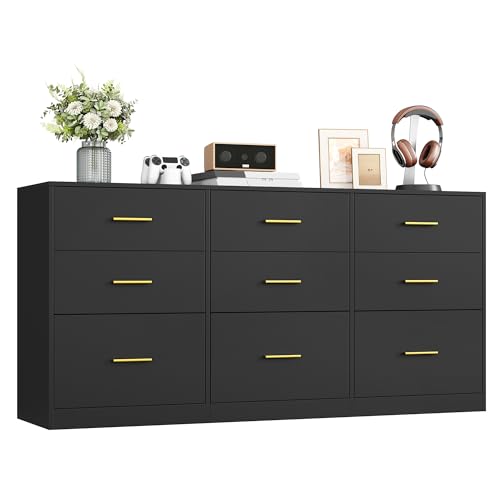
9 Drawer Dressers: The Complete Storage Guide
If you need serious bedroom storage without sacrificing style, a 9 drawer dresser is one of the most capable configurations available. This guide breaks down dimensions, drawer layouts, materials, and top-tier options so you can choose with confidence.
EXPLORE TOP PICKSQuick Answer: A 9 drawer dresser typically measures 60–72 inches wide, 36–44 inches tall, and 18–20 inches deep, offering roughly 30–40% more usable storage than a 6 drawer model. It suits master bedrooms, guest rooms, and shared spaces where clothing volume is high. Look for solid wood construction, full-extension drawer glides, and a balanced layout of wide and narrow drawers.
What's Inside This Guide
What Is a 9 Drawer Dresser?
A 9 drawer dresser is a large-capacity storage piece configured with nine individual drawers, usually arranged in three columns of three or a mix of wide lower drawers and narrower upper drawers. Unlike a traditional 9 drawer chest of drawers, which tends to be taller and narrower, a 9 drawer dresser balances width and height to create a broad, furniture-grade anchor piece for the bedroom.
These dressers are popular in master suites, guest rooms, and family homes where multiple people share storage space. The extra drawers allow for clear categorization: one column for tops, one for bottoms, one for accessories and delicates. That structure makes a nine-drawer unit far more efficient than cramming the same volume into fewer, deeper drawers.
If you are comparing configurations, it helps to understand where 9 drawers sit in the broader range. A 6 drawer dresser is the standard bedroom workhorse, while an 8 drawer dresser adds a modest step up. The 9 drawer format is the largest common residential configuration before you move into specialized 9 drawer dresser wood statement pieces or commercial-grade storage.
Dimensions & Room Fit
Before choosing a model, measure your available wall space, walking clearance, and drawer pull-out depth. A 9 drawer dresser is a substantial piece, and it needs room to open fully without blocking doorways or bed access.
| Configuration | Typical Width | Typical Height | Typical Depth | Best For |
|---|---|---|---|---|
| Standard Wide | 60–66 in | 36–40 in | 18–20 in | Master bedrooms, large wall space |
| Extra Wide | 70–72 in | 36–42 in | 18–20 in | Shared rooms, high clothing volume |
| Tall Configuration | 40–48 in | 52–60 in | 18–20 in | Smaller footprints, vertical storage |
For a standard bedroom, plan for at least 36 inches of clearance in front of the dresser so drawers can open fully. If your room is tight, a tall configuration is a smarter choice than a wide lowboy. You can compare footprint options in our guides to the 60 inch dresser and the 70 inch dresser, both of which are common 9 drawer footprints.
Depth matters as much as width. Most dressers sit at 18–20 inches deep, but some premium models push toward 20 inches to accommodate deeper drawers. Allow for that when measuring against a bed or closet door.
Drawer Layouts Explained
Not all 9 drawer dressers are organized the same way. The layout has a major impact on how usable the piece feels day to day. There are three common configurations:
1. Three Columns of Three
This is the most common layout. Each column is roughly equal in width, which makes the dresser feel symmetrical and visually balanced. It works well for separating clothing by person or category. The trade-off is that each drawer is narrower, so bulky items like sweaters may need to be folded more compactly.
2. Two Wide Columns Plus a Narrow Column
This layout mixes wide and narrow drawers. The wide drawers handle folded clothing and linens, while the narrow column stores accessories, socks, or delicates. It is a practical choice for couples sharing a dresser.
3. Wide Bottom Drawers With Stacked Top Drawers
Some 9 drawer dressers use two or three full-width drawers at the bottom for bulky items, with six smaller drawers stacked above. This configuration maximizes usable volume and is often found on 9 drawer French provincial dresser designs and traditional styles.
Buying tip: Check whether the drawers are full-extension or three-quarter extension. Full-extension glides let you reach the back of the drawer easily, which matters far more on a deep 9 drawer unit than on a shallow nightstand.
Materials & Construction Quality
A 9 drawer dresser carries more weight and sees more daily use than a smaller unit, so construction quality matters more. Here is what to look for:
Solid Wood
Solid oak, walnut, maple, and mahogany are the most durable options. They resist warping, hold screws and glides firmly, and can be refinished if the surface wears. A solid wood 9 drawer dresser is a long-term investment piece. See our 9 drawer dresser wood guide for material-specific recommendations.
Engineered Wood With Veneer
MDF and particleboard cores with quality wood veneers are common in mid-range dressers. They can look excellent and perform well, but they are less resistant to moisture and heavy loads. Check that the drawer boxes are solid wood or at least plywood, not particleboard.
Drawer Glides and Joinery
Look for metal ball-bearing glides, dovetail or box joints on drawer boxes, and a finished back panel. These details separate durable construction from furniture that will sag or stick within a few years. On a nine-drawer unit, weak glides become obvious quickly because every drawer gets used regularly.
Finishes and Hardware
Painted finishes should be smooth and evenly applied. Natural wood finishes should show consistent grain. Hardware should feel solid, not hollow. If you plan to upgrade hardware later, check that the drawer fronts are thick enough to support new pulls.
Market Tiers: Entry-Level to Luxury
To compare 9 drawer dressers fairly, it helps to think in market tiers rather than absolute figures. Each tier reflects a different balance of materials, construction, and finish quality.
Entry-Level Tier
Engineered wood construction, basic metal glides, and simpler finishes. Suitable for guest rooms, rentals, or short-term use where the dresser is not the centerpiece of the room.
Mid-Range Tier
Better veneers, solid wood drawer boxes, and smoother glides. A solid choice for daily use in a primary bedroom, with construction that holds up over several years.
Premium & Luxury Tier
Solid hardwood construction, dovetail joinery, full-extension soft-close glides, and refined finishes. These are long-term investment pieces designed to be refinished and passed down.
Within each tier, quality varies. A well-built mid-range dresser often outperforms a poorly made premium one. Focus on drawer construction, glide quality, and finish consistency rather than tier label alone. If you are weighing a 9 drawer model against a slightly smaller option, our comparison of 9 drawer dressers covers how the extra capacity changes the value equation.
How to Organize 9 Drawers Efficiently
Nine drawers is enough storage to keep an entire wardrobe organized, but only if you assign each drawer a clear purpose. Here is a practical system:
- Top row: Accessories, socks, underwear, and small items. Use drawer dividers to keep everything visible.
- Middle row: T-shirts, folded tops, and knitwear. Fold vertically so you can see every item at a glance.
- Bottom row: Jeans, bulky sweaters, and seasonal items. These drawers can handle heavier loads.
- Narrow column (if present): Delicates, sleepwear, or a dedicated drawer for each family member.
Rotate seasonal clothing so that off-season items move to the bottom drawers and everyday pieces stay at eye level. If you share the dresser, assign columns rather than rows, since columns are easier to keep separate. For more detailed systems, see our guide to drawer organization ideas.
One advantage of a 9 drawer dresser is that you can dedicate an entire drawer to items that usually clutter the top surface, such as chargers, books, or jewelry. That keeps the dresser top clear and the room feeling calmer.
Who Should Buy a 9 Drawer Dresser?
A 9 drawer dresser is the right choice if any of the following applies to you:
- You share a bedroom. Two people need separate storage zones, and nine drawers make that easy.
- You have a large wardrobe. If your clothing volume regularly exceeds what a 6 drawer dresser can hold, the extra capacity pays off daily.
- You want to eliminate a second storage piece. A 9 drawer dresser can replace a smaller chest plus a dresser, freeing up floor space.
- You are furnishing a guest room or rental property. Higher capacity means fewer complaints about storage from guests or tenants.
If your bedroom is small or your clothing volume is modest, a 7 drawer dresser or a 5 drawer dresser may be a better fit. A 9 drawer unit only makes sense when you can give it the wall space and clearance it needs.
For nursery or child-focused rooms, the same capacity logic applies, but safety anchoring becomes essential. Always secure a tall or wide dresser to the wall, especially in homes with young children.
Ready to Compare 9 Drawer Dressers?
Browse our curated selection of 9 drawer dressers across entry-level, mid-range, and premium tiers. Each pick is chosen for drawer construction, glide quality, and long-term durability.
VIEW RECOMMENDED OPTIONSRecommended 9 Drawer Dressers
The selection below covers a range of configurations and market tiers. Use the tier descriptors to match each option to your needs, then check availability and full specifications on the retailer page.