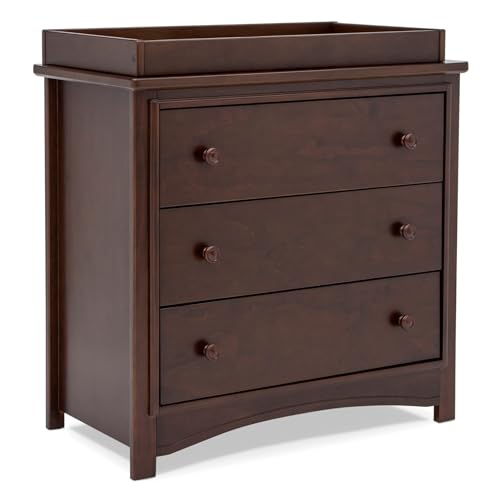
Changing Table Dressers: The Complete Buying Guide
A changing table dresser combines a safe diaper-changing surface with practical nursery storage in one space-saving piece. This guide explains how these combo units work, what safety features matter most, and how to choose the right one for your baby's room.
Explore Top PicksWhy parents choose a changing table dresser: Instead of buying a separate changing table and dresser, a combo unit gives you a dedicated changing station on top and drawers below for diapers, wipes, clothes, and bedding. It saves floor space, keeps essentials within arm's reach, and extends the furniture's usefulness long after the diaper years end.
What Is a Changing Table Dresser?
A changing table dresser — also called a changing dresser or changing table dresser combo — is a dresser designed or adapted to hold a changing pad at a comfortable standing height. Many models include a removable topper or contoured tray that secures the pad and keeps it from sliding. Once your child outgrows diapers, you simply remove the topper and the piece functions as a standard nursery dresser.
There are three common configurations:
- Integrated combo units — the changing surface is built into the dresser top with raised sides or a recessed area.
- Removable toppers — a separate tray or frame sits on top of a standard dresser and can be lifted off later. See changing table toppers for dressers.
- Convertible dressers — sold as a dresser with a matching changing kit that attaches securely to the back and sides.
If you already own a sturdy dresser, you can add a changing pad for dresser or a changing table tray for dresser to create a changing station without buying new furniture. Just confirm the dresser is stable and the top surface is at a safe height.
Benefits of a Changing Table Dresser Combo
Space efficiency
One footprint serves two jobs — changing surface and clothing storage — which matters in small nurseries and shared bedrooms.
Everything in reach
Drawers directly below the pad keep diapers, wipes, and fresh outfits within arm's reach during changes.
Long-term use
After the diaper stage, remove the topper and the unit becomes a regular dresser that grows with your child.
Fewer purchases
Buying one combo unit instead of two separate pieces simplifies planning and reduces furniture clutter.
Consistent style
A single piece keeps the nursery visually cohesive, especially in coordinated collections.
Easy conversion
Most toppers detach without tools, so the transition to a standard dresser takes minutes.
Safety Features to Look For
Safety is the single most important factor when choosing a changing dresser. A fall from a changing surface can cause serious injury, so prioritize these features:
- Anti-tip strap or wall anchor — every dresser should be secured to the wall. This is non-negotiable, especially in a nursery.
- Contoured changing pad with safety belt — a pad with raised edges and a strap helps keep a wriggling baby in place.
- Raised sides or a recessed top — a topper with barriers on at least three sides reduces roll-off risk.
- Sturdy, stable base — check that the unit does not wobble and that drawers do not pull open too easily.
- Non-toxic finishes — look for low-VOC or water-based finishes, particularly in a room where a baby sleeps.
- Smooth, rounded edges — sharp corners at standing height are a hazard during busy changes.
Place the changing surface so the pad's highest point is below your elbow, and never leave a baby unattended on any elevated surface — even for a moment. For more on matching a pad to your furniture, see changing pad to put on top of dresser and changing pad holder for dresser.
How to Choose the Right Changing Table Dresser
Work through these factors before you buy:
- Measure your space. Confirm the dresser width, depth, and height fit your nursery layout and leave clearance for doors and walkways.
- Check the changing height. The pad surface should sit at roughly waist height for the caregiver doing most changes. Too low strains your back; too high is unsafe.
- Count the drawers. A changing table drawers layout with 3–6 drawers usually covers diapers, wipes, clothes, and bedding. Deep bottom drawers help with larger items.
- Decide on integrated vs. topper. Integrated units look cleaner; toppers let you reuse an existing dresser. See changing table and dresser in one if you want a single-piece solution.
- Consider the conversion plan. If you want the piece to last, choose a topper that removes cleanly and leaves a usable flat top.
- Verify the material. Solid wood and high-grade engineered wood with reinforced joinery last longer than thin particleboard. Check drawer slides and hardware quality.
Changing Table Dresser Types Compared
| Type | Best For | Key Consideration |
|---|---|---|
| Integrated combo unit | Parents who want a single, cohesive nursery piece from day one | Confirm the changing area is removable or converts cleanly later |
| Dresser with removable topper | Families who want long-term dresser use after the nursery stage | Topper must lock securely to the dresser top and sides |
| Convertible dresser + changing kit | Buyers who want flexibility to upgrade or move furniture later | Check kit compatibility with the exact dresser model |
| Standard dresser + aftermarket tray | Reusing an existing sturdy dresser | Verify dresser stability and add a wall anchor |
Popular Styles and Finishes
Changing table dressers come in finishes that match most nursery themes. White and soft neutrals remain the most popular because they suit both traditional and modern nurseries. Natural wood tones work well in warm, organic schemes, while two-tone designs add contrast. If you plan to keep the dresser through the toddler and school-age years, choose a finish that fits the room's long-term design rather than only the newborn phase.
For a coordinated nursery, pair the dresser with matching storage. Our guides on chest of drawers for children's room and changing table with drawers and shelves cover complementary options. If you prefer open storage, see changing table chest of drawers.
Organizing the Drawers Below the Changing Pad
The drawers under a changing station should mirror your change routine. A practical layout:
- Top drawer: diapers, wipes, rash cream, and a few burp cloths — everything you need mid-change.
- Second drawer: onesies, sleepers, and socks, folded upright so you can see them.
- Lower drawers: spare bedding, swaddles, and out-of-season clothing.
Drawer dividers keep small items from sliding around, and a washable liner protects the drawer base. For more detail, see our bureau drawer liners and dresser organization guide.
Changing Table Dresser vs. Related Options
Buyers often compare several adjacent categories. These short comparisons can help you decide:
- Combo vs. separate table and dresser: a combo saves space; separate pieces can be repositioned independently.
- Dresser + tray vs. dedicated changing table: a tray on a sturdy dresser gives you long-term use; a dedicated table is single-purpose.
- Combo vs. changing station on top of dresser: a changing station on top of dresser is a flexible add-on; a combo is more integrated.
If you are shopping secondhand, review changing table dresser for sale listings carefully and inspect hardware and stability before use. If you prefer a full set, see changing table dresser and changing table dressers for more collection options.
Care and Maintenance
Wipe the changing surface after every use with a mild, baby-safe cleaner. Avoid harsh abrasives that dull the finish. Check the wall anchor and drawer hardware every few weeks — babies grow quickly and start pulling on drawers earlier than expected. Keep the pad cover washable and rotate spare covers so one is always clean. In humid rooms, ventilate to prevent moisture damage to wood finishes.
Frequently Asked Questions
Can I use a regular dresser as a changing table?
Yes, if the dresser is stable, the top is at a safe height, and you add a contoured pad with a safety strap and a secure topper or tray. Always anchor the dresser to the wall and never leave a baby unattended.
How long will my baby use a changing table dresser?
Most families use the changing surface for roughly the first 18–30 months. After that, remove the topper and the unit becomes a standard dresser that can serve for years.
What height should the changing surface be?
The pad's top surface should sit near the caregiver's waist — typically around 36–40 inches from the floor for an average-height adult. Always test the height with the actual pad in place.
Do I need a wall anchor?
Yes. Every dresser in a nursery should be anchored to the wall, with or without a changing top. Anti-tip straps are inexpensive and prevent serious injuries.
Can I convert the dresser back after the nursery stage?
Most combo units and toppers are designed to be removed. Check the product details for a removable topper, and confirm the dresser top is flat and finished underneath.
Ready to Compare Models?
Browse our recommended changing table dressers and storage options below, then check availability and compare features.
View Recommendations