
Soft Close Dresser: The Complete Guide to Quiet, Smooth Drawers
If you have ever been woken by a drawer slamming shut, you already understand why soft close hardware matters. This guide explains how soft close dressers work, what separates a good mechanism from a mediocre one, and how to choose a quiet dresser that fits your bedroom, nursery, or guest room.
What Is a Soft Close Dresser?
A soft close dresser is a dresser equipped with drawer slides or hinges that include a damping mechanism. When you push a drawer closed, the mechanism engages near the end of the travel and gently pulls the drawer the rest of the way, preventing it from slamming against the frame. The result is a quieter, more controlled closing motion and less wear on the drawer box and cabinet structure.
Soft close hardware is not a single product. It appears in several forms: integrated drawer slides with built-in dampers, add-on soft close adapters for existing slides, and soft close hinges used on doors of armoires and wardrobes. On a dresser, the relevant component is almost always the drawer slide, since dressers are defined by their drawers rather than doors.
The term is sometimes confused with "self close," which describes a mechanism that pulls a drawer shut but does not necessarily dampen the final motion. Soft close specifically implies the dampened, gentle final travel that prevents impact. When shopping, look for explicit language about damping or soft close mechanisms rather than assuming that any self-closing drawer is soft close.
Quick definition: A soft close dresser uses dampened drawer slides that catch the drawer near the end of its travel and ease it shut, reducing noise and impact wear.
How Soft Close Drawer Mechanisms Work
Most soft close drawer slides use one of two approaches: a fluid damper or a mechanical spring-and-cam system. In a fluid damper, a small cylinder filled with a viscous fluid resists rapid motion. As the drawer closes, the damper slows the final few centimeters of travel. In a mechanical system, a spring-loaded cam engages a catch on the drawer and pulls it closed at a controlled rate.
Both approaches rely on the drawer being pushed most of the way closed by the user. The soft close mechanism handles the final segment. This is why soft close drawers still require a deliberate push; they are not automatic closers that pull a fully open drawer shut. The mechanism is designed to finish the motion, not initiate it.
The Anatomy of a Soft Close Drawer Slide
- Drawer member: the rail attached to the drawer box.
- Cabinet member: the rail attached to the dresser frame.
- Intermediate member: the middle rail in a three-fold slide that extends the drawer fully.
- Damper or cam: the component that engages near the end of travel and controls the closing speed.
- Release trigger: a small lever or catch that disengages the soft close mechanism so the drawer can be removed.
Understanding these parts helps when troubleshooting. If a drawer stops soft closing, the damper or trigger is usually the culprit, not the entire slide. Many mechanisms can be reset or replaced without replacing the full slide assembly.
Key Benefits of Soft Close Drawers
Soft close hardware is more than a luxury detail. In daily use, it changes how a dresser feels and how long it lasts. The most commonly cited benefits include:
- Noise reduction: Drawers close quietly, which matters in shared bedrooms, nurseries, and homes with light sleepers.
- Less wear and tear: Slamming accelerates wear on drawer boxes, slides, and the dresser frame. Soft close reduces impact stress.
- Finger protection: Children and adults are less likely to catch fingers in a drawer that eases shut rather than snaps.
- Better perceived quality: A smooth, damped close is one of the tactile signals that separates a well-built dresser from a basic one.
- Drawer retention: Many soft close slides also hold the drawer closed more securely, reducing the chance of a drawer drifting open.
These benefits are most pronounced in high-use dressers: the primary bedroom dresser, a nursery chest, and any dresser used daily by multiple people. In a guest room used occasionally, the benefit is real but less critical.
Types of Soft Close Hardware
Not all soft close systems are equal. The hardware category affects durability, load capacity, and how the drawer feels in use. The main types you will encounter are:
| Hardware Type | Best For | Notes |
|---|---|---|
| Ball-bearing soft close slides | Most dressers | Smooth travel, good load capacity, widely available |
| Undermount soft close slides | Premium dressers | Hidden beneath the drawer, clean look, often smoother |
| Side-mount soft close slides | Entry-level and mid-range dressers | Visible on the drawer side, easier to retrofit |
| Soft close adapters | Retrofit projects | Add-on devices for existing slides, compatibility varies |
| Soft close hinges | Armoire and wardrobe doors | Relevant for dressers with doors rather than drawers |
Undermount slides are generally considered the top-tier option because they are hidden, tend to run smoother, and are less prone to collecting dust. Side-mount slides are more common in entry-level and mid-range dressers and are easier to inspect and service. For a deeper look at heavy-duty slide options, see the guide to 20-inch heavy-duty drawer slides and the 72-inch heavy-duty drawer slides for larger applications.
Quality Tiers: From Entry-Level to Premium
Soft close hardware appears across the full range of dresser quality, but the experience differs significantly by tier. The table below uses universal quality descriptors rather than any numeric or currency-based comparison.
| Tier | Typical Hardware | Best For |
|---|---|---|
| Entry-level | Basic side-mount soft close slides | Guest rooms, secondary bedrooms, light daily use |
| Mid-range | Improved ball-bearing slides with dampers | Primary bedrooms, family homes |
| Premium | Undermount soft close slides, tighter tolerances | High-use dressers, design-forward bedrooms |
| Luxury | Top-tier undermount systems, premium materials | Long-term investment pieces, custom furniture |
In practice, the gap between entry-level and mid-range soft close is often the most noticeable. Mid-range models typically offer smoother travel and more consistent damping than entry-level hardware. Premium and luxury tiers add refinement, hidden hardware, and tighter manufacturing tolerances, which translate into a more polished feel over years of use.
A well-specified mid-range soft close dresser is often the most balanced choice for a primary bedroom. It delivers the core benefit of quiet closing without the full premium of undermount systems.
How to Choose a Soft Close Dresser
Choosing a soft close dresser is mostly a process of matching size, drawer configuration, and build quality to your room and habits. The following checklist covers the decisions that matter most.
1. Confirm the Drawer Slide Type
Ask or check whether the dresser uses side-mount or undermount soft close slides. Undermount is the more refined option; side-mount is easier to inspect and service. If the listing does not specify, look for terms like "dampened," "self-closing with damper," or "soft close mechanism."
2. Match the Dresser Size to the Room
Measure the available wall space and the clearance needed for drawers to open. A dresser that fits the wall but blocks a doorway when drawers are open is still the wrong dresser. For narrow spaces, a 24-inch wide cabinet with drawers or an 8-inch wide cabinet with drawers can be a practical solution. For larger rooms, a 50-inch dresser or a 40 dresser may be a better fit.
3. Choose the Right Drawer Count
Drawer count should follow what you actually store. A 5-drawer chest of drawers in solid wood suits folded clothing and linens. A 9-drawer dresser offers more granular organization for shared use. Tall configurations such as a 24-inch tall chest of drawers or a 30-inch tall chest of drawers work well in compact footprints.
4. Check Load Capacity and Build
Soft close mechanisms are available in light-duty and heavy-duty versions. If you store dense items such as denim or books, prioritize dressers described as heavy-duty or reinforced. The heavy-duty dresser category is a useful starting point.
5. Consider Assembly and Delivery
Some soft close dressers ship fully assembled, while others require assembly. If assembly is a concern, look for fully assembled dressers or fully assembled chest of drawers options. If you prefer to assemble, check that the instructions include drawer slide alignment, since misalignment is the most common cause of a soft close mechanism that fails to engage.
6. Coordinate With the Rest of the Bedroom
If you are furnishing a full bedroom, a coordinated set reduces visual friction. Options include a 3-piece dresser set, a 3-piece dresser and nightstand set in black, or a 5-drawer dresser and nightstand set.
Materials and Build Quality
Soft close hardware is only as good as the drawer box it is attached to. A premium slide on a poorly constructed drawer will still feel inconsistent, because the drawer box flexes and the slide loses alignment. When evaluating a soft close dresser, look at both the hardware and the drawer construction.
Drawer Box Construction
- Dovetail joints: a sign of durable, traditional drawer construction.
- English dovetail vs. French dovetail: both are strong; English dovetail is often associated with higher-end construction.
- Stapled or nailed boxes: common in entry-level dressers; acceptable for light use but less durable over time.
- Drawer bottoms: a thicker bottom panel resists sagging under load, which helps soft close slides stay aligned.
Frame and Carcass
Solid wood and high-grade engineered wood both work well when properly constructed. The key is rigidity: a dresser frame that flexes will eventually cause drawer slides to bind, and a binding drawer will not close softly. Reinforced corners, a solid back panel, and a level base all contribute to consistent soft close performance.
For material-specific guidance, see the solid wood chest options such as the mahogany chest of drawers, the cedar dresser, and the maple dresser. Each material has different movement characteristics, which is why proper construction matters as much as the species.
Room-by-Room Recommendations
The ideal soft close dresser depends on where it will live. The recommendations below focus on configuration and use case rather than any numeric comparison.
Primary Bedroom
A primary bedroom dresser is used daily, so prioritize mid-range or premium soft close hardware, a drawer box with strong joinery, and a size that fits the wall without crowding. A large tall dresser or a light wood 6-drawer dresser are strong candidates. If the room is compact, a low dresser with drawers keeps sightlines open.
Nursery
Soft close is especially valuable in a nursery because it reduces noise during naps and protects small fingers. A small chest of drawers for nursery or a Montessori dresser supports independent access as the child grows. Pair it with a natural wood changing table dresser if you need a combined changing and storage surface.
Guest Room
Guest rooms see lighter use, so entry-level or mid-range soft close hardware is usually sufficient. A small chest of drawers or a single dresser fits most guest room footprints.
Closet and Walk-In
In a closet, soft close reduces noise and wear in a confined space. A dresser with hanging rod combines folded and hanging storage. For very tight closets, a shallow chest of drawers preserves aisle space.
Multi-Use and Living Spaces
When a dresser doubles as a media console or entryway storage, a bedroom TV stand dresser or a dresser table with mirror can serve both roles. Soft close is a meaningful upgrade in these high-traffic placements.
Can You Add Soft Close to an Existing Dresser?
In many cases, yes. Soft close adapters and replacement slides are available for retrofit projects. The feasibility depends on three factors: the drawer box dimensions, the existing slide type, and the clearance available for the new mechanism.
Side-mount slides are generally easier to retrofit because the mounting surfaces are accessible. Undermount retrofits are possible but require more precise alignment and often a specific slide model matched to the drawer box. If the existing drawer box is stapled or flimsy, retrofitting soft close hardware may not deliver the expected result, because the box itself will not hold alignment under load.
Retrofit Checklist
- Measure drawer box width, depth, and height precisely.
- Identify the existing slide type and mounting pattern.
- Check whether the drawer bottom is thick enough to support the new mechanism.
- Confirm that the dresser frame is square and the drawer opening is consistent.
- Test one drawer before committing to a full set.
If the existing dresser is a solid piece with good joinery, a retrofit can be a worthwhile investment. If the dresser is entry-level with stapled drawers, replacing the entire dresser with a mid-range soft close model is often the more practical path.
Maintenance and Troubleshooting
Soft close mechanisms are generally low-maintenance, but they do benefit from occasional attention. The most common issues are a drawer that no longer closes softly, a drawer that closes too slowly, and a drawer that does not stay closed.
Common Issues and Fixes
- Drawer no longer soft closes: check that the damper trigger is engaged. On many slides, the trigger can be reset by fully extending the drawer and pushing it closed firmly once.
- Drawer closes too slowly: the damper may be dirty or the slide may be misaligned. Clean the slide track and check alignment before replacing hardware.
- Drawer does not stay closed: inspect the slide for debris or wear, and confirm the dresser is level. An unlevel dresser can cause drawers to drift open.
- Squeaking or grinding: lubricate the slide with a dry lubricant appropriate for the slide material. Avoid heavy grease, which attracts dust.
Preventive Habits
- Do not overload drawers beyond the rated capacity of the slides.
- Keep the dresser level; re-level if the floor changes or the dresser is moved.
- Clean slide tracks periodically to remove dust and lint.
- Avoid slamming drawers even with soft close hardware, since the mechanism is designed to finish the motion, not absorb repeated impact.
Ready to Compare Soft Close Dressers?
Use the recommendations below to explore soft close dressers and related storage pieces. Each option is selected for drawer quality, build, and suitability for quiet bedrooms.
Explore Soft Close DressersFrequently Asked Questions
What does soft close mean on a dresser?
Soft close refers to a drawer mechanism that catches the drawer near the end of its travel and pulls it gently shut. This prevents slamming, reduces noise, and lowers impact wear on the drawer and frame.
Are soft close drawers worth it for a bedroom dresser?
For most households, yes. Soft close drawers reduce noise, protect the dresser from impact damage, and are especially valuable in shared bedrooms and nurseries. In guest rooms, the benefit is real but less critical.
Can I add soft close to an existing dresser?
In many cases, yes. Soft close adapters and replacement slides are available for retrofit. Compatibility depends on drawer box dimensions, the existing slide type, and available mounting clearance. Test one drawer before committing to a full set.
Do soft close dressers have a weight limit?
Every drawer slide has a rated load capacity. Soft close mechanisms are available across entry-level through heavy-duty tiers, so check the rated capacity for the specific slides used. Heavy-duty dressers are a better match for dense storage.
How long do soft close drawer mechanisms last?
Quality soft close slides from reputable manufacturers typically last many years of daily use. Lifespan depends on load, alignment, installation quality, and the tier of the hardware. Regular cleaning and avoiding overload extend service life.
What is the difference between soft close and self close?
Self close describes a mechanism that pulls a drawer shut but does not necessarily dampen the final motion. Soft close specifically implies a dampened final travel that prevents impact. Many modern dressers combine both, but the terms are not interchangeable.
Recommended Soft Close Dressers & Quiet Storage
⚠️ AFFILIATE DISCLOSURE: This website contains affiliate links. As an Amazon Associate, we earn from qualifying purchases. If you make a purchase through these links, we may receive a small commission at no additional cost to you. Read our full affiliate policy.

MorganBrig 57" Fluted Dresser, 9 Drawer Dresser for Bedroom, Light Walnut | Fluted 9 drawer dresser with curved corners, deep storage, hidden pulls, soft-close slides, FSC-certified wood, Light Walnut
Check price on Amazon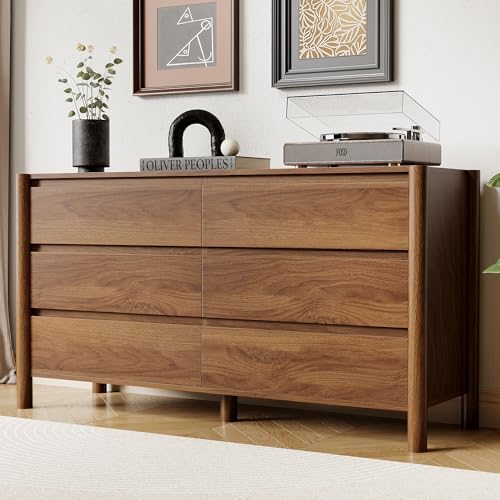
HOUROM Walnut Dresser for Bedroom,47"Wide 6 Drawer Mid Century Modern Chest | 47 inch wide dresser with 6 spacious drawers,solid wood legs and concealed handles.Large walnut storage design for bedrooms
Check price on Amazon
Furniway 63" Wide 9 Drawer Wood Dresser for Bedroom with Legs, Walnut | Mid Century Modern Chest of Drawers with Sturdy Wood Legs and Handless Design for Bedroom, Living Room or Hallway
Check price on Amazon
HOTALLOY 47” Fluted 6-Drawer Dresser for Bedroom, Light Oak | 6 Drawer Fluted Dresser With Curved Profile, Deep Drawers, Hidden Handles & Soft-Close Glides. Easy Assembly, Light Oak
Check price on Amazon
9 Drawer Dresser for Bedroom, 63" Wide Wooden Dresser,Natural Oak | 3.1" Rounded Legs, Heavy Duty Modern Wood Chest of Drawers, Large Storage Organizer for Living Room, Hallway
Check price on Amazon
SONGMICS Dresser for Bedroom, Wide Dresser with 5 Fabric Drawers | Chest of Drawers with Steel Frame, for Closet & Entryway, Ink Black and Ebony Black, BELLAH Collection ULGS322B01S
Check price on Amazon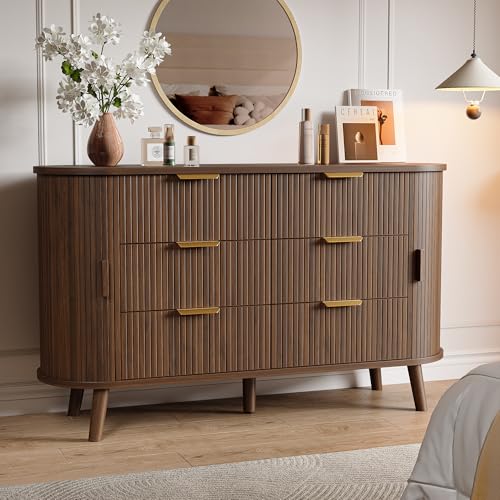
Decofy Fluted 6 Drawer Dresser, 55" Mid Century Modern Chest of Drawers | Sliding Door & Metal Handles, Curved Profile & Sturdy Legs, Wood TV Stand for Bedroom, Living Room (Walnut)
Check price on AmazonDisclaimer
The information provided on DresserAdvisor is for educational and informational purposes only. We are not furniture professionals, and our content should not replace professional advice from qualified furniture makers, interior designers, or safety experts. Some content may use AI assistance. Always check product safety standards and certifications before purchasing. If you do not agree, please do not use this website. Read the full disclaimer.