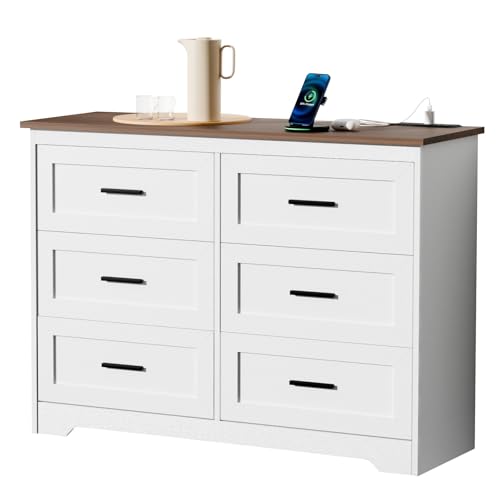
40 Dresser: The Complete Guide to 40-Inch Dressers
Everything you need to know about 40 dressers — the compact storage solution that fits small bedrooms, apartments, and tight spaces without sacrificing function or style.
Explore Recommended OptionsWhat is a 40 dresser? A 40 dresser is a dresser approximately 40 inches wide — a size category that bridges the gap between small-space dressers and full-size bedroom storage. It is wide enough to hold meaningful storage yet compact enough to fit into rooms where standard 60-inch dressers simply won't work.
If you are researching a 40 dresser before buying, this guide covers dimensions, drawer configurations, materials, placement strategies, and the trade-offs that matter most. By the end, you will know exactly what to look for and how to evaluate options in this category.
Why a 40-Inch Dresser Might Be Your Best Fit
The 40-inch width is one of the most practical sizes in bedroom furniture. It occupies roughly the same footprint as a small sofa armchair, yet it provides enough drawer space for a full wardrobe rotation for one person — or a shared rotation for a couple with disciplined storage habits.
- Small bedrooms and apartments: A 40 dresser fits along walls where larger pieces would block walking paths or closet doors.
- Guest rooms and spare bedrooms: Provides ample storage without dominating a room used only occasionally.
- Nurseries and children's rooms: The compact width leaves room for cribs, changing tables, and play areas while still offering practical drawer space.
- Pairs with other storage: A 40 dresser works well as a secondary piece alongside a larger wardrobe, armoire, or closet system.
- Entryways and hallways: Some 40-inch dressers double as console storage in wide hallways or entry areas.
40 Dresser Dimensions and Drawer Configurations
While the width is fixed at roughly 40 inches, the height, depth, and drawer count vary significantly. Understanding these variations is essential because two 40 dressers can serve very different storage needs.
| Configuration | Typical Height | Typical Depth | Drawer Count | Best For |
|---|---|---|---|---|
| Low 40 dresser | 28–32 in | 16–18 in | 3–4 | Under windows, as a media console, small rooms |
| Standard 40 dresser | 32–36 in | 18–20 in | 4–6 | General bedroom storage, guest rooms |
| Tall 40 dresser | 40–50 in | 16–18 in | 5–6 | Narrow floor space, vertical storage needs |
| Extra-tall 40 dresser | 50–56 in | 16–18 in | 6–8 | Very tight footprints, maximum vertical use |
For rooms with narrow walking paths, a tall 40 dresser is often the smarter choice because it reduces the footprint while maintaining storage capacity. For rooms with low windows or sloped ceilings, a low 40 dresser keeps sightlines open. If you need a taller option, browse large tall dresser styles or compare with a 30 inch tall chest of drawers for even more vertical storage.
Materials and Build Quality: What to Look For
The material determines durability, weight, and how well the dresser holds up over years of daily use. In the 40 dresser category, quality varies widely — from engineered wood with thin veneers to solid hardwood construction.
Solid Hardwood
Oak, maple, walnut, and mahogany dressers offer the best long-term investment. Look for dovetail drawer joints and solid wood drawer boxes. These pieces can be refinished and often become family heirlooms.
Explore solid oak dresser with mirror or maple dresser options.
Engineered Wood with Veneer
Plywood cores with quality veneers offer a strong mid-range option. Avoid particleboard cores with thin paper veneers — they are prone to swelling and peeling in humid environments.
Many light wood 6 drawer dresser models use this construction.
Metal and Mixed Materials
Steel and metal dressers suit industrial and modern interiors. They are highly durable but offer less flexibility in sizing and finishes. Rattan and bamboo options work well for coastal and bohemian styles.
Build quality checkpoint: Regardless of material, check the drawer glides. A mid-range dresser with quality side-mounted ball-bearing slides will outperform a high-end dresser with poorly aligned wooden runners. Soft-close mechanisms are a strong indicator of overall build care.
How to Place a 40 Dresser in Your Room
Placement matters as much as the dresser itself. A 40-inch dresser gives you flexibility that larger pieces do not.
Along the Bedroom Wall
The classic placement: centered on an empty wall or offset toward a corner. Leave at least 24 inches of clearance in front of the drawers for comfortable opening. If the wall is long, pair the dresser with a mirror or artwork to balance the visual weight.
As a Nightstand Alternative
In compact bedrooms, a 40 dresser can sit beside the bed in place of a nightstand, providing both bedside surface area and full clothing storage. This works especially well with low 40 dressers under 32 inches tall.
Inside or Beside a Closet
For walk-in closets with limited shelving, a 40 dresser can serve as the primary folded-clothing storage. Choose a model with a shallow depth (16 inches) to preserve aisle width. Learn more about dresser with hanging rod combinations.
In a Nursery or Kids' Room
A 40 dresser fits comfortably alongside a crib without crowding the room. Anchor it to the wall and choose a model with rounded edges and soft-close drawers for safety. See small chest of drawers for nursery options.
Maximizing Storage Inside a 40 Dresser
A 40 dresser has less total volume than a full-size dresser, so drawer organization becomes more important. The goal is to use every inch without overstuffing drawers, which strains glides and accelerates wear.
- Use drawer dividers: Dividers keep folded clothes upright and visible, reducing the tendency to pile items and waste vertical space.
- Assign drawers by category: Top drawers for small items (socks, underwear, accessories); middle drawers for shirts and folded tops; bottom drawers for bulky items like jeans and sweaters.
- Rotate seasonally: Store off-season clothing elsewhere to keep the 40 dresser focused on current wardrobe needs.
- Consider shallow drawers for accessories: A 40 dresser with one or two shallow top drawers is ideal for jewelry, belts, and small accessories.
For a deeper dive into drawer layout strategy, see the dresser table with mirror guide for combined storage and vanity setups.
40 Dresser vs. Other Dresser Sizes
Understanding how a 40 dresser compares to neighboring size categories helps you confirm whether it is the right choice before you commit.
| Size Category | Typical Width | Storage Capacity | Best Room Size |
|---|---|---|---|
| Small dresser | 24–32 in | Limited — 3–4 drawers | Very small bedrooms, dorm rooms |
| 40 dresser | 38–42 in | Moderate — 3–6 drawers | Small to medium bedrooms, apartments |
| 50 dresser | 48–52 in | Generous — 5–8 drawers | Standard bedrooms, shared rooms |
| 60+ dresser | 60–72 in | Extensive — 6–12 drawers | Large bedrooms, master suites |
If you are weighing a 40 dresser against a slightly wider option, review the 50 inch dresser guide for a direct comparison of storage capacity and room fit. For very tight spaces, a 24 inch wide cabinet with drawers may be a better fit.
40 Dresser Buying Checklist
Before purchasing a 40 dresser, run through this checklist to avoid common mistakes:
- Measure twice: Confirm the width of your intended wall space, including baseboard and outlet clearances.
- Check drawer depth: Deep drawers (18–20 inches) hold bulkier items; shallow drawers (14–16 inches) suit folded tops and accessories.
- Verify drawer extension: Full-extension glides allow access to the entire drawer, which matters more in a compact dresser.
- Test stability: Tall 40 dressers should include anti-tip hardware. Always anchor to the wall in homes with children or pets.
- Consider assembly: Some 40 dressers ship flat-packed. If assembly is not your preference, look for pre-assembled options.
- Match your decor: A 40 dresser is prominent enough to influence the room's style. Choose a finish and hardware that aligns with your existing palette.
Frequently Asked Questions About 40 Dressers
What is a 40 dresser?
A 40 dresser refers to a dresser approximately 40 inches wide. This size is popular for small bedrooms, apartments, and tight spaces where a full-size dresser would be too large. The 40-inch width offers a practical middle ground between compact and full-size storage.
How many drawers does a 40-inch dresser typically have?
Most 40-inch dressers feature between 3 and 6 drawers, depending on the height and drawer configuration. Taller models often include more drawers, while lower models offer wider, deeper drawers. The drawer count affects how you organize your clothing and accessories.
Is a 40-inch dresser big enough for two people?
A 40-inch dresser can work for two people if supplemented with closet space or additional storage. For couples with extensive wardrobes, consider a larger model or pair a 40-inch dresser with a chest of drawers to expand capacity without widening the footprint.
What materials are best for a 40 dresser?
Solid wood options such as oak, maple, and pine offer the best durability and longevity. Engineered wood with quality veneers provides a more accessible entry-level option, while metal dressers suit industrial and modern decors. For long-term use, prioritize dovetail joints and full-extension glides.
Can a 40 dresser be used outside the bedroom?
Yes. A 40 dresser works well in hallways, entryways, living rooms, and home offices as a storage console. Choose a low-profile model with a clean finish for multi-purpose use, and consider a low dresser with drawers for spaces where surface area matters.