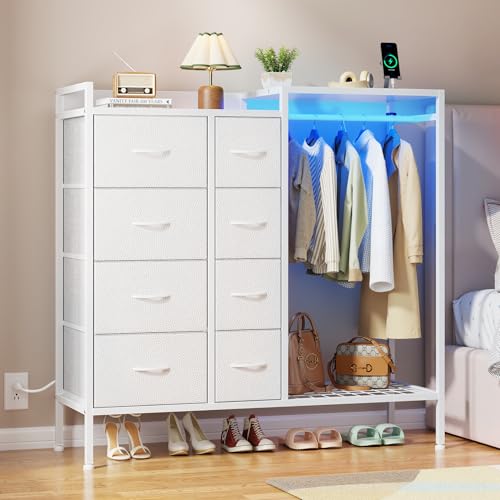
Dresser With Hanging Rod: The Complete Buying Guide
Maximize your bedroom storage with a combination dresser that offers both folded drawer space and a vertical hanging section. Learn everything you need to choose the right one.
START EXPLORINGWhy a dresser with hanging rod? A dresser with a hanging rod — sometimes called a combination dresser — merges two essential bedroom storage functions into one compact footprint. It is an excellent solution for small bedrooms, apartments, guest rooms, and anyone who wants to reduce furniture clutter without sacrificing organization.
What Is a Dresser With Hanging Rod?
A dresser with hanging rod is a hybrid furniture piece that combines a traditional drawer bank with a vertical hanging compartment. The lower or side section features drawers for folded clothing, while the upper or adjacent section includes a rod for hanging shirts, dresses, jackets, and other garments. Some models include additional shelves above or below the rod for accessories, shoes, or folded items.
This type of furniture is particularly valuable in rooms where closet space is limited. Instead of needing both a dresser and a separate wardrobe, you get the functionality of both in a single unit. Many models are designed with a tall, narrow profile that fits into tight corners or along short walls, making them a smart choice for compact bedroom layouts and multifunctional spaces.
Unlike a standard chest of drawers or a traditional wardrobe, the combination design forces you to think about how you organize your clothing. The drawer section typically handles everyday folded items such as t-shirts, socks, and undergarments, while the hanging rod accommodates wrinkle-prone garments. This natural division can actually improve your daily routine by keeping categories of clothing separate and easy to find.
Types of Dresser With Hanging Rod Configurations
Combination dressers come in several configurations. Understanding the differences will help you choose the one that best fits your room and lifestyle.
Side-by-Side Configuration
In this layout, the drawer bank occupies one side of the unit and the hanging section occupies the other. This is the most common design and works well in rooms with a wide, open wall. The hanging section is usually open or covered by a door. Side-by-side models tend to be wider and shorter, making them suitable for placement under a window or along a long wall.
Vertical Stacked Configuration
Here, the hanging rod sits above the drawer bank in a tall, narrow tower. This configuration is ideal for small rooms because it uses vertical space efficiently. The drawers are typically at waist height for easy access, while the hanging section rises above. Some models include a shelf between the two sections for additional storage or display.
Armoire-Style With Hanging Rod
An armoire-style combination dresser is a tall cabinet with doors that conceal both the hanging rod and the drawers. When the doors are closed, it looks like a traditional wardrobe; when open, it reveals a full storage system. These models offer the cleanest appearance and are excellent for bedrooms where you want to hide clothing from view. If you prefer a more furniture-like appearance, an armoire with shelves and drawers may also suit your needs.
Corner and Compact Models
Corner models are designed to fit into the often-wasted corner space of a bedroom. They typically feature a triangular or L-shaped footprint with a small hanging section and a few drawers. These are the most space-efficient options and are popular in studio apartments, dorm rooms, and guest bedrooms. For very tight spaces, a small chest of drawers paired with a wall-mounted rod can serve a similar purpose.
Size and Dimension Guide
Getting the size right is critical. A dresser with hanging rod that is too large will overwhelm a small room, while one that is too small will not provide enough storage. Consider both the floor footprint and the vertical height, especially if you have low ceilings or wall-mounted fixtures.
| Size Category | Typical Width | Typical Height | Best For |
|---|---|---|---|
| Compact / Corner | 24–36 inches | 48–60 inches | Small bedrooms, studios, guest rooms |
| Standard | 36–48 inches | 60–72 inches | Average bedrooms, apartments |
| Wide / Side-by-Side | 48–60 inches | 60–72 inches | Master bedrooms, larger rooms |
| Tall / Armoire-Style | 30–40 inches | 72–84 inches | Rooms with limited floor space but high ceilings |
The hanging section itself typically provides 18 to 30 inches of rod width and 40 to 60 inches of vertical drop. This is sufficient for shirts, blouses, and light dresses. For longer garments such as full-length coats or maxi dresses, you may need a dedicated tall wardrobe or a model with an extended hanging height. Always measure the rod height from the floor to ensure your longest garments will clear the bottom of the unit.
If you are comparing this to a standard drawer-only unit, note that a 30-inch tall chest of drawers offers more drawer depth but no hanging space. The combination unit trades some drawer volume for the versatility of hanging storage.
Materials and Construction Quality
The materials used in a dresser with hanging rod directly affect its durability, stability, and appearance. Because the hanging rod supports the weight of garments, the frame and rod mounting points must be robust.
Solid Wood
Solid wood models are the most durable and can last for decades. Hardwoods such as oak, maple, and walnut offer excellent strength and a premium feel. The hanging rod in a solid wood unit is often made of matching wood or heavy-duty metal. Solid wood is the top-tier choice for long-term investment, though it is heavier and requires more careful handling during assembly and moving.
Engineered Wood
Particle board, MDF, and plywood are common in mid-range and entry-level models. High-grade engineered wood with reinforced joinery can be very stable, especially when the hanging rod is anchored into a solid wood block or metal bracket. Look for models that use dowel-and-cam assembly with metal reinforcement at stress points. Avoid units where the rod is mounted only into thin particle board, as this can sag over time.
Metal Frames
Some modern and industrial-style combination dressers use metal frames with wood or fabric drawers. These are lightweight and often easy to assemble. The hanging rod is typically built into the metal frame, which provides excellent strength. Metal frames are a good choice for rental units, dorms, and rooms where furniture is moved frequently.
Rod and Hardware
The hanging rod should be at least 1 inch in diameter for wooden rods and 0.75 inches for metal rods. Check that the rod is supported at both ends with metal brackets or reinforced wood blocks. Drawer slides should be smooth and rated for the weight of your clothing. Soft-close slides are a nice upgrade in mid-range and premium models. For heavy-duty needs, look for heavy-duty dresser construction with reinforced drawer boxes.
Drawer Count and Layout
The drawer count in a dresser with hanging rod is typically lower than in a standalone dresser of the same width, because the hanging section takes up space. Most models offer 3 to 6 drawers. Think about how you will use the drawers and choose a layout that matches your folding and storage habits.
- 3-drawer models: Best for light storage or guest rooms. Often paired with a single hanging section. A 3-drawer pine chest of drawers offers a similar drawer count if you prefer a standalone piece.
- 4-drawer models: A balanced choice for individuals or couples with moderate clothing volume. The drawers are usually split between small and medium sizes.
- 5-drawer models: Offer more storage for folded clothing and accessories. Look for a mix of deep and shallow drawers to accommodate different item types. A 5-drawer chest of drawers in solid wood is a good reference for drawer depth and layout.
- 6-drawer models: The most generous drawer capacity in a combination unit. These are often wide side-by-side designs with a full hanging section. If you need maximum drawer space, a 6-tier storage drawer system can supplement the dresser.
Drawer depth matters as well. Shallow drawers (4–6 inches) are ideal for undergarments and accessories, while deeper drawers (8–10 inches) work better for sweaters and jeans. Some combination dressers include a mix of both, which is the most versatile layout.
Buying Guide: What to Check Before You Buy
Use this checklist to evaluate any dresser with hanging rod before making a decision. It covers the most important factors that affect usability, safety, and longevity.
Pre-Purchase Checklist
- Measure your space: Confirm the unit fits your wall, including clearance for doors and drawers to open fully.
- Check the hanging height: Ensure the rod height accommodates your longest garments without dragging.
- Verify rod weight capacity: Look for reinforced mounting and a rod rated for the weight of your clothing.
- Examine drawer slides: Smooth, sturdy slides are essential. Soft-close is a plus.
- Check stability and anti-tip hardware: Tall units must include wall-anchoring hardware for safety.
- Consider assembly complexity: Some models require two people and several hours to assemble. Fully assembled options exist but are heavier to move. A fully assembled dresser saves time but may limit delivery options.
- Review the finish: Check that the finish is smooth, consistent, and resistant to moisture and scratches.
- Plan your organization: Decide which items will go in drawers and which will hang. This helps you choose the right drawer count and sizes.
- Check return policy and warranty: Especially important for online purchases.
How to Organize a Dresser With Hanging Rod
Once you have your combination dresser, a thoughtful organization system will help you get the most from it. Here are practical tips to maximize storage and keep your bedroom clutter-free.
Divide by Category
Use the hanging section for wrinkle-prone items such as dress shirts, blouses, dresses, and jackets. Keep folded items like t-shirts, jeans, and sweaters in the drawers. This division reduces ironing and makes getting dressed faster.
Use the Right Hangers
Slim velvet hangers save space and prevent slipping. For heavy garments, use sturdy wooden or plastic hangers. Avoid wire hangers, which can deform shoulders and tangle easily.
Add Drawer Dividers
Drawer dividers and organizers keep socks, undergarments, and accessories neatly separated. This is especially helpful in combination dressers where drawer space is more limited than in a full-size dresser.
Rotate Seasonal Clothing
Store off-season clothing in under-bed bins or higher shelves, and keep only the current season in your combination dresser. This keeps the hanging rod and drawers from becoming overcrowded.
Use the Top Shelf
Many combination dressers include a shelf above the hanging rod. Use it for hats, bags, folded blankets, or decorative items. Baskets and bins on the top shelf can hide small items and keep the look tidy.
For more detailed drawer organization strategies, see our dresser organization guide approach, which covers folding techniques and space planning.
Dresser With Hanging Rod vs. Alternatives
Understanding how a combination dresser compares to other storage furniture will help you decide if it is the right fit for your bedroom.
| Furniture Type | Drawer Storage | Hanging Storage | Best For |
|---|---|---|---|
| Dresser With Hanging Rod | Moderate (3–6 drawers) | Yes (compact rod section) | Small rooms, apartments, guest rooms |
| Standard Dresser | High (5–9 drawers) | No | Rooms with separate closet space |
| Wardrobe / Armoire | Low to moderate | Yes (full-height rod) | Rooms needing maximum hanging space |
| Chest of Drawers | High (4–6 deep drawers) | No | Bedrooms with a separate closet |
If you have a large closet, a standalone 9-drawer dresser or a 5-drawer solid wood chest may provide more drawer capacity. But if closet space is limited, the combination dresser is the more efficient choice. For rooms where hanging space is the priority, a full wardrobe or an armoire with shelves and drawers may be better.
Ready to Find Your Perfect Combination Dresser?
Explore our curated selection of dressers with hanging rods and compare features, configurations, and storage capacity to find the right fit for your bedroom.
VIEW RECOMMENDED MODELSFrequently Asked Questions
A dresser with hanging rod is a combination furniture piece that merges drawer storage with a vertical hanging section, allowing you to store folded and hanging clothes in one compact unit. It is also called a combination dresser or a dresser with wardrobe space.
The hanging section typically ranges from 18 to 30 inches in width and 40 to 60 inches in height, depending on the overall unit size. This is enough for shirts, dresses, and light jackets. For longer garments, check the rod height carefully.
Yes, it is ideal for small bedrooms and apartments because it combines two furniture functions into one footprint, reducing the need for a separate wardrobe or closet. Corner and vertical stacked models are especially space-efficient.
Solid wood and high-grade engineered wood with reinforced joinery offer the best durability. The hanging rod should be made of heavy-duty metal or solid wood to support the weight of garments. Check that the rod is mounted into reinforced wood or metal brackets.
Many models are designed for self-assembly with basic tools. However, tall units and those with glass or heavy components may require two people. If you prefer to avoid assembly, look for fully assembled options or white-glove delivery services.
Always use the anti-tip wall-anchoring hardware included with the dresser. Tall combination dressers should be secured to the wall studs for safety, especially in homes with children or pets. Avoid placing heavy items on the top shelves of tall units.