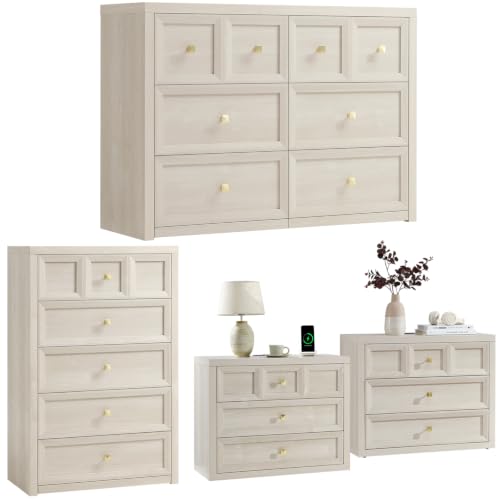
5 Drawer Dresser and Nightstand Set: The Complete Buyer's Guide
Everything you need to know before choosing a matching five-drawer dresser and nightstand set — sizing, materials, drawer mechanics, style matching, and safety essentials for a coordinated bedroom.
START THE GUIDEWhy a matching set? A coordinated dresser and nightstand set removes the guesswork from bedroom design. Both pieces share the same finish, hardware, and proportions, so the room feels intentional from the moment you assemble it. This guide walks you through what actually matters when comparing sets, so you can decide with confidence.
What a 5 Drawer Dresser and Nightstand Set Includes
A standard configuration pairs a five-drawer dresser with a single matching nightstand. Premium and flagship-tier collections sometimes include two nightstands or a mirrored companion piece. The dresser typically spans between roughly 40 and 60 inches wide, making it a versatile anchor for medium and large bedrooms. If your room is compact, a 40-inch dresser paired with a slim nightstand keeps walkways clear without sacrificing drawer count.
The five-drawer format is popular because it balances capacity with a manageable footprint. Most designs arrange two or three shallow top drawers for folded items and accessories, plus two deeper lower drawers for bulkier clothing or linens. That layout works well for couples who split storage, or for a single user who wants a place for everything.
Sizing and Room Fit
Measure twice before ordering. The dresser width must fit your chosen wall with clearance for drawers to open fully — plan for at least 20 to 24 inches of open-floor depth in front. The nightstand should sit beside the bed at a height close to the mattress top, typically between 20 and 26 inches, so a lamp and phone are within easy reach.
Consider vertical space too. A 30-inch tall chest of drawers is a good reference height if you prefer a slightly raised dresser surface, while low-profile designs keep the room feeling open. Wider rooms benefit from a 50-inch dresser, which adds substantial top-surface area for decor and a mirror.
| Tier | Typical Construction | Best For |
|---|---|---|
| Entry-level | Engineered wood panels, basic roller glides, simplified joinery | First apartments, guest rooms, short-term setups |
| Mid-range | Solid wood fronts or mixed construction, ball-bearing or side-mount glides, dowel-and-cam joinery | Primary bedrooms, everyday family use |
| Premium | Solid hardwood frames, soft-close glides, dovetail drawer boxes | Long-term homes, frequent daily use |
| Luxury | Hardwood throughout, hand-finished surfaces, premium hardware, reinforced corner blocks | Design-led interiors, heirloom-quality expectations |
Drawer Mechanics That Make or Break a Set
Drawer glides are the most-used component in any dresser, so they deserve the closest inspection. Entry-level sets often use nylon roller glides that work fine for light loads but can stiffen over time. Mid-range and premium sets typically use ball-bearing side-mount or under-mount glides, which glide more smoothly and support heavier contents.
If quiet operation matters — a nursery, a shared bedroom, or a home office guest room — look for a soft-close dresser. Soft-close mechanisms prevent drawers from slamming and reduce wear on the glide tracks. For heavy clothing storage, check the drawer box construction: dovetail joints outperform stapled boxes, and heavy-duty drawer slides add load capacity for dense items like jeans and sweaters.
Materials, Finishes, and Style Matching
Matching the set to your existing bedroom palette is easier when you understand the material. Solid wood takes refinishing well and develops character over time. A solid oak dresser with mirror offers natural grain and a classic look, while mid-century modern dresser and nightstand sets use tapered legs and clean lines for a lighter, more contemporary feel.
Finishes matter for maintenance. Painted finishes hide minor scratches less effectively but are easy to touch up. Natural wood finishes show wear gracefully but need periodic conditioning. If your room leans warm and neutral, a light wood dresser with gold hardware pairs well with soft textiles. For bolder rooms, a navy blue dresser and nightstand combination creates a focal point without overwhelming the space.
Key Features to Compare Before Buying
Drawer Box Construction
Dovetail joints indicate a sturdier drawer box than stapled or nailed construction. English dovetail front joints and French dovetail back joints are the benchmark in premium and luxury tiers. Check that drawer bottoms are at least 3mm thick and seated in a groove, not simply stapled to the underside.
Interior Drawer Dimensions
Exterior measurements can be misleading. Ask for interior drawer depth, width, and height. Shallow drawers around 4 to 5 inches deep suit accessories and folded shirts; deeper drawers of 8 to 10 inches handle sweaters and bedding. A well-planned five-drawer set mixes both depths.
Finish and Edge Banding
On engineered wood sets, check that all exposed edges are properly banded. Unbanded edges absorb moisture and chip over time. On solid wood sets, inspect the finish inside drawers too — a sealed interior resists odors and makes cleaning easier.
Hardware Quality
Knobs and pulls should feel solid, not hollow. Metal hardware with a consistent finish resists tarnishing. If you plan to swap hardware later, confirm that pull spacing is standard so replacements fit without drilling new holes.
Safety and Anti-Tip Hardware
Every dresser should ship with an anti-tip kit. Wall anchoring is essential in homes with children or pets. Confirm the set includes mounting hardware and that the dresser back panel has a suitable anchoring point. Stability also depends on weight distribution — load heavy items in lower drawers.
Assembly and Delivery
Some sets arrive flat-packed with cam-lock assembly, while others ship fully assembled. If you prefer zero assembly, look for fully assembled dressers for sale. Flat-pack sets are easier to transport through tight stairwells but require careful torque control during assembly to avoid stripped fittings.
Style Directions for a Coordinated Set
The set you choose sets the tone for the entire room. Here are practical style directions and what each requires from surrounding decor:
- Modern and minimalist: Clean lines, handleless or slim pulls, matte finishes. Keep nightstand tops sparse and let the furniture geometry do the work. A fluted dresser adds texture without visual clutter.
- Mid-century modern: Tapered legs, warm wood tones, and contrasting hardware. Pair with a low platform bed and a single statement lamp. See the mid-century dresser guide for proportion tips.
- Traditional and French provincial: Curved fronts, carved details, and antiqued finishes. A French provincial dresser pairs naturally with a mirror and soft, layered bedding.
- Rustic and farmhouse: Reclaimed-look wood, dark metal pulls, and visible grain. A rustic brown dresser anchors a warm, textured room.
- Glam and statement: Metallic accents, lacquered finishes, and mirrored surfaces. A black lacquer dresser with gold hardware creates a strong focal point.
Pre-Purchase Checklist
Run through this list before you commit to any set:
- Confirm dresser width, depth, and height against your wall and walkway measurements.
- Verify nightstand height relative to your mattress top.
- Check glide type and test drawer movement if buying in person.
- Inspect drawer box joinery and bottom panel thickness.
- Confirm anti-tip hardware is included.
- Review the finish warranty and care instructions.
- Check whether assembly is required and what tools are needed.
- Measure doorways and stairwells for delivery clearance.
Frequently Asked Questions
What is included in a 5 drawer dresser and nightstand set?
A typical set includes one five-drawer dresser and one matching nightstand, though some collections offer two nightstands. Pieces share the same finish, hardware, and design language for a cohesive bedroom look.
How much storage does a 5 drawer dresser provide?
A five-drawer dresser typically offers a balanced mix of shallow and deep drawers, enough for clothing, linens, and accessories for one or two people. It suits medium to large bedrooms without dominating floor space.
What should I check before buying a dresser and nightstand set?
Verify drawer glide type, joinery quality, finish durability, tipping safety hardware, and exact dimensions against your room layout. Confirm the set matches your bed height and available wall space.
Should I anchor the dresser to the wall?
Yes. Anti-tip anchoring is strongly recommended for every dresser, regardless of household composition. Children climbing on open drawers can cause tip-over accidents, and wall anchoring eliminates that risk in most installations.
Can I mix the set with furniture from another collection?
Yes, but keep proportions and wood tones within a similar family. A matching set provides visual cohesion, but a deliberately mismatched nightstand can work in eclectic rooms. If you want flexibility, choose a set with neutral finishes and standard hardware spacing.