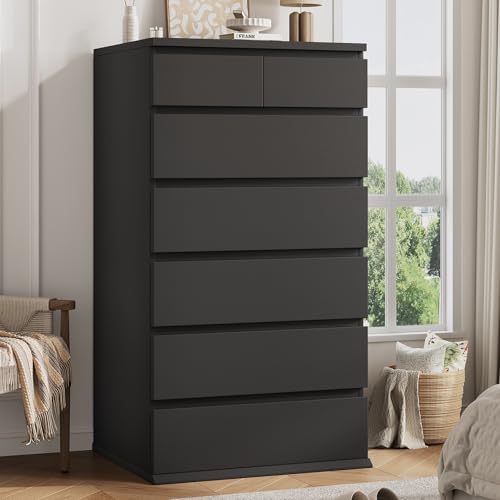
Large Tall Dresser: The Vertical Storage Solution for Modern Bedrooms
Everything you need to know about choosing, placing, and living with a large tall dresser — the space-smart storage piece that keeps your bedroom organized without consuming floor area.
Why a large tall dresser deserves a place in your bedroom: When floor space is limited but your clothing collection keeps growing, vertical storage becomes the logical answer. A large tall dresser delivers generous drawer capacity in a compact footprint, turning unused wall height into practical, everyday organization. This guide covers sizing, drawer layouts, materials, safety, and styling so you can decide with confidence.
What Is a Large Tall Dresser?
A large tall dresser — also called a tall chest of drawers or vertical dresser — is a storage piece that prioritizes height over width. While standard dressers spread horizontally across a wall, a large tall dresser rises upward, often reaching 50 inches or more, with a depth and width that fit neatly into narrow spaces.
The term "large" refers to overall storage capacity rather than physical width. A well-designed tall dresser can hold as much folded clothing as a much wider horizontal model, making it a smart choice for bedrooms, guest rooms, and apartments where every square foot matters.
If you are still weighing different formats, our comparison of a full range of dresser types explains how height, drawer count, and placement needs intersect.
Key Characteristics
- Height: Typically 50 to 65 inches tall, sometimes taller in narrow tower configurations.
- Footprint: Usually 30 to 42 inches wide and 16 to 20 inches deep.
- Drawer count: Common layouts include five, six, and seven drawers, often in graduated sizes.
- Placement: Suited to corners, beside the bed, or along short wall segments where a wide dresser would block traffic.
Large Tall Dresser vs. Wide Dresser: Which Fits Your Room?
The choice between a tall dresser and a wide dresser comes down to the geometry of your room and how you move through it. A wide horizontal dresser works well under a window or along a long uninterrupted wall, while a tall dresser excels in compact rooms and tight corners.
| Consideration | Large Tall Dresser | Wide Horizontal Dresser |
|---|---|---|
| Floor footprint | Compact, minimal floor usage | Requires a longer wall segment |
| Best room shapes | Small to medium rooms, corners, narrow walls | Large rooms with long walls and open floor space |
| Top surface use | Vertical display, mirrors, lighting | Broader display area, often used for TVs |
| Drawer access | Top drawers may need a step stool for shorter users | All drawers accessible from a standing position |
| Visual effect | Draws the eye upward, makes ceilings feel taller | Grounds the room, emphasizes horizontal lines |
| Stability priority | High — wall anchoring is essential | Moderate — still anchor for safety |
For deeper guidance on matching dimensions to your room, our guide to 30-inch tall chests and 24-inch tall chest of drawers pages cover intermediate heights that bridge the gap between compact and full-size tall models.
How to Choose the Right Large Tall Dresser
Before ordering, work through four practical questions: where it will stand, how much it needs to hold, who will use it, and how long it should last. Each answer narrows the field of suitable models.
1. Measure the Wall and the Walkway
Measure the wall segment where the dresser will sit, then add at least 30 inches of clearance in front of the drawers for comfortable opening. Account for door swings and closet access. A large tall dresser can sit in a corner, but the drawers must still open fully without striking other furniture.
2. Match Drawer Count to Your Wardrobe
As a working rule, allow roughly one drawer for every two to three days of folded clothing per person, plus dedicated drawers for accessories and bedding. If the dresser serves two people, look for models with divided drawer banks or a symmetric layout that assigns personal space.
3. Check Drawer Depth and Interior Height
Deep drawers are useful for sweaters and denim, while shallow drawers suit accessories and undergarments. Many tall dressers use graduated drawers, with deeper compartments at the base and shallower ones at the top. Our overview of dressers with deep drawers helps you gauge whether a deeper configuration suits your needs.
4. Plan for Height and Reach
Test the top drawer height against the primary user's reach. For children's rooms or shared bedrooms, a tall dresser may need a step stool or a lower secondary storage piece. Adults usually find the top of a 55-inch dresser comfortably reachable, while anything above 65 inches becomes display space rather than daily storage.
Drawer Layouts That Work in a Tall Format
The vertical shape of a tall dresser opens up several layout options, each suited to different habits.
- Single-column tower: One stack of wide drawers, simple and efficient. Best for folded clothing and linens.
- Two-column bank: Side-by-side stacks, often with a mix of sizes. Great for couples who need separate zones.
- Graduated stack: Shallow at the top, deep at the bottom. A classic arrangement that supports accessories up high and bulky items down low.
- Mixed media layout: A combination of drawers and open shelves or a small cabinet door. Useful when the dresser also needs to hold books or display items.
When evaluating a specific model, inspect drawer glide quality and joinery. Dovetail joints and soft-close metal glides signal mid-range to premium construction. For an introduction to this feature, see our notes on a soft-close dresser and why drawer hardware matters for everyday use.
Materials and Construction: What Lasts
A large tall dresser carries more leverage and vertical load than a low horizontal piece, so construction quality matters more, not less. The material and joinery determine whether the dresser stays square and smooth after years of daily opening and closing.
| Tier | Typical Construction | Best For |
|---|---|---|
| Entry-level | Engineered wood panels, stapled or cam-lock assembly, basic roller glides | Guest rooms, starter apartments, temporary setups |
| Mid-range | Engineered wood with solid wood fronts, reinforced joints, ball-bearing glides | Primary bedrooms with daily use and moderate weight loads |
| Premium | Solid hardwood frames, dovetail drawer boxes, soft-close metal glides | Long-term family use and rooms where furniture is a focal point |
| Luxury | Kiln-dried hardwood, hand-finished surfaces, custom hardware, heirloom joinery | Design-led bedrooms and buyers prioritizing longevity |
Wood species also influence appearance and durability. Oak and maple resist wear well, walnut offers a rich grain, and pine suits relaxed or cottage-style interiors. Our solid oak dresser overview shows how a premium hardwood finish translates into daily practicality.
Safety First: Anchoring a Tall Dresser
A tall dresser has a higher center of gravity than a low one, which makes anti-tip protection non-negotiable. Every reputable manufacturer supplies a wall-anchor strap or bracket. Use it.
Safety checklist before first use:
- Install the anti-tip strap into a wall stud or a suitable anchor.
- Place heavier items in the lower drawers and lighter items up top.
- Avoid overloading the top surface; do not place a television on a tall dresser unless the model is explicitly rated for it.
- Keep the top drawers closed when not in use to reduce the risk of tipping.
- Re-check the anchor every few months, especially in households with children.
For households with young children, our guide to children's dresser options explains additional safety features to look for, such as drawer stops and rounded edges.
Placement and Styling Ideas
A large tall dresser is a versatile styling anchor. Because it rises vertically, it can fill a corner, act as a bedside companion, or serve as a slim focal point on a short wall.
Corner Placement
Tuck the dresser into a corner to free up the center of the room. A mirror hung above the dresser visually doubles the available light and makes the vertical form feel intentional rather than space-saving by necessity.
Bedside Companion
In rooms without space for both a nightstand and a dresser, a tall dresser beside the bed can serve both roles. Choose a model with a top drawer sized for bedside essentials. Our matching set examples show how coordinated pieces create a cohesive look.
Focal-Point Wall
On a short wall between windows, a tall dresser draws the eye upward and makes the ceiling feel higher. Pair it with a narrow floor mirror or a pair of sconces to complete the composition.
Finish and Color Direction
Light wood finishes keep small rooms feeling airy, while dark finishes add drama and depth. A light wood six-drawer dresser or a black tall dresser illustrates how dramatically finish choice changes the room's mood.
Organization Tips for Tall Dresser Living
Vertical storage changes how you organize. The top drawers are best reserved for light, infrequently used items; the lower drawers handle bulk and weight. A simple zoning system keeps the dresser efficient.
- Top drawer: Accessories, socks, small folded items, and anything used less than weekly.
- Upper-middle drawers: Everyday folded clothing — shirts, knitwear, and casual wear.
- Lower-middle drawers: Denim, heavier sweaters, and workout clothing.
- Bottom drawer: Bedding, off-season clothing, or bulky items that add stabilizing weight.
Vertical drawer organizers and dividers make tall stacks easier to manage; our notes on lift-up top storage chests also show how a secondary compartment can handle overflow.
Common Mistakes to Avoid
- Skipping the wall anchor because installation feels inconvenient. A tall dresser should never be left free-standing in a home with children or pets.
- Choosing by width alone without checking drawer depth. A narrow, deep dresser may hold more than a wider, shallow one.
- Overloading the top surface with decor or electronics that raise the center of gravity.
- Ignoring glide quality on a piece with many drawers, where every glide gets daily use.
- Placing the dresser in a tight corner without checking drawer swing clearance.
Frequently Asked Questions
What qualifies as a large tall dresser?
A large tall dresser typically stands 50 inches or higher, offers at least five drawers, and provides a narrow footprint compared to wide horizontal dressers. It maximizes vertical wall space and suits medium to large bedrooms.
How do I keep a tall dresser stable and safe?
Always use the anti-tip strap or wall anchor included with the dresser. Load heavier items in the lower drawers, avoid placing a television on top, and check the anchor periodically to ensure a secure installation.
What is the best height for a tall dresser?
For most adults, a top surface between 50 and 60 inches works well for daily access. If the dresser doubles as a changing table or display surface, keep the top within comfortable reach from a standing position.
Can a large tall dresser replace a wardrobe?
It can replace a wardrobe for folded clothing and accessories, but not for hanging garments unless it includes a hanging rod or is paired with a separate closet. A large tall dresser is an excellent compact storage solution when closet space is limited.
Which materials last longest in a tall dresser?
Solid hardwood construction with dovetail or reinforced drawer joints and metal glides delivers the longest service life. Mid-range models with engineered wood and sturdy hardware are also durable when assembled and anchored correctly.
If you are furnishing a full bedroom, consider coordinating a tall dresser with a bed and dresser set or a three-piece dresser set to simplify matching finishes and proportions. For smaller secondary spaces, a single dresser or a small storage chest with drawers keeps storage proportionate.
Ready to Compare Large Tall Dressers?
Browse our curated selection of large tall dressers and tall chests of drawers. Filter by drawer count, finish, and construction tier to find the vertical storage piece that fits your bedroom and your routine.
Explore Top Picks