
8 Inch Wide Cabinet with Drawers: The Complete Slim Storage Guide
Looking for storage that fits where nothing else will? Learn how an 8 inch wide cabinet with drawers turns narrow gaps, tight hallways, and awkward corners into genuinely useful storage space.
Jump to Buying ChecklistWhy this guide matters: An 8 inch wide cabinet with drawers is one of the most underrated storage solutions for small homes. This guide explains exactly what fits inside, how to measure your space correctly, which drawer mechanisms hold up over time, and where these slim units work best. By the end, you will know precisely which configuration suits your room and your storage habits.
What Is an 8 Inch Wide Cabinet with Drawers?
An 8 inch wide cabinet with drawers is a vertical storage unit built with an extremely narrow footprint. The measurement of 8 inches typically refers to the exterior width of the cabinet body. Because the width is so limited, manufacturers rely on vertical stacking rather than horizontal spreading. This means the cabinet grows upward rather than sideways, making it ideal for spaces where horizontal room is scarce.
These slim cabinets are sometimes called skinny drawer cabinets, narrow storage towers, or slim drawer units. They differ from standard dressers in one important way: a traditional dresser is designed around a wide surface area, while an 8 inch cabinet is designed around a narrow slot of floor space. That distinction changes how you use them and where they fit.
The usable drawer width is slightly smaller than the external width because the frame, side panels, and drawer runners consume space. In most units, the internal drawer width lands between 5.5 and 6.5 inches. That is narrow, but it is more than enough for a surprising range of everyday items. If you are comparing storage formats, it helps to understand how these units sit relative to a standard small chest of drawers and a shallow chest of drawers, since each format solves a different spatial problem.
Who Should Consider a Narrow Drawer Cabinet?
This type of furniture is not for everyone. It is a specialist solution, and it performs best when the buyer has a clear reason for choosing extreme narrowness over generous width. The following situations are where an 8 inch wide unit genuinely earns its place.
- Apartment and condo dwellers who need storage in a bedroom, hallway, or bathroom but have very little wall space left to use.
- Bathroom users who want to tuck toiletries, grooming tools, and spare towels into a narrow gap beside a sink or between a vanity and a wall.
- Bedroom organizers who want to separate accessories, socks, and folded basics from the main wardrobe without adding a full-size dresser.
- Entryway users who need a compact place for gloves, keys, chargers, and small daily items near the door.
- Craft and hobby enthusiasts who need labeled small-part storage for tools, threads, beads, or art supplies.
- Home office users who want paper, cables, and stationery organized without dedicating a whole wall to filing furniture.
If you have plenty of open floor space, a wider unit will almost always give you more usable storage per drawer. The narrow cabinet is a problem-solving piece, not a general-purpose workhorse. For a broader look at storage formats, our guide to small storage chests with drawers covers the middle ground between slim towers and full dressers.
Dimensions and Sizing: What 8 Inches Really Means
Width is only one of three dimensions that determine whether a slim cabinet works in your space. Depth and height matter just as much, and overlooking either one is the most common reason buyers end up disappointed.
Width is fixed at roughly 8 inches at the exterior. That is narrow enough to slide into gaps beside doors, between a bed and a wall, or alongside a washing machine. But you should always add a small clearance margin on each side so the cabinet does not scrape the wall or trap moisture against it.
Depth is the variable that surprises most buyers. Slim cabinets range from around 10 inches to 16 inches deep. A shallow unit fits into hallways and behind doors, but its drawers hold less volume. A deeper unit stores more, but it may protrude into a walking path. Measure the depth of your intended spot before anything else.
Height determines both capacity and stability. Compact units sit around 24 to 30 inches tall, mid-height towers reach 40 to 50 inches, and full-height slim towers can exceed 60 inches. Taller models offer far more drawer capacity but must be anchored to the wall. Our comparison of a 24 inch tall chest of drawers and a 30 inch tall chest of drawers shows how height changes the storage equation in practice.
| Configuration | Typical Height Range | Best For | Stability Note |
|---|---|---|---|
| Compact slim unit | 24 to 30 inches | Bathroom gaps, bedside corners, entryways | Usually stable freestanding |
| Mid-height tower | 40 to 50 inches | Bedroom accessories, hallway storage | Wall anchor recommended |
| Full-height slim tower | 60 inches and above | High-capacity narrow storage, utility rooms | Wall anchor required |
Drawer Types and Mechanisms
Because the drawer opening is so narrow, the mechanism inside matters more than it does on a wide dresser. A poorly fitted runner in a narrow drawer causes jamming, wobbling, and premature wear. Understanding the three common mechanism types will help you judge quality before you commit.
Basic side-mounted runners are the most common setup in entry-level slim cabinets. They work well enough for light loads such as socks, accessories, and stationery. Over time, light-duty runners can develop a slight wobble if the drawer is overloaded. They are a reasonable match for low-traffic storage.
Ball-bearing slides represent the mid-range standard. They glide more smoothly, handle heavier contents, and resist sagging better than basic runners. If you plan to store tools, toiletries, or denser items, this is the mechanism to look for. Our overview of heavy-duty drawer slides explains how slide quality affects long-term performance.
Soft-close and undermount systems sit at the premium end. Drawers close gently without slamming, and the hidden undermount design keeps the interior clean. These systems are smoother and quieter, but they cost more within their class. For a deeper look at this feature, read our guide to soft-close dressers.
One structural detail deserves special attention in narrow units: drawer box construction. Dovetail joints and reinforced corner blocks hold up far better under repeated use than stapled or glued boxes. In a narrow drawer, the side panels take more stress per inch of width, so build quality is not a cosmetic detail.
Materials and Build Quality
Material choice affects durability, moisture resistance, and how the cabinet ages. Narrow cabinets concentrate stress into a smaller frame, so material quality has an outsized effect on longevity.
Solid wood offers the most durable construction and can be refinished if the surface wears. It is heavier and generally represents the premium tier. A solid build in a narrow format is a long-term investment that can last for decades with basic care.
Engineered wood with a sealed finish is the most common mid-range option. Medium-density fiberboard and sealed particle board perform well in dry rooms and hold their shape when the frame is properly reinforced. In bathrooms or humid climates, the finish quality matters enormously. Unsealed edges absorb moisture and swell, so check that all cut edges are coated.
Metal units are a practical choice for utility rooms, garages, and bathrooms. Steel frames resist moisture and are easy to wipe clean. They suit a more industrial look and tend to be stable even in tall configurations.
Mixed materials combine a metal frame with wood or engineered wood drawers. These offer a good balance of stability and visual warmth. If you want a coordinated look, browsing black dressers and small white dressers with mirrors can help you match a slim cabinet to existing bedroom furniture.
What Actually Fits Inside an 8 Inch Wide Drawer?
This is the question buyers ask most often, and the honest answer depends on drawer depth and height. With roughly 5.5 to 6.5 inches of internal width, you are working with a narrow but usable channel. The following items are realistic fits in a well-proportioned slim drawer.
- Folded socks, underwear, and rolled T-shirts stored front to back
- Jewelry, watches, and small accessories in divided trays
- Toiletries, grooming tools, and travel-size bottles
- Office stationery, cables, chargers, and small adapters
- Craft supplies such as threads, beads, and small tools
- Spare batteries, remote controls, and small electronics
- Kitchen linens, tea towels, and small utensils in utility settings
What does not fit well: bulky sweaters, bedding, large towels, or anything that needs to lie flat across a wide surface. For those items, a wider format such as a low dresser with drawers or a solid wood five-drawer chest is a far better match.
Best Places to Put a Slim Drawer Cabinet
Placement determines how much value you get from a narrow cabinet. The right spot turns dead space into functional storage; the wrong spot creates an obstacle.
Bathroom Gaps
The space between a vanity and a wall, or beside a shower enclosure, is often wasted. An 8 inch wide unit fits neatly into these slots and keeps toiletries and towels organized. Choose a moisture-resistant material and seal the base if the floor gets wet. Pairing the cabinet with a small bedroom vanity with drawers creates a coordinated, space-efficient setup.
Bedroom Corners and Bedside Slots
A narrow cabinet can sit beside a bed in place of a traditional nightstand, or fill the gap between a bed frame and a wall. Bedroom use favors mid-height towers for accessory and clothing storage. If you need matching pieces, a dresser and nightstand set or a three-piece dresser and nightstand set can coordinate the room.
Hallways and Entryways
A slim tower in a hallway turns an awkward stretch of wall into a storage zone for gloves, keys, and small daily items. Keep the depth shallow so the walkway stays clear. For a coordinated entryway, our guide to small dressers covers complementary compact formats.
Closets and Utility Rooms
A narrow unit fits into closet corners and utility rooms where a standard dresser would block access. This is a strong placement for craft supplies, cleaning tools, and spare linens. If you are organizing a walk-in space, our article on dressers for closets explains how to integrate slim storage into a closet system.
Buying Checklist for an 8 Inch Wide Cabinet
Use this checklist before you finalize any purchase. It covers the details that separate a cabinet that works for years from one that frustrates you within a month.
Measure and Verify
- Measure the exact width of your intended space, then subtract at least half an inch for clearance on each side.
- Measure the depth available and confirm the cabinet will not block a doorway, drawer, or walking path.
- Check ceiling height and any wall obstructions such as outlets or light switches.
- Confirm the internal drawer width and depth, not just the exterior dimensions.
Evaluate Build Quality
- Look for reinforced corner joints and a solid back panel.
- Prefer ball-bearing slides for heavier contents and smooth-close mechanisms for bedrooms.
- Check that all engineered wood edges are sealed, especially for bathroom use.
- Confirm an anti-tip kit is included for any unit taller than about 40 inches.
Match Your Storage Needs
- Count the items you plan to store and compare against total drawer volume.
- Choose drawer height based on content: shallow for accessories, deeper for folded clothing.
- Decide whether you need pure drawers or a mixed design with an open shelf.
- Confirm the finish and color coordinate with your existing furniture.
Quality Tiers at a Glance
Product positioning in this category follows a predictable pattern. The table below describes how the three tiers typically differ, so you can judge whether a model is appropriately specified for its class.
| Tier | Typical Construction | Best For |
|---|---|---|
| Entry-Level | Engineered wood frame, basic side-mounted runners, stapled drawer boxes | Light storage in dry rooms, short-term use, secondary spaces |
| Mid-Range | Reinforced engineered wood or mixed materials, ball-bearing slides, sealed finish | Everyday bedroom and bathroom storage, regular daily use |
| Premium | Solid wood or heavy-gauge metal, soft-close undermount slides, dovetail drawer boxes | Long-term use, heavier contents, humid or high-traffic locations |
A mid-range model usually offers smoother operation and better moisture resistance than an entry-level unit, while a premium model is built for decades of use. Match the tier to how hard the cabinet will work, not to how it looks in a product photo.
Common Mistakes to Avoid
Most disappointing purchases in this category trace back to a small number of avoidable errors. Avoid these and you will be far more satisfied with your slim cabinet.
- Ignoring depth. Width gets all the attention, but depth is what decides whether the cabinet fits and whether the drawers are useful.
- Skipping the wall anchor. Tall narrow furniture has a higher center of gravity. Anchor it, especially in homes with children or pets.
- Overloading narrow drawers. Narrow drawers concentrate weight. Respect the load rating and distribute heavier items toward the bottom drawers.
- Choosing the wrong mechanism. Basic runners are fine for accessories, but heavier contents need ball-bearing slides or better.
- Ignoring humidity. Unsealed engineered wood in a bathroom will swell over time. Confirm moisture resistance before placing a cabinet in a wet room.
- Forgetting clearance. A cabinet that fits with zero margin is a cabinet that will scrape walls and trap dust.
Frequently Asked Questions
What can I store in an 8 inch wide cabinet with drawers?
An 8 inch wide cabinet with drawers is ideal for jewelry, accessories, folded socks and underwear, toiletries, craft supplies, office stationery, and small electronics. Its narrow footprint makes it a practical choice for bathroom, bedroom, and hallway storage where floor space is limited.
How deep is a typical 8 inch wide cabinet with drawers?
Depth varies by model, but most 8 inch wide cabinets with drawers fall between 10 and 16 inches deep. Shallower units suit hallways and bathroom gaps, while deeper models provide more usable drawer volume for bedroom storage.
Is an 8 inch wide cabinet stable enough to use freestanding?
A well-built narrow cabinet can stand on its own, but taller units should always be anchored to the wall with the included anti-tip kit. Choosing a model with a wide base, solid back panel, and reinforced frame improves stability significantly.
How many drawers does an 8 inch wide cabinet usually have?
Most models offer three to six drawers. Vertical stacking is the standard approach because it maximizes storage capacity within a narrow footprint. Some designs combine open shelves with drawers for mixed storage.
Can an 8 inch wide cabinet with drawers be used in a bathroom?
Yes, provided the unit uses moisture-resistant materials such as sealed engineered wood, painted finish, or metal. Bathroom placement works well beside a sink or in a narrow gap, but avoid particle board without a sealed coating in humid conditions.
Final Thoughts
An 8 inch wide cabinet with drawers is a specialist piece of furniture, and that is exactly why it works so well in the right setting. It is not meant to replace a full dresser. It is meant to rescue the awkward gaps, narrow corners, and leftover strips of floor space that most furniture cannot use.
Before you buy, measure twice, confirm the depth as carefully as the width, and choose a drawer mechanism that matches what you plan to store. Anchor tall units to the wall, seal the base if the cabinet will live in a bathroom, and match the quality tier to how hard the cabinet will be used. If you do those things, a slim drawer cabinet can quietly become one of the most useful pieces of storage in your home.
Ready to explore specific models? Browse the recommended picks below, or compare alternative compact formats in our guide to small chests of drawers and fully assembled chests of drawers.
Top Picks: 8 Inch Wide Cabinets with Drawers
⚠️ AFFILIATE DISCLOSURE: This website contains affiliate links. As an Amazon Associate, we earn from qualifying purchases. If you make a purchase through these links, we may receive a small commission at no additional cost to you. Read our full affiliate policy.

Sunamon Narrow Plastic Storage Drawers: 3 Drawer Storage Organizer with Wheels, Narrow Storage Cabinet, Rolling Storage Cart for Narrow Space, 7.87-inch Wide (All-White)
Check price on Amazon
WelFurGeer Soft Close Pull Out Drawers for Cabinets, 8" W x 21" D Pull Out Cabinet Drawer with Heavy Duty Slides, Pull Out Cabinet Organizer, Cabinets Roll Out Drawers, Pull-Out Home Organizers
Check price on Amazon
Salfanre Pull Out Cabinet Drawers, 8" W x 21" D | Soft Close Full Extension Wood Cabinet Organizer,Smooth Slide Out Shelf,9 Size Options from 8"–32" W
Check price on Amazon
Fokyfok Pull out Cabinet Organizer,7"-11"W,17"-24"D,Expandable,Adhesive | No Drill,Roll out Drawers,Adjustable Slide out Shelves for Kitchen,Pantry,Framed and Framless Cabinets,White,1PC
Check price on Amazon
Sylunawyn 2 Tier Pull Out Cabinet Organizer - 8" W x 22" D Soft Close Slide Out Shelves with Shelf Liners - Pullout Drawers for Kitchen Cabinets, Pantry, Bathroom, Heavy Duty Steel Wire Baskets
Check price on Amazon
ROOMTEC Pull Out Cabinet Organizer, Cabinet Pull Out Shelves 7½" W x 21½" D, Heavy Duty Cabinet Drawers Slide Out Kitchen Cabinet Organizers Storage Shelf
Check price on Amazon
MAX Houser 4 Drawer Narrow Dresser Fabric Storage Tower Vertical Slim Storage Chest Organizer Nightstand Side/End Table Small Standing Organizer Removable Drawers Wood Top for Bedroom, Bathroom(Beige)
Check price on Amazon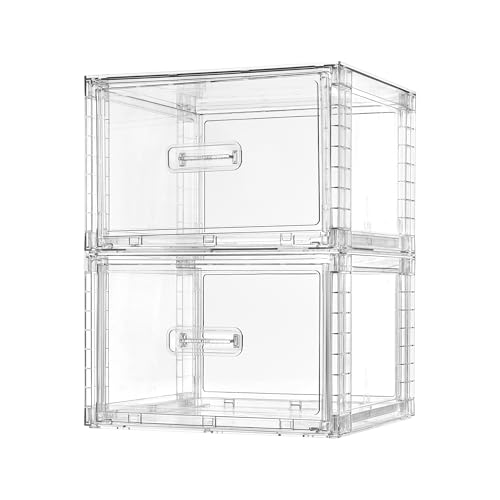
Vtopmart 2 Pack Clear Stackable Storage Drawers 15QT | Easily Assemble Closet Organizers,Plastic Storage Bins for Bathroom,Cabinet,Kitchen Pantry,Under Sink Organization(Medium)
Check price on AmazonDisclaimer
The information provided on DresserAdvisor is for educational and informational purposes only. We are not furniture professionals, and our content should not replace professional advice from qualified furniture makers, interior designers, or safety experts. Some content may use AI assistance. Always check product safety standards and certifications before purchasing. If you do not agree, please do not use this website. Read the full disclaimer.