
Natural Wood Changing Table Dresser: The Complete Buyer's Guide
A natural wood changing table dresser pairs a dedicated diaper-changing surface with full dresser storage, so your nursery stays organized and the furniture stays useful long after the baby years. Here is everything to check before you choose one.
Jump to Buying ChecklistWhy this guide exists: A changing table dresser is one of the most heavily used pieces in a nursery, and it is also one of the few that should survive past toddlerhood. This guide explains the safety requirements, wood types, sizing, and finish considerations that separate a durable long-term investment from a piece you will replace in two years.
What Is a Natural Wood Changing Table Dresser?
A natural wood changing table dresser is a dresser built from solid wood or wood veneer with an unfinished or lightly finished natural tone, topped with a changing station. The top surface typically includes a recessed tray or raised edges that hold a contoured changing pad, plus a safety strap. Below, you get a full bank of drawers for clothing, diapers, wipes, and bedding.
The key distinction is that this is a dresser first. Unlike a dedicated changing table that becomes obsolete once diapers are done, a changing table dresser converts back into a standard bedroom dresser when the topper is removed. That dual purpose is why so many caregivers treat it as the centerpiece of nursery furniture planning.
Natural wood refers to the visible grain and warm, unpainted tone of the timber. It can mean a truly unfinished piece, a water-based clear finish, or a light stain that preserves the grain. If you are also outfitting the rest of the room, our guide to natural wood crib and dresser sets explains how to coordinate matching pieces across the nursery.
Why Choose Natural Wood Over Painted or Engineered Options
Natural wood is not automatically better than every alternative, but it does offer specific advantages that matter in a nursery setting:
- Refinishability. Solid wood can be sanded and refinished if it gets scratched, stained, or simply needs a refresh. Painted MDF and particleboard cannot be restored the same way.
- Stability and weight. A solid hardwood dresser has a lower center of gravity and greater mass, which contributes to tip-over resistance when properly anchored.
- Finish transparency. Natural finishes make it easier to verify that the product uses a low-VOC or water-based topcoat, which is a reasonable concern in a room where a baby sleeps.
- Longevity. A well-built natural wood dresser is a long-term investment that can move from nursery to guest room to a child's bedroom without looking out of place.
That said, natural wood covers a wide range. Pine is softer and dents more easily than maple or oak. Rubberwood is a common mid-range choice that performs well when properly kiln-dried. Oak and maple sit in the premium to high-end tier for durability, while walnut is typically a luxury-tier material chosen for its grain and color depth.
Safety Features That Are Non-Negotiable
Safety is the single most important filter when evaluating any changing table dresser. These are the features to confirm before anything else:
- Anti-tip anchoring hardware. Every dresser in a nursery should be secured to the wall. Confirm the model includes an anchoring strap and mounting hardware.
- Raised perimeter on the changing surface. A recessed tray or raised edges on all four sides help keep the pad and baby in place during a change.
- Safety strap. A waist strap is a basic requirement, even though it is never a substitute for keeping a hand on the baby.
- Sturdy, stable base. Look for a wide footprint, solid legs or a full plinth base, and no wobble when the drawers are open.
- Drawer stops and smooth glides. Drawers that pull all the way out are a hazard. Look for built-in stops and, ideally, soft-close or self-closing mechanisms. Our overview of soft-close dresser mechanisms explains what to expect at each quality tier.
- Non-toxic finish. Verify low-VOC or water-based finishes, especially on surfaces a baby may touch or mouth.
Buying Checklist: Natural Wood Changing Table Dresser
- Solid wood or high-quality veneer over a stable core
- Anti-tip wall anchoring kit included
- Removable changing topper that converts to a standard dresser
- Raised edges or recessed tray on the changing surface
- Safety strap included and easy to reach
- Drawer stops on every drawer
- Low-VOC, water-based, or otherwise verified non-toxic finish
- Changing surface height comfortable for the primary caregiver
- Full-extension or soft-close drawer glides
- Enough drawer depth for diapers and folded clothing
Wood Types Compared
The wood species affects durability, weight, grain appearance, and how the piece ages. Here is how the common options compare:
| Wood Type | Durability | Typical Market Tier | Best For |
|---|---|---|---|
| Pine | Soft; dents and scratches more easily | Entry-level | Caregivers who want a natural look and accept some patina over time |
| Rubberwood | Moderate; dense and stable when kiln-dried | Mid-range | Balanced choice for a nursery that may later become a child's room |
| Oak | High; hard and resistant to everyday wear | Premium | Long-term use across multiple children or rooms |
| Maple | High; dense, fine grain, takes finish well | Premium to high-end tier | A clean, light natural tone with strong structural stability |
| Walnut | High; rich color and distinctive grain | Luxury | Design-forward nurseries where the dresser is a focal piece |
| Beech | High; hard and shock-resistant | Mid-range to premium | Heavy daily use with a light natural finish |
If you want to compare species in more depth across the wider furniture category, our maple dresser guide and cedar dresser overview cover the practical trade-offs of each material in bedroom settings.
Essential Tier
Pine and engineered-core options with natural veneer. Solid choice for a first nursery where the dresser may move to a guest room later. Focus on anchoring hardware and drawer stops over material prestige.
Balanced Tier
Rubberwood, beech, and similar hardwoods with full-extension glides. Feature-rich for its class and typically the best combination of stability, finish quality, and long-term usability.
Top-Tier
Oak, maple, and walnut with soft-close hardware and verified low-VOC finishes. A worthwhile investment if the dresser will serve multiple children or become a permanent bedroom piece.
Sizing and Height: Getting the Fit Right
Changing table dressers range from compact apartment-friendly models to full-width pieces. The right size depends on the room and on the caregiver's comfort during a change.
| Consideration | What to Check |
|---|---|
| Changing surface height | Aim for roughly waist level for the main caregiver. Most adults find a total surface height in the mid-to-high 30-inch range comfortable. |
| Footprint width | Confirm the dresser fits with clearance on both sides for a diaper caddy and a reachable waste bin. |
| Drawer depth | Deep drawers hold diaper boxes and folded sleepers; shallow drawers suit wipes, creams, and small clothing. |
| Topper removal | Measure the dresser top after the topper comes off to confirm it still works as a standard dresser later. |
| Doorway clearance | Check that the assembled piece fits through the nursery door and any hallway turns. |
If space is tight, a small chest of drawers for the nursery paired with a wall-mounted changing pad can be a workable alternative. For larger rooms, a full-width natural wood piece often becomes the visual anchor of the nursery.
Drawer Configuration and Organization
The drawer layout matters more than most buyers expect. A typical changing table dresser has three to six drawers, often with a mix of deep and shallow options. A practical configuration looks like this:
- Top drawer: wipes, creams, nail clippers, thermometer, and other small items you need within arm's reach of the changing pad.
- Middle drawers: folded onesies, sleepers, and daily clothing.
- Bottom drawers: backup diaper supplies, bedding, and out-of-season clothing.
Drawer dividers make a meaningful difference in keeping small items contained. Pair the dresser with a compact drawer unit if you need overflow storage, and keep the changing surface itself clear of anything that is not part of the change routine.
Finish and Maintenance for Natural Wood
Natural wood finishes fall into a few broad categories, and each affects maintenance:
- Unfinished or oiled wood: Requires periodic re-oiling but can be spot-repaired. Confirm the oil is food-safe or nursery-appropriate.
- Water-based clear coat: Low odor and low VOC. Wipe with a damp cloth and mild soap; avoid abrasive cleaners.
- Light stain with clear topcoat: Preserves grain while adding some protection. Check that the topcoat is water-based or otherwise verified low-VOC.
For day-to-day care, dust with a soft cloth, wipe spills promptly, and avoid leaving wet wipes or damp cloths on the wood surface. A changing pad cover protects the top from everyday wear. If the dresser will sit near a window, rotate small items periodically to avoid uneven fading.
How a Changing Table Dresser Fits Into the Wider Nursery
Think of the changing table dresser as one part of a coordinated storage plan. In a typical nursery you are balancing clothing storage, diaper supplies, bedding, and toys. A dresser with a changing topper handles clothing and diapers in one footprint, which frees wall space for a crib and a glider.
If you are building a matched set, a crib and dresser set in natural wood keeps the finish consistent and simplifies the room visually. If you prefer a lighter footprint, a light wood six-drawer dresser can serve as both the changing station and the primary clothing storage.
For rooms that need to serve double duty later, consider how the piece will read once the topper is gone. A natural wood dresser with clean lines and simple hardware transitions easily into a child's bedroom or a guest room, which is exactly the point of choosing a dresser-first design.
Common Mistakes to Avoid
- Skipping the wall anchor. This is the most serious and most common error. Anchor the dresser even if it feels stable.
- Choosing a topper that is not removable. A permanently fixed changing surface limits the dresser's useful life.
- Ignoring the finish. Confirm low-VOC or water-based finishes rather than assuming natural wood means non-toxic.
- Underestimating drawer needs. Diapers and wipes take up more space than most new parents expect.
- Buying before measuring. Measure the room, the doorway, and the caregiver's comfortable changing height before ordering.
Frequently Asked Questions
Is a natural wood changing table dresser safe for a nursery?
Yes, when it meets current safety standards. Look for a raised perimeter on all four sides, a safety strap, a stable base, and non-toxic finishes. Solid hardwood construction tends to be durable and stable, and natural finishes make it easier to verify low-VOC or water-based topcoats.
What wood types are best for a natural wood changing table dresser?
Solid hardwood options such as oak, maple, beech, and walnut offer the best durability and stability. Pine and rubberwood are common entry-level and mid-range choices that work well when properly finished. Avoid particleboard or MDF cores if you want a piece that can be refinished.
Can a changing table dresser be used after the baby outgrows diapers?
Yes, that is one of the main advantages. Many natural wood changing table dressers convert into a standard dresser once the changing tray or topper is removed. Choose a model with a removable topper and a full set of drawers so it stays useful for years.
What height should a changing table dresser be?
Most caregivers find a changing surface height of roughly waist level comfortable, which typically falls in the range of 36 to 40 inches for many adults. Always check the assembled height of the dresser plus the changing pad before deciding.
Do I need to anchor a changing table dresser to the wall?
Yes. Furniture tip-over prevention is critical in a nursery. Even a sturdy natural wood dresser should be secured to the wall with the included anti-tip kit. Check that the model you choose includes an anchoring strap and hardware.
Ready to Compare Natural Wood Changing Table Dressers?
Use the checklist above to filter your options, then browse recommended models below to check availability and compare features.
Compare FeaturesRecommended Natural Wood Changing Table Dressers
⚠️ AFFILIATE DISCLOSURE: This website contains affiliate links. As an Amazon Associate, we earn from qualifying purchases. If you make a purchase through these links, we may receive a small commission at no additional cost to you. Read our full affiliate policy.

Nordee Axio Baby Changing Table Dresser with Drawers, Natural Wood | Nursery Dresser with Removable Changing Table Top, 36'' Tall Diaper Changing Station, 4 Drawers, Adjustable Shelf
Check price on Amazon
St.Mandyu Wood Changing Table Dresser, Baby Nursery Dresser, Baby Diaper Changing Table, 5 Drawers, Adjustable Shelves, Metal Handle, Curved Wrapping Design, Nature
Check price on Amazon
Wide Baby Changing Table with 2 Doors, 2 Different Size Drawer&Storage Cubbies, Durable Wood Construction, Built-in Shelves for Ample Storage (Natural)
Check price on Amazon
Lovinouse 47.2" Solid Wood Baby Changing Table Dresser, Natural | 4 Drawers and 2 Doors, Changing Table Top, Safety Guardrails, Modern Nursery Dresser
Check price on Amazon
St.Mandyu Changing Table Dresser, 4 Large Drawers Wood Baby Nursery Dresser with Raised and Detachable Changing Table Top, Fluted Diaper Changing Table with Gold Handles, Natural
Check price on Amazon
Dream On Me Emily Changing Table, Compact and Portable Solid New Zealand Pinewood, Safety Rails, Two Storage Shelves, Includes Water-Resistant 1" Changing Pad — Natural
Check price on Amazon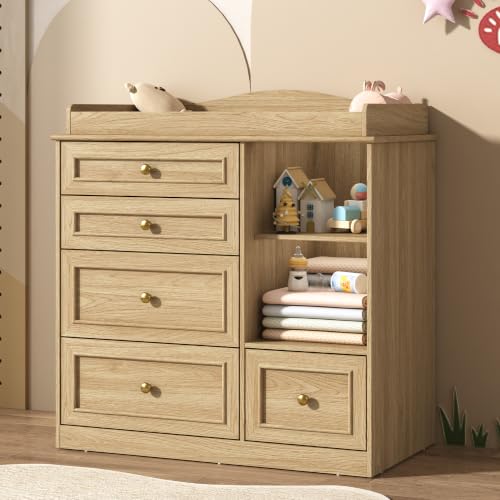
St.Mandyu Nature Changing Table Dresser | Baby Nursery Dresser, Diaper Changing Table
Check price on Amazon