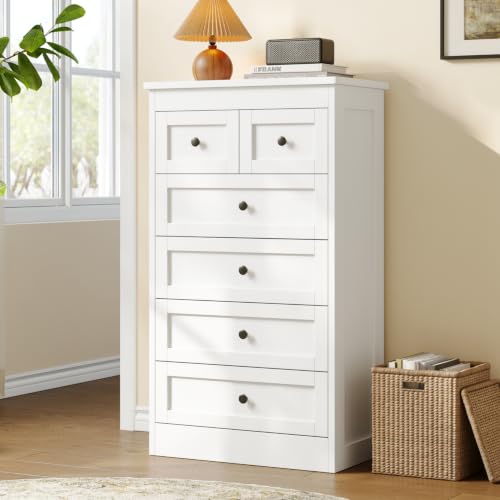
Shallow Chest of Drawers: The Complete Buying Guide
Everything you need to know about shallow depth chests of drawers — how they save space, which drawer types work best, and how to choose one that fits your bedroom perfectly.
Why shallow chests matter: A standard chest of drawers often measures 18 to 20 inches deep, which can crowd narrow hallways, small bedrooms, and tight corners. A shallow chest of drawers — typically 12 to 15 inches deep — reclaims floor space without sacrificing the storage you actually use every day.
What Exactly Is a Shallow Chest of Drawers?
A shallow chest of drawers is a storage piece built with a reduced front-to-back depth. While a conventional chest may sit 18–20 inches from the wall, shallow models usually fall between 11 and 15 inches. The drawer fronts stay wide enough for folded clothing, linens, or accessories, but the unit protrudes far less into the room.
This reduced depth is not just a styling choice — it changes how a room functions. In a compact bedroom, every inch of walkway matters. A shallow chest can sit opposite the foot of the bed without blocking traffic, slide into a short wall segment, or line a hallway without creating a bottleneck. If your priority is a compact footprint, explore our dedicated small chest of drawers options for additional size guidance.
Why Choose a Shallow Chest of Drawers?
Shallow chests solve a specific set of problems that full-depth furniture cannot. The benefits fall into four practical categories:
- Space efficiency: A shallower footprint leaves more open floor area, which is critical in apartments, guest rooms, and narrow bedrooms. Pair one with a low dresser with drawers to keep sightlines open.
- Better accessibility: Shallower drawers are easier to reach into from a seated or standing position, and items are less likely to get lost at the back.
- Hallway and entryway friendly: A 12-inch-deep chest can line a corridor without reducing walkway width below comfortable clearance.
- Design flexibility: Shallow units work as accent storage in living rooms, nurseries, and home offices where a full-depth dresser would feel bulky.
Shallow Chest Depth: How Shallow Should You Go?
Depth is the defining specification of this furniture category. The table below maps common depth ranges to their best use cases, using universal quality and size descriptors rather than specific measurements tied to any market.
| Depth Category | Typical Use Case | Best For |
|---|---|---|
| Ultra-shallow (entry tier) | Hallways, entryways, tight corners | Accessories, linens, small folded items |
| Shallow (mid-tier) | Small bedrooms, guest rooms | Folded clothing, pajamas, knitwear |
| Semi-shallow (balanced tier) | Standard bedrooms, nursery storage | Everyday clothing, bedding, towels |
| Standard depth (top-tier reference) | Primary bedrooms with generous floor area | Bulky items, full wardrobe rotation |
As a rule of thumb, if the walkway in front of your chest is under 30 inches wide, a shallow model is the safer choice. For very tight layouts, consider a narrow dresser that combines reduced width with reduced depth.
Drawer Types That Work Best in a Shallow Chest
Shallow depth changes what a drawer can realistically hold. The most effective configurations use drawer types matched to their limited internal space:
- Single-level drawers: One layer of storage per drawer keeps contents visible and easy to retrieve.
- Divided or segmented drawers: Built-in dividers turn shallow drawers into organized compartments for socks, jewelry, or accessories.
- Soft-close runners: A quality mechanism matters more in shallow drawers because the drawer travel is shorter and misalignment is more noticeable. Our soft-close dresser guide explains what to look for.
- Lift-up top compartments: Some shallow chests add a hinged top section for extra utility without adding depth — see the chest of drawers with lift-up top for this configuration.
Materials and Construction to Look For
Shallow chests are often built with thinner side panels, so construction quality matters more than in a full-depth unit. Prioritize these features:
- Solid wood or high-grade engineered wood: Solid oak, maple, or pine frames resist warping better in shallow profiles. Browse our solid oak dresser with mirror for a premium wood example.
- Reinforced drawer boxes: Dovetail or box-joint construction adds durability where drawer bottoms carry concentrated weight.
- Rust-proof and stable finishes: A weather-resistant coating protects against humidity changes, especially in bathrooms or laundry areas.
- Anti-tip hardware: Essential for any tall or narrow unit, particularly in nurseries. See our small chest of drawers for nursery recommendations.
Where a Shallow Chest Fits Best
The strength of a shallow chest is versatility. Common placements include:
- Small bedrooms: Position it beside the bed as a compact nightstand-and-dresser hybrid, or pair it with a bedroom set with dresser and two nightstands for a coordinated look.
- Nurseries: A shallow chest doubles as a changing station when topped with a pad — see natural wood changing table dresser options.
- Hallways and entries: Ultra-shallow models line corridors without blocking passage.
- Living rooms: Use it as a media console or accent storage; a bedroom TV stand dresser layout adapts well to this dual purpose.
- Closets: A shallow chest fits inside a walk-in closet aisle where a full-depth unit would not.
Styling a Shallow Chest Without Clutter
Because shallow chests have smaller tops, styling should be deliberate. Keep the surface to two or three objects — a lamp, a tray, and a small plant work well. Mirrors hung above add visual height without adding depth. For coordinated ideas, review our dresser styling tips and dresser mirror ideas.
When choosing a finish, lighter tones and natural wood grains make a shallow unit feel more open. A light wood 6 drawer dresser demonstrates how pale finishes reduce visual weight in small rooms.
Shallow Chest Buying Checklist
Before you commit, run through these practical checks:
- Measure the walkway: Confirm at least 30 inches of clearance in front of the unit.
- Measure the wall segment: Verify width plus any door swing or radiator clearance.
- Check drawer extension: Full-extension runners need extra clearance in front of the chest.
- Confirm drawer weight rating: Heavy-duty runners are worth prioritizing for clothing storage — see our heavy-duty dresser guide.
- Decide assembly vs. pre-built: Pre-assembled units are ready to use; flat-pack options suit tight delivery routes — compare fully assembled chest of drawers options.
- Plan anchor points: Secure tall shallow units to the wall for safety.
Frequently Asked Questions
What is considered a shallow chest of drawers?
Any chest with a front-to-back depth under roughly 15 inches qualifies as shallow. Ultra-shallow models sit closer to 11–12 inches, while semi-shallow units land around 14–15 inches.
Can a shallow chest hold regular clothing?
Yes, provided you fold items to fit the reduced depth. Shallow drawers are best for folded clothing, knitwear, linens, and accessories rather than bulky items.
Is a shallow chest stable?
Stability depends on construction and anti-tip hardware. Choose models with a wide base or wall-anchoring kit, especially for taller shallow units.
Where should I place a shallow chest in a small bedroom?
Opposite the foot of the bed, along a short wall, or beside the bed as combined nightstand storage. Keep at least 30 inches of walkway clearance.