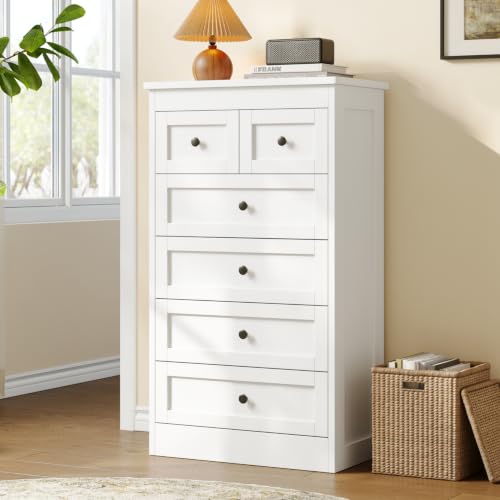
Tall Skinny Dresser for Closet: The Complete Guide
Turn unused closet corners into efficient storage with a tall, narrow dresser built for tight spaces. Learn sizing, drawer depth, materials, and layout strategies before you buy.
What Is a Tall Skinny Dresser?
A tall skinny dresser is a vertically oriented storage piece with a narrow footprint — typically somewhere between 18 and 30 inches wide — but a height that often reaches 48 to 60 inches or more. It stacks four, five, or even six drawers in a single column or a compact two-column layout. Unlike a wide horizontal dresser that spreads storage across the room, a tall narrow dresser concentrates capacity upward, which is exactly what a closet alcove, a sliver of wall between shelves, or the end of a walk-in wardrobe needs.
The category overlaps with what buyers search for as a narrow set of drawers for bedroom or a tall skinny dresser in general bedroom contexts. In a closet, however, the priorities shift: depth matters more than width, drawer glide smoothness matters more than decorative hardware, and ventilation matters more than a mirrored top. This page focuses on that closet-first perspective.
If your space is shallow rather than narrow, the companion guides on shallow depth dressers for small spaces and shallow dresser for small bedroom cover the depth-first trade-offs. For a closet specifically, the tall skinny format remains the most reliable fit because it uses the vertical cavity that closets naturally provide.
Key Dimensions to Measure Before Buying
Closet dressers fail in one of two ways: they are a fraction of an inch too wide for the opening, or they leave no clearance for drawers to open. Measure these four figures before you shop:
| Measurement | What to Check | Typical Closet-Friendly Range |
|---|---|---|
| Width | Clear opening between closet walls or shelving brackets | 18–30 inches |
| Depth | Front face to back panel, plus clearance for drawer pull-out | 14–20 inches |
| Height | Floor to top surface, accounting for any shelf above | 48–60 inches |
| Drawer Extension | Distance drawers travel forward when fully open | Full extension needs roughly the drawer depth again |
A common mistake is measuring only the dresser body and forgetting that a full-extension drawer needs nearly its own depth again in front clearance. In a narrow closet corridor, a 16-inch-deep drawer that extends fully will occupy 32 inches of walking space. If that is too tight, choose a three-quarter extension glide or a model with shallower drawers. The narrow white dresser and narrow wooden chest of drawers pages show how these dimensions play out in real configurations.
Drawer Depth: The Hidden Specification
Drawer depth is where tall skinny dressers diverge most sharply. A closet dresser can be narrow on the outside but generous front-to-back, and that internal depth determines whether you can store sweaters, jeans, or only accessories.
- Shallow drawers (under 12 inches internal): Best for folded shirts, socks, underwear, and accessories. Easier to see and reach, but limited volume.
- Standard drawers (12–16 inches internal): The balanced choice for most closets. Handles folded knitwear, t-shirts, and lightweight bedding.
- Deep drawers (over 16 inches internal): Suited to bulky sweaters, jeans stacks, and off-season clothing. Check that the closet corridor allows full extension.
If your priority is maximum capacity in a narrow column, look at models described as having deep drawers in a tall wood dresser or a tall white dresser with deep drawers. These formats trade a little reachability for significantly more volume per square foot of floor space. For closets used primarily for folded everyday clothing, standard depth is usually the smarter balance.
Quality Tiers: What Changes as You Move Up
Rather than anchoring on figures, it helps to understand how tall skinny dressers differ across quality tiers. The classification below is relative and consistent across this guide.
Entry-Level Tier
Engineered wood panels, stapled or cam-lock assembly, and partial-extension roller glides. Adequate for light closet use and seasonal rotation, but expect more flex in the frame and simpler drawer bottoms.
Mid-Range Tier
Solid wood fronts with engineered cores, dovetail or reinforced box joints, and smooth ball-bearing glides. This is the sweet spot for a closet dresser used daily — sturdy enough for heavy sweaters and stable enough to resist wobble in a narrow column.
Premium Tier
Solid hardwood construction, full-extension soft-close glides, dust panels between drawers, and a finished back panel. These details matter in a closet because the dresser is often visible from the side and pushed against a wall.
Luxury Tier
Hand-finished hardwoods, custom hardware, felt-lined top drawers, and joinery built for decades of use. Chosen when the dresser is a permanent architectural fixture rather than a temporary storage solution.
For a closet installation, the mid-range tier usually delivers the best balance of stability, glide smoothness, and long-term durability. Entry-level works for guest closets and dorm rooms, where the dorm dresser page covers similar constraints. Premium and luxury tiers make sense when the dresser doubles as a visible furniture piece in a walk-in wardrobe.
Layout Strategies for Narrow Closet Spaces
Where you place the dresser inside the closet determines how usable it actually is. Four layouts work reliably:
- End-of-run placement: The dresser sits at the short end of a walk-in closet, facing down the corridor. This gives full drawer extension without blocking hanging rods. It is the most comfortable configuration when space allows.
- Side alcove placement: The dresser tucks into a recessed nook beside hanging sections. Measure the opening precisely; a 24-inch dresser in a 25-inch alcove leaves almost no room for your knuckles when pulling a drawer.
- Under-shelf stacking: A shorter tall dresser (around 48 inches) slides beneath an existing closet shelf, using the vertical gap that would otherwise be dead space. This is where the short chest of drawers for closet format becomes relevant.
- Freestanding corner: A narrow dresser placed diagonally or flush against a corner wall outside the closet proper, used as an overflow station. The narrow drawer set format suits this best.
Whichever layout you choose, leave at least 24 inches of clear floor in front of the dresser if you want comfortable daily use. In tighter corridors, prioritize drawers that open at least three-quarters of the way rather than full extension.
Materials and Finishes That Suit Closets
Closets are enclosed, often humid, and frequently unheated. Material choice affects longevity more than it does in an open bedroom.
- Solid wood (oak, pine, maple, walnut): Durable and repairable, but sensitive to humidity swings. A solid pine dresser is a practical choice for dry climates; a walnut wood dresser suits climate-controlled walk-ins.
- Engineered wood with laminate or veneer: Dimensionally stable and resistant to minor moisture changes. Best for basements, garages converted to closets, and rental units.
- Painted finishes: A narrow white dresser brightens dark closets and hides scuffs. White finishes also make a tight space feel less cramped.
- Natural or light wood tones: A natural oak dresser or light wood chest of drawers brings warmth without darkening the space.
Avoid unfinished surfaces in closets unless you plan to seal them; raw wood absorbs moisture and odors. If you are refinishing an existing piece, the unfinished dresser guide covers sealing and finishing steps.
Features Worth Prioritizing
- Anti-tip hardware: Non-negotiable for any tall dresser. A 60-inch column has a high center of gravity and must be anchored to the wall or closet framing.
- Full-extension or soft-close glides: In a narrow space, smooth glides reduce the force needed to open drawers and prevent jamming against walls.
- Finished back panel: Closets often expose the rear of furniture. A finished back looks intentional and resists moisture.
- Dust panels between drawers: Keeps clothing clean and adds structural rigidity to a tall frame.
- Adjustable leveling feet: Closet floors are rarely perfectly level, and a tall narrow dresser wobbles noticeably without them.
- Recessed or low-profile pulls: Standard knobs protrude and catch on clothing in tight corridors. Consider pull handles for dresser drawers that sit flush.
Organizing a Tall Skinny Dresser Inside a Closet
A narrow vertical dresser rewards intentional organization because each drawer holds a single category cleanly. A practical assignment:
- Top drawer: Accessories, socks, underwear, and small items that benefit from quick access.
- Second drawer: Folded t-shirts and lightweight tops.
- Third drawer: Knitwear and sweaters, folded vertically to maximize visible inventory.
- Fourth drawer: Jeans and heavier bottoms.
- Bottom drawer: Off-season clothing, bedding, or overflow storage.
Pair the dresser with complementary closet systems so folded clothing does not compete with hanging space. The dresser closet combo guide explores integrated layouts, while the storage dresser overview covers multi-purpose formats. If the closet also stores jewelry or valuables, a dresser with a hidden jewelry drawer keeps small items secure without a separate box.
Common Mistakes to Avoid
- Ignoring drawer extension clearance: The single most common error. Measure the corridor, not just the dresser.
- Choosing height over stability: Very tall, very narrow units can feel top-heavy. Prioritize models with a wider base or included anti-tip kit.
- Overlooking the closet ceiling or shelf: A 60-inch dresser under a 58-inch shelf will not fit. Measure the vertical opening too.
- Buying before checking the return policy: Closet fit is unforgiving. Confirm the retailer accepts returns on assembled or opened furniture.
- Skipping the finished back: In a closet, the back is often visible. Unfinished backs look temporary and collect dust.
If you are still deciding between a vertical and horizontal format, the tall and wide dressers comparison clarifies the trade-offs, and the dresser budget guide helps you allocate spending across tiers without overcommitting to features you will not use in a closet.
Frequently Asked Questions
How narrow can a tall dresser be and still be useful?
Around 18 inches wide is the practical lower limit for a functional tall dresser. Below that, drawers become too narrow for folded clothing and the frame loses stability. For very tight closets, an 18–22 inch wide model with deep drawers is a better compromise than a wider unit that does not fit.
Is a tall skinny dresser safe in a closet?
Yes, provided it is anchored to the wall or closet framing with anti-tip hardware. Tall narrow dressers have a higher center of gravity than low dressers, so anchoring is essential, especially in households with children or pets. Never rely on the dresser's own weight to keep it upright.
What is the difference between a tall skinny dresser and a lingerie chest?
A lingerie chest is typically narrower and shallower, with many small drawers designed for accessories and intimate apparel. A tall skinny dresser for closet use usually has fewer, larger drawers suited to folded clothing. If your closet stores mostly small items, a lingerie-style layout works; for everyday clothing, a standard tall narrow dresser is more practical.
Should I choose full-extension drawers in a narrow closet?
Only if the corridor allows it. Full-extension drawers need roughly their own depth again in front clearance. In tight walk-in closets, three-quarter extension glides are often the smarter choice because they still expose most of the drawer contents without requiring the full pull-out distance.
Can a tall skinny dresser replace closet shelving?
Partially. A tall narrow dresser handles folded clothing and accessories well, but it does not replace hanging rods or high shelves for bulky items. The most efficient closets combine a narrow dresser with hanging sections and a top shelf, as explored in the dresser closet combo guide.
What material is best for a closet dresser in a humid room?
Engineered wood with sealed laminate or veneer handles humidity swings better than solid wood in most cases. If you prefer solid wood, choose a species with good dimensional stability and keep the closet ventilated. Avoid unfinished surfaces in humid closets.
Final Buying Checklist
- Measured closet width, depth, and height, including shelf clearance
- Confirmed drawer extension clearance in the walking corridor
- Selected a drawer depth that matches the clothing you store
- Chosen a quality tier appropriate to daily use frequency
- Verified anti-tip hardware is included or available
- Checked that the back panel is finished for closet visibility
- Confirmed the dresser fits through the closet doorway during delivery
- Reviewed the return policy before assembly
With those checks complete, a tall skinny dresser becomes one of the most efficient storage investments a small closet can hold. For related narrow formats, explore the tall skinny dresser overview and the narrow drawer set for bedroom guide.