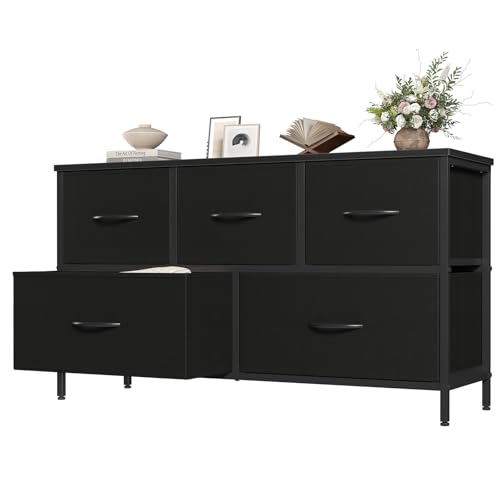
Short Chest of Drawers for Closet: The Complete Guide
Maximize your closet storage with a low-profile chest that fits under hanging rods, keeps folded clothing organized, and blends seamlessly into your space.
START EXPLORINGWhy a short chest works in a closet: A closet is often the most underused storage zone in a bedroom. A short chest of drawers turns wasted floor space beneath hanging clothes into a functional organization hub. This guide covers sizing, drawer layouts, materials, and placement so you can choose a piece that fits your closet perfectly.
What Makes a Short Chest of Drawers Ideal for Closets?
A short chest of drawers is defined by its low profile, typically standing between 30 and 42 inches tall. Unlike a tall skinny dresser for closet that maximizes vertical space, a short chest prioritizes a compact footprint and accessible top surface. In a closet, this height range creates a natural split: drawers for folded items below, hanging space above.
The key advantage is spatial efficiency. Most closets have limited floor area, and a short chest occupies only a small rectangle while delivering multiple drawers of storage. It also keeps frequently used items at arm's reach, reducing the need to dig through bins or reach high shelves.
Short Chest Sizes and Closet Placement
Before choosing a chest, measure your closet carefully. The two critical dimensions are the height clearance under your hanging rod and the depth of the closet floor area. A standard hanging rod sits 60 to 66 inches from the floor, leaving roughly 20 to 36 inches of clearance for a chest and its top surface.
| Tier | Typical Height | Best For |
|---|---|---|
| Entry-level | 30–34 inches | Small closets with low clearance; light storage |
| Mid-range | 34–38 inches | Standard closets; everyday folded clothing |
| Premium | 38–42 inches | Larger walk-in closets; heavy-duty drawer use |
For tighter spaces, a shallow depth dresser for small spaces can be a better fit than a full-depth chest. If your closet is narrow, consider a narrow set of drawers for bedroom that slides into a side alcove.
Drawer Configuration: How Many Drawers Do You Need?
The number of drawers directly affects how well you can separate clothing categories. A short chest typically offers three to five drawers, each with distinct advantages.
- Three drawers: Best for broad categories — tops, bottoms, and accessories. Ideal for entry-level closets or guest rooms.
- Four drawers: A balanced tier that separates socks and undergarments from folded shirts and seasonal items.
- Five drawers: The top-tier layout for serious organization, often including a shallow top drawer for jewelry or small accessories.
Drawer depth matters as much as count. Deep drawers suit bulky sweaters and linens, while shallow drawers work better for socks, ties, and delicates. If you need extra separation, look for a chest of drawers with shelves that combines open shelving with closed storage.
Materials and Construction: What to Look For
Closets can be humid, especially in bathrooms or basements, so material choice affects longevity. Solid wood and high-grade engineered wood with reinforced joinery are the most durable options. A high-quality solid wood dresser resists warping and holds screws tightly over years of use.
For a natural look, a solid pine dresser offers a classic feel and takes paint or stain well. If you prefer a warmer tone, a walnut wood dresser brings depth and richness to a closet interior. Entry-level models often use particle board with laminate; these are serviceable but less resistant to moisture and heavy loads.
Check the drawer glides. Mid-range and premium chests typically feature metal ball-bearing slides or dovetail joinery, which operate more smoothly and last longer than basic stapled construction.
Placement Strategies for Closet Chests
Where you place the chest determines how usable your closet becomes. Consider these layouts:
- Under the hanging rod: The classic placement. Leave at least 4 inches between the chest top and the lowest hanging garment.
- At the closet end wall: Fits a narrow wooden chest of drawers without blocking the walking path.
- Beside a shoe rack: A low profile dresser pairs well with vertical shoe storage.
- As a closet island: In walk-in closets, a short chest can anchor the center, though you will need a wide dresser with deep drawers for this layout.
Organization Tips for Closet Chest Drawers
A short chest works best when each drawer has a clear purpose. Assign the top drawer to small items like socks, undergarments, or jewelry. Middle drawers suit folded shirts and trousers. Bottom drawers handle bulky items such as sweaters, workout clothes, or off-season linens.
Use drawer dividers to keep categories separate. For small accessories, a dresser with hidden jewelry drawer adds a discreet storage layer. If your closet doubles as a dressing area, a dresser bench can provide seating without sacrificing drawer space.
Short Chest vs. Other Closet Storage Solutions
A short chest is not the only option. Compare it with alternatives to see which fits your needs:
- Tall skinny dresser: Better for narrow closets with high ceilings; offers more vertical storage but less top surface. See our guide to a tall skinny dresser.
- Cube storage dresser: Modular and flexible, but open cubbies expose items to dust. A cube storage dresser suits casual storage.
- Dresser closet combo: A built-in approach that merges hanging space with drawers. Explore a dresser closet combo for custom layouts.
- Storage dresser: A broader category that includes chests with mixed storage. See our storage dresser overview.
Safety and Durability Considerations
Closet chests are often placed in tight spaces where tipping risk increases. Look for models with anti-tip hardware or wall-anchoring kits. Drawer stops prevent drawers from pulling out fully, which is important in narrow closets.
For children's closets, a children's dresser with rounded edges and secure glides adds safety. If the closet serves a nursery, consider a nursery dresser designed with child-safe features.
Frequently Asked Questions
What is the ideal height for a short chest of drawers in a closet?
A short chest for a closet typically ranges from 30 to 42 inches tall. This leaves clearance for hanging rods above and keeps the top surface accessible without a step stool.
How many drawers should a closet chest have?
Most closet chests offer three to five drawers. Three-drawer models suit folded clothing and accessories, while four- or five-drawer versions provide better separation for socks, undergarments, and seasonal items.
Can a short chest of drawers fit under a hanging rod?
Yes, if the chest height plus required hanging space fits your closet. Standard hanging rods sit around 60 to 66 inches from the floor, so a chest under 42 inches leaves adequate room for shirts and dresses.
What material is best for a closet chest of drawers?
Solid wood and high-grade engineered wood with reinforced joinery offer the best durability. These materials resist humidity fluctuations and hold up well to daily drawer use.
Ready to upgrade your closet? Browse our recommended short chests of drawers below, selected for closet-friendly dimensions, durable construction, and smart drawer layouts.