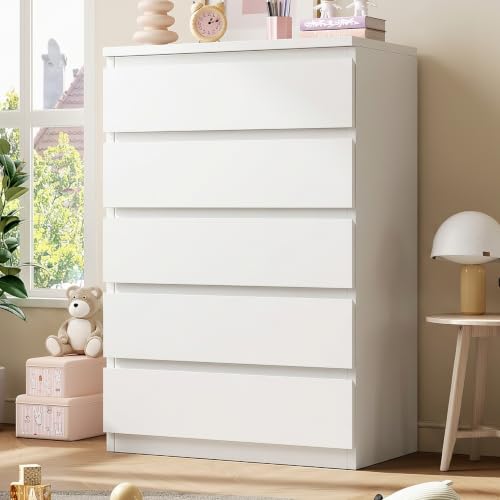
Tall White Dresser with Deep Drawers: The Complete Buying Guide
Everything you need to know about choosing a tall white dresser with deep drawers — storage capacity, drawer glide quality, material durability, and room-by-room fit.
Explore Recommended ModelsWhy this guide matters: A tall white dresser with deep drawers solves two common bedroom problems at once — limited floor space and inadequate clothing storage. The vertical footprint preserves valuable floor area, while the deep drawers accommodate bulkier items like sweaters, denim, and bedding that standard shallow drawers cannot handle. This guide walks you through every consideration so you can choose confidently.
Why a Tall White Dresser with Deep Drawers Works
A tall white dresser with deep drawers is a practical storage solution for bedrooms where floor space is limited but clothing volume is not. The vertical design maximizes wall height, while the white finish creates an airy, open feel that prevents the piece from visually dominating the room. Deep drawers, typically measuring between 14 and 18 inches in interior depth, hold folded sweaters, linens, and seasonal items that would otherwise overflow shallower units.
This combination of height and drawer depth makes the piece especially useful in smaller bedrooms, guest rooms, and apartments. Rather than spreading storage across multiple pieces of furniture, a single tall dresser consolidates clothing organization into one footprint. For additional space-saving options, explore our guide to tall skinny dressers and shallow dressers for small bedrooms.
Key Features to Evaluate Before Buying
Drawer Depth & Volume
Deep drawers should measure at least 14 inches internally. Verify interior dimensions rather than exterior drawer fronts, since frame construction reduces usable space.
Drawer Glide Mechanism
Metal ball-bearing glides with full-extension travel are the standard for mid-range and premium tiers. Entry-level models often use nylon rollers that wear faster under heavy loads.
Material & Construction
Solid wood frames and drawer boxes outperform engineered wood in load-bearing capacity and longevity. Look for dovetail or reinforced corner joinery on drawer boxes.
Tip-Restraint Safety
Tall dressers must include anti-tip hardware. Deep drawers shift the center of gravity forward when opened, making wall anchoring essential — especially in homes with children.
Finish Durability
White finishes range from painted MDF to catalyzed lacquer and water-based polyurethane. Higher-tier finishes resist yellowing, chipping, and daily wear more effectively.
Height-to-Width Ratio
Tall dressers typically stand 48 to 60 inches high. Ensure the width-to-height ratio feels stable and that the top surface remains reachable for everyday items.
Quality Tiers: What to Expect at Each Level
The market for tall white dressers with deep drawers spans several quality tiers. Understanding what each tier offers helps you align expectations with intended use and lifespan.
| Tier | Construction & Materials | Drawer Glides | Best For |
|---|---|---|---|
| Entry-level | Engineered wood with laminated or painted finish; stapled or cam-lock joinery | Nylon roller glides, partial extension | Guest rooms, temporary setups, light-duty use |
| Mid-range | Engineered wood core with solid wood veneer or painted MDF; reinforced corner blocks | Metal ball-bearing glides, three-quarter extension | Primary bedrooms with moderate daily use |
| Premium | Solid wood frame and drawer boxes; dovetail joinery; catalyzed lacquer finish | Full-extension ball-bearing glides with soft-close | High-use bedrooms, long-term ownership |
| Luxury | Hardwood construction throughout; hand-finished details; premium hardware | Undermount soft-close glides with heavy-load rating | Design-focused spaces, heirloom-quality expectations |
Mid-range models generally represent the most balanced choice for a primary bedroom, offering metal glides and reinforced construction that handle daily use without the full investment of a premium solid-wood piece. If you are comparing storage formats more broadly, our overview of wide dressers with deep drawers explains how horizontal configurations differ from tall vertical designs.
How to Organize Deep Drawers Effectively
Deep drawers are generous but can become disorganized without a system. The most effective approach separates the drawer interior into zones using dividers and shallow trays. Bulky items like folded sweaters and jeans belong at the bottom of the stack, while smaller items such as socks, undergarments, and accessories sit in divided trays on top.
Vertical folding — storing garments upright rather than stacked flat — dramatically improves visibility in deep drawers. This method lets you see every item at a glance and removes the need to dig through layers. Pair vertical folding with drawer dividers to keep categories separated. For smaller bedrooms where every inch matters, the strategies in our shallow-depth dresser guide complement deep-drawer organization nicely.
Matching a Tall White Dresser to Your Room
Height and placement matter as much as drawer depth. In a standard bedroom, a tall dresser works well against a wall adjacent to the bed or opposite the footboard. Leave at least 30 inches of clearance in front of the dresser so drawers can fully extend without obstruction.
White finishes visually recede, making tall pieces feel less imposing in compact rooms. If your bedroom is particularly narrow, consider a narrow white dresser or a tall skinny dresser for closet placement. For rooms that need both vertical storage and a companion piece, a tall and wide dresser may offer a better balance. If your needs skew toward darker tones, the considerations in our tall wood dresser with deep drawers guide apply similarly.
Ready to Compare Models?
Review our curated selection of tall white dressers with deep drawers below, chosen for storage capacity, glide quality, and construction durability.
Safety Considerations for Tall Dressers
Tall dressers with deep drawers carry a higher tip-over risk than low-profile designs, particularly when multiple drawers are open simultaneously. Always install the included anti-tip strap or wall anchor. If the dresser does not include hardware, a basic furniture wall-anchoring kit can be installed in minutes.
Place heavier items in lower drawers to keep the center of gravity low. Avoid placing televisions or heavy decor on top of a tall dresser unless the unit is explicitly rated for that load. Families with young children should prioritize models with interlocking drawer systems that prevent multiple drawers from opening at once.
Frequently Asked Questions
How deep should drawers be in a tall dresser?
Interior drawer depth of 14 to 18 inches is ideal for clothing storage. Depths under 12 inches limit usefulness for bulky items like sweaters, while depths over 18 inches can make items at the back difficult to reach.
Is a tall white dresser suitable for a small bedroom?
Yes. The vertical footprint uses wall height rather than floor area, which preserves walking space. White finishes also reduce visual weight, making the room feel less crowded.
What is the difference between deep drawers and standard drawers?
Standard dresser drawers typically measure 6 to 8 inches in interior depth, suited to folded shirts and accessories. Deep drawers measure 14 inches or more, accommodating sweaters, denim, bedding, and seasonal items.
Do tall dressers need to be anchored to the wall?
Yes. Anti-tip anchoring is strongly recommended for any dresser over 30 inches tall. Deep drawers shift weight forward when opened, increasing tip-over risk without a wall anchor.
How many drawers should a tall white dresser have?
Most tall dressers have four to six drawers. Five-drawer configurations are the most common, balancing deep lower drawers for bulky items with shallower upper drawers for smaller accessories.