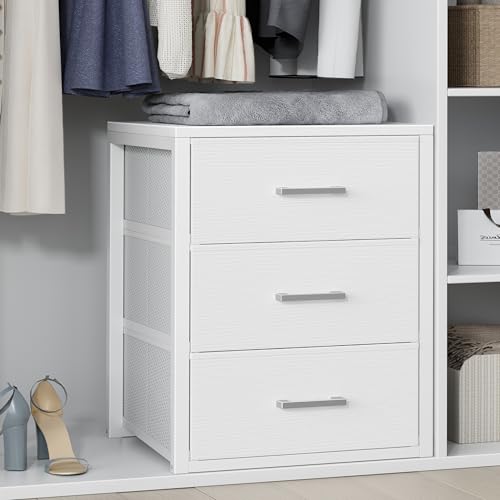
Why Choose a Small Dresser for Your Closet?
Closets are often treated as purely vertical storage, but the floor area beneath short-hanging garments and shelving can be used far more efficiently. A small dresser to put in closet solves several common problems at once. It captures unused floor space, provides closed storage for folded clothing and accessories, and reduces clutter that would otherwise migrate to bedroom surfaces.
For apartment dwellers and anyone living in a compact bedroom, moving clothing storage into the closet can be transformative. Instead of dedicating a large wall to a full-size dresser, a compact unit allows the bedroom to serve as a restful, uncluttered space. The closet becomes a complete wardrobe zone where hanging, shelving, and folded storage coexist.
A closet dresser also improves daily routines. Clothing, undergarments, and accessories are grouped in one location, which makes getting dressed faster and keeps the bedroom tidier. If your closet has an awkward corner or a short wall beneath a shelf, a small chest of drawers for closet use can turn that dead zone into functional storage.
Key Measurements Before You Buy
The single most important step is measuring your closet accurately. A dresser that looks compact online can still block hanging space or make drawers impossible to open. Measure the closet opening, the interior depth from back wall to door frame, and the available floor width. Also account for door swing and any shelving or hanging rods above.
- Width: Confirm the dresser fits between walls or beside hanging sections with room for drawer pulls.
- Depth: Standard closets are 24 inches deep; a dresser deeper than 18-20 inches may obstruct the doorway.
- Height: Ensure the top clears hanging rods or shelves, and that you can reach the top drawer comfortably.
- Clearance: Allow at least 18-24 inches in front of the dresser for opening drawers.
If your closet is particularly tight, a space-saving dresser design with a shallow profile or a small dresser that fits in closet openings can make the difference between a workable layout and a cramped one. For narrow gaps, consider a small white dresser for closet placement that visually blends with the walls.
Choosing the Right Configuration
Closet dressers come in several configurations, and the best choice depends on how much floor and vertical space you have. A tall, narrow unit maximizes vertical storage in a small footprint, while a wide, low unit fits beneath short hanging garments and provides a broad top surface for accessories or baskets.
Drawer count matters as much as overall size. A 4-drawer model is often sufficient for a single person's folded clothing, while a 5- or 6-drawer unit gives more flexibility for couples or seasonal items. Deep drawers are useful for bulky sweaters and linens, whereas shallow drawers work well for undergarments and accessories. A small dresser with deep drawers is a practical choice for storing thicker garments in a compact footprint.
If you need extra organization, look for models with felt-lined top drawers or built-in dividers. A small dresser with drawers that includes adjustable or removable dividers adapts well to changing storage needs. For a more traditional look, a small chest of drawers with a compact footprint can sit neatly inside a closet without dominating the space.
Materials and Build Quality
Closets can be more humid than the rest of the home, especially if they share a wall with a bathroom or are poorly ventilated. That makes material choice important. Solid wood is the most durable option and resists warping over time. Oak, pine, and walnut are common choices, each with distinct grain patterns and hardness levels. A solid wood dresser is a long-term investment that holds up well in a closet environment.
Engineered wood with a quality veneer is a practical mid-tier option. It is lighter and often more dimensionally stable in humid conditions, but edges and joints should be sealed to prevent moisture damage. If you are comparing construction types, our guide on solid wood vs engineered materials breaks down the trade-offs in detail.
For a natural look that pairs well with wood shelving, a small wood dresser offers warmth and versatility. A small oak dresser is particularly durable and works well in both traditional and modern closets. If you prefer a painted finish, a small painted chest of drawers can brighten a dark closet and hide minor wear.
Style Options for Closet Placement
Because a closet dresser is often partially hidden, style choices can be more practical than in a bedroom setting. That said, the dresser should still complement the closet's overall look, especially in walk-in closets where it may be visible. A small white dresser reflects light and makes a compact closet feel larger. A small grey dresser for bedroom or closet adds a neutral, modern tone that hides smudges well.
For a more distinctive look, a small dresser mid-century modern style with tapered legs and clean lines can elevate a walk-in closet. A small mid-century chest of drawers pairs especially well with open shelving and wood tones. If your closet has a rustic or vintage feel, a small mahogany chest of drawers brings a rich, classic character.
For a truly budget-conscious closet setup, a small dresser for closet cheap option in a simple finish can deliver essential storage without overcomplicating the design. Just be sure to check drawer glide quality and construction details, since these affect long-term durability more than appearance.
Assembly, Mobility, and Practical Details
Before ordering, consider how the dresser will get into the closet and whether assembly is required. A small dresser no assembly required model saves time and avoids the risk of damaging the unit during setup. Fully assembled dressers are often heavier, so verify that the closet doorway and hallway can accommodate the unit's dimensions.
Mobility is another factor. If you rearrange your closet seasonally, a small rolling cabinet with drawers can be moved easily. For a more permanent setup, a stationary unit with adjustable leveling feet is more stable on uneven floors.
Finally, think about drawer organization. Stackable organizers and dividers can extend the capacity of a small dresser, especially for undergarments and accessories. A stackable dresser drawer organizer system keeps items visible and accessible, which is especially useful in a low-light closet.
Comparing Dresser Tiers
To make the decision easier, it helps to think in terms of quality tiers rather than specific figures. The table below outlines what to expect at each tier for a closet dresser.
| Tier | Best For | Construction Notes |
|---|---|---|
| Entry-level | Temporary setups, dorms, guest closets | Engineered wood, basic glides, lighter weight |
| Mid-range | Primary closets, everyday use, apartments | Solid wood or quality veneer, smooth glides, reinforced joints |
| Premium | Walk-in closets, long-term use, design-focused spaces | Hardwood construction, soft-close drawers, dovetail joinery |
| Luxury | High-end walk-ins, custom closet systems | Premium hardwoods, hand-finished details, custom hardware |
A mid-range model usually offers the best balance for a closet dresser, since it combines durable construction with practical features like smooth drawer glides and sealed edges. Entry-level models are fine for light use, while premium and luxury tiers make sense when the dresser is a permanent, visible part of a well-designed closet.
Frequently Asked Questions
What size dresser fits in a standard closet?
A standard reach-in closet typically accommodates a dresser up to 30-36 inches wide and 18-22 inches deep, provided there is enough clearance in front of hanging clothes. Always measure your closet opening, interior depth, and available floor space before choosing a model.
Should I choose a tall narrow dresser or a wide low dresser for a closet?
A tall narrow dresser works well in closets with limited floor space because it uses vertical storage while keeping a small footprint. A wide low dresser is better when you have horizontal space beneath short hanging garments. Consider drawer accessibility and whether the closet has shelving above.
How many drawers do I need in a closet dresser?
For a single person, a 4-5 drawer dresser is usually enough for folded clothing, undergarments, and accessories. Couples or families may benefit from a 6-8 drawer model or two compact units. Drawer dividers and organizers can extend the capacity of any drawer count.
What material is best for a small dresser placed in a closet?
Solid wood is the most durable and long-lasting option for a closet dresser because it resists warping in humidity changes. Engineered wood with a quality veneer is a practical mid-tier alternative. For closets with moisture concerns, avoid particle board that lacks sealed edges.
Can I use a small dresser without assembly in a closet?
Yes, some small dressers are sold fully assembled or require only minimal setup. If you prefer a no-assembly option, look for models described as fully assembled or ready to use. Verify the product dimensions and weight to ensure it can be maneuvered through the closet doorway.
Final Thoughts
A small dresser is one of the most practical upgrades you can make to a closet. It turns unused floor space into organized storage, keeps folded clothing accessible, and helps the bedroom stay clutter-free. The key is to measure carefully, choose a configuration that matches your closet layout, and prioritize durable construction over cosmetic details.
Whether you need a narrow unit for a tight reach-in closet or a compact chest for a walk-in wardrobe, the right model will make daily dressing easier and keep your clothing organized for years. Use the recommendations below as a starting point, and compare features against your closet measurements before making a final choice.