
Small Dresser Guide: Compact Storage That Works Hard
Everything you need to choose a small dresser for tight bedrooms, narrow closets, and apartment living — sizes, drawer layouts, materials, and organization strategies.
EXPLORE TOP PICKSWhy a small dresser is often the smartest choice: In compact rooms, the right small dresser can free up floor space, double as a nightstand or entryway console, and still hold a full week of folded clothing. The key is matching the footprint to your room and the drawer layout to how you actually live.
What Qualifies as a Small Dresser?
A small dresser generally measures under 40 inches wide and 36 inches tall. Most compact models fall between 24 and 36 inches wide with a depth of 15 to 18 inches. That footprint lets the piece slide into a bedroom corner, sit inside a reach-in closet, or serve as a bedside console in a studio apartment without blocking walking paths.
The term covers several distinct formats, and understanding each one helps you narrow your search quickly:
- Narrow dressers: Tall, slim units designed for tight wall segments or closet alcoves. These maximize vertical storage in a small floor area.
- Low, wide dressers: Short units that fit beneath a window or a sloped ceiling while providing a long drawer run for folded clothing.
- Small chest of drawers: Compact drawer stacks with 3 to 5 drawers that prioritize height over width — practical beside a bed or inside a closet.
- Multi-purpose compact pieces: Dressers that double as changing tables, vanity tables, or entryway consoles with a drawer section.
If you are still deciding between format types, our comparison of a small chest of drawers versus a standard small dresser is a useful next read.
Small Dresser Dimensions: Size Guide by Room
Matching width and height to your available wall space is the single most important step. Use this guide as a starting point, then verify with a tape measure in the actual room.
| Room / Placement | Typical Footprint | Best For | Watch Out For |
|---|---|---|---|
| Compact bedroom (under 100 sq ft) | 24–32 in wide, 28–34 in tall | Narrow dressers, 3–4 drawer units | Door swing clearance and baseboard depth |
| Closet alcove or walk-in closet | 20–28 in wide, 40–52 in tall | Tall, slim chest of drawers | Ventilation gap behind the unit; shelf clearance |
| Studio or apartment alcove | 30–36 in wide, 30–36 in tall | Low, wide dresser doubling as a console | Depth relative to sofa or bed placement |
| Nursery or guest room | 30–38 in wide, 32–36 in tall | Small dresser with changing pad or top surface | Anchor points for child safety straps |
| Living room or entryway | 32–40 in wide, 28–32 in tall | Small chest with closed storage plus display top | Cable management for lamps and chargers |
For a more granular breakdown of fit by room, see our guides on small dressers for small bedrooms and small space dressers.
How Many Drawers Do You Actually Need?
Small dressers usually offer between 3 and 5 drawers, and the count matters more than the width. A single person who folds casual clothing and rotates seasonal items can work comfortably with 4 drawers if the bottom one is deep. Couples sharing a compact bedroom generally need 5 or more, or a dresser paired with a closet system.
- 3-drawer models: Best for a single user, guest rooms, or closets that only hold folded essentials. Choose models with at least one deep bottom drawer.
- 4-drawer models: The balanced tier for most small bedrooms. Two shallow drawers for undergarments and accessories, two medium drawers for tops and folded trousers.
- 5-drawer models: The top-tier compact configuration when you need to fit two people's folded clothing or store bedding without a separate chest.
If you want to store bulky sweaters or bedding, prioritize drawer depth over drawer count. Our article on small dressers with deep drawers explains how to evaluate interior depth before ordering.
Materials and Build Quality: What to Look For
A small dresser takes more daily contact than a larger piece because you open its drawers more often relative to its volume. Build quality is not a luxury — it is what keeps a compact unit from wobbling or sagging after a year of use.
Solid wood versus engineered panels. Solid wood frames and drawer boxes hold up best over time, especially in a humid bedroom. Mid-range and premium models often use solid wood fronts with engineered panels for the case body — a reasonable compromise. Entry-level models lean on particleboard with veneer, which is fine for a guest room but tends to show wear faster in a daily-use bedroom. Our solid wood versus engineered comparison covers this in detail.
Joinery and hardware. Look for dovetail drawer joints or reinforced corner blocks rather than staples alone. Metal drawer slides — especially heavy-duty stainless steel slides — outlast plastic track systems. Soft-close mechanisms are a mid-range and premium feature that reduce wear and noise in tight spaces.
Finish durability. Painted and laminate finishes resist scuffs better in high-traffic spots, while wood veneers with a clear topcoat suit bedrooms. Our small painted chest of drawers guide covers finish options if you like a colored piece.
Small Dresser Types by Style and Material
Once you have settled on dimensions and drawer count, style becomes the deciding factor. These are the most common small-dresser formats for compact rooms:
Wood and solid wood options
A small wood dresser is the classic choice for warmth and repairability. Oak and walnut hold up well to daily use, while pine is softer and better suited to guest rooms. If you want a natural grain look, our small oak dresser and solid walnut dresser guides go deeper on finish and grain matching. For painted finishes, a small white dresser or a grey piece keeps a compact room feeling open.
Mid-century and modern compact pieces
Mid-century modern dressers use tapered legs and clean fronts to make a small footprint feel airy. Our small mid-century modern dresser guide covers leg height, wood tone, and drawer alignment. If you prefer a classic case piece, a small mid-century chest of drawers offers similar styling in a narrower format.
Bedroom, closet, and specialty formats
Bedroom-focused shoppers should compare the small dresser for bedroom guide with the small dresser for closet guide. Closet units usually prioritize height and narrow depth, while bedroom units need a more stable base and a usable top surface.
- Small dressers that fit in a closet — measure door width and hinge clearance first.
- Small dressers to put in a closet — ventilation and shelf-height considerations.
- Small dressers with a mirror — a compact vanity-dresser combination.
- Small dressers with drawers — drawer layout comparisons across formats.
- Small dressers with no assembly required — for renters and quick setups.
- Small chests of drawers for closets — tall, narrow configurations.
Placement Ideas for Tight Spaces
Placement decides whether a compact dresser feels like a solution or a compromise. These configurations work in rooms of roughly 80 to 120 square feet:
- Bedside replacement: A 24–30 inch wide dresser can replace a nightstand, adding four times the storage in the same floor area. Pair it with a matching nightstand if you want symmetry — a small dresser and nightstand set simplifies that.
- Alcove or niche: Measure the recess depth, then choose a unit that leaves at least two inches of ventilation at the back. A small chest dresser or a space-saving dresser usually fits these recesses best.
- Closet interior: A tall, narrow unit at the end of a reach-in closet adds a full drawer bank without reducing hanging space. A small white dresser for a closet keeps the interior bright.
- Entryway or hallway: A low compact dresser works as a console with closed storage for shoes, gloves, and mail. A small chest of drawers for the living room guide covers styling and cable management.
- Bathroom storage: A narrow unit outside the shower zone can hold towels and toiletries — see small dresser for bathroom storage for moisture-safe materials.
For rooms that need a storage surface rather than a full dresser, a small chest of drawers bedside or a small rolling cabinet with drawers can be moved as needs change.
Organization Strategies for a Small Dresser
A small dresser holds more than its dimensions suggest when the interior is organized deliberately. These habits make the biggest difference:
- Use drawer dividers: A stackable dresser drawer organizer turns a shallow drawer into compartments for socks, undergarments, and accessories, eliminating wasted space.
- Fold vertically: Standing folded items upright lets you see everything in a drawer at once and fits more into each row.
- Assign by frequency: Keep daily items in the top two drawers and seasonal pieces in the bottom drawer or a storage bin under the bed.
- Rotate seasonally: Swap heavy sweaters out for lighter pieces each season so you never need more than one compact drawer for off-season clothing.
- Keep the top clear: A mostly clear top surface makes a compact dresser feel larger and gives you usable display or prep space.
For a step-by-step drawer system, see our dresser organization guide.
Mistakes to Avoid When Buying a Small Dresser
- Buying by width only. Depth and height determine whether the unit blocks a door, a baseboard heater, or a window sill. Measure all three dimensions.
- Skipping the drawer test. Read reviews that mention drawer wobble, slide smoothness, and whether the drawers pull out fully. Full-extension slides matter more in a compact unit because you have less room to reach around the drawer.
- Ignoring anchoring. Any dresser taller than 30 inches should be anchored to the wall, especially in a child's room. A small dresser is not automatically a safer dresser.
- Overlooking ventilation. A dresser pushed tight against a wall in a humid room traps moisture. Leave a small gap and avoid placing it against an exterior wall with condensation issues.
- Choosing style before fit. The most attractive compact dresser is useless if it does not clear the closet door. Measure first, then choose the finish and style.
Quality Tiers for Small Dressers
Small dressers span a wide range of build quality. Instead of comparing figures, use these tiers to set expectations for construction and longevity:
| Tier | Typical Construction | Best For |
|---|---|---|
| Entry-level | Engineered panels, stapled joints, plastic or basic metal slides | Guest rooms, dorm rooms, short-term rentals |
| Mid-range | Solid wood fronts, reinforced joints, metal slides, some soft-close | Daily-use bedrooms, shared apartments |
| Premium | Solid wood case and drawer boxes, dovetail joints, full-extension soft-close slides | Primary bedrooms, long-term investment pieces |
| Luxury / professional-grade | Hardwood throughout, hand-finished surfaces, commercial-grade hardware | Design-focused interiors, high-traffic homes |
As a general rule, mid-range compact dressers offer the most durable construction relative to their footprint, while entry-level models are best reserved for light-duty rooms. Premium and luxury tiers are worthwhile when the piece will be used daily for many years.
Frequently Asked Questions
What size counts as a small dresser?
A small dresser typically measures under 40 inches wide and no more than 36 inches tall, with most compact models falling between 24 and 36 inches wide. These dimensions allow the piece to fit into tight bedroom corners, narrow closet alcoves, and apartment alcoves without overwhelming the room.
How many drawers should a small dresser have?
Most small dressers offer between 3 and 5 drawers. A 3-drawer compact model suits one person's folded clothing, while a 4- or 5-drawer configuration adds room for accessories and linens. Prioritize deeper bottom drawers over an extra shallow drawer for better real-world storage.
Is a small dresser sturdy enough for everyday use?
Yes, when it is built well. Look for solid wood or high-grade engineered panels, dovetail or reinforced drawer joints, and metal drawer slides. Entry-level compact models often use stapled joints and thin panels, while mid-range and premium tiers typically include dovetail joinery and soft-close mechanisms.
Can a small dresser work in a closet?
Absolutely. A narrow, tall small dresser can sit inside a walk-in closet or at the end of a reach-in closet to capture vertical storage. Measure door clearance and leave at least two inches of ventilation space around the unit to prevent moisture buildup.
How do I keep a small dresser from feeling cramped?
Choose a light finish or a mirrored top to reflect light, keep the top surface mostly clear, and mount a slim mirror or floating shelf above the unit. Interior drawer dividers also let you fit more into each drawer, so you can choose a smaller footprint without losing capacity.
Ready to compare compact models?
Browse our curated selection of small dressers and storage pieces to find the right fit for your room.
See Recommended Small DressersRecommended Small Dressers & Compact Storage
⚠️ AFFILIATE DISCLOSURE: This website contains affiliate links. As an Amazon Associate, we earn from qualifying purchases. If you make a purchase through these links, we may receive a small commission at no additional cost to you. Read our full affiliate policy.

AODK Small Dresser for Bedroom with 4 Storage Drawers, Black | Dressers Chest of Drawers Fabric Dresser with Sturdy Steel Frame, Dressers for Closet with Wood Top
Check price on Amazon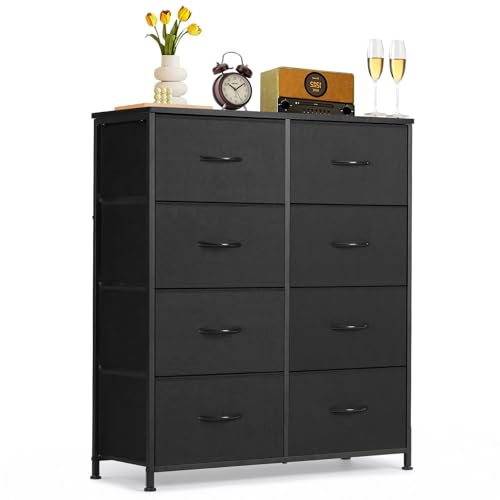
8-Drawer Dresser for Bedroom, Anti-Tip Tall Storage Organizer | Chest of Drawers with Wooden Top and Metal Frame Fabric Bins for Closet, Living Room, Hallway, Entryway, Black
Check price on Amazon
SONGMICS Dresser for Bedroom, Wide Dresser with 5 Fabric Drawers | Chest of Drawers with Steel Frame, for Closet & Entryway, Ink Black and Ebony Black, BELLAH Collection ULGS322B01S
Check price on Amazon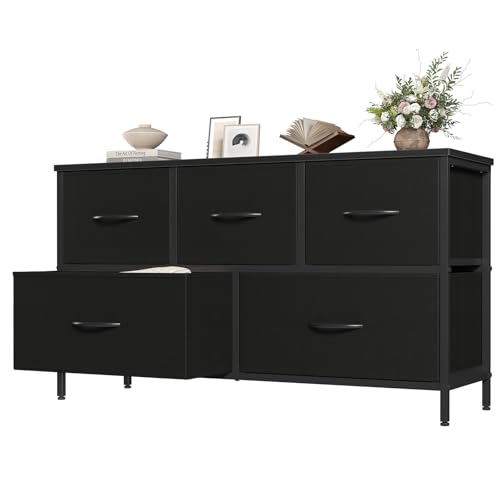
OLIXIS 5 Drawer Black Dresser for Bedroom, Closet Chest Organizer Furniture | TV Stand for Living Room Hallway, Wide Fabric Storage Tower with Wooden Top and Metal Frame
Check price on Amazon
Sweetcrispy 8 Drawer Fabric White Dresser for Bedroom, Tall Double Dresser | Chest of Drawers with Sturdy Steel Frame and Wooden Top, Closet Living Room Storage Organizer with Easy Pull Handles
Check price on Amazon
DUMOS Night Stand with 4 Fabric Drawers, Bedside Table for Bedroom | Night Stand with Removable Bins, Sturdy Steel Frame Wood Top, Organizer Furniture for Bedroom Closet, Living Room, Brown
Check price on Amazon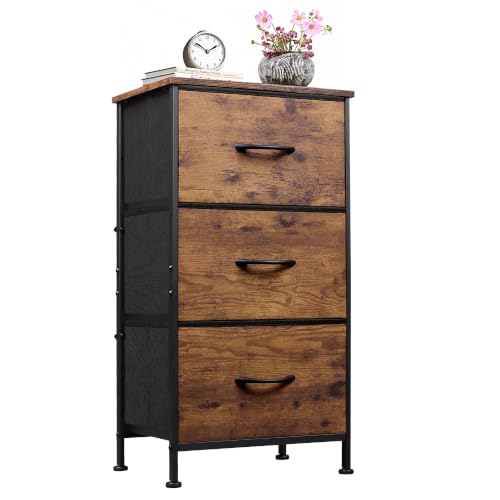
WLIVE Small Dresser Nightstand for Bedroom, 3 Drawers, Rustic Brown | 3 roomy fabric drawers, Compact nightstand, Bedroom or closet use, Chest of drawers, Dresser for small spaces
Check price on Amazon