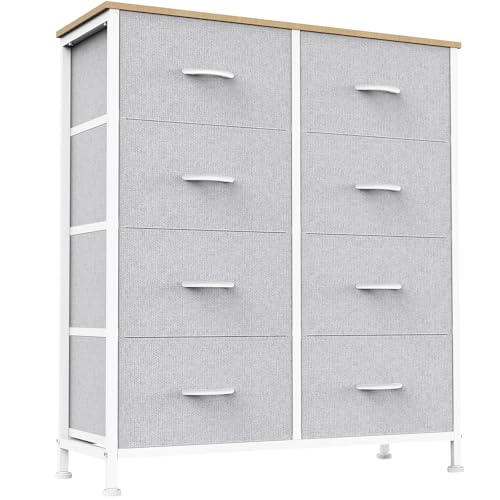
A small grey dresser for the bedroom solves a very specific problem: how to store folded clothing, accessories, and linens without crowding the room. Grey is one of the most adaptable finishes in bedroom furniture because it sits comfortably between warm wood tones and cool modern palettes. When you combine a compact footprint with a neutral grey finish, you get a piece that fits tight layouts, blends with existing decor, and stays visually calm in a space meant for rest.
This guide walks through the decisions that matter most: understanding true compact dimensions, choosing the right grey shade for your lighting, matching drawer counts to your wardrobe, evaluating construction quality, and styling the dresser so it feels intentional rather than squeezed in. If your storage needs extend beyond the bedroom, the same principles apply to a small chest dresser used in a hallway or guest room.
What Counts as a Small Grey Dresser for a Bedroom?
In furniture terms, a dresser is generally considered small when its width stays at or under roughly 40 inches. Depth is usually around 16 to 18 inches, and height commonly falls between 30 and 36 inches. Those numbers matter because a compact dresser still needs clearance: you want at least 24 inches of walking space in front of the drawers, and you want the top surface to sit below window sills or wall art if possible.
Typical compact configurations include three-drawer single-column units, four-drawer models with two small and two large drawers, and five-drawer narrow dressers that trade width for height. A tall narrow dresser with drawers is a strong option when floor space is the constraint but ceiling height is available. Conversely, a wider but shallow unit works better along a long empty wall.
| Compact Format | Typical Footprint | Best For |
|---|---|---|
| 3-drawer small dresser | Up to ~32" wide, ~16" deep | Guest rooms, single occupants, light storage |
| 4-drawer compact dresser | ~32–38" wide, ~18" deep | Couples needing mixed drawer sizes |
| 5-drawer narrow dresser | ~24–30" wide, taller profile | Small footprints with vertical space |
| Wide shallow dresser | ~40" wide, ~16" deep | Long walls, under-window placement |
Measure your room before comparing models. Note door swing paths, closet clearance, and the position of outlets. If the dresser will sit beside a bed, account for nightstand space or consider a coordinated set such as a small dresser and nightstand set that is designed to fit together proportionally.
Choosing the Right Grey Tone for a Small Bedroom
Grey is not a single color. In compact bedrooms, the shade you choose changes how large and bright the room feels. Light greys reflect more ambient light and keep small spaces feeling open. Mid-tone greys add presence without dominating. Dark charcoal greys create a grounded, moody look but need adequate lighting to avoid making a small room feel closed in.
Dove Grey & Soft Greige
Reflects light well and pairs with nearly any bedding color. The safest choice for rooms with limited natural light or pale walls.
Slate & Warm Grey
Balanced and versatile. Works with both wood floors and cool-toned carpets, and hides minor surface marks better than pale finishes.
Charcoal & Graphite
Adds visual weight and contrast. Best paired with light walls, layered lighting, and a mirror above the dresser to offset density.
Consider the undertone as well. Cool greys lean blue or silver and suit modern and minimalist bedrooms. Warm greys lean beige and blend naturally with oak, walnut, and rattan accents. If your bedroom already has strong wood tones, a warm grey reduces visual clash. If you are working with a neutral, cool palette, a cooler grey keeps the scheme consistent.
Finish sheen matters too. Matte and satin finishes are forgiving and easy to maintain, while high-gloss grey surfaces reflect light but show fingerprints more readily. For a compact bedroom that doubles as a dressing area, satin tends to be the most practical middle ground.
Drawer Count and Layout: Matching Storage to Your Routine
The number of drawers matters less than how the drawer sizes are distributed. A three-drawer dresser with three equally large drawers is excellent for bulky items like sweaters and jeans, but poor for socks and accessories. A four or five-drawer layout that combines shallow top drawers with deeper lower drawers usually organizes clothing more efficiently.
- Top shallow drawers: Ideal for socks, underwear, accessories, and folded t-shirts.
- Middle medium drawers: Best for shirts, activewear, and folded knitwear.
- Bottom deep drawers: Suited to jeans, bulky sweaters, and bedding.
Drawer glide quality is the detail buyers overlook most often. Entry-level models frequently use basic side-mounted glides that function but can feel uneven under load. Mid-range models typically upgrade to smoother ball-bearing glides with full extension, which lets you reach the back of the drawer. Premium and high-end tier dressers often use soft-close mechanisms and heavier-duty slides rated for frequent daily use. If you open your dresser several times a day, the glide upgrade is one of the most noticeable quality differences between tiers.
Interior drawer lining also separates tiers. Felt-lined top drawers protect jewelry and delicate items, while unfinished or paper-lined interiors are common in entry-level pieces. For a compact bedroom dresser used every day, a felt-lined top drawer is a practical feature rather than a luxury.
Materials and Construction Quality
Grey finishes appear on solid wood, engineered wood, and mixed-material dressers. Each brings different strengths. Solid wood offers repairability, structural longevity, and the ability to be refinished or repainted later. Engineered wood with a quality veneer or laminate delivers a stable, consistent surface and often a more uniform grey color across panels. The key is understanding what you are getting; our comparison of solid wood versus engineered construction explains the trade-offs in detail.
For bedroom use, check these construction signals regardless of material:
- Joinery: Dovetail or finger-joint drawer boxes resist separation better than stapled or glued corners.
- Back panel: A rigid, properly attached back panel prevents racking and keeps the dresser square over time.
- Drawer supports: Corner blocks or center supports under wide drawers reduce sagging.
- Finish durability: A factory-applied, low-VOC finish resists chipping and is safer for bedroom air quality.
- Stability hardware: Anti-tip brackets are essential, especially in bedrooms and homes with children.
If longevity and refinishing potential are priorities, a solid wood small chest of drawers is worth considering. Solid wood also takes paint well if you later decide to change the finish or refresh the piece.
Style Pairings for a Small Grey Bedroom Dresser
Grey is flexible enough to anchor several bedroom aesthetics. Modern and minimalist rooms benefit from flat-front drawers and slim metal pulls. Farmhouse and transitional spaces suit shaker-style drawer fronts with cup pulls or simple knobs. Mid-century-inspired rooms pair well with tapered legs and a warm grey finish over wood grain.
Hardware is the fastest way to shift a grey dresser's personality. Gold and brass pulls warm up cool grey finishes and add a boutique feel. Matte black hardware reads more industrial and graphic. Wooden knobs soften the piece for coastal or Scandinavian schemes. Because hardware is easy to swap later, it is a low-commitment way to customize a compact dresser.
Stool or bench placement matters in small rooms. A low stool tucked beside or beneath the dresser keeps the footprint tight while giving you a spot to sit while getting dressed. If you prefer a more traditional setup, a small dresser with mirror adds function without requiring separate wall space for a mirror.
Styling a Compact Grey Dresser Without Clutter
The top surface of a small dresser is prime real estate, and it is easy to overload. Aim for three to five objects grouped with intention rather than a scattered collection. A small tray corrals jewelry and everyday items, a single lamp provides task lighting, and one decorative object or plant adds personality. Everything else belongs in a drawer or on the wall.
- Use vertical space: A wall-mounted shelf or a mirror above the dresser adds function without consuming floor area.
- Keep the top 70 percent clear: Visual breathing room makes a compact dresser feel larger and more deliberate.
- Add a catch-all tray: A single tray stops small items from spreading across the surface.
- Choose a low-profile lamp: A slim lamp preserves sightlines and prevents the dresser from feeling top-heavy.
Inside the drawers, dividers and organizers multiply usable space. A stackable dresser drawer organizer keeps folded items upright and visible, which makes a compact dresser function like a larger one. Organizing by category rather than by season also reduces the amount of clothing that ends up piled on top.
Placement Tips for Small Bedrooms
Where you place a compact grey dresser affects both function and how spacious the room feels. Along the wall opposite the bed is the most common arrangement because it keeps the walkway clear. If the room is narrow, a corner or perpendicular placement can preserve floor space. Avoid blocking closet doors or radiator panels, and leave enough clearance for drawers to open fully.
Lighting placement is equally important. A dresser positioned near a window benefits from natural light that highlights the grey finish. A dresser on a dark wall benefits from a lamp or wall sconce to prevent the piece from disappearing into shadow. In rooms with limited floor area, a small space dresser chosen specifically for compact layouts will usually fit better than a standard-width model.
If your bedroom storage needs are broader than one dresser, combine the dresser with under-bed storage or a storage bed. A storage bed handles bulky items and lets the dresser focus on daily clothing. This division of storage reduces pressure on the dresser and keeps it from becoming overstuffed.
Common Buying Mistakes to Avoid
- Buying by photo alone: Grey finishes look different under warm versus cool lighting. Check finish samples or reviews that mention color accuracy.
- Ignoring drawer extension: A dresser without full-extension glides loses usable depth, which matters most in compact units.
- Underestimating depth: An 18-inch deep dresser can protrude into walkways more than expected. Measure the full footprint, not just the width.
- Skipping anti-tip hardware: Tall narrow dressers require wall anchoring for safety, especially in homes with children or pets.
- Overlooking assembly requirements: Some compact dressers ship flat-packed. Check whether assembly is required and how complex it is before ordering.
Quick Buyer's Checklist
- Confirm width, depth, and height against your room measurements
- Choose a grey tone that matches your lighting and existing palette
- Verify drawer sizes are distributed for your clothing types
- Check for full-extension or soft-close glides
- Look for dovetail or reinforced drawer box joinery
- Confirm anti-tip hardware is included
- Review hardware style and whether it can be swapped later
- Check assembly requirements before purchase
Frequently Asked Questions
What size is considered a small grey dresser for a bedroom?
A small grey dresser typically measures up to about 40 inches wide, 18 inches deep, and 36 inches tall. Compact models in this range fit narrow walls, shared bedrooms, and tight floor plans without dominating the space.
Which grey finish works best in a small bedroom?
Light and mid-tone greys such as dove grey, greige, and slate work best in small bedrooms because they reflect light and keep the room feeling open. Darker charcoal finishes can work well when paired with lighter walls and layered lighting.
How many drawers should a small grey bedroom dresser have?
Most compact grey dressers offer three to five drawers. A three-drawer model suits lighter storage needs, while four or five-drawer layouts with mixed drawer sizes organize clothing and accessories more efficiently.
Is solid wood better than engineered wood for a small dresser?
Solid wood offers repairability and refinishing potential over time, while engineered wood with a quality veneer provides a stable, consistent surface. Both can be durable; the deciding factor is construction quality, joinery, and hardware rather than material type alone.
Can a small grey dresser be used outside the bedroom?
Yes. Compact grey dressers work well in closets, living rooms, entryways, and nurseries because the neutral finish blends with many decor styles. The same sizing and quality considerations apply in those spaces.
Final Thoughts
A small grey dresser is a practical, versatile choice for a bedroom where space is limited but organization still matters. Focus on accurate measurements, a grey tone that suits your light and palette, a drawer layout that matches your clothing, and construction details like glide quality and joinery. Get those four factors right, and the dresser will serve you comfortably for years without making the room feel crowded.
If you are still exploring options, our broader collection of small dressers for sale covers additional sizes, finishes, and configurations beyond grey. Pairing this guide with that overview gives you a complete picture before you decide.