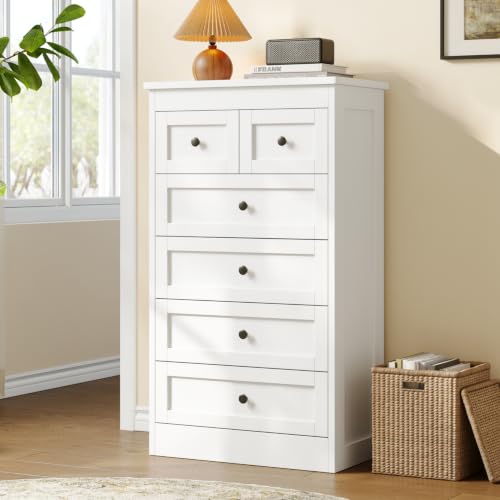
Space Saving Dresser: Smart Storage for Small Bedrooms
Compact designs, clever footprints, and practical storage solutions for apartments, guest rooms, and tight bedroom layouts.
Explore Buying FactorsWhy a space saving dresser matters: In a small bedroom, every inch counts. The right compact dresser keeps your wardrobe organized without crowding your floor plan, blocking walkways, or dominating the room visually. This guide explains how to choose a unit that fits your space and your storage needs.
What Makes a Dresser Space Saving?
A space saving dresser is designed to deliver maximum storage within a minimal footprint. Unlike full-size bedroom dressers that can span 60 inches or more in width, compact models prioritize vertical storage, shallow depth, or modular configurations. The goal is simple: keep your clothing organized while preserving floor space for movement, furniture arrangement, and visual breathing room.
The most effective space saving dressers share three characteristics. First, they use a narrow or shallow profile that fits against walls, inside closets, or in awkward corners. Second, they maximize height rather than width, stacking drawers vertically to increase capacity without expanding the footprint. Third, they often incorporate multi-purpose features such as rolling casters, stackable modules, or integrated mirrors that reduce the need for additional furniture.
For anyone furnishing a studio apartment, a guest bedroom, a dorm room, or a compact primary bedroom, choosing the right compact dresser is one of the highest-impact storage decisions you can make. A well-chosen unit can replace a bulky wardrobe, free up closet space, and even serve as a bedside table or vanity station depending on the design.
Types of Space Saving Dressers
Not every compact dresser solves the same problem. Some are narrow enough to slot into tight wall spaces, while others are shallow enough to sit inside a closet. Understanding the main categories helps you match the furniture to your actual room constraints.
Narrow Vertical Dressers
Narrow vertical dressers, sometimes called tallboys or lingerie chests, are the classic space saving solution. With widths often between 20 and 32 inches, they fit into tight wall segments beside a bed, between a door and a corner, or along a short hallway wall. Because they stack four to six drawers vertically, they offer substantial storage without demanding a wide footprint. A small dresser of this type is ideal for bedrooms where horizontal wall space is limited but ceiling height is available.
Shallow-Depth Dressers
Depth is often the overlooked dimension. Standard dressers measure 18 to 20 inches deep, but shallow models at 14 to 16 inches can make the difference between a comfortable walkway and a cramped one. Shallow dressers are particularly useful in narrow bedrooms, behind doors, and inside closets. If you are planning to place a dresser inside a closet, a small dresser that fits in closet is worth considering, since it keeps clothing storage contained and frees up bedroom floor area entirely.
Stackable and Modular Dressers
Stackable dresser drawers let you build storage upward as needed. These modular systems are popular in dorms, rentals, and homes where storage needs change over time. A stackable dresser can start as a two-drawer unit and grow into a taller tower, and some designs allow you to separate modules for use in different rooms. This flexibility makes them a strong choice for anyone who moves frequently or shares a small space.
Rolling and Mobile Dressers
Rolling dressers with casters can be repositioned as needed, which is invaluable in multi-use rooms. A small rolling cabinet with drawers can serve as a bedside storage unit during the week and roll into a closet or hallway when floor space is needed for exercise, guests, or projects. Locking casters keep the unit stable once positioned.
Dual-Purpose Dressers
Some compact dressers combine storage with another function. A small dresser with mirror eliminates the need for a separate vanity mirror, while a small changing table dresser serves double duty in a nursery. In a guest room, a compact dresser paired with a mirror can function as both clothing storage and a grooming station.
Key Factors When Choosing a Space Saving Dresser
Before you start comparing models, work through the following factors. They will narrow your options quickly and help you avoid a purchase that looks compact online but feels cramped in person.
Measure Your Space First
Measure the width, depth, and height of the area where the dresser will go. Do not forget to account for door swings, drawer pull extension, and walking clearance. A dresser that fits the wall but blocks a closet door or leaves only 12 inches of walkway will frustrate you daily. Pay particular attention to depth: a unit that protrudes too far into the room can make even a spacious bedroom feel tight.
Match Drawer Count to Your Wardrobe
Compact dressers typically offer three to five drawers. Three-drawer models suit minimal wardrobes or guest rooms. Five-drawer vertical units provide more capacity for primary bedrooms. If you need to store bulky items like sweaters or bedding, look for at least one deep drawer. A small dresser with deep drawers offers more usable volume per drawer, which matters when overall capacity is constrained.
Consider the Material and Build Quality
Compact dressers are available in solid wood, engineered wood, metal, and plastic. Solid wood offers durability and repairability, while engineered wood is lighter and often more consistent in finish. Metal and plastic models are common in dorm and rental settings. Whatever the material, check the drawer glides, the joinery, and the stability of the unit. A solid wood small chest of drawers is a long-term investment that can be refinished or repainted as your decor changes.
Check Stability and Safety
Tall narrow dressers must be anchored to the wall. Anti-tip kits are inexpensive and widely available, and many manufacturers include them. If the dresser will be used in a child's room or nursery, wall anchoring is non-negotiable. Also consider drawer stops and soft-close mechanisms, which prevent drawers from pulling all the way out and reduce the risk of pinched fingers.
Think About Placement and Access
Where will the dresser live? A unit placed in a closet needs a shallow depth and full drawer extension. A bedside dresser needs to align with mattress height or function as a nightstand substitute. A dresser placed under a window must clear the windowsill. Map out the placement before you commit, and consider whether a small dresser and nightstand set would solve two storage problems with one coordinated purchase.
Placement Ideas for Small Spaces
The same compact dresser can solve different problems depending on where you place it. These placement strategies are proven to work in tight bedrooms and multi-use rooms.
- Beside the bed as a nightstand replacement: A narrow three-drawer chest can serve as both bedside table and clothing storage, freeing up floor space that a separate nightstand would occupy.
- Inside the closet: A shallow dresser placed inside a walk-in or reach-in closet keeps clothing storage contained and can free up an entire bedroom wall. Look for units designed for closet placement, such as a small dresser to put in closet.
- Under a window: A low, wide dresser can sit beneath a windowsill, turning dead wall space into functional storage. This works best when the dresser height clears the sill by at least a few inches.
- At the foot of the bed: A low-profile dresser can replace a bedroom bench, providing storage and a surface for folded blankets or decorative items.
- In a hallway or alcove: A narrow chest can turn an awkward alcove into useful storage for linens, out-of-season clothing, or accessories. A small chest of drawers works well in these transitional spaces.
Organizing a Compact Dresser
Space saving dressers demand disciplined organization. A compact unit fills up quickly, so every drawer needs a purpose. These strategies help you get the most from limited capacity.
Assign drawers by category, not by convenience. Designate the top drawer for accessories and small items, the middle drawers for folded tops, and the bottom drawer for bulky items like jeans or sweaters. Keeping categories consistent prevents clutter from migrating between drawers.
Use drawer dividers and organizers. A stackable dresser drawer organizer can double the usable capacity of a single drawer by creating compartments for socks, underwear, and small accessories. Dividers also keep folded stacks upright so you can see everything at a glance.
Fold vertically, not horizontally. The file-folding method, where clothes are folded and stored upright like files in a cabinet, lets you see every item without digging through a stack. This technique is especially effective in shallow drawers.
Rotate seasonal clothing. Store off-season items elsewhere, such as under the bed or in a closet, and reserve dresser space for the current season. This keeps the unit from overflowing and makes daily dressing easier.
Keep the top surface clear. In a small room, the top of the dresser often becomes a catch-all. Limit decor to one or two items and use a small tray for everyday essentials like keys, glasses, or jewelry. A cluttered top makes a compact dresser feel even smaller.
Style and Material Options
Space saving does not mean sacrificing style. Compact dressers are available in a wide range of finishes and materials to match your bedroom decor.
For a clean, modern look, consider a small white dresser, which reflects light and makes a tight room feel more open. A small grey dresser for bedroom offers a neutral tone that works with many color schemes. Wood finishes remain popular for their warmth and durability; a small oak dresser or a small mid-century chest of drawers adds character without visual weight.
If you prefer a painted or distressed finish, a small painted chest of drawers can serve as a design accent in a small room. For rentals, dorms, or temporary setups, a small plastic chest of drawers offers a lightweight, portable option. Mid-century modern designs remain a strong choice for compact spaces because their tapered legs and clean lines keep visual clutter low.
What to Avoid When Buying a Compact Dresser
Some common mistakes can turn a space saving purchase into a daily frustration. Keep these pitfalls in mind:
- Ignoring drawer extension: A deep drawer that only pulls out halfway is hard to use in a narrow space. Check that drawers extend fully and that the unit leaves enough clearance for them to open.
- Overestimating capacity: Compact dressers hold less than they appear to. Match the drawer count to your actual wardrobe rather than assuming you can downsize on the fly.
- Skipping wall anchoring: Tall narrow units tip easily if drawers are left open. Always anchor to the wall, especially in homes with children or pets.
- Choosing style over footprint: A beautiful dresser that blocks a doorway or makes the room feel cramped is not a good fit, regardless of its design.
- Forgetting the top surface: In small rooms, the dresser top often doubles as a nightstand or display area. Plan for how you will use that surface and keep it uncluttered.
Frequently Asked Questions
What is the best size for a space saving dresser?
A space saving dresser typically measures between 24 and 40 inches wide, 16 to 20 inches deep, and 30 to 48 inches tall. Narrow vertical designs are ideal for tight bedroom layouts, while low-profile wide models work well under windows or sloped ceilings.
Are tall narrow dressers stable and safe?
Tall narrow dressers are stable when properly anchored to the wall. Most quality models include anti-tip hardware. Always secure the unit to a stud or use appropriate wall anchors, and avoid placing heavy items in the top drawers to maintain balance.
Can a space saving dresser fit inside a closet?
Yes. Many compact dressers are designed specifically for closet placement. Measure your closet depth, typically 22 to 24 inches, and choose a unit with a shallower profile. Rolling or stackable options offer added flexibility for closet organization. A small dresser for closet can be a practical solution for freeing up bedroom floor space.
How many drawers should a small dresser have?
A compact dresser usually offers three to five drawers. Three-drawer models suit minimal wardrobes, while five-drawer vertical units maximize capacity without expanding the footprint. Consider deep drawers for bulkier items and shallow drawers for accessories.
Can a compact dresser work in a living room or office?
Yes. A small chest of drawers for living room can store media, games, or linens, while a small chest of drawers for office keeps supplies organized. The key is choosing a finish and style that matches the room's decor.
Choose the Right Compact Dresser for Your Space
A space saving dresser is more than a piece of furniture; it is a practical solution for organizing your home without sacrificing comfort or style. By measuring your space, matching drawer count to your wardrobe, prioritizing stability, and choosing a placement that works with your room layout, you can find a compact dresser that serves you well for years.
Start with the factors above, shortlist two or three models that fit your dimensions, and read the product details carefully before you commit. The right compact dresser will make your bedroom feel more organized, more spacious, and easier to live in.
For more specific guidance, explore our guides on the small space dresser, the small dresser for small bedroom, and the small dresser for bedroom. If you are furnishing a nursery, see our recommendations for a small changing pad for dresser and a small changing table with drawers.