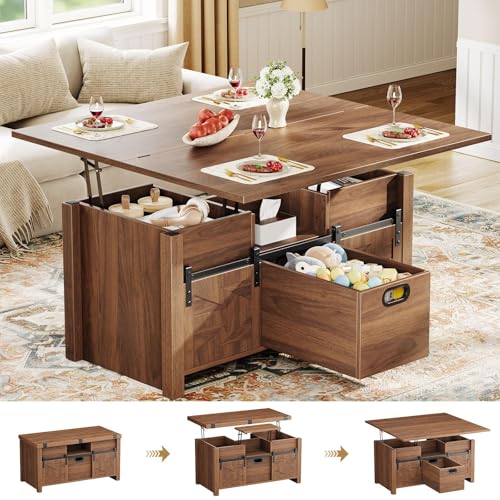
Chest of Drawers with Lift Up Top
Everything you need to know about lift-top chests: how the mechanism works, storage advantages, material choices, safety requirements, and how to pick the right model for your bedroom.
Explore the Buying GuideQuick Answer: A chest of drawers with lift up top combines traditional drawer storage with a hinged lid that opens to reveal a hidden compartment. It is one of the most space-efficient bedroom storage solutions available, offering a usable top surface when closed and concealed storage when opened. The best models use reinforced gas struts, soft-close hinges, and solid wood frames — and they are always anchored to the wall for safety.
What Is a Chest of Drawers with Lift Up Top?
A chest of drawers with lift up top is a storage furniture piece that pairs a conventional stack of drawers with a hinged top panel. When the lid is closed, the top functions as a normal dresser surface for lamps, decor, or daily items. When lifted, it exposes a deep internal compartment — often lined with felt or fabric — that is ideal for storing items you want out of sight.
The lift mechanism is the defining feature. On entry-level models it may be a simple hinge with a friction stay. On mid-range and premium models, gas struts or soft-close piston hinges hold the lid open at a comfortable angle and prevent it from slamming shut. This matters both for convenience and for safety, especially in households with children.
Lift-top chests sit at the intersection of two categories: they are more storage-dense than a standard dresser, and they offer more concealed volume than a low dresser with drawers. If you are comparing formats, our guide to dresser vs chest of drawers explains the terminology and when each format makes sense.
Why Choose a Lift-Top Chest?
The lift-up top is not a gimmick. It solves a real storage problem: most bedrooms have more small items than they have drawers, and most dresser tops are wasted on clutter. A lift-top chest gives you a second storage layer without adding footprint to the room.
Concealed Storage
The lift-up compartment hides bedding, off-season clothing, keepsakes, or documents behind a clean top surface. Out of sight, protected from dust, and easy to reach.
Dual-Purpose Top
When closed, the lid is a stable surface for a lamp, mirror, or display. You do not sacrifice the dresser top you would normally use every day.
Space Efficiency
Adds meaningful storage volume without increasing the floor footprint. A strong option for small bedrooms and apartments where wall space is limited.
Cleaner Bedroom Look
Items that would otherwise sit on top of the dresser — or spill onto the floor — can be tucked into the lift-up compartment, keeping the room visually calm.
Better Security
Some models include a lockable lift-up lid, which is useful for personal documents, jewelry, or items you prefer to keep private.
Versatile Placement
Works as a bedroom chest, a hallway storage piece, or a living room console. The lift-up top makes it useful in rooms where a standard chest would be one-dimensional.
How the Lift-Up Mechanism Works
Understanding the hardware is the single most important part of choosing a lift-top chest. The lid mechanism determines how the chest feels day to day and how long it will last.
Gas Struts
Gas struts are pressurized cylinders that assist the lift and hold the lid open. They are the most common mechanism on mid-range and premium lift-top chests. Quality struts are rated for a specific load and cycle count; a well-specified strut should hold the lid open without drifting and close with controlled resistance.
Soft-Close Hinges
Soft-close hinges slow the final few inches of closing so the lid settles gently instead of slamming. This protects fingers and reduces wear on the frame. Many soft-close models pair damped hinges with a friction stay rather than gas struts.
Friction Stays and Simple Hinges
Entry-level lift-top chests often use friction stays — a metal arm that holds the lid at a set angle through mechanical resistance. These are functional but generally less smooth than gas struts and may loosen over time. If you plan to open the compartment daily, prioritize gas struts or a damped hinge system.
Load Ratings and Lid Support
Every lift-top mechanism has a maximum load rating. Exceeding it stresses the struts and hinges and can cause the lid to fail. Check the rating before you store heavy bedding or books in the compartment. A reinforced lid frame and metal hinge plates are signs of durable construction.
Lift-Top Chest vs Other Storage Formats
| Format | Best For | Storage Profile | Considerations |
|---|---|---|---|
| Lift-top chest of drawers | Small bedrooms, concealed storage, dual-purpose top | Drawers plus a deep hidden compartment | Mechanism quality matters; leave clearance for the lid |
| Standard chest of drawers | Everyday clothing storage | Drawers only; top surface is open | No concealed compartment; top can collect clutter |
| Shallow chest of drawers | Narrow rooms, hallways | Reduced depth drawers | Less volume per drawer; limited top depth |
| Tall dressers | Maximizing vertical storage | Many stacked drawers | Higher center of gravity; anchor to wall |
| Armoire with shelves and drawers | Mixed hanging and folded storage | Doors, shelves, and drawers | Larger footprint; better for full wardrobe needs |
Materials and Build Quality
The lift-top mechanism puts extra stress on the frame because the lid is a moving, load-bearing panel. That makes material choice more consequential than on a standard chest.
Solid Wood
Solid oak, walnut, pine, and maple offer the best long-term structural integrity for a lift-top chest. Solid wood frames hold hinge screws securely and resist the flexing that can loosen a lid over time. Oak and walnut are the most durable; pine is lighter and softer but still a solid choice when properly reinforced. Browse our solid oak dresser with mirror guide for a sense of how solid oak performs in bedroom furniture.
Engineered Wood and Veneers
Engineered wood with quality veneers is common at the mid-tier. It is dimensionally stable and can look excellent, but the hinge mounting points must be reinforced with metal plates or hardwood blocks. On lower-tier engineered pieces, the lift-up lid is the first component to show wear.
Hardware Quality
Look for reinforced metal hinges, rated gas struts, and metal drawer slides. Heavy-duty slides and struts are worth prioritizing; our notes on heavy-duty drawer slides explain what separates durable hardware from entry-level components.
Interior Lining
Better lift-top chests line the compartment with felt, velvet, or cedar. Cedar lining adds a natural repellant against moths and is a nice feature for storing woolens and blankets. Felt lining protects jewelry and delicate items from scratches.
Sizing and Placement
Lift-top chests need more planning than standard dressers because the lid swings upward and, on some models, forward. Measure twice before you commit.
Key Measurements
- Width: Most lift-top chests range from roughly 30 to 50 inches wide. Match the width to your wall segment and traffic flow.
- Height: Common heights fall between 30 and 50 inches. Consider the lid clearance above the chest — artwork or a mirror may need to move.
- Depth: Deeper chests hold more in the lift-up compartment but project further into the room. Check door swings and walkways.
- Lid clearance: Confirm the lid opens without hitting a wall, window sill, or light fixture. Some lids open to 90 degrees; others need more room.
- Compartment depth: This is the number that determines what you can actually store. Measure the internal depth before assuming bedding will fit.
Room Placement
Place the chest against a solid wall and anchor it with the included anti-tip strap. Avoid placing it directly under a low window or a wall-mounted shelf. If the lid opens toward a doorway, leave enough clearance that someone entering the room cannot be struck by the lid. For narrow rooms, a 24-inch wide cabinet with drawers may be a better footprint than a full-width lift-top chest.
Safety Considerations
Any furniture with a moving lid and a tall profile deserves a safety review. These points are non-negotiable, especially in homes with children or pets.
- Anti-tip anchoring: Always secure the chest to the wall using the manufacturer's anti-tip kit. A lift-top chest has a higher center of gravity when the lid is open.
- Lid support: Confirm the struts or hinges hold the lid open on their own. A lid that drifts down is a pinch and crush hazard.
- Soft-close or damped closing: Prioritize models that close gently. This protects fingers and reduces the chance of the lid slamming.
- Rounded edges: Look for eased or rounded lid edges and drawer fronts, particularly for nursery and children's room use.
- Load limits: Never exceed the rated load of the lift-up compartment. Overloading stresses the struts and can cause sudden failure.
- Drawer stops: Drawers should have stops that prevent them from pulling fully out and tipping the chest forward.
For nurseries, pair the chest with a dedicated changing pad and never leave a child unattended on a lift-top surface. Our small chest of drawers for nursery guide covers additional child-safety considerations.
Buying Checklist
Use this checklist before you commit to a lift-top chest. It covers the details that separate a long-term investment from a piece that disappoints within a year.
- Mechanism type: Gas struts or damped soft-close hinges are preferred over simple friction stays for daily use.
- Hardware rating: Confirm the struts and hinges are rated for the compartment's intended load.
- Frame construction: Solid wood frames or reinforced engineered wood with metal hinge plates.
- Drawer slides: Metal slides with stops; soft-close drawers are a plus on premium models.
- Compartment lining: Felt, velvet, or cedar lining protects contents and adds a finished feel.
- Lid clearance: Measure the swing arc and confirm it clears walls, fixtures, and walkways.
- Anti-tip kit: Included and compatible with your wall type.
- Finish durability: A sealed, water-resistant finish on the lid surface is easier to maintain.
- Assembly requirements: Some lift-top chests ship fully assembled; others require hinge alignment during setup. If you prefer no assembly, see fully assembled chest of drawers options.
- Tier positioning: Entry-level models are functional but use simpler hardware; mid-range models typically offer smoother mechanisms and better lining; premium and luxury tiers add solid hardwood frames and rated gas struts.
Understanding Quality Tiers
Lift-top chests vary widely in build quality. Rather than thinking in terms of numbers, think in terms of tiers — each tier represents a relative position in the market and a different level of hardware and material investment.
| Tier | Typical Build | Best For | What to Expect |
|---|---|---|---|
| Entry-level | Engineered wood, simple friction stays | Guest rooms, occasional use | Functional concealed storage; mechanism may loosen with heavy daily use |
| Mid-range | Engineered wood with veneers, gas struts, felt lining | Primary bedrooms, daily use | Smoother lid action, better hardware, reliable drawer slides |
| Premium | Solid wood frame, rated gas struts, soft-close drawers | Long-term primary bedroom use | Durable construction, refined closing action, quality lining |
| Luxury | Hardwood solids, hand-finished, commercial-grade hardware | Statement furniture, high-use homes | Flagship-tier mechanism, superior finish, heirloom-level build |
How to Organize a Lift-Up Compartment
The lift-up compartment is most useful when it has a clear purpose. Treat it as a dedicated storage zone rather than a catch-all.
- Bedding and linens: Store folded duvet covers, spare sheets, and pillowcases. Use fabric bins to keep sets together.
- Off-season clothing: Sweaters and winter accessories fit well and are easy to rotate seasonally. See our seasonal clothing storage guide for rotation systems.
- Keepsakes and documents: A lockable lid makes this a sensible place for personal papers and memory items.
- Jewelry and accessories: Felt-lined compartments work well for jewelry trays. Our jewelry storage guide covers tray layouts.
- Weight distribution: Place heavier items toward the hinge side and keep the total load within the rated limit.
Keep frequently used clothing in the drawers and reserve the lift-up compartment for items you access weekly or seasonally. This reduces wear on the mechanism and keeps daily routines efficient. For a full drawer-by-drawer system, see our dresser organization guide.
Care and Maintenance
A lift-top chest needs a small amount of routine care to keep the mechanism smooth and the finish intact.
- Check the struts: Every few months, open the lid fully and confirm it holds without drifting. Replace struts that lose pressure.
- Tighten hinge screws: Moving lids can loosen screws over time. Check and tighten them periodically.
- Lubricate sparingly: A dry silicone lubricant on hinge points reduces squeaks without attracting dust.
- Clean the lid surface: Wipe with a slightly damp cloth and dry immediately. Avoid harsh solvents on veneers and painted finishes.
- Protect the interior: Use liners or bins to keep the compartment clean and prevent scratches.
- Re-check anchoring: Confirm the anti-tip strap remains secure, especially after moving the chest.
Frequently Asked Questions
What is a chest of drawers with lift up top?
It is a storage unit that combines standard drawers with a hinged top surface that lifts upward to reveal a hidden compartment. The lid typically uses gas struts or soft-close hinges, giving you extra storage for bedding, seasonal items, or personal belongings while keeping the top surface usable when closed.
What are the benefits of a lift-top chest of drawers?
The main benefits include concealed storage that keeps clutter out of sight, a dual-purpose top surface, better use of vertical space, and added security for personal items. Lift-top chests are especially useful in small bedrooms where every inch of storage matters.
Are lift-up top chests safe for bedrooms and nurseries?
Most modern lift-top chests use gas struts or soft-close hinges that prevent the lid from slamming shut. For nurseries and children's rooms, choose models with anti-tip wall straps, rounded edges, and a lid mechanism that stays open securely. Always anchor the chest to the wall and check the maximum load rating of the lift-up compartment.
What materials are best for a chest with lift up top?
Solid wood such as oak, walnut, and pine offers the best durability and long-term structural integrity for lift-top mechanisms. Engineered wood with quality veneers is a solid choice for mid-tier options. The hinge and strut hardware matters just as much as the wood: look for reinforced metal hinges and rated gas struts.
How do I choose the right size lift-top chest of drawers?
Measure your room and the intended wall first. A standard lift-top chest typically ranges from 30 to 50 inches wide and 30 to 50 inches tall. Consider drawer count, the internal depth of the lift-up compartment, and whether the lid opens toward a wall or a walkway. Leave clearance for the lid to fully open.
Ready to Choose Your Lift-Top Chest?
Review the recommended models below, compare their mechanisms and features, and select the one that fits your bedroom layout and storage needs.
View Recommended Models