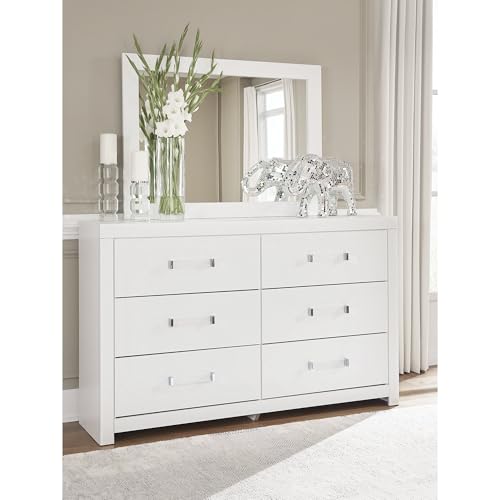
Dresser With Mirror And Chest Set: The Complete Buyer's Guide
A matching dresser with mirror and chest set gives your bedroom a coordinated look while doubling your storage capacity. This guide walks you through sizing, drawer layouts, mirror types, and the details that separate a well-built set from a forgettable one.
Start Your ResearchWhy consider a coordinated set? A dresser with mirror and chest set solves two problems at once: it consolidates clothing storage into one visual unit, and it gives you a dedicated grooming station with a mirror. Buying the two pieces together usually means matched finishes, consistent hardware, and a more cohesive bedroom than mixing separate purchases.
What a Dresser With Mirror and Chest Set Actually Includes
The term is used loosely in furniture listings, so it helps to know the common configurations before you shop. Most sets fall into one of three arrangements, and each suits a different bedroom layout.
- Dresser with attached mirror plus separate chest: The dresser has a mirror mounted or bolted to its back, and the chest is a standalone tall piece with four to six drawers. This is the most common matching set and works well when the two pieces sit on different walls.
- Dresser with detached mirror plus chest: The mirror rests on or hangs above the dresser rather than being permanently attached. This gives you flexibility to reposition the mirror or replace it later without replacing the dresser.
- Dresser and chest with a shared mirror console: A less common layout where the mirror spans the dresser top and the chest provides the bulk of the drawer storage. Useful in wider bedrooms where a single long furniture run is possible.
If you are still deciding between furniture categories, our comparison of a dresser versus a chest of drawers explains where each piece earns its place. For mirror-specific configurations, the guide to a dresser with mirror and chest of drawers covers more layout variations.
How to Size a Matching Set for Your Bedroom
Measure first, shop second. A matched set that overwhelms the room is worse than two mismatched pieces that fit. Use the reference table below to narrow down dimensions, then confirm against your own wall measurements and walkway clearances.
| Room Size | Dresser Width | Chest Height | Best For |
|---|---|---|---|
| Small bedroom or guest room | 36–50 inches | 40–48 inches | Entry-level sets with a compact footprint |
| Standard primary bedroom | 54–64 inches | 48–56 inches | Mid-range sets with a full-width mirror |
| Large primary suite | 66–72 inches | 56–62 inches | Premium sets with deep drawers and a wide mirror |
| Walk-in closet or dressing room | 48–60 inches | 52–60 inches | Tall chest plus a mirror for dressing |
Leave at least 30 inches of clear walking space in front of drawer fronts so they can open fully. If your bedroom is tight, a dresser sized for small spaces paired with a taller chest is often a better fit than a wide set. For closets, a dresser that fits inside a closet can free up floor area entirely.
Drawer Layouts: Where the Set Earns Its Keep
Two pieces mean two storage roles. The dresser usually handles folded clothing, linens, and daily-use items, while the chest handles bulkier clothing, seasonal items, or overflow. A well-designed set divides the work rather than duplicating it.
- Dresser: Look for a mix of shallow top drawers for accessories and deeper lower drawers for folded clothes. A dresser with different size drawers is more practical than uniform rows.
- Chest: Deep drawers suit sweaters and bulky items. A chest with large deep drawers reduces the number of drawers you need to open.
- Specialty storage: If jewelry is part of your routine, a set with a built-in jewelry drawer or a hidden jewelry compartment adds real utility without extra furniture.
- Hardware quality: Full-extension drawer slides are the single biggest upgrade in daily use. Our guide to a dresser with full extension drawers explains what to check.
Mirror Options and What They Change
The mirror is not just decoration. It determines how you use the dresser, how much light the room gets, and how flexible the set is if you move.
Attached Rectangular Mirror
Bolted to the dresser back, this is the classic configuration. It saves wall space and keeps the set visually unified, but it limits where you can place the dresser against sloped ceilings or windows.
Detached Dresser-Top Mirror
Rests on the dresser surface or leans against the wall. Easier to reposition, replace, or remove if you want to use the dresser top for a television. See the dresser top mirror with drawers guide for hybrid options.
Full-Length Mirror
Suits dressing rooms and walk-in closets. A dresser with a full-length mirror lets you check an outfit head to toe, which a standard dresser mirror cannot do.
Mirror With Integrated Lighting
A dresser with lights and mirror is useful in rooms with limited natural light. Built-in LEDs around the mirror improve grooming accuracy and add ambient light at night.
Materials and Build Quality by Tier
Furniture tiers are the most reliable way to compare sets without getting lost in specification sheets. The descriptors below reflect relative market position and build quality, not any specific figure.
| Tier | Typical Build | Best For |
|---|---|---|
| Entry-level | Engineered wood with veneer, basic metal slides, knock-down assembly | Guest rooms, first apartments, temporary setups |
| Mid-range | Solid wood frames with veneer panels, smoother slides, pre-assembled or partial assembly | Primary bedrooms, long-term daily use |
| Premium | Solid hardwood construction, dovetail or reinforced joinery, full-extension slides | Primary suites, households that expect a decade or more of use |
| Luxury | Hardwood with hand-finished details, premium hardware, beveled or specialty mirror glass | Statement bedrooms, interior-designed spaces |
Within any tier, check three things before you commit: whether drawer bottoms are reinforced, whether the mirror is safety-backed, and whether the back panel is rigid. A set that is well-specified for its class will hold up far better than one that merely looks good in photos. Our dresser style guide can help you match the set to your existing decor, and the dresser with gold handles overview covers hardware finishes if you want a warmer accent.
Style Directions That Work With a Matched Set
A matching dresser and chest set reads as intentional, so the style you choose will define the room. These directions are the most reliable to build around.
Traditional
Arched mirror crowns, carved detailing, and warm wood tones. Pairs well with paneled walls and classic bedding. Explore the broader dresser styles range to compare.
Mid-Century Modern
Tapered legs, clean horizontal lines, and a low-profile mirror. Keeps a matched set from feeling heavy in smaller rooms.
Farmhouse
Painted finishes, cup pulls, and a simple rectangular mirror. A relaxed look that suits both primary bedrooms and guest rooms.
Modern Minimalist
Flat fronts, integrated handles, and a frameless or thin-framed mirror. Best in rooms where the furniture should recede rather than dominate.
If you want the mirror to do double duty as a statement piece, an elegant dresser with a shaped mirror is worth considering. For rooms where the set will sit near a window or entry, a dresser with a glass top display adds a layer of visual interest without breaking the matched look.
Placement and Practical Considerations
Where the set goes determines which configuration works. A few placement rules cover most bedrooms:
- Place the dresser with mirror on a wall that receives natural light if possible. The mirror will bounce daylight across the room.
- Keep the chest on an adjacent or opposite wall so the two pieces do not compete for the same sightline.
- Anchor tall chests to the wall. This is especially important in households with children, and a dresser with locking drawers adds another layer of safety for tools or medications.
- If floor space is limited, consider a dresser with a hutch or a dresser with open shelves and drawers to add vertical storage without a second footprint.
- In closets, a dresser with a hanging rod can replace the need for a separate wardrobe.
If you are furnishing a nursery or a room that will later convert, a dresser that doubles as a changing table can be paired with a chest and mirror to create a set that grows with the child. For rooms that serve multiple purposes, a dresser that doubles as a desk is worth exploring before committing to a traditional mirror setup.
Common Mistakes to Avoid
- Buying the mirror before measuring the ceiling. An attached mirror adds 30–40 inches of height. Confirm the total height clears any sloped ceiling or ceiling fan.
- Assuming matching means identical. Many sets match finish and hardware but vary drawer count between the dresser and chest. Read the specifications for each piece separately.
- Ignoring the mirror's safety backing. Large mirror panels should have a shatter-resistant backing or be tempered. This matters most in bedrooms used by children.
- Skipping the assembly check. Some sets ship fully assembled, others require significant assembly. If you want to avoid tools, a solid wood dresser with no assembly required is the safer route.
- Overlooking drawer interior height. A deep drawer that is too tall wastes space for folded clothing. Compare interior heights, not just exterior dimensions.
Frequently Asked Questions
Is a dresser with mirror and chest set worth buying as a matched pair?
A matched set is usually the better choice when you want a cohesive bedroom and consistent hardware and finish. It also removes the guesswork of coordinating two separate purchases. The trade-off is less flexibility if you later want to change one piece. If flexibility matters more, buy the dresser with mirror and drawers first and add a chest later in a complementary finish.
How much space should I leave between the dresser and chest?
Leave at least 24–30 inches between the two pieces if they sit on the same wall, so drawer fronts can open without collision. If they are on opposite walls, keep a clear path of at least 36 inches between them for comfortable walking.
Can I remove the mirror from an attached dresser later?
On most attached-mirror dressers, the mirror is bolted through the back rails and can be removed with basic tools. However, removing it may leave visible holes or an unfinished back panel. If you think you may want a mirror-free setup later, start with a dresser without a mirror and add a standalone mirror instead.
What is the difference between a chest set and a dresser set?
A dresser set typically centers on a wide, lower piece with a mirror, often paired with a nightstand. A chest set centers on a taller, narrower piece with more vertical drawers. A dresser with mirror and chest set combines both, giving you wide and tall storage in one coordinated group. See the dresser with mirror and nightstand set guide for the nightstand-inclusive configuration.
Do mirror dressers work in small bedrooms?
Yes, and they can actually help. A mirror reflects light and makes a compact room feel larger. In small bedrooms, choose a dresser at the lower end of the width range and a chest that sits in a corner. Our guide to dressers less than 50 inches wide lists options that fit this strategy.
What should I check on the mirror before purchasing?
Check that the mirror glass has a safety backing or is tempered, that the frame is securely attached to the dresser, and that the mirror height is appropriate for the user. A mirror that sits too low forces you to bend, and one that sits too high cuts off the reflection. If lighting is limited, a dresser with lights or a dresser with LED lights improves usability.
Ready to Compare Dresser and Chest Sets?
Use the curated selections below to compare configurations, drawer layouts, and mirror styles across the most relevant dresser with mirror and chest sets available.
Explore Recommended Sets