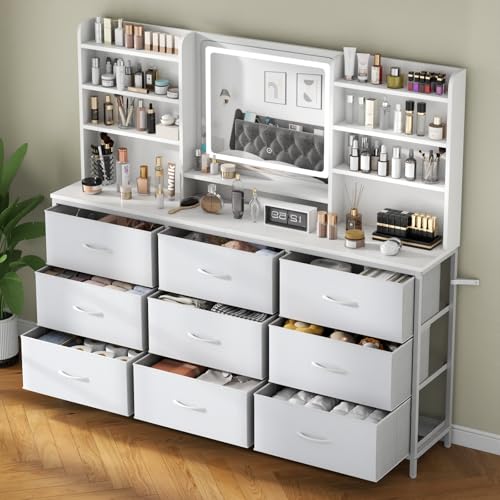
Dresser with Mirror and Nightstand Set: The Complete Buying Guide
Everything you need to know before choosing a coordinated bedroom furniture set — sizing, mirror placement, drawer layout, materials, and room planning.
Jump to Buying ChecklistWhy a matching set makes sense: A dresser with mirror and nightstand set solves two common bedroom problems at once — storage and visual cohesion. Instead of hunting for pieces that may clash in finish or proportion, you get a coordinated trio that is designed to work together in style, scale, and hardware.
This guide walks you through what to check before you commit, how to measure your room, which materials hold up over time, and how to avoid the most common layout mistakes. By the end, you will know exactly which configuration fits your space and your daily routine.
What Is Included in a Dresser with Mirror and Nightstand Set?
Most sets follow a standard structure, but the exact contents vary by collection. Before comparing options, confirm what ships together so you do not end up ordering a mirror separately or discovering that only one nightstand is included.
1. The Dresser
The anchor piece. Typically four to eight drawers, available in standard, wide, or tall configurations. Drawer glide quality and interior depth matter more than the exterior footprint.
2. The Mirror
Usually attached to the dresser top, though some collections offer a detached wall-mounted version. Frame material and glass thickness determine both durability and visual weight.
3. The Nightstand(s)
Sets commonly include one or two nightstands. One-nightstand sets suit guest rooms or single sleepers; two-nightstand sets are standard for primary bedrooms shared by couples.
4. Optional Add-Ons
Some collections bundle a chest of drawers, a bench, or a bed frame. These extras are convenient but can inflate the footprint — measure before committing to the full collection.
How to Choose the Right Set for Your Bedroom
The right set is not the one with the most drawers — it is the one that fits your room, your storage habits, and your visual style. Work through the four criteria below in order, because each one narrows the field for the next.
1. Measure the Wall and Walking Clearance First
Start with the wall where the dresser will sit. A common mistake is buying a wide dresser that leaves less than two feet of walking space in front of the drawers. Allow at least 24 inches of clearance for comfortable access, and more if the dresser sits in a high-traffic path. If your wall is tight, explore dressers for small spaces before assuming a full set will not work.
2. Decide Between an Attached and a Detached Mirror
Attached mirrors move with the dresser and simplify positioning, but they lock you into a fixed height. Detached mirrors give you flexibility to place the mirror at the correct eye level and can be swapped out later. For a coordinated look with more flexibility, compare dresser with mirror and drawers configurations side by side.
3. Match Drawer Count to Your Storage Volume
Single adults typically need four to six drawers, while couples sharing a dresser benefit from six to eight. If your clothing volume is high, a set with a companion chest is a smarter choice than cramming everything into one wide dresser. See how dressers that hold a lot of clothes are structured for higher capacity.
4. Confirm Finish and Hardware Consistency
The nightstands should visually relate to the dresser without being identical in every dimension. Match the wood tone and hardware finish, then let the nightstands be slightly lower than the dresser top. This creates a natural visual hierarchy instead of a flat, repetitive line.
Comparing Set Tiers: Which Level Fits Your Needs?
Sets differ most in drawer glide quality, mirror frame construction, and finish durability. Use the tier framework below to understand what each level prioritizes. Tiers reflect relative market positioning, not an absolute ranking.
| Tier | Best For | Drawer Glides | Mirror Frame | Finish Durability |
|---|---|---|---|---|
| Essential tier | Guest rooms, first apartments, temporary setups | Basic roller glides | Lightweight composite or thin wood | Standard laminate or single-coat finish |
| Balanced tier | Primary bedrooms with everyday use | Side-mounted ball-bearing glides | Solid wood frame with beveled glass | Multi-layer finish with sealed edges |
| High-end tier | Long-term family bedrooms, coordinated collections | Soft-close undermount glides | Hardwood frame with premium mirror glass | Hand-applied finish with protective topcoat |
| Flagship tier | Design-led interiors, heirloom-focused buyers | Full-extension soft-close with metal sides | Solid hardwood with anti-tip reinforcement | Catalyzed lacquer or hand-rubbed oil finish |
A balanced-tier set is the most common choice for daily use because the glide upgrade makes a noticeable difference in daily operation, and the mirror frame resists warping better than entry-level construction. If the dresser will be used heavily by multiple people, moving up one tier is usually worthwhile.
Materials and Finishes That Hold Up Over Time
The material determines how the set ages. Solid wood frames and drawer fronts resist warping and can be refinished later, while engineered wood with quality veneers offers stability and consistent color. For a deeper comparison, review dresser vs chest of drawers construction notes before finalizing your choice.
- Solid hardwood (oak, maple, walnut): Long-term investment, refinishable, heavier to move.
- Engineered wood with veneer: Stable in humidity changes, consistent finish, good value for its tier.
- Glass elements in mirror and drawers: Adds brightness; verify tempered glass and secure mounting.
- Hardware finish: Choose brushed or lacquered finishes that resist tarnishing in humid rooms.
- Drawer bottoms: Reinforced or dovetail-joined bottoms handle heavier clothing loads without sagging.
Bedroom Layout Tips for a Coordinated Set
Placement matters as much as the furniture itself. A well-placed set makes the room feel larger and more intentional, while a poorly placed one creates bottlenecks and visual clutter.
- Center the dresser and mirror on the largest uninterrupted wall for a balanced focal point.
- Keep nightstands within arm's reach of the bed — usually 2 to 6 inches from the mattress edge.
- Leave at least 24 inches between the dresser front and the nearest obstacle when drawers are open.
- Position the mirror so the top edge sits slightly above standing eye level for a flattering reflection.
- If the room is narrow, consider a dresser with full length mirror to reduce the need for a separate floor mirror.
- Use the nightstand height to create a visual step-down from the dresser top.
Mirror Selection: Attached, Detached, or Full-Length?
Mirror type changes both the function and the feel of the set. A standard attached mirror is ideal for daily grooming, while a full-length option supports outfit checks without a separate piece of furniture. For rooms with limited wall space, a dresser with lights and mirror combines grooming lighting and reflection in one footprint.
Attached Mirror
Best for traditional and transitional bedrooms. Fixed height, simple installation, and a cohesive silhouette with the dresser.
Detached Wall Mirror
Best for modern and minimalist rooms. Lets you place the mirror at the correct eye level and change it later without replacing the dresser.
Full-Length Option
Best for small bedrooms without space for a separate floor mirror. Doubles as an outfit-check station and adds perceived depth.
How to Match Nightstands to the Dresser
The nightstands should feel like siblings to the dresser, not twins. Match the finish, hardware, and wood tone, but vary the height slightly so the room reads as layered rather than flat. A nightstand that is 2 to 6 inches lower than the dresser top is the safest proportion. If you need a smaller footprint beside the bed, compare dresser vs nightstand dimensions before committing to a set with oversized nightstands.
Safety and Anti-Tip Essentials
Tall dressers and mirrors add weight and leverage, so anti-tip hardware is not optional. Confirm that the set includes a wall-anchoring kit, and install it even if the dresser feels stable. For households with young children, check that the mirror is secured to both the dresser and the wall where possible. Sets intended for nurseries should meet current furniture stability standards — see dresser to use as changing table guidance if the room doubles as a nursery.
Buying Checklist Before You Order
Run through this checklist before adding a set to your cart. It takes five minutes and prevents the most common return scenarios.
- Measured wall width, ceiling height, and drawer-open clearance.
- Confirmed whether one or two nightstands are included.
- Verified mirror attachment method and anti-tip hardware inclusion.
- Checked drawer glide type and drawer interior depth.
- Confirmed finish sample or swatch availability for color matching.
- Reviewed assembly requirements and whether tools are included.
- Checked delivery access — stair width, doorway clearance, and packaging dimensions.
- Compared the set against standalone options using dresser with matching night stands references.
Ready to Compare Sets?
Browse curated options that match the criteria in this guide — coordinated finishes, verified drawer construction, and mirror configurations for every room size.
Explore Recommended SetsFrequently Asked Questions
What is included in a dresser with mirror and nightstand set?
A typical set includes one dresser with an attached or detached mirror plus one or two matching nightstands. Some collections also add a chest of drawers, bench, or bed frame to complete the bedroom.
How do I measure my bedroom for a dresser with mirror and nightstand set?
Measure the available wall width, the clearance from bed to wall, and the height from floor to ceiling. Leave at least 24 inches of walking space in front of drawers and confirm the mirror top sits above eye level when standing.
Should the mirror be attached to the dresser or wall-mounted?
Attached mirrors are simpler to position and move with the dresser, while wall-mounted mirrors offer more flexibility and a cleaner look. Choose attached for convenience and wall-mounted for a custom fit.
How many drawers should a dresser in a set have?
A six to eight drawer dresser suits most couples, while a four to six drawer dresser works for single adults or guest rooms. Sets with varied drawer sizes offer the best balance of folded clothing and accessory storage.
How do I match a nightstand set to my dresser?
Match the finish, hardware style, and wood tone rather than the exact dimensions. A nightstand that is 2 to 6 inches lower than the dresser top creates a balanced visual line.
Can a dresser with mirror and nightstand set work in a small bedroom?
Yes, if you choose a narrow dresser and one nightstand instead of two. Focus on vertical storage and confirm drawer-open clearance before ordering. Sets with a full-length mirror can replace a separate floor mirror and save space.