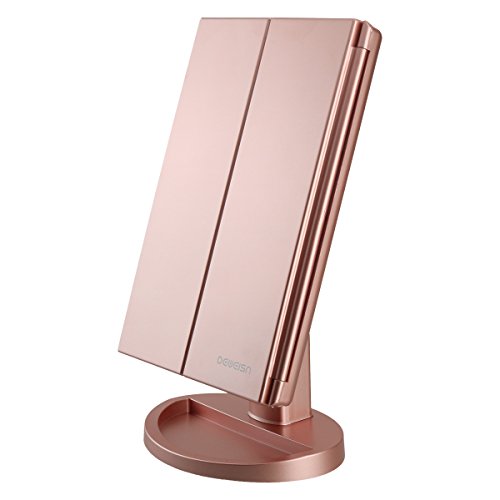
Dresser with Lights and Mirror: The Complete Buying Guide
Combine organized storage, flattering illumination, and a full view of your styling routine. Learn how to choose a lighted mirror dresser that fits your room, your habits, and your long-term needs.
Explore Recommended ModelsWhy a lighted mirror dresser deserves a place in your bedroom: A dresser with lights and mirror solves three problems at once — it stores your clothes, gives you a dedicated grooming surface, and adds ambient light to a dark corner. For anyone who has ever balanced a makeup bag on a crowded nightstand or squinted in poor bedroom lighting, this hybrid furniture piece is a practical upgrade worth researching carefully before you commit.
What Is a Dresser with Lights and Mirror?
A dresser with lights and mirror is a storage chest of drawers with two integrated features: a mirror mounted above or attached to the top, and built-in lighting — typically LED strips or bulbs — positioned around the mirror frame or under the top surface. Unlike a standalone dresser with mirror and drawers, the lighted version adds task illumination for grooming, dressing, and detail work.
These pieces sit at the intersection of three furniture categories: bedroom storage, vanity furniture, and accent lighting. That combination is exactly why shoppers researching this topic tend to be close to a purchase decision — they already know they want storage plus a mirror, and they are now comparing how lighting quality, mirror size, and drawer configuration differ between models.
If you are still deciding between related formats, our guides on the dresser vanity combo and the dresser top mirror with drawers explain how each configuration behaves in real rooms.
Why Choose a Lighted Mirror Dresser?
The appeal is practical more than decorative. A standard mirror relies on whatever light reaches it from windows or ceiling fixtures, which often leaves shadows across your face. Integrated lighting fixes that problem directly.
Everyday benefits
- Better grooming accuracy: Even, front-facing light reduces shadows when you apply skincare, shave, or style hair.
- Space efficiency: One footprint delivers storage, mirror, and lighting — valuable in smaller bedrooms where a separate vanity is not realistic.
- Ambient bedroom lighting: Many LED dressers offer dimmable or warm-white settings that work as soft evening lighting.
- Visual depth: A mirror doubles the perceived light and space in a room, especially when paired with a dresser with lights that highlights the reflection.
- Consolidated organization: Jewelry, cosmetics, and clothing can live in one organized zone rather than scattered across the room.
Where it works best
Lighted mirror dressers suit primary bedrooms, guest rooms, dressing areas, and studio apartments. They are less ideal for nurseries, where a dresser to use as changing table is the safer functional choice, and for rooms with no accessible outlet near the intended wall.
Quick decision check
Choose a lighted mirror dresser if you want one piece of furniture to handle storage, mirror access, and task lighting. Choose a separate vanity plus dresser if you have floor space and prefer independent pieces you can rearrange or replace individually.
Lighting Types: LED Strips, Bulbs, and Dimmable Systems
Lighting quality is the single biggest differentiator between models at different tiers. Two dressers can look similar in photos but feel completely different in use.
LED strip lighting
The most common configuration. Thin LED strips sit behind or around the mirror frame, producing even, low-heat illumination. Entry-level models often use fixed cool-white strips, while mid-range and premium models add warm-to-cool color switching and dimming. LED strips are energy efficient and have long service life, but check that the strip is replaceable or that the manufacturer offers spare parts.
Bulb-based mirror lighting
Vanity-style bulb rings around the mirror give a classic Hollywood look and strong task light. They typically use small screw-base LED bulbs that you can replace yourself — a real advantage for long-term maintenance. Heat output is minimal with LED bulbs, but confirm the fixture is rated for the bulb type.
Dimmable and color-tunable systems
Higher-tier models often include touch dimming and adjustable color temperature. This matters because grooming light and ambient light are different tasks: bright neutral light helps with detail work, while warm low light is better for relaxing in the evening. If you plan to use the dresser as evening ambient lighting, dimming is close to essential.
Practical lighting considerations
- Power source: Most models plug into a standard wall outlet. Confirm cord length and which side the cord exits, since this affects furniture placement.
- Controls: Touch sensors on the mirror are common and convenient; physical switches are more durable in heavy daily use.
- Certification: Look for recognized electrical safety certification on the lighting components, especially for plug-in fixtures in bedrooms.
- Glare: Very bright exposed bulbs positioned at eye level can cause glare. Diffused LED strips behind a frame are gentler for close-up grooming.
For a broader look at illuminated storage furniture beyond mirror models, see our guide to the dresser with LED lights.
Mirror Types and What They Change
The mirror determines how usable the dresser is as a grooming station, and it also shapes the visual weight of the piece in your room.
Attached vs. detached mirrors
An attached mirror is fixed to the dresser, usually via a frame or mounting bracket. It is stable, looks intentional, and often conceals wiring for the lights. A detached mirror rests on top or hangs above, giving you flexibility to reposition it — but it may not integrate with the lighting system, and you lose the coordinated look.
Full-length vs. dresser-top mirrors
A dresser with full-length mirror supports head-to-toe outfit checks, which is a major advantage if you do not have a closet mirror. Dresser-top mirrors focus on face and upper-body viewing and keep the piece more compact. If outfit checking matters to you, full-length is the stronger choice; if grooming is the priority, a well-lit top mirror is sufficient.
Framed, frameless, and frosted options
- Framed mirrors: Wood, metal, or painted frames add style and hide LED strips neatly. They are the most common configuration in lighted models.
- Frameless mirrors: Clean and modern, but the lighting must be mounted separately or as a backlit halo.
- Frosted or tinted glass: Adds a softer look and can reduce harsh reflections, though it slightly reduces clarity.
Mirror shape also matters visually: rectangular mirrors read formal and traditional, arched mirrors soften the silhouette, and round mirrors work well in modern and Scandinavian-style rooms. Our dresser style guide covers how mirror shape interacts with overall furniture style.
Sizing: Match the Dresser to Your Room
Dresser sizing is where most buying mistakes happen. A lighted mirror dresser is taller than a plain dresser because of the mirror, so ceiling height and wall space both matter.
| Category | Typical Width Range | Best For | Watch Out For |
|---|---|---|---|
| Compact / entry-level | Narrow footprint | Small bedrooms, apartments, dressing corners | Limited drawer depth; check mirror height against wall space |
| Standard mid-range | Moderate width | Primary bedrooms, guest rooms | Confirm clearance for drawers to open fully |
| Wide / premium | Broad footprint | Large suites, shared bedrooms | Needs a long wall; mirror may dominate small rooms |
| Tall / vertical | Narrow but tall | Rooms with limited floor width | Top drawers may be high for shorter users |
Measure three things before buying: the wall width you can dedicate to the dresser, the clearance in front of it (aim for at least 24 inches so drawers open without obstruction), and the ceiling height minus mirror height so the top of the mirror does not crowd the ceiling or a light fixture.
For rooms where wall space is genuinely tight, our roundup of dressers for small spaces covers narrow and vertical options, and the guide to dressers less than 50 inches wide helps you compare mid-size footprints.
Materials, Build Quality, and Drawer Hardware
The lighting and mirror get the attention, but the drawer system is what you interact with every day. Build quality separates furniture that lasts a decade from furniture that loosens within a couple of years.
Case and frame materials
- Solid wood: The most durable option. Expect a long-term investment with refinishing potential.
- Engineered wood with veneer: Stable and common in mid-range models. Quality varies widely — look for thick panels and well-finished edges.
- Metal accents and frames: Often used around mirrors and legs; adds structural rigidity and a modern look.
For a deeper comparison, read about solid wood dressers that arrive without assembly if you prefer ready-to-use furniture.
Drawer mechanisms
- Full-extension slides: Let you see and reach the entire drawer. A meaningful upgrade over three-quarter extension slides.
- Ball-bearing vs. roller slides: Ball-bearing slides feel smoother and handle heavier loads; roller slides are common in entry-level pieces.
- Soft-close: Prevents slamming and reduces wear on the drawer front and case.
- Dovetail vs. stapled joints: Dovetail joints are a mark of higher-tier construction.
If deep storage is a priority, compare options in our guide to the dresser with full extension drawers, and for heavy clothing loads see dressers with large deep drawers.
Finishes and hardware
Painted finishes hide minor wear less well than wood veneers but suit modern and farmhouse styles. Hardware — knobs, pulls, and handles — is often the easiest upgrade if you want to personalize a mid-range piece later. Our guides on the dresser with gold handles and the dresser with gold hardware show how hardware changes the character of a piece.
Storage and Organization: Getting the Drawer Layout Right
Lighted mirror dressers are often used as combined clothing and grooming storage, so drawer layout matters more than raw drawer count.
- Shallow top drawers suit jewelry, accessories, and grooming tools.
- Deep lower drawers handle folded clothing and bulkier items.
- Divided or lined drawers protect delicate items and reduce clutter migration.
- Locking drawers are useful in shared households or for valuables — see dressers with locking drawers.
If jewelry storage is a priority, a dresser with built-in jewelry box or a dresser with jewelry drawer keeps accessories organized in the same zone as your mirror and lighting. For a full system, pair the dresser with drawer dividers and a consistent folding routine.
For rooms with a lot of clothing to store, compare capacity-focused options in dressers that hold a lot of clothes and dressers with lots of drawers.
Styling a Lighted Mirror Dresser
A lighted mirror dresser already carries visual weight, so styling should stay restrained. A few principles that work across styles:
- Keep the mirror sightline clear: avoid tall items directly in front of the mirror; place decor to the sides.
- Layer light, not clutter: a small tray for daily items, one plant or vase, and a single decorative object is usually enough.
- Coordinate the lighting temperature: warm LED settings pair well with wood tones and soft textiles; neutral white suits modern and minimalist rooms.
- Hide the cord: route cables along the back of the dresser or use a cord cover to keep the setup clean.
- Add a seat if it doubles as a vanity: a dresser stool completes the grooming station without taking much floor space.
For broader styling direction, our dresser styles guide covers modern, traditional, farmhouse, and minimalist approaches, and the dresser style guide explains how to match a dresser to existing bedroom furniture.
Comparing Dresser Configurations
Lighted mirror dressers are one option among several related formats. This table places them alongside the most common alternatives shoppers consider.
| Configuration | Best For | Key Advantage | Trade-Off |
|---|---|---|---|
| Dresser with lights and mirror | Grooming plus clothing storage in one footprint | Integrated lighting and mirror | Needs a nearby outlet; mirror adds height |
| Dresser without mirror | Minimalist rooms, wall-mounted mirror setups | Flexible mirror placement; lower visual weight | No integrated task lighting |
| Dresser with mirror and chest set | Complete matched bedroom collections | Coordinated style across pieces | Takes more floor space overall |
| Dresser vs. armoire | Hanging storage needs | Vertical storage for hanging garments | Larger footprint; often no mirror |
| Dresser vanity combo | Dedicated makeup and skincare routines | Purpose-built grooming surface | Less clothing storage per footprint |
Buying Checklist Before You Order
Use this checklist to verify the details that product photos rarely show clearly:
- Measure the wall and clearance: confirm width, mirror height, and at least 24 inches of drawer-opening clearance.
- Locate the outlet: check the nearest power outlet and the cord length and exit side.
- Confirm lighting controls: dimmable, color-tunable, or fixed — decide which you actually need.
- Check drawer extension: full-extension slides are a significant daily-use upgrade.
- Review assembly requirements: some models require mirror and lighting installation; others arrive ready to use.
- Verify safety certification: look for recognized electrical safety marks on lighting components.
- Check anchoring hardware: taller dressers should include or support anti-tip anchoring, especially in homes with children.
- Review the return policy: lighting faults are easiest to resolve early, so know the window.
If you prefer furniture that arrives fully assembled, see dressers for sale already assembled and dressers that do not require assembly.
Frequently Asked Questions
What is a dresser with lights and mirror?
It is a chest of drawers with an integrated mirror and built-in lighting, usually LED strips or replaceable bulbs. It combines clothing storage with a lit grooming station, so you do not need a separate vanity.
Are LED lights on a dresser safe?
Yes. LED lighting is low-voltage and generates very little heat, which makes it suitable for bedroom furniture. Choose models with certified electrical components, intact wiring, and a proper plug — and avoid daisy-chaining multiple high-draw devices on one outlet.
What size dresser with mirror and lights should I choose?
Start with the wall width you can dedicate, then subtract space for walkways. Aim for at least 24 inches of clearance in front of the drawers. Compact models suit small bedrooms and dressing corners, while wide models work in larger suites with long walls.
Can I use a lighted mirror dresser as a vanity?
Yes. The integrated lighting supports grooming, skincare, and makeup routines, and the drawers keep products organized. Adding a dresser stool makes the setup comfortable for seated use.
How do I hide the power cord?
Route the cord along the back of the dresser, secure it with adhesive clips, and use a cord cover where it runs down the wall. Keeping the cord off the floor also reduces trip hazards and dust buildup.
Do lighted mirror dressers need assembly?
It depends on the model. Some arrive fully assembled; others require attaching the mirror, mounting the lighting, and installing drawer hardware. Check the assembly details before ordering if you prefer a ready-to-use piece.