
Dresser with Locking Drawers: Secure Storage Buying Guide
Locking drawers turn an ordinary dresser into a secure storage solution for valuables, documents, medications, and personal items. This guide explains lock types, drawer configurations, materials, and safety features so you can choose the right model with confidence.
Why a locking dresser matters: A dresser with locking drawers gives you a dedicated, furniture-integrated place to secure items that should not be left in the open. Whether you need to protect important paperwork, keep medications out of reach, or simply add a layer of privacy to your bedroom storage, understanding how locking mechanisms work helps you avoid a model that looks secure but performs poorly in daily use.
Lock Types on Dressers with Locking Drawers
The lock mechanism is the most important part of a locking dresser. Not all locks are equal, and the right choice depends on what you plan to store and how often you need access. Most locking dressers on the market fall into one of four categories.
1. Keyed Cam Locks
Keyed cam locks are the most common option for residential dressers. A small cylinder lock is mounted on the drawer face and a rotating cam secures the drawer to the frame. They are simple, reliable, and easy to replace if a key is lost. Entry-level locking dressers frequently use this design, while mid-range and premium models tend to use heavier cylinders with smoother turning action.
2. Central Locking Bars
A central locking system uses one key to secure multiple drawers at once through an internal vertical bar. This is convenient for dressers with many drawers because you do not need to lock each drawer individually. Central locking is typically found on mid-tier and high-end tier dressers, and replacement keys are usually available from the manufacturer rather than a hardware store.
3. Individual Drawer Locks
Each drawer has its own independent lock. This gives you flexibility to lock only the drawers that hold sensitive items while leaving everyday clothing drawers accessible. Individual locks are common on dressers with hidden jewelry drawers and on models designed for shared bedrooms.
4. Electronic and Keypad Locks
Electronic locks use a keypad or biometric reader instead of a physical key. They are the least common option and usually appear on premium or specialty storage furniture. The advantage is that you never need to carry a key, but you should confirm that the lock has a backup power method and that the manufacturer offers a reset procedure in case the code is forgotten.
Lock Quality at a Glance
- Entry-level: Basic cam lock with a single key; adequate for privacy but not high-security.
- Mid-range: Reinforced cam lock or central locking bar with smoother action and replaceable keys.
- Premium: Heavy-duty central locking with anti-pick cylinders and better key control.
- Luxury / specialty: Electronic or biometric locks with backup access and advanced key management.
Drawer Configurations in Locking Dressers
The way drawers are arranged affects how useful a locking dresser will be. A single locked drawer is fine for a few valuables, but if you need to secure a larger volume of items, the configuration matters as much as the lock itself.
Single Locking Drawer
Many dressers include one locking drawer among several standard drawers. This is a practical choice for buyers who want a secure spot for documents or jewelry without locking the entire dresser. Models with a hidden jewelry drawer often place the lock on the concealed compartment.
Multiple Locking Drawers
Some dressers lock two or three drawers independently. This suits buyers who want to separate categories of sensitive items. If you are comparing storage capacity, a dresser with drawers on both sides or a design with extra-large drawers may give you more locked volume.
Full-Dresser Locking
A central locking bar secures every drawer with one key. This is the most convenient option for households that want the entire dresser secured at once. It is also common on dressers that double as a desk or a TV stand combo, where the locked drawers protect equipment and accessories.
Drawer Glide Quality
Locking drawers place extra stress on the glide mechanism because the drawer cannot be pulled open freely. Look for full-extension drawer glides and metal ball-bearing slides, especially on mid-range and premium models. A dresser with full-extension drawers gives you full access to the drawer interior, which matters when the drawer holds documents or valuables.
Materials and Build Quality
The material of the dresser frame and drawer fronts affects both durability and how well the lock performs over time. A lock is only as secure as the material it is mounted into.
Solid Wood
Solid wood dressers hold lock hardware more securely than engineered wood because screws and cylinders bite into dense grain. Oak, maple, and walnut are common choices for premium locking dressers. A solid wood dresser with locking drawers is a long-term investment that can be re-locked or re-keyed if needed.
Engineered Wood and MDF
Engineered wood is common at the entry-level and mid-range tiers. It can work well if the lock is mounted with reinforced plates, but repeated locking and unlocking can loosen the mounting over time. Check that the drawer front has a solid core where the lock is installed rather than a hollow section.
Metal Reinforcement
Some locking dressers add metal plates or reinforced drawer fronts around the lock area. This is a good sign of build quality, especially on models designed for commercial or office use. A dresser with a metal-reinforced locking bar is more resistant to forced opening than one mounted directly into thin wood.
Safety and Installation Considerations
A locking dresser adds a layer of security, but it does not replace basic furniture safety practices. Dressers can tip over if they are not properly anchored, and a locked drawer does not change that risk.
Wall Anchoring Is Essential
Always anchor a locking dresser to the wall using an anti-tip strap or bracket. This is especially important in homes with children or pets. A locked drawer can tempt a child to climb, so anchoring is not optional. Many modern dressers include a wall-anchoring kit in the box; if yours does not, purchase one separately.
Key Management
Keep a spare key in a safe place outside the dresser. If the lock uses a central bar, confirm that replacement keys are available from the manufacturer. For electronic locks, register the device and set a backup access method during installation.
Placement and Ventilation
Place the dresser away from direct heat sources and ensure the back panel is not blocked. Locking drawers can trap humidity if the dresser is placed against a damp wall, so leave a small gap for airflow. This is particularly relevant in bathrooms where a dresser vanity combo is used.
Child Safety
For nursery and children's rooms, a locking dresser should be paired with a changing table attachment only if the attachment is designed for the specific model. Avoid placing heavy items on top of a dresser that will be used as a changing table, and always use the safety strap.
Comparison of Locking Dresser Options
Use the table below to compare lock types and configurations by tier and best use. The tier descriptors reflect relative market position and build quality, not any specific figure.
| Lock Type | Tier | Best For | Key Considerations |
|---|---|---|---|
| Keyed Cam Lock | Entry-level to mid-range | Single locked drawer for documents or jewelry | Easy to replace; check drawer front thickness |
| Central Locking Bar | Mid-range to premium | Securing all drawers with one key | Replacement keys usually manufacturer-supplied |
| Individual Drawer Locks | Mid-range | Flexible locking in shared bedrooms | More keys to manage; check each lock alignment |
| Electronic Keypad | Premium to luxury | Keyless access and audit trails | Confirm backup power and reset procedure |
| Reinforced Metal Lock Plate | Professional-grade | High-security or commercial use | Heavier build; verify anchoring hardware |
Matching the Dresser to Your Room
The locking mechanism should fit the room's function. A bedroom dresser used for everyday clothing may only need one locked drawer for personal items, while a home office dresser that doubles as a desk may benefit from full central locking. If space is limited, a dresser that fits in a closet can keep the locked drawers out of sight entirely. For shared rooms, a dresser with lots of drawers gives each person a separate locked section.
Style and Finish
Locking dressers are available in the same style range as standard dressers. Modern dressers with clean lines and integrated locks suit contemporary bedrooms, while farmhouse dressers and rustic dressers often use visible keyhole escutcheons as a design feature. If you are matching other furniture, review the dresser style guide to keep finishes consistent.
Buyer Checklist Before You Decide
- Confirm the lock type and how many drawers it secures.
- Check whether replacement keys are available and how to order them.
- Verify the drawer glide type, especially on locking drawers.
- Confirm a wall-anchoring kit is included or available.
- Measure the dresser footprint against your room and doorway clearance.
- Review the material where the lock is mounted, not just the dresser exterior.
- Check the warranty coverage for the lock mechanism separately from the frame.
- Decide whether you need individual locks or a central locking system.
Recommended Dressers with Locking Drawers
⚠️ AFFILIATE DISCLOSURE: This website contains affiliate links. As an Amazon Associate, we earn from qualifying purchases. If you make a purchase through these links, we may receive a small commission at no additional cost to you. Read our full affiliate policy.

Wanfu Metal Storage Cabinet, 36" H Locking Storage Cabinet with 2 Drawers and Adjustable Shelf, Metal Cabinets for Office, Garage, Home-Black
Check price on Amazon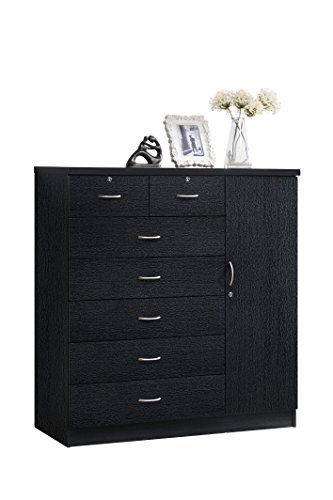
Hodedah 7 Drawer Jumbo Chest, Five Large Drawers, Two Smaller Drawers with Two Lock, Hanging Rod, and Three Shelves | Black
Check price on Amazon
HODEDAH 7 Drawer Wood Dresser for Bedroom, 31.5 inch Wide Chest of Drawers, with 2 Locks on the Top Drawers, Storage Organization Unit for Clothing, White
Check price on Amazon
Vipbear Black Tall Dresser with Sliding Top Lock & LED Light, 51.3" Tall 7 Drawer Chest of Drawers with Charging Station, Modern Wood Bedroom Storage Organizer for Closet, Hallway, Entryway
Check price on Amazon
WISUNO 3 Door Vertical Stackable Storage Cabinet with Lock,Anti-Failing Device, Metal Lcoker,Organizer for Office, Home, Gym, School,Employee,Kids. (Grey)
Check price on Amazon
Vipbear Black Tall Dresser 7 Drawer with Charging Station & LED Lights | Tall Wood Chest of Drawers with Sliding Top Locking Storage, Modern Closet Organizer for Bedroom, Hallway, Entryway
Check price on Amazon
VINGLI Wood Mobile File Cabinet with 4 Drawers and Shelves, Printer Stand with Open Storage, Locking Lateral Filing Cabinet for Home Office, Black
Check price on AmazonFrequently Asked Questions
What types of locks are available on dressers with locking drawers?
Most locking dressers use keyed cam locks, central locking bars, individual drawer locks, or electronic keypad locks. Keyed cam locks are the most common for home use, while central locking systems secure multiple drawers with a single key.
Are dressers with locking drawers safe for children?
Locking drawers can help keep hazardous items away from children, but the dresser itself must also be anchored to the wall with an anti-tip strap. Look for models that meet current furniture stability standards and pair the lock with a wall-anchoring kit for full safety.
Can I add a lock to an existing dresser?
Yes. Retrofit cam locks and drawer lock kits are available for most wooden dressers. You will need to drill a hole in the drawer face or frame, so measure carefully and choose a lock that matches your drawer thickness. Central locking bars are harder to retrofit and usually require a factory-built system.
What should I check before buying a dresser with locking drawers?
Check the lock type and how many drawers it secures, whether keys are replaceable, the drawer glide quality, the dresser's stability rating, and whether a wall-anchoring kit is included. Also confirm the material and finish match your bedroom style and that the lock mechanism is covered by a warranty.
Do locking dressers work for shared bedrooms?
Yes. Models with individual drawer locks let each person secure their own drawer while leaving shared drawers accessible. This is a practical option for dorm rooms, guest rooms, and bedrooms shared by siblings.