Understanding the Two Pieces
Before shopping, it helps to understand what each piece is designed to do. These are related but distinct furniture categories, and the best bedroom setups use them together deliberately.
What Is a Dresser with Mirror?
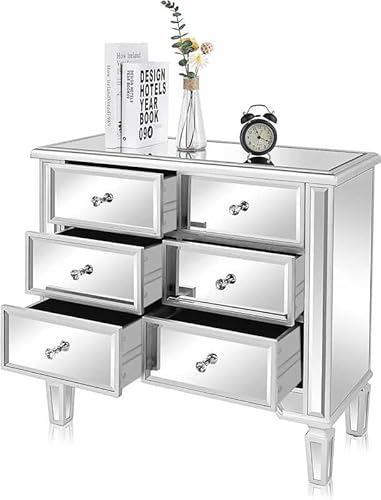
A dresser with mirror and drawers is a wide, relatively low storage unit topped with a flat surface and paired with an attached or leaning mirror. The mirror turns the dresser top into a grooming station, while the lower height keeps the piece visually light in the room. Dressers typically feature three to six wide drawers arranged in rows, with the top drawers kept shallow for smaller items.
The mirror is the defining feature. It can be a full-length design that leans against the wall, a framed rectangular mirror mounted to the back, or a tri-fold panel that opens up the viewing angle. If you prefer a freestanding piece, a dresser with full-length mirror gives you outfit-checking capability without a separate wall mirror.
What Is a Chest of Drawers?
A chest of drawers is taller than it is wide, stacking drawers vertically to maximize storage in a compact footprint. This vertical orientation makes it ideal for rooms where floor space is limited but wall height is available. Chests often contain four to six drawers, with deeper lower drawers for folded clothing and shallow upper drawers for accessories.
The key trade-off is reachability: top drawers on a tall chest may be above eye level for shorter users. Look for chests with a sensible drawer hierarchy, where frequently used items sit at waist height and seasonal items occupy the top or bottom.
Dresser with Mirror vs. Chest of Drawers: Key Differences
The table below summarizes how the two pieces differ so you can decide which role each should play in your bedroom. Descriptors reflect market positioning, not any specific numeric figures.
| Feature | Dresser with Mirror | Chest of Drawers |
|---|---|---|
| Typical orientation | Wide and low | Tall and narrow |
| Primary function | Grooming, display, daily-access storage | High-volume clothing storage |
| Drawer count | 3–6 wide drawers | 4–6 stacked drawers |
| Best for | Bedroom walls with available width | Corners and narrow wall segments |
| Market positioning | mid-tier to premium | entry-level to luxury |
How to Choose a Dresser with Mirror and Chest of Drawers
Choosing the pair is less about matching finishes and more about matching dimensions, drawer ergonomics, and material quality to your room and routine. Work through these factors in order.
1. Measure Your Room and Wall Space First
Start with a simple floor plan. Mark the wall segments where each piece could sit, then note door swings, window placement, and walking paths. A dresser with mirror needs enough clearance in front for a stool or standing room, while a chest of drawers needs clearance to fully open its lowest drawers.
If your room is compact, consider a dresser that fits in a closet or a dressers for small spaces to free up floor area. A narrow chest can tuck into a corner that a wide dresser cannot use at all.
2. Decide the Drawer Hierarchy You Actually Need
Map your clothing categories to drawer types before shopping. Socks, undergarments, and accessories belong in shallow drawers. Folded shirts and knitwear fit mid-depth drawers. Jeans, bedding, and off-season clothing need deep drawers. A dresser with mirror usually provides the shallow top drawers, while the chest supplies the deeper lower storage.
Look for models described as having full-extension drawers, which let you reach the back of each drawer without straining. If you own many small items, a dresser with lots of small drawers can supplement the pair. For generous folded-clothing capacity, a dresser with large deep drawers or a chest with similar deep drawers is worth prioritizing.
3. Match Mirror Style to the Dresser
The mirror should feel integrated, not added on. A mirror roughly the same width as the dresser frame looks balanced. Slightly narrower mirrors work well with decorative dressers that have prominent side posts. A dresser with lights and mirror is a strong choice if the dresser doubles as a vanity, since built-in lighting reduces shadows for grooming.
Consider whether you want an attached mirror or a removable one. An attached mirror is stable and saves wall space; a removable mirror offers flexibility if you later want to repurpose the dresser top. A dresser top mirror with drawers adds a small storage tier above the main surface, which is useful in compact rooms.
4. Evaluate Materials and Construction
Solid wood frames and reinforced drawer boxes hold up best over years of daily use. In the mid-tier and premium segments, look for dovetail or doweled drawer joints, metal ball-bearing glides, and a finished back panel. Entry-level pieces often use engineered wood with laminate surfaces; these can be perfectly serviceable but are more sensitive to moisture and heavy loads.
Hardware matters too. Gold handles and gold hardware remain a popular way to elevate a neutral dresser, while matte black pulls suit industrial and modern schemes. Check that pulls are screwed into solid material rather than thin veneer.
For a cohesive look, many buyers choose a matched dresser with mirror and chest set. A set guarantees consistent finishes, drawer proportions, and hardware, which simplifies styling and reduces decision fatigue.
5. Plan Safety and Stability
Tall chests must be anchored to the wall. Anti-tip straps are essential in homes with children or pets, and many chests ship with them. Check that the dresser mirror is either securely attached or positioned so it cannot tip. Weight distribution matters as well: load heavy items into lower drawers to keep the center of gravity low.
Material and Finish Options at a Glance
Use this table to align your material expectations with the tier you are shopping in. All descriptors are relative to the category, not absolute figures.
| Tier | Typical Materials | Construction Notes | Best For |
|---|---|---|---|
| entry-level | Engineered wood, laminate, paper veneer | Stapled or cam-lock assembly; basic glides | Guest rooms, first apartments, short-term setups |
| mid-range | Engineered wood with wood veneer, some solid wood trim | Reinforced drawer boxes; metal ball-bearing glides | Primary bedrooms with regular daily use |
| premium | Solid hardwood frames, hardwood veneer panels | Dovetail joints; full-extension glides; finished backs | Long-term households and design-focused rooms |
| luxury | Select hardwoods, hand-finished surfaces, premium hardware | Hand-joined drawers; soft-close mechanisms; heirloom-grade build | Statement bedrooms and long-term investment pieces |
Styling a Dresser with Mirror and Chest of Drawers
Once the pieces are in place, styling determines whether the room feels intentional or crowded. Treat the dresser top as a curated surface and let the chest stay visually quieter.
On the dresser, group items in threes: a tray for jewelry, a small plant or sculptural object, and a lamp if lighting is needed. Leave breathing room around the mirror so reflections are not blocked. On the chest, a single framed print or a low bowl is usually enough; too many objects on a tall chest can make the room feel top-heavy.
If you want the pair to read as a coordinated set, repeat one material or finish across both pieces, such as matching hardware or a shared wood tone. A dresser with matching nightstands extends that cohesion across the whole bedroom. For a softer look, a dresser with baskets can add texture and hide small-item clutter.
Common Mistakes to Avoid
- Buying the chest before measuring drawer clearance. A tall chest placed too close to a bed or wall cannot open fully, defeating its purpose.
- Choosing a mirror that is too wide. An oversized mirror can visually overpower a low dresser and crowd the wall.
- Ignoring drawer glide quality. Stiff or partial-extension glides become frustrating within months; prioritize smooth, full-extension mechanisms.
- Mixing too many finishes. Two or three coordinated tones work; five competing finishes make the room feel unfinished.
- Skipping wall anchoring. Tall chests and leaning mirrors should be secured, especially in homes with children.
Frequently Asked Questions
What is the difference between a dresser with mirror and a chest of drawers?
A dresser with mirror is typically wider and lower, designed with a flat top for grooming and display, often paired with a mirror. A chest of drawers is taller and narrower, focusing on maximizing vertical drawer storage in a compact footprint.
Should I buy a matching dresser and chest of drawers set?
A matching set creates visual cohesion and simplifies styling. However, mixing a dresser with mirror and a separate chest of drawers in a complementary finish can add depth and character to a bedroom.
How do I choose the right mirror for my dresser?
Choose a mirror that matches the dresser's width or is slightly narrower, and ensure its height suits your ceiling and wall space. Consider a full-length mirror if you need outfit checking, or a framed rectangular mirror for a classic look.
What drawer layout is best for a dresser and chest combo?
Look for a mix of shallow top drawers for small items and deep bottom drawers for bulkier clothing. Full-extension drawers and metal glides improve usability and durability over time.
Can a dresser with mirror be used as a vanity?
Yes, many dressers with mirrors work well as a vanity when paired with a stool and good lighting. Ensure the top surface is spacious enough and the mirror is positioned at a comfortable viewing height.
Ready to Compare Your Options?
Browse recommended dressers with mirrors and chests of drawers below, then check availability and read full details before you decide.
EXPLORE RECOMMENDATIONS