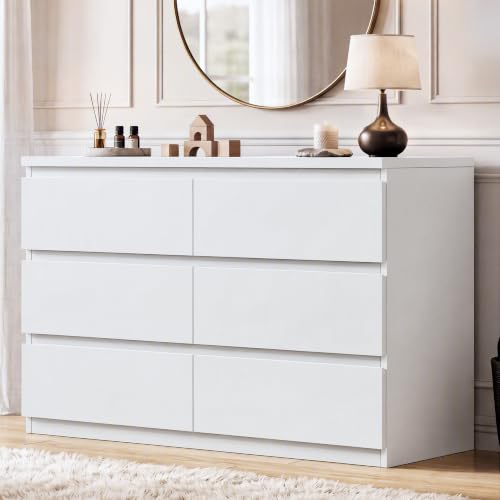
Dresser That Doubles As A Desk: A Complete Guide
Short on floor space but need both clothing storage and a workspace? A dresser that doubles as a desk lets you consolidate two essential furniture pieces into one footprint. Here is everything you need to know before you choose one.
Explore Buying CriteriaWho this guide is for: If you live in a studio apartment, a small bedroom, a dorm, or a home office that must also serve as a bedroom, this guide will help you understand how dresser-desk combos work, which design types exist, and how to pick one that fits your daily routine without sacrificing comfort or storage.
What Is a Dresser That Doubles As a Desk?
A dresser that doubles as a desk is a furniture piece designed so that the top surface functions as a workspace while the body provides drawer storage for clothing and personal items. Unlike a standard dresser, a dedicated dresser-desk combo is engineered with a top at seated working height, enough depth for a laptop and notebook, and often a drawer layout that separates office supplies from clothing.
The concept solves a real problem: in compact living spaces, a separate dresser and desk can consume most of the usable wall space. By merging them, you free up floor area for circulation, a bed, or a seating zone. The trade-off is that the piece must be chosen carefully, because a poorly designed combo can leave you with a desk that is too high to type comfortably or drawers that collide with your knees. If you are still deciding between storage formats, our guide to dresser vs chest of drawers explains how drawer depth and height differ between the two.
It also helps to understand that not every dresser makes a good desk. A standard dresser is usually taller than a desk, which puts the keyboard at shoulder height rather than forearm height. Purpose-built combos, convertible designs, and certain dresser tables with drawers are the safer starting point.
Main Design Types and Who They Suit
Dresser-desk combos generally fall into a few recognizable formats. Each has trade-offs in footprint, ergonomics, and how naturally the two functions coexist.
Convertible / Folding Desk Dresser
A dresser with a desk surface that folds down, slides out, or drops from the side. The best choice for studios where the room must switch between living, sleeping, and working modes. When the desk is stowed, the unit reads as a normal dresser.
Fixed-Top Dresser Desk
A single wide unit with a permanent desk-height top and dresser drawers beneath. Simplest to use and the most stable for a permanent home office setup, but it always occupies the workspace footprint.
Desk With Dresser Drawers Below
A true desk silhouette with deep drawer banks built into the pedestals. Excellent ergonomics for daily computer work, and the drawer capacity often rivals a mid-size dresser. A strong option for remote workers.
Tall Dresser With Pull-Out Desk
A tall, narrow dresser that hides a pull-out work surface. Ideal for narrow walls and very small rooms, though the usable desk depth is usually limited to a laptop and a notebook.
If your room is genuinely tight, combine this guide with our overview of dressers for small spaces and the sizing notes in the dresser style guide before committing to a footprint.
Key Buying Criteria
Because a combo unit must satisfy two jobs at once, the specifications matter more than they do for a single-purpose dresser. Use the following checklist as your decision framework.
1. Desk Height and Ergonomics
The top surface should match seated desk height so that your elbows rest near a 90-degree angle. Many dressers are built taller than desks, so verify the top height before you assume a dresser can be repurposed. A convertible or purpose-built combo avoids this problem entirely.
2. Working Depth
A laptop needs enough depth that the screen sits at a comfortable viewing distance and your wrists are supported. Shallow pull-out surfaces are fine for a tablet or handwriting, but heavy monitor use usually calls for a fixed-top or desk-silhouette model.
3. Drawer Layout and Clearance
Check that the top drawer opens fully without hitting the chair or your knees, and that the drawer glides are smooth enough that daily use does not disturb items on the desk. Models with full-extension drawers make it easier to reach the back of deep drawers without leaning over the workspace. A layout that mixes shallow top drawers for office supplies with deeper lower drawers for clothing tends to work best.
4. Cable Management
If you will use a monitor, laptop charger, or lamp, look for a unit with a rear cutout or grommet. Without it, cables drape across the front of the dresser and undermine the clean look that made the combo appealing in the first place.
5. Build and Stability
A desk surface takes more concentrated load than a dresser top, so frame rigidity matters. Solid wood and reinforced engineered panels hold up better over years of daily work than thin particle board. If you want to skip assembly entirely, dressers that do not require assembly are worth reviewing. Also confirm the unit includes an anti-tip strap, since drawers opened while leaning on the desk increase tip risk.
Quality Tiers Explained
Rather than comparing prices, it is more useful to compare what each tier of dresser-desk combo typically delivers. The tiers below describe relative market positioning, not absolute numbers.
| Tier | Best For | Typical Construction | What to Expect |
|---|---|---|---|
| Entry-level | Dorms, first apartments, occasional use | Engineered wood panels, basic metal glides | Simpler assembly, lighter frame, and a desk surface best suited to a laptop rather than a full monitor setup |
| Mid-range | Daily remote work in small bedrooms | Reinforced panels or mixed solid wood, side-mounted or ball-bearing glides | Smoother drawer action, better top load capacity, and more thoughtful cable routing |
| Premium | Permanent home offices that double as bedrooms | Solid wood frames, dovetail or high-grade joinery, soft-close hardware | Stable under monitor weight, refined finish, and drawers that stay quiet over years of daily use |
| Luxury | Design-led interiors where furniture is a focal point | Hardwood, hand-finished surfaces, premium hardware | Flagship construction, integrated lighting or hidden compartments, and long-term durability |
A general rule: mid-range and premium models usually offer a more rigid top and smoother glides than entry-level units, which matters more for a workspace than it does for a purely decorative dresser. For readers exploring adjacent multi-use formats, our article on a dresser table covers a related middle ground.
Placement and Ergonomics Tips
- Plan the chair zone first. Allow enough clearance behind the desk for the chair to roll back. A combo unit placed flush against a bed frame defeats the purpose of the workspace.
- Keep the desk near natural light, but not in direct glare. Side lighting from a window reduces screen reflections compared with a window directly behind or in front of the monitor.
- Reserve the top drawer for work items. Keeping pens, chargers, and notebooks in the top drawer prevents clutter from migrating onto the desk surface and preserves the dressing-area function of the remaining drawers.
- Anchor the unit. Even a stable combo should be fixed to the wall if children or pets are present, because an open drawer plus body weight on the desk edge shifts the center of gravity forward.
- Consider a mirror or lighting arrangement. If the same surface also serves as a grooming station, pair it with a dresser top mirror with drawers or add a task lamp that can be angled away from the screen.
- Think about room transitions. In a studio, a convertible model lets you close the workspace at the end of the day, which helps separate work from rest psychologically as well as physically.
Common Mistakes to Avoid
- Assuming a standard dresser will work as a desk. Height mismatches are the most common cause of discomfort. Measure the top height against your seated elbow height before buying or repurposing.
- Ignoring drawer swing and knee room. A drawer that only opens partway because of a nearby bed or wall turns the workstation into a frustration.
- Overlooking cable routing. Buyers often discover the lack of a grommet only after the unit is assembled, at which point drilling feels risky.
- Underestimating top load. A heavy monitor arm clamped to a thin top can bow the surface. Confirm the panel thickness and reinforcement before mounting anything.
- Choosing a footprint before measuring the room. Use the dimensions guidance in our dresser buying hub and the style considerations in dresser styles to avoid a unit that crowds the door swing or blocks a closet.
- Forgetting the combo as a family solution. In a nursery or child's room, safety certification and anchoring matter more than desk features. See our notes on a dresser to use as a changing table for the safety framing that applies to multi-use pieces in general.
Frequently Asked Questions
Can any dresser be used as a desk?
Not every dresser works as a desk. A suitable combo needs a top at seated working height, sufficient depth for a laptop and notebook, and drawers that open without disturbing the workspace. Purpose-built combo units or convertible dressers are safer choices than improvising with a standard dresser.
What height should a dresser-desk combo be?
For comfortable seated work, the surface should align with your forearms when your elbows are near a 90-degree angle. Most standard desks sit at seated working height, so look for a combo whose top matches typical desk height rather than typical dresser height, which is often higher.
How much weight can a dresser-desk combo hold?
Capacity depends on construction. Mid-range and premium models with reinforced tops and solid frames typically support a monitor, laptop, and desk accessories without issue. Entry-level models may require careful weight distribution. Always check the manufacturer's stated load limits before placing heavy equipment on top.
Is a convertible dresser-desk good for small apartments?
Yes. It is an excellent space-saving solution for studios and small apartments because it consolidates clothing storage and a workspace into one footprint. Convertible models that fold or slide the desk surface away are especially useful when the room serves multiple purposes.
Should I choose a fixed top or a folding desk surface?
Choose fixed if the desk will be used every day for computer work and stability matters most. Choose folding or pull-out if the room must convert between work and relaxation modes and the workspace is used for lighter tasks such as a laptop, tablet, or writing.
Ready to compare specific models? Review the recommended dresser-desk combos and storage solutions in the curated selection below, then check availability and feature details directly on the retailer page.
See Recommended Models