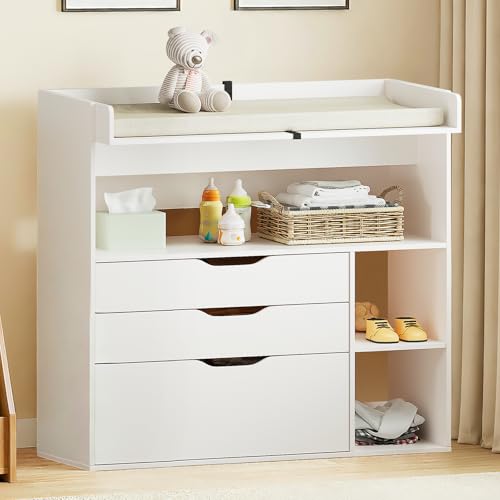
Changing Table Drawers: Safety, Style & Smart Storage
Transform your nursery with a dresser that doubles as a changing station. Discover the best changing table drawers for 2026 – safe, durable, and beautifully organized.
Shop Top Picks ↓Why choose a changing table dresser? It’s the ultimate 2-in-1 nursery investment. You get a spacious dresser with deep drawers for baby clothes, diapers, and blankets, plus a sturdy changing top that keeps everything within arm’s reach. When the diaper years are over, you still have a beautiful bedroom dresser that grows with your child.
What Makes a Great Changing Table Dresser?
🔒 Safety First
- Sturdy construction: Solid wood or high-quality engineered wood with a wide, stable base.
- Safety rails: A raised lip on the changing top (at least ½ inch) helps prevent rolling.
- Anti-tip kit: Always anchor the dresser to the wall – a must for baby safety.
- Non-toxic finishes: Look for low-VOC paints and stains that are safe for little ones.
📏 Drawer Depth & Size
- Deep drawers: Aim for at least 6–8 inches of depth to store bulky baby items like sleep sacks and blankets.
- Full-extension slides: Allow you to access the entire drawer, making diaper changes easier.
- Soft-close mechanisms: Prevent slamming and protect tiny fingers.
- Check the dresser size guide to ensure it fits your nursery layout.
🧵 Material & Durability
- Solid wood (oak, pine, maple) offers the best durability and can be refinished later.
- Engineered wood (MDF, plywood) is budget-friendly but check for sturdy construction.
- Drawer construction: Dovetail or mortise-and-tenon joints are signs of quality.
- Learn more about how to evaluate dresser quality.
🎨 Style & Finish
- Neutral colors: White, gray, and natural wood tones are timeless and match any decor.
- Two-tone designs: Add visual interest with contrasting drawer fronts.
- Hardware: Sleek knobs or pulls that are easy to grip – and safe for little hands.
- Explore more nursery dresser ideas for inspiration.
Drawer Construction – What to Look For
The drawers are the heart of any changing table dresser. Here’s what separates a quality piece from a flimsy one:
🔩 Joints & Slides
- Dovetail joints are the gold standard – they interlock and won’t pull apart under heavy weight.
- Ball-bearing slides provide smooth, quiet operation and support up to 100 lbs.
- Undermount slides are hidden and offer a clean look, often with soft-close.
- Check out our guide on drawer construction for more detail.
📦 Drawer Depth & Capacity
- Deep drawers (10″+) are ideal for storing bulkier items like towels and sleep sacks.
- For organization, consider drawer organizers to keep tiny socks and onesies tidy.
- If you’re tight on space, a small dresser with deep drawers can still work wonders.
Changing Table Dresser – Pros & Cons
✅ Pros
- Dual-purpose: dresser + changing table saves space and money
- Keeps diapers, wipes, and clothes organized in one place
- Grows with your child – becomes a regular dresser after diapers
- Available in a wide range of styles to match any nursery
❌ Cons
- Changing top may be smaller than standalone changing tables
- Requires a changing pad that fits the top securely
- Can be more expensive than a basic dresser
- May be too tall for shorter parents – check the height
Dresser vs. Dedicated Changing Table
| Feature | Changing Table Dresser | Dedicated Changing Table |
|---|---|---|
| Longevity | ✔️ Becomes a lifelong dresser | ❌ Often outgrown in 2–3 years |
| Storage | ✔️ 4–6 deep drawers for clothes & supplies | ⚠️ Open shelves or small baskets only |
| Safety | ✔️ Stable, tip-resistant, often with rails | ✔️ Designed specifically for changing |
| Cost | 💰 $200 – $800 | 💰 $80 – $300 |
| Best For | Parents who want a long-term investment | Budget-conscious or temporary setups |
Prices are estimated market averages. Premium solid wood models may cost more.
Safety Tips for Changing Table Drawers
- 🔹 Always anchor the dresser to the wall using the included anti-tip kit.
- 🔹 Use a changing pad with straps that secures to the top of the dresser.
- 🔹 Keep diaper supplies within arm’s reach but out of baby’s grasp.
- 🔹 Never leave your baby unattended on the changing surface – even for a second.
- 🔹 Check that the drawer slides are smooth and won’t pinch little fingers.
- 🔹 For extra peace of mind, consider a dresser with locking drawers when your child starts exploring.
Top 3 Features to Prioritize
Sturdy Frame & Drawers
Solid wood or high-quality plywood with dovetail joints. Avoid particleboard.
Deep, Full-Extension Drawers
At least 6″ depth and full-extension slides for easy access to every item.
Safety Rails & Anti-Tip
Built-in rails on the changing top and a wall-anchoring system are non-negotiable.
Choosing the Right Size for Your Nursery
Measure your space before you buy. Here’s a quick guide:
- Width: Most changing dressers are 36″–48″ wide. A 40″ width is a sweet spot for most nurseries.
- Height: The changing surface should be at your hip level (around 36″–40″ tall) to avoid back strain.
- Depth: Standard depth is 18″–22″. Deeper dressers offer more storage but take up more floor space.
- If your nursery is compact, consider a dresser for small spaces or a narrower 30″ model.
Final Thoughts – Is a Changing Table Dresser Right for You?
If you want a piece of furniture that will last through the baby years and beyond, a changing table dresser is an excellent investment. It combines safety, storage, and style in one smart package. Focus on solid construction, deep drawers, and safety features, and you’ll have a dresser that serves your family for decades. Ready to choose yours? Browse our top picks below.