What Counts as an Antique Dresser?
Strictly speaking, an antique is generally defined as a piece at least 100 years old. In practical shopping terms, the antique dressers for sale market also includes late-vintage pieces from the early to mid-1900s that carry authentic period construction. The distinction matters because age affects materials, joinery, drawer mechanics, and the level of restoration you should expect.
If you want to narrow your search by era, our guide to antique dressers from the early 1900s explains how construction methods shifted during that transitional period. For a broader overview of the category itself, see our antique dresser overview.
Key Antique Dresser Styles You Will Encounter
Style is the fastest way to filter a large marketplace. Most antique dressers for sale fall into a handful of recognizable families, each with its own construction signatures and room-matching strengths.
French and Provincial Styles
French pieces are prized for elegant curves, tapered legs, and refined detailing. Our antique French dresser guide covers the full range, while the antique French chest of drawers deep-dive focuses on drawer configurations. These pieces suit classic, transitional, and even modern bedrooms when styled with restraint.
English and Traditional Forms
The antique English chest of drawers is one of the most reliable entry points into authentic period furniture, thanks to sturdy oak and mahogany construction and widely documented forms. Traditional antique wooden chest of drawers pieces are also widely available and easier to evaluate for a first-time buyer.
Japanese, Painted, and Specialty Pieces
Collectors seeking something distinctive should explore the antique Japanese chest of drawers, known for precise joinery and minimal hardware, or an antique painted chest of drawers for a bolder decor statement. Smaller niches also exist — the antique miniature chest of drawers works well for accents and jewelry storage.
Wood and Material Guide
The wood tells you a lot about durability, restoration potential, and how the piece will age in your home. Each species below is presented with the quality tier system used throughout this guide.
- Mahogany — dense, richly figured, and among the most respected antique furniture woods. Typically mid-tier to high-end tier depending on carving and provenance. See our antique mahogany dresser with mirror guide for mirrored configurations.
- Oak — heavy-duty and highly durable, often with visible grain and solid joinery. A dependable essential tier to mid-tier choice. Explore antique oak dressers for sale.
- Pine — lighter, softer, and often painted or scrubbed. Well-suited to farmhouse and cottage interiors, generally in the starter tier to mid-tier range.
- Marble-topped pieces — a luxurious design choice with a durable work surface. See the antique marble top dresser guide for care and authenticity checks.
Understanding Market Tiers
Instead of thinking in numbers, classify antique dressers by market position. This stays useful over time and helps you compare pieces fairly.
Entry-Level Tier
Authentic period pieces with visible wear, common woods, and simpler forms. Good for first-time buyers who value character over perfect finish.
Mid-Range Tier
Solid antique construction with intact joinery, original or sympathetically restored hardware, and recognizable maker or regional style.
High-End Tier
Rare woods, fine carving, documented provenance, and museum-grade restoration. A long-term investment for serious collectors.
Size, Height, and Room Fit
Antique dressers come in distinct height classes, and the right one depends on your room and how you use the top surface.
- Lowboy — lower height, wide proportions; ideal beneath windows or as a display surface. See the antique lowboy dresser with mirror.
- Highboy — tall and imposing; strong storage density for compact footprints. Explore the antique highboy dresser for sale category.
- Tall dressers — vertical designs that save floor space. Read the antique tall dresser guide.
- Narrow chests — for tight walls and small bedrooms. See the antique narrow chest of drawers.
| Form | Best For | Typical Tier |
|---|---|---|
| Lowboy | Open wall space, display top, classic bedroom | Mid-range tier |
| Highboy | Maximizing storage in a small footprint | Mid to high-end tier |
| Tall dresser | Compact rooms and vertical organization | Entry to mid-range tier |
| Narrow chest | Hallways, small bedrooms, tight corners | Entry-level tier |
How to Verify an Authentic Antique Dresser
Because the antique dressers for sale market includes reproduction pieces, verification should be systematic. Walk through these checks before committing.
- Inspect the joinery. Dovetail joints, hand-cut irregularities, and pinned mortise-and-tenon connections are strong authenticity signals. Perfectly uniform machine dovetails suggest a later reproduction.
- Check drawer bottoms and runners. Original antique drawers show wear patterns consistent with decades of use. Look for matching patina between the drawer sides and the carcass.
- Examine hardware. Original pulls often sit in slightly irregular holes; later replacements may leave extra holes or mismatched patina. Note that reproduction hardware is acceptable if it is disclosed.
- Look at the back and underside. Hand-planing marks, uneven boards, and older nails or cut nails are useful clues. Machine-sanded backs are typically modern.
- Check for finish consistency. A heavily worn top with pristine sides can indicate refinishing or repair. That is not automatically disqualifying, but it affects tier and authenticity.
- Smell and feel. Old wood develops a distinct dry, earthy scent; fresh finishes and new pine smell different.
If a piece has been refinished or is an antique-looking chest of drawers rather than a true period piece, a reputable seller should say so clearly. For a related category check, our antique style chest of drawers page explains the difference between style and origin.
Condition, Restoration, and What to Accept
Every antique has a history, and some wear is expected. The question is whether the wear is cosmetic or structural. Prioritize structural integrity over surface perfection: solid joints, smooth drawer operation, and no active wood damage matter more than a few dents.
Restoration is a spectrum. Sympathetic restoration preserves original finish and hardware where possible; heavy refinishing removes patina and can reduce the piece's standing in the high-end tier. Ask specifically what was replaced, repaired, or refinished. For mirrored pieces, verify the mirror is original or a well-matched replacement — see our antique dressers with mirrors guide.
Finishes and Color Directions
Color is often the deciding factor in a bedroom. Antique finishes range from deep natural mahogany to soft painted white, and each creates a different mood.
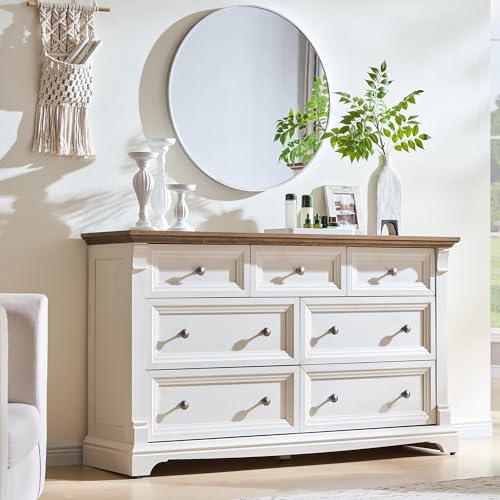
For a bright, airy bedroom, consider antique white dressers for sale or a complete antique white dresser and nightstands pairing. If you want a mirror-topped focal point, see the antique white dresser with mirror. For a richer, warmer look, a natural or stained finish may suit a traditional bedroom better.
Where to Shop and What to Ask
Antique dressers for sale are sold through estate sales, specialist dealers, auctions, and online marketplaces. Each channel has different return policies, authentication standards, and shipping realities. Regardless of channel, ask a consistent set of questions:
- What is the estimated age, and what evidence supports it?
- Is the finish original, and has the piece been refinished or repaired?
- Are the hardware and mirror original?
- How do the drawers operate, and are there any structural issues?
- What are the exact dimensions, including height?
- How is the item packed and shipped, and what is the return policy?
If you are also furnishing a room around the piece, our bedroom dressers for sale overview and bedroom dresser and nightstand sets guide can help you build a coherent set.
Ready to Explore Authentic Antique Dressers?
Browse curated antique dressers and storage pieces from trusted sellers. Compare features and find the right fit for your bedroom.
Explore OptionsFrequently Asked Questions
How old must a dresser be to be considered antique?
Most definitions require at least 100 years of age. In practice, listings for antique dressers for sale often include later period pieces, so confirm the stated age and the evidence behind it before buying.
Are antique dressers practical for daily use?
Yes, provided the drawers operate smoothly and the structure is sound. Many buyers prefer mid-range tier and high-end tier pieces with restored runners and reinforced joints for daily use.
How can I tell a genuine antique from a reproduction?
Check joinery, hardware holes, drawer wear patterns, and the back panels. Hand-cut dovetails and consistent patina indicate age; uniform machine joinery and sanded backs often indicate a later reproduction.
Should I refinish an antique dresser?
Refinishing can remove patina and affect authenticity. A light cleaning and wax is usually preferable; consult a professional before stripping an original finish, especially on high-end tier pieces.
Which antique dresser styles work in modern bedrooms?
Clean-lined French forms, narrow chests, and simple wooden chests integrate well with modern decor. Pair a statement antique with neutral textiles to keep the room balanced.