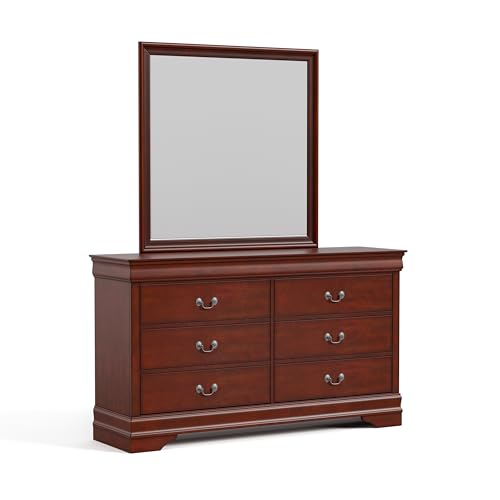
Antique Mahogany Dresser with Mirror
Everything you need to know about choosing, evaluating, and caring for a timeless antique mahogany dresser with mirror — from wood grading and period styles to restoration and daily maintenance.
Start Your ResearchWhy mahogany? Mahogany has been the wood of choice for fine furniture since the 18th century. Its deep reddish-brown tones, tight grain, and natural durability made it a favorite of cabinetmakers across Georgian, Victorian, and Edwardian eras. An antique mahogany dresser with mirror combines that heritage with practical bedroom storage — but choosing the right piece requires knowing what to look for.
What Defines an Antique Mahogany Dresser with Mirror
An antique mahogany dresser with mirror is more than a bedroom storage piece — it is a slice of furniture history. Mahogany (Swietenia species) was imported from the Caribbean and Central America beginning in the early 1700s and quickly became the preferred wood for high-quality case furniture in Europe and North America.
What sets a genuine antique apart from a reproduction is the combination of materials, construction techniques, and the passage of time. Authentic pieces typically feature:
- Solid mahogany construction — drawer fronts, sides, and top are usually solid mahogany or mahogany veneer over a secondary wood such as pine or oak.
- Hand-cut dovetail joints — irregular spacing and slight variations are hallmarks of pre-industrial craftsmanship.
- Period hardware — brass pulls, escutcheons, and keys that match the era of manufacture.
- Original mirror glass — often with subtle distortions, foxing (spotting), or a slightly cloudy silvering that confirms age.
- Patina — the mellow, darkened surface that develops over decades of exposure to light and air.
If you are exploring the broader category, our guide to antique dressers with mirrors covers the full range of styles and wood types. For mahogany specifically, understanding the difference between solid mahogany and mahogany veneer is essential — both are legitimate in antiques, but they affect durability and restoration options differently.
Period Styles and Design Evolution
Mahogany dressers with mirrors were produced across several distinct design periods, each with its own characteristics. Knowing these styles helps you identify what you are looking at and determine whether a piece fits your bedroom aesthetic.
Georgian (1714–1837)
Clean lines, proportioned elegance, and fine craftsmanship. Georgian mahogany dressers often feature bracket feet, serpentine or bow-front drawer faces, and simple brass hardware. Mirrors are typically rectangular with modest frames.
Victorian (1837–1901)
Ornate and substantial. Victorian mahogany dressers frequently include carved details, marble tops, heavy hardware, and large mirrors with elaborate frames. These pieces are often larger and more imposing than earlier styles.
Edwardian (1901–1910)
A return to lighter, more refined lines. Edwardian mahogany dressers often feature inlaid details, satinwood crossbanding, and slimmer proportions. Mirrors are usually smaller and more restrained.
American Colonial Revival (Late 19th–Early 20th c.)
Inspired by early American furniture, these pieces often feature solid mahogany, simple bracket bases, and rectangular mirrors. They are widely available and pair well with both traditional and transitional interiors.
Each period brings its own charm. If you are drawn to the imposing presence of Victorian furniture, you may also appreciate the scale of an antique highboy dresser. For smaller spaces, an antique lowboy dresser with mirror offers the same mahogany warmth in a more compact footprint.
Wood Grading and Quality Indicators
Not all mahogany is equal. The wood's quality varies based on species, age, and how it was cut and seasoned. When evaluating an antique mahogany dresser with mirror, consider these quality indicators:
- Grain tightness — high-grade mahogany has a tight, uniform grain with minimal porosity. Run your hand across the surface; it should feel smooth and dense.
- Color depth — genuine antique mahogany develops a rich, deep reddish-brown patina. Freshly cut or heavily sanded mahogany appears lighter and less complex.
- Figure and flame — premium pieces feature attractive figure such as crotch, flame, or ribbon-stripe mahogany, often book-matched across drawer fronts.
- Veneer integrity — if the piece uses veneer, check for lifting, bubbles, or missing sections. Veneer is not a sign of lower quality in antiques — it was often used to showcase the finest cuts of wood.
- Secondary woods — drawer sides and backs are typically made from secondary woods like pine, poplar, or oak. Their condition tells you about the piece's structural health.
For a deeper look at how mahogany compares to other antique woods, see our guide to the antique mahogany dresser category.
Mirror Types and Evaluation
The mirror is a defining feature of an antique mahogany dresser with mirror — and one of the most important elements to evaluate. Original mirrors add character and authenticity, but they can also present condition challenges.
Common Mirror Types
- Original silvered glass — the most desirable. Older mirrors used silver nitrate backing, which develops a warm, slightly cloudy appearance over time. Foxing (small dark spots) and edge darkening are normal and often considered part of the charm.
- Re-silvered mirrors — mirrors that have been re-silvered at some point. While not original, a professionally re-silvered mirror can be perfectly functional and visually appealing.
- Replacement glass — modern mirror glass installed in an antique frame. This is common and not necessarily a drawback, but it does affect authenticity and value.
What to Check
- Silvering condition — extensive dark spots or desilvering along the edges may indicate moisture exposure. Light foxing is acceptable; large dark patches may require replacement.
- Frame integrity — check that the mirror frame is securely attached to the dresser and that the wood is not split or warped.
- Mounting hardware — original brackets and screws are preferable. Corroded or makeshift mounts can be a safety concern.
- Reflection quality — stand in front of the mirror and check for distortion. Slight waviness is normal in antique glass; severe distortion may indicate damage.
Drawer Construction and Storage
The drawers are the working heart of any dresser. In an antique mahogany dresser with mirror, drawer construction tells you a great deal about the piece's quality and condition.
- Dovetail joints — hand-cut dovetails are a hallmark of pre-industrial furniture. Look for irregular spacing and slight variations in the pins and tails. Machine-cut dovetails (perfectly uniform) suggest a later piece or reproduction.
- Drawer bottoms — solid wood drawer bottoms, often with hand-planed surfaces and slight irregularity, are typical of antiques. Check for cracks, warping, or repairs.
- Runners and guides — wooden runners wear over time. Smooth operation is a good sign; sticking or wobbling may indicate worn runners that need attention.
- Dust boards — the dividers between drawers help keep contents clean and support the drawer structure. Check that they are intact and securely attached.
- Interior condition — smell the drawers. A musty or chemical odor may indicate mildew or past pest treatment. Look for signs of woodworm (small flight holes) and check for any active infestation.
If drawer capacity is a priority, compare the storage volume of this piece with a larger antique tall dresser or a antique wooden chest of drawers.
Hardware and Details
Hardware is one of the most telling details on an antique dresser. Original brass pulls, escutcheons, and keyhole covers add authenticity and visual appeal. When evaluating hardware:
- Original vs. replacement — original hardware is preferable. Replacement hardware should be period-appropriate in style and material.
- Brass quality — solid brass develops a warm patina over time. A magnet will not stick to solid brass; if it does, the hardware may be brass-plated steel.
- Escutcheons and keys — many antique dressers originally had locking drawers. Check whether the escutcheons (keyhole covers) are present and whether a key is available.
- Pulls and bails — check that pulls are secure and that the wood around them is not split or stripped.
Hardware condition affects both function and aesthetics. If you are considering replacing hardware, keep the original pieces — they add value and authenticity even if you choose not to use them.
Condition Assessment Checklist
Before purchasing an antique mahogany dresser with mirror, work through this checklist. It will help you distinguish a sound piece from one that requires significant investment in repairs.
- Structural integrity — check that the frame is solid, joints are tight, and the piece does not wobble. Look for signs of major repairs or replaced structural elements.
- Finish condition — some cracking and crazing is normal for antique finishes. Extensive flaking, deep scratches, or water rings may require refinishing.
- Wood condition — inspect for woodworm holes, rot, splits, and warping. Check the back and underside of the piece, where problems are often hidden.
- Mirror condition — as covered above, evaluate silvering, frame integrity, and mounting hardware.
- Drawer function — open and close every drawer. They should glide smoothly without excessive force. Sticking drawers may need runner repair or lubrication.
- Hardware condition — check that all pulls are secure and that escutcheons are present.
- Provenance — ask about the piece's history. Documentation, receipts, or maker's marks add value and confidence.
If you are comparing this piece to other antique styles, our guide to antique dresser types provides a useful overview. For pieces from the early 20th century, see antique dressers from early 1900s.
Restoration and Preservation
The question of restoration is one of the most debated topics in antique furniture. For an antique mahogany dresser with mirror, the general rule is: preserve whenever possible, restore only when necessary.
Preservation
Preservation involves cleaning and stabilizing the piece without altering its original finish or patina. This is the preferred approach for pieces with historical or market value. Light cleaning with a soft cloth and a pH-neutral wood cleaner is usually sufficient. Apply a high-quality furniture wax sparingly to protect the finish.
Restoration
Restoration — which may include stripping, sanding, and refinishing — should be reserved for pieces with severe damage, failing finishes, or structural problems that affect usability. Even then, consult a professional conservator before undertaking major work. Original patina and finish are highly valued by collectors, and aggressive restoration can significantly reduce value.
Common Repairs
- Drawer runner repair — worn runners can be built up or replaced to restore smooth operation.
- Veneer repair — lifting veneer can often be re-glued and clamped without refinishing the entire piece.
- Hardware replacement — period-appropriate hardware can be sourced from antique hardware specialists.
- Mirror re-silvering — if the mirror is severely deteriorated, professional re-silvering can restore function while preserving the original frame.
For broader guidance, see our article on antique mahogany dresser care and maintenance.
Market Tiers and What to Expect
Antique mahogany dressers with mirrors span a wide range of quality and desirability. To help you navigate the market without focusing on specific figures, here is a tier-based framework:
| Tier | Best For | Typical Characteristics |
|---|---|---|
| Entry-Level | First-time antique buyers; casual decor | Later reproductions or Edwardian pieces with some condition issues; may have replacement hardware or mirrors. |
| Mid-Range | Collectors seeking solid value; everyday use | Well-preserved Victorian or Edwardian pieces; original hardware; good structural condition; minor cosmetic wear. |
| Premium | Serious collectors; period-correct interiors | Georgian or high-quality Victorian pieces; original mirrors with attractive foxing; documented provenance; excellent patina. |
| Luxury / Museum-Grade | Museum collections; investment-grade acquisitions | Rare maker's marks; exceptional figure and veneer work; original finish in outstanding condition; significant historical documentation. |
Within each tier, condition and authenticity are the primary drivers of desirability. A mid-range piece in excellent original condition is often a better long-term investment than a premium piece that has been heavily restored.
Styling and Placement Ideas
An antique mahogany dresser with mirror is a statement piece that can anchor a bedroom's design. Here are a few placement and styling ideas:
- As a focal point — place the dresser on the wall opposite the bed. The mirror adds light and depth, making the room feel larger.
- In a dressing area — pair with a small stool or bench and a table lamp for a dedicated grooming station.
- Mixed with modern pieces — the warm tones of mahogany contrast beautifully with modern bedding, lighting, and accessories. Avoid matching too many antique pieces in one room.
- In a guest room or hallway — a compact antique lowboy dresser with mirror works well in smaller spaces and doubles as a console.
If you are planning a full bedroom refresh, explore our bedroom dresser sets with mirror for coordinated options.
Related Guides
Continue your research with these related articles:
Frequently Asked Questions
How can I tell if a mahogany dresser is genuinely antique?
Genuine antique mahogany dressers typically show hand-cut dovetail joints, uneven patina, hand-planed drawer bottoms, and period-appropriate hardware. Look for signs of age such as oxidation, wear patterns around drawer pulls, and construction techniques consistent with the era. A magnet test can help identify solid brass hardware, and checking the back and drawer interiors often reveals tool marks and wood aging that reproductions cannot replicate.
What is the difference between mahogany and other antique woods?
Mahogany is prized for its deep reddish-brown color, fine grain, and exceptional durability. Unlike oak, which has an open grain, mahogany has a tight, smooth grain that takes polish beautifully. Compared to walnut, mahogany tends to be more uniform in color and slightly denser. Its natural resistance to rot and warping made it the preferred wood for fine furniture across the 18th and 19th centuries.
Should I restore or preserve an antique mahogany dresser?
Preservation is generally preferred for pieces with significant historical or market value. Light cleaning with a soft cloth and a pH-neutral wood cleaner is usually sufficient. Full restoration — stripping and refinishing — should be reserved for pieces with severe damage or failing finishes. Original patina and finish are highly valued by collectors, so consult a professional conservator before undertaking any major restoration.
How do I safely attach and maintain the mirror on an antique dresser?
Check that the mirror's mounting brackets and screws are secure and not corroded. Use felt pads between the mirror frame and the dresser top to prevent scratching. Avoid placing the dresser in direct sunlight or near heat sources, as this can damage both the wood finish and the mirror's silvering. Clean the glass with a non-ammonia glass cleaner and keep the frame dry.
What should I inspect before buying an antique mahogany dresser with mirror?
Inspect drawer operation for smooth gliding, check dovetail joints for tightness, look for signs of woodworm or rot, verify that the mirror silvering is intact, and confirm that hardware is original or period-appropriate. Examine the finish for excessive cracking or flaking, and check for structural repairs that may affect stability. Ask about provenance and whether any restoration work has been documented.
Ready to Find Your Antique Mahogany Dresser with Mirror?
Explore curated options and compare features from trusted sellers. Your perfect piece is waiting.
View Available Options