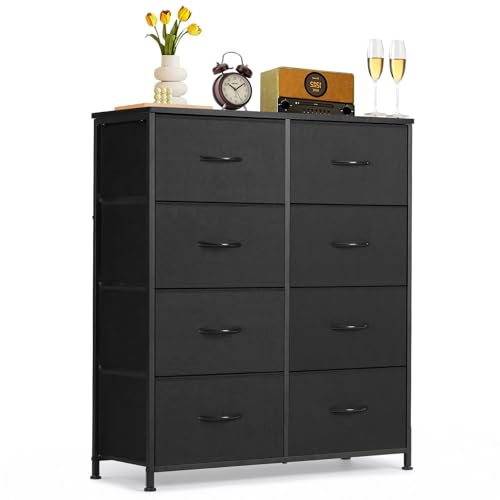
Small Space Dresser: Smart Storage for Compact Rooms
Maximize every square foot with a dresser designed for tight bedrooms, apartments, and closets. Learn which compact styles, sizes, and features work best for limited floor space.
Explore the GuideWhy small space dressers matter: When floor space is limited, a full-size dresser can overwhelm a room and block traffic flow. The right compact dresser delivers generous storage without sacrificing the room's usability — and choosing well means understanding depth, height, drawer configuration, and placement before you buy.
What Makes a Dresser "Small Space" Friendly?
A small space dresser is not simply a smaller version of a standard dresser. It is a piece of furniture engineered — or selected — to deliver usable storage within a restricted footprint. That means prioritizing vertical space, controlling depth, and choosing a drawer layout that keeps frequently used items accessible without requiring a large floor area.
The most effective compact dressers share a few defining traits: they hug the wall closely, they rise upward rather than outward, and they offer a drawer arrangement that suits the room's specific needs. A small chest dresser or a tall narrow dresser with drawers often outperforms a wide, low unit when the room is narrow but ceiling height is available.
Key Dimensions to Check Before Buying
Measurements are the single most important factor in choosing a small space dresser. A beautiful dresser that does not fit is a costly mistake. Before shopping, record these dimensions for your room:
- Available wall width — the horizontal space between obstructions such as doors, windows, and other furniture.
- Clear floor depth — how far the dresser can extend into the room while leaving comfortable walking space. Standard dressers are often 18–20 inches deep; shallow models around 12 inches are available for tight rooms.
- Drawer pull clearance — the space needed for drawers to open fully without hitting a bed or door.
- Height clearance — check for windowsills, wall art, or light switches that limit how tall the dresser can be.
For very tight rooms, a 12-inch deep chest of drawers can be the difference between a functional room and a cramped one. Measure the opening path as well — doorways and stairwells can prevent a dresser from reaching the room even when it fits inside it.
Small Space Dresser Types Compared
Different compact dresser styles solve different spatial problems. The table below compares the most common options so you can match the type to your room's constraints.
| Dresser Type | Best For | Space-Saving Advantage | Typical Tier |
|---|---|---|---|
| Tall narrow chest | Narrow walls, closets, tight corners | Small footprint with vertical drawer stack | Entry to mid-range |
| Small 3–4 drawer dresser | Small bedrooms, guest rooms | Compact width without excessive height | Essential tier |
| Shallow-depth dresser | Hallways, small apartments | Reduced depth keeps walkways clear | Mid-range |
| Vertical dresser | Bedrooms with limited floor area | Stacks storage upward, not outward | Mid to premium |
| Dresser with mirror | Rooms without wall mirror space | Combines two functions in one footprint | Mid-range |
| Rolling cabinet with drawers | Multi-use rooms, dorms, studios | Moves out of the way when not needed | Essential to mid-tier |
Top Small Space Dresser Styles and Their Strengths
Small 3-Drawer and 4-Drawer Dressers
These are the workhorses of compact bedrooms. A small chest of drawers with three or four drawers fits neatly beside a bed or in a corner while holding folded clothing, linens, and accessories. They suit guest rooms, children's rooms, and apartments where a full-size dresser would dominate the space. Look for models with metal drawer glides and a solid top surface that can double as a display area.
Tall Narrow Dressers and Vertical Dressers
When wall width is limited but height is available, a tall narrow chest of drawers in solid wood or a vertical dresser maximizes storage per square foot. These designs stack five or more drawers in a footprint barely wider than a nightstand. They are especially effective in closets and along narrow bedroom walls. Verify stability features — anti-tip hardware is essential for tall, slim units, particularly in homes with children.
Rolling Cabinets and Mobile Storage
A small rolling cabinet with drawers offers flexibility that fixed furniture cannot. In a studio apartment or multi-use room, wheels let you reposition storage as the room's function changes. This is a smart choice for dorms, craft rooms, and home offices that need drawer storage without a permanent commitment to one layout.
Small Dressers for Closets
Placing a dresser inside a walk-in closet frees up bedroom floor space entirely. A small chest of drawers for closet or a white small dresser for closet keeps clothing organized at the point of use. Measure the closet depth carefully — a shallow dresser leaves room for hanging clothes on the opposite side. This approach works best in closets at least 24 inches deep.
Dressers with Mirrors
A small dresser with mirror consolidates two functions into one footprint, which is valuable in bedrooms too small for a separate vanity. The mirror adds perceived depth to the room as well. Choose a mirror that attaches securely to the dresser or mounts directly to the wall above it to avoid taking up additional floor space.
Where to Place a Small Space Dresser
Placement determines whether a compact dresser feels like a space-saving solution or an obstacle. Consider these placement strategies:
- Beside the bed — replace a nightstand with a narrow dresser to combine bedside surface and clothing storage in one piece. A small dresser and nightstand set creates a coordinated look while keeping the footprint minimal.
- Inside the closet — moving the dresser into a walk-in closet can open up the bedroom dramatically. See our guide to small chest of drawers for closet placement for depth and clearance details.
- Under a window — a low, wide dresser can sit beneath a window without blocking light if the height is below the sill. Measure the sill height first.
- Along a narrow wall — a tall narrow dresser uses vertical wall space that would otherwise be empty, keeping the center of the room open.
- In a living area — a small chest of drawers for living room can serve as a media console or entryway storage in open-plan apartments.
Materials and Build Quality for Compact Dressers
Small dressers endure frequent use because every drawer tends to be fully utilized. Build quality matters more, not less, in a compact unit. Solid wood construction — particularly in a solid wood small chest of drawers — generally offers better long-term durability and resistance to sagging drawers than engineered wood. That said, modern engineered wood with quality hardware can serve well in entry-level and mid-range tiers. Our guide to solid wood vs engineered furniture explains the trade-offs in detail.
Pay attention to drawer glides: metal ball-bearing slides operate more smoothly and last longer than basic nylon rollers. Dovetail joints signal sturdier drawer boxes than stapled construction. For tall narrow units, confirm that the dresser includes anti-tip straps or brackets — stability is a safety requirement, not an optional extra.
Color and Finish Choices for Small Rooms
In compact rooms, lighter finishes reflect light and help the space feel larger. A small white dresser is a classic choice for small bedrooms because it blends into light walls and keeps the room visually open. A small grey dresser for bedroom offers a softer, more contemporary alternative that still reads as neutral.
Darker finishes can work well in small spaces when they are used intentionally — for example, a tall black dresser with deep drawers can anchor a corner and add contrast. The key is to avoid heavy, bulky silhouettes in dark tones that visually close in the room. A white small dresser for closet also keeps a confined closet interior brighter and easier to navigate.
Drawer Configuration: What to Look For
The drawer layout of a small dresser determines how much it can actually hold. For most compact bedrooms, a mix of drawer depths works best:
- Shallow top drawers — ideal for accessories, socks, and small items that get lost in deep drawers.
- Medium middle drawers — the main workhorse for folded shirts, sweaters, and everyday clothing.
- Deep bottom drawers — useful for bulky items such as jeans, blankets, or off-season clothing.
If you need maximum capacity in minimal floor space, a tall dresser with lots of drawers packs more compartments into the same footprint than a low, wide unit. Internal drawer dividers and organizers can further increase usable capacity — a stackable dresser drawer organizer helps keep small items contained and easy to find.
Matching Your Small Dresser to Your Room
The right dresser should fit both the physical dimensions of the room and its functional role. Consider these common scenarios:
Small Bedrooms
For a compact bedroom, prioritize a dresser that leaves clear walking space on at least two sides. A small dresser with mirror can replace a vanity, while a small white dresser keeps the room bright. If the bed frame allows, pair the dresser with storage beds to distribute clothing storage across the room rather than concentrating it in one piece.
Apartments and Studios
In apartments and studios, furniture often needs to serve more than one purpose. A TV dresser for bedroom combines media storage with clothing drawers, and a small rolling cabinet with drawers can move between the bedroom and living area as needed.
Closets and Walk-Ins
A dresser inside the closet keeps clothing organization centralized. A small chest of drawers for closet works best in walk-ins with enough depth for both the dresser and hanging garments. A white small dresser for closet is a practical choice for narrow closet layouts because it keeps the interior visually light.
Living Areas and Multi-Use Rooms
A small chest of drawers for living room can function as a console, sideboard, or entryway catch-all. Choose a model with a sturdy top and a finish that coordinates with the room's primary furniture.
Ready to Find Your Small Space Dresser?
Explore our recommended compact dressers and storage solutions — selected for tight bedrooms, apartments, closets, and multi-use rooms.
View Recommended DressersFrequently Asked Questions
What is the smallest dresser size for a small bedroom?
A three-drawer chest roughly 30 inches wide and 15–18 inches deep is generally the smallest practical dresser for a bedroom. If floor space is extremely limited, a tall narrow dresser under 24 inches wide can provide comparable storage with a smaller footprint. Always measure the available wall width and walking clearance before deciding.
Is a tall dresser better than a wide dresser for small rooms?
Usually, yes. A tall dresser uses vertical space, which is often abundant in small rooms, while preserving floor area for walking and other furniture. A wide dresser may work better in rooms with low ceilings or under a window, provided the depth is shallow enough not to block the room.
How deep should a small space dresser be?
A depth of 15–18 inches suits most small bedrooms and leaves reasonable walking clearance. For very tight hallways or apartments, a 12-inch deep chest of drawers is available and can fit where standard-depth dressers cannot.
Can I use a small dresser as a nightstand?
Yes. A narrow dresser beside the bed combines bedside surface space with clothing storage. Look for a model no taller than the mattress top so items on the surface remain within easy reach. A matched small dresser and nightstand set can unify the look of a compact bedroom.
Should I anchor a tall narrow dresser to the wall?
Absolutely. Tall, narrow dressers have a higher center of gravity and are more prone to tipping when drawers are open. Use the anti-tip hardware included with the dresser, or install wall straps and brackets if none are provided. This is especially important in homes with children or pets.
How can I get more storage from a small dresser?
Use drawer dividers and stackable organizers to segment drawers, fold clothing more efficiently, and rotate seasonal items to storage elsewhere. Our dresser organization guidance and drawer organizer options can help you maximize every drawer in a compact unit.
Final Checklist Before You Buy
Use this checklist to confirm a small space dresser will work in your room:
- Measured available wall width, floor depth, and height clearance.
- Confirmed the dresser fits through all doorways and stairwells on the delivery path.
- Verified drawer clearance in front of the dresser (aim for 24–30 inches of walking space).
- Checked that the dresser includes anti-tip hardware or can be anchored securely.
- Reviewed drawer glide quality and joint construction for durability.
- Chosen a finish that suits the room's light levels and color palette.
- Matched the drawer configuration to your actual storage needs.
A well-chosen small space dresser delivers the storage of a full-size unit without the footprint. Measure carefully, prioritize vertical storage, and select a build quality suited to daily use — and your compact room will stay organized and comfortable.