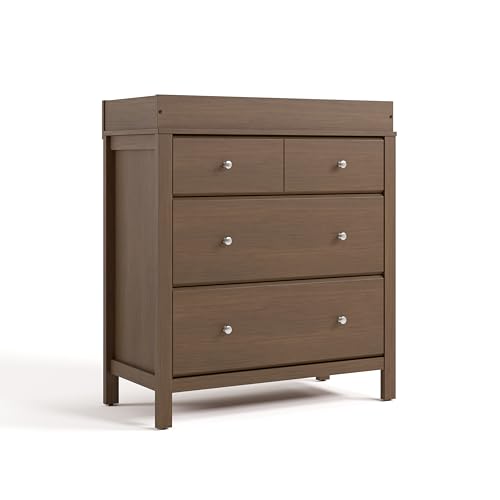
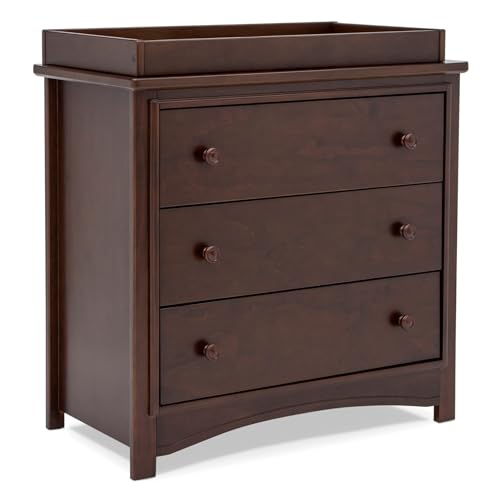
Small Changing Table Dresser: The Compact Nursery Solution
Space is at a premium in most nurseries. A small changing table dresser combines a safe changing surface with practical drawer storage in one footprint — helping you stay organized without sacrificing floor space.
Explore Recommended OptionsWhy this matters: A dedicated changing table plus a separate dresser often takes up more room than a small nursery can spare. A compact changing table dresser solves that by stacking two functions into one piece of furniture. This guide walks through sizing, safety, materials, layout, and buying considerations so you can choose confidently.
What Is a Small Changing Table Dresser?
A small changing table dresser is a compact furniture piece designed with a padded changing area on top and drawers or open shelving below. It is typically narrower than a standard dresser — often around 30 to 40 inches wide — and built with nursery use in mind. The changing surface may be a removable topper, a contoured pad with a restraint strap, or an integrated recessed tray.
What separates it from a regular small dresser is the reinforced top platform and the safety features that support diaper changes. Once the baby outgrows the changing stage, the topper can usually be removed and the unit functions as a normal chest of drawers. Many models also coordinate with a small dresser and nightstand set for a cohesive nursery look.
If you are still deciding whether a changing pad on an existing dresser is the right approach, the small changing pad for dresser guide explains that alternative in detail.
Who Should Consider a Compact Changing Table Dresser?
This furniture category fits a specific set of households and room constraints:
- Small nurseries and apartments — where floor area is limited and every piece must earn its place.
- Shared bedrooms — when the nursery doubles as a guest room or a sibling's room.
- Multi-level homes — a second changing station on another floor saves trips up and down stairs.
- Long-term planners — families who want the piece to transition into a regular dresser after the baby grows.
If you need drawers specifically for diapers, wipes, and clothing, a small changing table with drawers is worth comparing. If your priority is a standalone dresser that fits a closet, the small dresser that fits in closet guide is more relevant.
Key Dimensions to Check Before Buying
Measurements are the single most common source of returns for nursery furniture. Before you commit, record these numbers:
Unit footprint
Most compact changing table dressers fall between 30 and 40 inches in width and 18 to 22 inches in depth. Height usually ranges from 36 to 40 inches including the changing surface — a comfortable standing height for most adults. Confirm the exact dimensions against your wall length and doorway width.
Clearance in front
Leave at least 24 to 30 inches of open floor in front of the dresser. You need room to stand, turn, and reach for supplies without twisting awkwardly while holding a baby.
Drawer capacity
Three to five drawers is typical for compact models. Depth matters as much as count — shallow drawers work for clothing and wipes, while at least one deeper drawer is useful for blankets or bulk items. If deep storage is a priority, look at a small dresser with deep drawers.
Wall anchoring
Any dresser in a nursery must be anchored to the wall with the supplied anti-tip kit. This is a non-negotiable safety step, regardless of how sturdy the piece feels.
Materials and Build Quality
Nursery furniture takes more abuse than most people expect — spilled wipes, sticky hands, repeated cleaning. Build quality determines how well the piece holds up.
Solid wood
Solid wood — oak, pine, or walnut — offers the most durable construction and can be refinished if the finish dulls. A solid wood changing table dresser is a long-term investment that often survives multiple children. The trade-off is higher weight and a higher position in the market.
If you are weighing wood options, the solid wood vs engineered comparison breaks down durability, maintenance, and humidity behavior.
Engineered wood
High-grade engineered wood with sealed, low-emission finishes is a practical mid-range option. It is lighter, more consistent in appearance, and generally more resistant to warping in humid rooms. Check that all exposed edges are sealed — unsealed particleboard can swell if liquids penetrate.
Hardware and drawers
Metal drawer slides with a smooth glide and a soft-close feature reduce noise during nap time and prevent slammed fingers. Reinforced corner joints and a solid back panel are signs of more careful construction. If you are choosing between drawer counts, the solid wood 6 drawer dresser page shows how larger-capacity layouts differ from compact three-drawer units.
Quality Tiers: How to Compare Models
To compare options without getting lost in specifications, group models into quality tiers. The descriptors below are relative positions in the market, not fixed labels — use them to set expectations for materials, hardware, and finish.
| Tier | Best For | Typical Characteristics |
|---|---|---|
| Entry-level | Short-term use, second changing station, rental homes | Engineered wood panels, basic drawer slides, lighter hardware, simple finishes |
| Mid-range | Primary nursery use, families planning a second child | Thicker panels, smoother slides, sealed finishes, removable changing topper |
| Premium | Long-term daily use, design-conscious nurseries | Solid wood or high-grade veneers, soft-close drawers, reinforced joinery, refined finishes |
| Luxury | Heirloom use, coordinated nursery collections | Hardwood construction, hand-finished surfaces, premium hardware, matching furniture sets |
In practice, a mid-range model usually offers smoother drawer mechanisms and better edge sealing than an entry-level unit, while the jump from premium to luxury is mostly about materials and finish refinement. A well-specified mid-range piece is often the balanced choice for a first nursery.
Safety Features to Verify
Nursery furniture safety is not optional. Check for these features before purchase:
- Anti-tip anchoring kit included and clearly documented
- Contoured changing pad with a safety restraint strap
- Raised edges or a recessed tray to limit roll-off risk
- Smooth, snag-free surfaces with no sharp corners at handling height
- Drawer stops that prevent accidental full removal
- Low-emission, sealed finishes suitable for indoor nursery air quality
- Stable base with no wobble when drawers are open
Even with every safety feature in place, the rule never changes: keep one hand on the baby at all times and never leave them unattended on the changing surface, even for a moment.
How to Lay Out a Small Nursery Around It
A compact changing table dresser works best when it is part of a deliberate floor plan rather than an afterthought.
Placement
Position the dresser within arm's reach of the crib or a comfortable chair. Keep it out of direct sunlight, which can fade finishes and heat the changing surface. Avoid placing it directly under a window if the room gets drafts.
Storage flow
Organize drawers by frequency of use. The top drawer should hold the items you reach for during every change — diapers, wipes, cream, and a spare onesie. Lower drawers can hold folded clothing, sleep sacks, and bedding. If your room has limited closet space, pair the dresser with a small chest of drawers for closet to keep overflow organized.
Lighting and access
Add a small lamp or a wall-mounted light near the changing area so you are not fumbling in the dark during night changes. Keep a waste bin and a small supply caddy within reach so you never have to step away mid-change.
Coordinating pieces
If space allows, a matching small chest dresser can add supplementary storage without crowding the room. For rooms with almost no floor space, a small space dresser may be the more realistic anchor piece.
Transitioning the Dresser After the Nursery Stage
One of the strongest arguments for this furniture category is its useful life beyond infancy. When the changing stage ends:
- Remove the changing topper or pad and store it for a future child.
- Use the top surface for a lamp, books, or decorative items.
- Reassign drawers to older-child clothing, crafts, or school supplies.
- Touch up the finish if needed — solid wood models can be sanded and refinished.
Many families move the piece into a hallway, guest room, or home office later. A compact unit like a small wood dresser adapts easily to these secondary roles.
Common Mistakes to Avoid
- Skipping the wall anchor. This is the most serious and most common oversight.
- Buying before measuring. Doorways, stair turns, and wall lengths all matter.
- Overlooking drawer depth. A five-drawer unit with shallow drawers can hold less than a three-drawer unit with deep ones.
- Choosing style over stability. A wobbly base is a safety hazard, not just an annoyance.
- Ignoring finish quality. Rough or poorly sealed surfaces are hard to clean and wear quickly.
- Forgetting future use. A piece that converts to a standard dresser delivers far more long-term utility.
Editorial tip: Before ordering, tape the unit's footprint on the floor with painter's tape and walk around it for a day. This simple step reveals clearance problems that measurements alone often miss.
Frequently Asked Questions
What is a small changing table dresser?
A small changing table dresser is a compact dual-purpose nursery furniture piece that combines a padded changing surface on top with drawers or shelving below. It is designed for tight spaces where a separate changing station and dresser would not fit comfortably.
How much floor space does a small changing table dresser need?
Most compact models are roughly 30 to 40 inches wide and 18 to 22 inches deep. You should also allow at least 24 to 30 inches of clear floor space in front for safe standing and handling of the baby.
Is a changing table dresser safe for newborns?
Yes, when it meets current safety standards, includes a contoured changing pad with restraint, and is anchored to the wall. Always keep one hand on the baby and never leave them unattended on the changing surface.
Can a small changing table dresser be used after the baby grows?
Yes. Once the changing topper or pad is removed, the piece functions as a standard dresser or chest of drawers. Many families continue using it in the child's room or as hallway storage for years.
Which material is best for a compact changing table dresser?
Solid wood and high-grade engineered wood with sealed finishes are the most durable options. Look for low-emission finishes, smooth drawer slides, and reinforced joints if you plan to use the piece for multiple children.