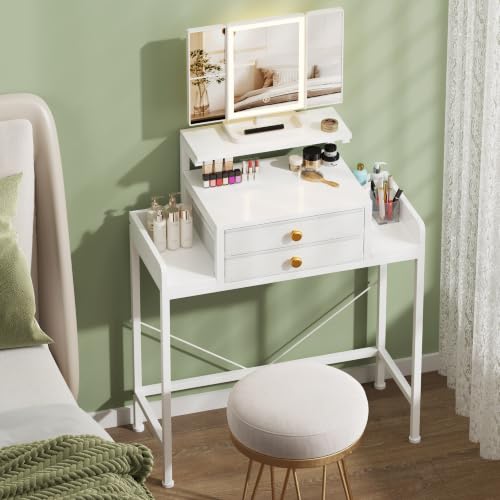
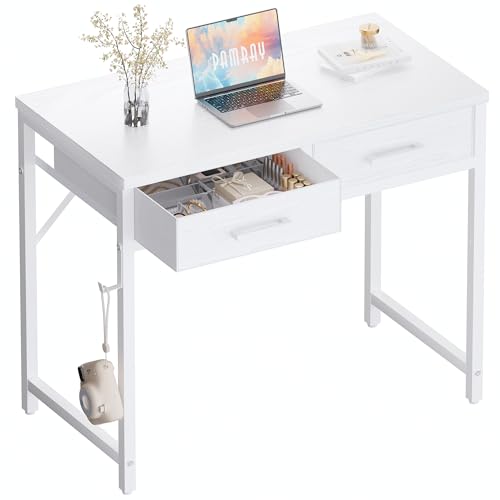
Small Vanity Table with Drawers: The Compact Bedroom Solution
A compact vanity with drawers gives you a dedicated grooming and storage station without sacrificing floor space. This guide covers sizes, drawer layouts, materials, and smart styling so you can choose with confidence.
Explore the Buying GuideWhy a small vanity table with drawers makes sense: In a compact bedroom, every piece of furniture has to earn its place. A small vanity with drawers combines a mirror-ready surface, organized storage, and a seated work area in one footprint. It replaces the clutter of loose cosmetics on a nightstand and keeps daily routines efficient.
Most shoppers arrive here knowing they want a vanity, but they are unsure how much drawer space a compact model really offers, whether it will fit against a narrow wall, or how it differs from a small dresser with drawers. This guide answers those questions directly, with practical measurements, material guidance, and tier-based recommendations that do not rely on fleeting market conditions.
If your bedroom is especially tight, you may also want to compare a vanity with a small vanity table with storage configuration, which often adds shelving or open cubbies alongside drawers. And if you need a seated workspace rather than a grooming station, a small white vanity desk with drawers can serve both roles.
What Is a Small Vanity Table with Drawers?
A small vanity table with drawers is a compact bedroom furniture piece designed for grooming, makeup application, and light personal care. It typically features a flat top surface, one to three drawers for organizing cosmetics and accessories, and often a knee clearance area so you can sit comfortably. Many models are designed to pair with a mirror, either attached or sold separately.
The key distinction from a full-size vanity is footprint. A compact vanity generally stays under 40 inches wide and 20 inches deep, making it suitable for narrow walls, alcoves, and small apartment bedrooms. It is closely related to a small dressing table with storage, though vanities usually emphasize a seated grooming setup rather than general clothing storage.
Unlike a standard small dresser for bedroom use, a vanity is optimized for seated height and shallow drawer depth, which makes items easier to reach while seated. That ergonomic difference matters if you use the surface daily.
Sizes and Dimensions: What Fits in a Compact Bedroom
Measure your available wall space and the distance to your bed before choosing. A vanity needs clearance for a stool or chair, usually around 24 inches of pull-out space, plus room to open drawers fully.
| Vanity Size | Typical Width | Typical Depth | Best For |
|---|---|---|---|
| Narrow / petite | 24–30 in | 14–16 in | Very tight walls, alcoves, studio apartments |
| Standard compact | 30–36 in | 16–18 in | Most small bedrooms, guest rooms |
| Wide compact | 36–42 in | 18–20 in | Small bedrooms with room for a stool and mirror |
Height usually ranges from 30 to 32 inches, which aligns with standard stool and chair seat heights. If you plan to use the vanity as a dual-purpose desk, look for at least 24 inches of knee clearance and confirm that the drawer stack sits to one side. A small vanity table with drawers no mirror setup is often the most flexible choice because you can mount a mirror at your preferred height and keep the surface clear.
Drawer Layouts: How Many and What Kind
Drawer configuration is the feature that separates a useful vanity from a decorative one. Here is how the common layouts compare:
- Single wide drawer: Best for a shallow tray of daily items. Simple and easy to organize with dividers.
- Two stacked drawers: A balanced layout for separating skincare from makeup and tools. Often the sweet spot in compact vanities.
- Three drawers (one wide, two small): Good separation for jewelry, grooming tools, and everyday products without adding width.
- Side drawer stack: Keeps the knee area open for seated use, making the vanity workable as a desk.
Drawer depth matters as much as count. Shallow drawers of 3 to 5 inches are ideal for cosmetics and accessories, while deeper drawers suit hair tools and backup supplies. If you want more generous storage than a vanity offers, a small dresser with deep drawers may be a better primary storage piece.
Soft-close slides and dovetail joints are worth prioritizing. Mid-range and premium models commonly include these, while entry-level tiers often use standard side-mounted slides. For a closer look at construction quality, see our guide on solid wood vs engineered furniture.
Materials and Finishes
Material choice affects durability, weight, and how easily the piece can be refreshed later. The three most common options for compact vanities are:
- Solid wood: The most durable construction. It can be sanded and refinished, which extends its usable life. A solid wood dresser or solid wood vanity is a long-term investment piece.
- Engineered wood with veneer: A stable, consistent surface at a mid-range tier. It resists warping in humid rooms but cannot be refinished as easily.
- Metal frame with wood or glass top: A modern option that is lightweight and easy to clean. Steel frames paired with a wood top offer a solid balance of durability and visual lightness.
Finish matters in small rooms. Light finishes visually open up tight spaces, while dark finishes add depth and contrast. A white vanity is a common choice for compact bedrooms because it reflects light and blends with most color schemes. If you prefer a white finish, explore a small white dresser with drawers for coordinating storage.
For natural wood tones, a small oak dresser or small wood dresser often coordinates well with vanity pieces from the same finish family. Pairing finishes across a small dresser and nightstand set can unify the room without requiring matching furniture throughout.
Styles That Work in Small Spaces
Visual weight is as important as physical size in a compact bedroom. A visually light vanity keeps the room from feeling crowded.
- Mid-century modern: Tapered legs and clean lines create an open feel under the piece. See our small dresser mid-century modern guide for coordinating options.
- Scandinavian minimalist: Light woods, simple hardware, and uncluttered surfaces. Works especially well in white or pale rooms.
- Traditional with slim proportions: A small mahogany chest of drawers or painted traditional piece adds character while staying compact.
- Painted and refreshed: A small painted chest of drawers can be matched to your palette and refreshed over time.
If you prefer a softer, more decorative look, a small vanity dresser with mirror combines the grooming function with a built-in focal point, which reduces the number of separate pieces you need.
Buying Guide: What to Check Before You Commit
Use this checklist to evaluate any compact vanity you are considering. It focuses on functional quality rather than transient market factors.
- Measure twice: Confirm width, depth, and height against your wall, plus clearance for a stool and open drawers.
- Check drawer action: Open and close each drawer. Look for smooth slides and consistent gaps. Soft-close is a plus.
- Inspect joinery: Dovetail joints and reinforced corners signal durable construction. Staples and glue-only joints are an entry-level sign.
- Confirm stability: A vanity should not wobble. Legs should sit flat, and taller models should include anti-tip hardware.
- Plan the mirror: Decide whether you want an attached mirror or a wall-mounted option. A mirror-free model offers more flexibility.
- Think about the seat: Allow room for a stool or chair that fits under the vanity without blocking drawers.
If your space is extremely limited, a space-saving dresser or small space dresser may complement the vanity by handling clothing storage separately. For bedrooms that need both functions in a single footprint, compare the vanity against a small dresser for small bedroom setup.
Comparing Vanity Tiers
Tiers describe relative position in the market based on construction, materials, and hardware quality. They are not tied to any specific figure and remain stable over time.
| Tier | Typical Construction | Hardware | Best For |
|---|---|---|---|
| Entry-level | Engineered wood, basic joinery | Standard side slides | Guest rooms, first apartments, light daily use |
| Mid-range | Engineered wood with veneer or mixed solid wood | Ball-bearing or soft-close slides | Primary bedrooms with regular daily use |
| Premium | Solid wood, dovetail joints, reinforced frame | Soft-close, premium pulls | Long-term use, rooms where the vanity is a focal piece |
Mid-range models usually offer the most balanced combination of drawer action and finish quality for a compact vanity. Premium tiers are a worthwhile investment if you plan to keep the piece for many years or want the option to refinish it later.
Organization Tips for a Compact Vanity
Small drawers reward thoughtful organization. A few simple habits keep the vanity functional day after day:
- Use drawer dividers: Separate skincare, makeup, and tools so items do not migrate into one pile. See our stackable dresser drawer organizer guide for options.
- Keep the top surface clear: Store daily items in a small tray and put everything else in drawers. A clear surface makes the room feel larger.
- Rotate seasonal items: Move out-of-season products to a larger storage piece and keep the vanity stocked with current essentials.
- Use vertical space: A wall shelf or mirror with a slim frame adds function without consuming floor area.
If the vanity handles grooming items and you need separate storage for clothing, a small chest of drawers for closet keeps the bedroom floor clear. For multi-purpose rooms, a small chest of drawers for living room can absorb overflow storage.
Common Mistakes to Avoid
- Buying before measuring: Depth is the most common oversight. A vanity that is too deep blocks walking paths.
- Ignoring drawer clearance: Drawers need room to open fully. Confirm the space in front of the vanity is clear.
- Skipping stability checks: Tall or narrow vanities should include anti-tip hardware, especially in homes with children.
- Overlooking the mirror plan: Decide on attached versus wall-mounted before purchase to avoid awkward placement later.
- Choosing style over drawer function: A beautiful vanity with stiff drawers becomes frustrating quickly. Test the drawers.
For rooms that need more clothing storage than a vanity can provide, a small dresser for closet or a small chest dresser can complement the vanity without competing for the same wall space.
Ready to Choose Your Vanity?
Browse curated compact vanities and storage pieces selected for small bedrooms. Compare drawer layouts, materials, and tiers side by side.
View Recommended OptionsFrequently Asked Questions
What size should a small vanity table with drawers be?
A compact vanity typically measures 28 to 40 inches wide, 16 to 20 inches deep, and 30 to 32 inches tall. These dimensions fit narrow walls and small bedrooms while still offering usable drawer storage and a comfortable seated surface.
How many drawers does a small vanity table need?
One to three drawers is typical for compact models. A single wide drawer suits daily essentials, while two or three drawers allow better separation for cosmetics, jewelry, and grooming tools. Prioritize drawer action and depth over raw count.
Can a small vanity table with drawers double as a desk?
Yes. Choose a model with at least 24 inches of knee clearance, a wider top surface, and a side drawer stack so the drawers do not obstruct seated use. A mirror-free model offers the most flexibility for dual-purpose use.
What materials are best for a small vanity table?
Solid wood is the most durable and can be refinished. Engineered wood with a veneer finish is stable and consistent at a mid-range tier. Metal frames with wood tops are lightweight and easy to clean, making them a solid choice for modern interiors.
How do I keep a compact vanity organized?
Use drawer dividers, keep the top surface clear with a small tray, rotate seasonal products out, and add a slim wall shelf if needed. These habits prevent clutter from accumulating in limited drawer space.
Related Reading
Explore more compact storage solutions to complete your bedroom setup:
- Small vanity table with storage — add open shelving to the drawer setup.
- Small dressing table with storage — compare grooming and clothing storage.
- Small white vanity desk with drawers — a dual-purpose workspace option.
- Small dresser with drawers — primary clothing storage for compact rooms.
- Small dresser for small bedroom — coordinate your full bedroom storage plan.
- Space-saving dresser — additional ideas for tight floor plans.
- Solid wood dresser — construction quality and long-term durability.
- Stackable dresser drawer organizer — organize shallow vanity drawers efficiently.