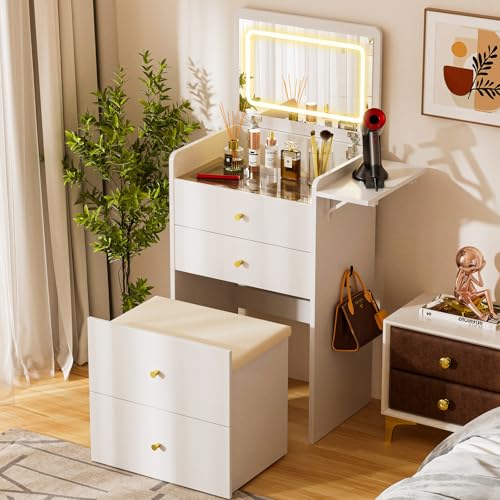
Small Dressing Table with Storage: The Complete Buying Guide
Discover how to choose a compact dressing table that combines vanity space with smart drawer storage. Perfect for small bedrooms, apartments, and tight corners where every inch counts.
Start ExploringDresserAdvisor Philosophy: A small dressing table with storage is more than just furniture — it is a daily ritual space. The right piece gives you a place to sit, prepare, and store your essentials without overwhelming the room. This guide walks you through every decision: dimensions, drawer layouts, materials, mirror options, and organization strategies. By the end, you will know exactly which compact dressing table fits your space and your routine.
Why Choose a Small Dressing Table with Storage?
Traditional dressing tables often assume a large bedroom with generous floor space. That assumption no longer fits most modern homes. Apartments, guest rooms, and shared bedrooms demand furniture that earns its footprint. A small dressing table with storage solves this by combining three functions into one compact unit: a vanity surface, a seating area, and drawer-based organization.
Unlike a standalone small vanity table with storage that focuses mainly on the mirror and tabletop, a dressing table with drawers gives you dedicated compartments for makeup, jewelry, hair tools, and folded clothing. This dual-purpose design is especially valuable in rooms where a full-size small dresser would be too large.
Another advantage is flexibility. Many compact dressing tables fit into corners, alcoves, or the narrow wall beside a bed. Some models even work as a small vanity table with drawers that doubles as a bedside surface. If you are furnishing a small dresser for small bedroom, adding a dedicated vanity zone helps separate sleep space from grooming space.
Key Dimensions: How Small Is "Small"?
Before browsing styles, establish your available footprint. Measure the wall width, the depth from wall to walkway, and the height clearance under any window or shelf. Most compact dressing tables fall into these ranges:
- Width: 24 to 42 inches (60–107 cm). Units under 30 inches fit tight corners; 36–42 inch models offer more drawer space.
- Depth: 14 to 20 inches (36–51 cm). Shallow depths suit narrow hallways and beside-bed placement.
- Height: 28 to 32 inches (71–81 cm) for the tabletop. Ergonomic seating usually requires 26–30 inches of clearance beneath the surface.
- Knee space: At least 20 inches wide and 24 inches tall if you plan to sit facing the table.
If your room is extremely tight, a space-saving dresser or a small space dresser with a fold-down or wall-mounted design may be the better fit. For standard bedrooms, a 36-inch wide dressing table with three drawers is often the sweet spot.
Drawer Configurations That Work
Storage is where a small dressing table earns its keep. The drawer layout determines how usable the piece feels day to day. Here are the most common configurations:
Three-Drawer Layout
The classic arrangement: one shallow top drawer for jewelry and makeup, one medium drawer for hair tools and accessories, and one deeper bottom drawer for folded clothing or linens. This setup suits most users and keeps the tabletop clear. If you need more clothing capacity, pair it with a small dresser with deep drawers nearby.
Four-to-Six Drawer Layout
Compact dressing tables with four or six drawers trade tabletop width for vertical storage. These work well in narrow footprints where you still want generous organization. Look for models with metal glides or soft-close mechanisms, as drawer hardware quality matters more when drawers are narrow.
Open Shelf Plus Drawers
Some designs combine a small drawer bank with an open cubby or shelf. This hybrid works for baskets, books, or decorative storage. It is a practical choice if you want the visual lightness of open storage without sacrificing closed compartments.
Pro Tip: Measure Drawer Interiors
Exterior dimensions can be misleading. Check the internal drawer depth and height. A 4-inch deep top drawer handles jewelry and cosmetics; a 6–8 inch drawer handles hair tools and clothing. For makeup-heavy routines, consider a small vanity table with drawers no mirror if you plan to mount a separate mirror on the wall.
Materials and Build Quality
Compact furniture endures more handling per square inch than large pieces. Drawers open and close frequently, and the tabletop takes daily wear. Material choice affects durability, weight, and visual warmth.
Solid Wood
Solid wood remains the benchmark for longevity. Oak, pine, and walnut are common in dressing tables. A solid wood dressing table with drawers resists warping and can be refinished over time. For lighter tones, consider a small oak dresser; for deeper grain, a solid walnut dresser offers a premium look. If you prefer painted finishes, a small painted chest of drawers can be a good reference for finish durability.
Engineered Wood and MDF
Engineered wood offers stability and consistent surfaces at lower weight. High-quality MDF with veneer can look excellent and hold up well in dry bedrooms. The trade-off is repairability: deep scratches are harder to fix than on solid wood. Our guide on solid wood vs engineered furniture explains the trade-offs in detail.
Metal and Mixed Materials
Steel frames with wood tops suit modern and industrial interiors. A small rolling cabinet with drawers can double as a mobile vanity if you need to move it between rooms. For a softer look, rattan or cane panels add texture without bulk.
Mirror Options: Attached, Detached, or None
The mirror decision shapes both function and footprint. Attached mirrors save wall space but limit placement to walls without obstructions. Detached mirrors offer flexibility but require wall mounting or a stand.
- Attached mirror: Best for corner placement and rooms with limited wall space. A small vanity dresser with mirror is a classic all-in-one solution.
- Detached mirror: Choose a small dresser with mirror if you want the option to reposition the mirror or use the tabletop freely.
- No mirror: A small dressing table with storage without a mirror works well in rooms where a wall mirror already exists or where the table doubles as a desk.
If you are setting up a nursery or guest room, a small changing table with drawers can serve a similar compact-storage role, though the surface height and safety features differ.
Style and Placement Ideas
Compact dressing tables fit more locations than most people expect. Consider these placements:
- Bedroom corner: A 30–36 inch wide unit with an attached mirror turns an unused corner into a grooming station. Pair with a small dresser for bedroom for additional clothing storage.
- Closet interior: If your closet has depth, a small dresser that fits in closet or a small dresser for closet can create a hidden vanity zone.
- Beside the bed: A narrow dressing table can replace a nightstand, especially if you choose a small chest of drawers bedside style with a shallow top.
- Living room or hallway: A small chest of drawers for living room can hold entryway essentials while offering a surface for keys and mail.
Style-wise, mid-century modern remains popular for compact pieces. A small dresser mid-century modern often features tapered legs and clean lines that keep visual weight low. For a softer look, a small white dresser brightens tight rooms. If you prefer a coordinated set, a small dresser and nightstand set simplifies matching.
Quality Tiers: What to Expect at Each Level
Dressing tables vary widely in construction quality. Use these tier descriptors to set expectations without relying on numeric figures. The tiers reflect relative market position, not absolute specifications.
| Tier | Typical Construction | Best For |
|---|---|---|
| Entry-level | Engineered wood panels, basic metal glides, laminate or paper veneer finishes | Guest rooms, temporary setups, first apartments |
| Mid-range | Engineered wood with wood veneer, side-mounted ball-bearing glides, painted or stained finishes | Primary bedrooms, daily-use vanity stations |
| Premium | Solid wood frames with veneered panels, soft-close or undermount glides, durable catalyzed finishes | Long-term daily use, homes with children |
| Luxury | Solid hardwood throughout, dovetail joinery, premium hardware, hand-finished surfaces | Heirloom-quality pieces, design-focused interiors |
Mid-range models usually offer the best balance for a dressing table that sees daily use. The drawer mechanism is the most important upgrade to prioritize: smooth glides reduce wear and improve the daily experience more than cosmetic details. For heavy-duty needs, a stainless steel drawer slides heavy duty upgrade is worth considering in custom or semi-custom pieces.
Organization Strategies for Compact Vanities
A small dressing table stays functional only if its storage is organized intentionally. Start with a drawer divider system or a stackable dresser drawer organizer to separate small items. Use the top drawer for daily essentials, the middle for tools and accessories, and the bottom for backup or seasonal items.
Keep the tabletop minimal: a tray for daily items, a small mirror, and one decorative object. Rotate seasonal or occasional items into deeper drawers or a nearby small chest of drawers for closet. If you need overflow capacity, a stackable dresser or storage chest with drawers can extend your system without adding floor footprint.
Safety and Stability Checks
Compact furniture can tip if drawers are overloaded or if the unit is placed on uneven flooring. Look for anti-tip hardware and anchor the unit to the wall when possible. Check that drawer stops prevent accidental pull-out. If the dressing table includes a mirror, confirm that the mounting is secure and that the glass has safety backing or tempered construction. These checks matter most in homes with children or pets.
Frequently Asked Questions
What is the ideal width for a small dressing table with storage?
Most compact models range from 24 to 42 inches wide. A 30–36 inch width fits a standard bedroom corner while providing three usable drawers. Measure your walkway clearance before choosing; you need at least 24 inches of open floor in front of the table for comfortable seating.
Can a small dressing table double as a desk?
Yes, if the tabletop height is comfortable for seated work and the knee space is clear. A small vanity table with drawers no mirror is often the best option for dual use because the open top accommodates a laptop or writing surface. Check that the drawer bank does not block legroom.
How many drawers do I need?
Three drawers handle most daily routines: one for cosmetics and jewelry, one for hair tools and accessories, and one for folded clothing or linens. If you store clothing in the dressing table, choose four to six drawers or pair the table with a separate small dresser with drawers.
Is solid wood necessary for a small dressing table?
Not strictly. High-quality engineered wood with wood veneer performs well in dry bedrooms and costs less than solid hardwood. Solid wood offers better repairability and longevity, making it a stronger long-term investment if the piece will be used daily for many years.
How do I keep a compact vanity organized?
Use drawer dividers, keep the top surface minimal, and assign one drawer to daily items only. Rotate seasonal or occasional products into deeper storage. A stackable dresser drawer organizer keeps small items from sliding around in shallow drawers.