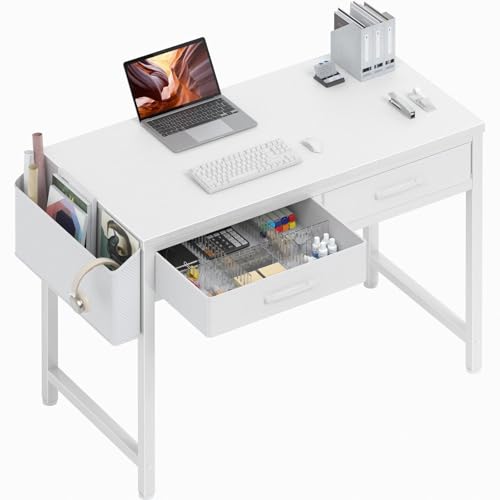
Small Vanity Table With Drawers No Mirror: The Complete Buyer's Guide
A compact vanity table without a mirror gives you drawer storage, a grooming surface, and the freedom to place your own mirror exactly where you want it. Here is everything you need to choose the right one for a small space.
Explore the GuideWhy a mirrorless vanity makes sense: If you already own a mirror you love, or if your room layout works better with a wall-mounted or freestanding mirror, a small vanity table with drawers and no mirror is the more flexible choice. It keeps the footprint compact, keeps your grooming essentials within reach, and adapts to how you actually use the space.
What Is a Small Vanity Table With Drawers and No Mirror?
A small vanity table with drawers and no mirror is a compact dressing or grooming station built around drawer storage rather than a built-in mirror. Think of it as a slim desk with shallow drawers, designed to hold skincare, makeup, jewelry, and grooming tools, while the top surface stays clear for daily use.
Because there is no attached mirror, the table usually has a lighter visual profile than a traditional vanity. That makes it easier to slide into a narrow alcove, position beside a window for natural light, or place under a sloped ceiling. You pair it with whatever mirror suits the room, or you skip the mirror entirely and use the surface as a compact desk or display station.
If you are weighing whether a mirrorless design fits your routine, our guide to a small vanity table with drawers walks through how drawer layout affects daily usability, while the small dressing table with storage overview covers how to balance surface area against drawer volume.
Why Choose a Vanity Table Without a Mirror?
Removing the mirror is not a compromise. It is a design decision that solves several practical problems in small rooms.
Mirror Flexibility
Use a wall mirror at eye level, a freestanding mirror you already own, or a lighted mirror that suits your routine. You are not locked into the mirror that came with the furniture.
Lighter Visual Footprint
Without a mirror frame and support structure, the table reads as less bulky. In a small bedroom or studio, that visual lightness matters as much as the actual measurements.
Dual-Purpose Surface
A mirrorless top can serve as a writing desk, a jewelry station, or a display shelf between grooming sessions. The surface earns its keep even when you are not getting ready.
Better Placement Options
You can position the table facing a window, beside a closet, or under a low ceiling without worrying about mirror height and reflection angles.
If you prefer the classic setup with an attached mirror, the small vanity table with drawers guide explains how mirror-integrated models compare on storage and placement. For a dedicated desk-style option, see the small white vanity desk with drawers overview.
Small Vanity Table Sizes: What Fits in a Compact Space
Size is the first decision, and it drives everything else. Measure your available wall space and the clearance in front of it before you compare models.
| Size Category | Typical Width | Typical Depth | Best For |
|---|---|---|---|
| Narrow / entry-level footprint | 28–32 inches | 14–16 inches | Alcoves, dorm rooms, tight bedroom corners |
| Standard small | 32–38 inches | 16–18 inches | Small bedrooms, studio apartments, guest rooms |
| Wide small / dual-purpose | 38–44 inches | 18–20 inches | Compact desks, shared bedrooms, closet conversions |
As a rule of thumb, allow at least 24 inches of clearance in front of the table for a stool or chair and for comfortable movement. If the table sits between a bed and a wall, leave a few inches on each side so drawers can open without scraping.
For rooms where every inch counts, the small space dresser guide covers placement strategies that apply equally to vanity tables. If the table is going into a closet, the small dresser that fits in closet breakdown is useful for checking depth and door swing.
Drawer Configuration: The Heart of a Mirrorless Vanity
With no mirror to anchor the design, the drawers become the defining feature. The right configuration keeps your routine smooth; the wrong one turns every morning into a search mission.
Common drawer layouts
- Two shallow drawers side by side: Ideal for makeup, brushes, and small accessories. Shallow drawers keep items visible and prevent clutter from sinking to the bottom.
- One wide shallow drawer plus one deeper drawer: A balanced layout that separates daily essentials from bulkier items such as hair tools or skincare backups.
- Three stacked drawers: Good for vertical storage in a narrow footprint. The top drawer handles daily items, while lower drawers hold refills and less-used tools.
- One deep drawer with a divider: Suits jewelry, watches, and accessories when paired with an organizer insert. Without a divider, deep drawers tend to become a catch-all.
Drawer glides matter as much as drawer count. Entry-level models often use basic side-mounted slides, while mid-range and premium tables typically use smoother ball-bearing or soft-close mechanisms. If you open the drawer several times a day, that difference is noticeable within weeks.
For a closer look at how drawer depth changes what you can store, the small dresser with deep drawers guide explains when deep storage helps and when it works against you. If you are organizing a closet-based setup, the small chest of drawers for closet overview covers drawer stacking in tight vertical spaces.
Materials and Build Quality
Material choice affects durability, weight, and how the table ages in a bedroom or bathroom-adjacent space. The classification below uses consistent market-tier descriptors rather than any specific figures.
Solid wood
Oak, walnut, and pine are the classic choices. Solid wood offers durable construction, can be refinished if it gets scratched, and develops character over time. Oak and walnut sit in the premium to luxury tiers, while pine is often a solid mid-range option. A solid wood dresser built with dovetail or reinforced joinery is a long-term investment that outlasts most engineered alternatives.
Engineered wood with veneer
Particleboard or MDF cores with a quality veneer are common in the mid-range tier. They resist warping in humid rooms better than some solid wood pieces and hold a consistent finish. Check the edge banding and drawer bottoms; those are the first places lower-grade construction shows wear.
Metal frames and mixed materials
Steel or aluminum frames paired with wood or glass tops suit modern and industrial interiors. These designs often have a lighter visual weight, which helps in small rooms. Look for rust-proof finishes if the table sits near a bathroom.
Plastic and resin
Entry-level plastic or resin vanities are practical for dorms, rentals, and temporary setups. They are easy to move and wipe clean, but they typically lack the rigidity and finish quality of wood or metal construction.
If you are comparing construction types side by side, the solid wood vs engineered comparison breaks down where each material performs best.
Styles That Suit a Small, Mirrorless Vanity
Without a mirror to set the tone, the table's style carries more visual weight. Choose a design that matches the surrounding furniture rather than competing with it.
Mid-Century Modern
Tapered legs, clean lines, and warm wood tones. A mid-century silhouette keeps a small room feeling open. See the small mid-century modern dresser guide for matching pieces.
Modern Minimalist
Flat fronts, handleless drawers, and a neutral finish. Minimalist designs reduce visual noise in compact rooms and pair well with wall-mounted mirrors.
Painted and White Finishes
White and soft painted finishes reflect light and make small rooms feel larger. The small white dresser with drawers overview covers finish durability and care.
Rustic and Natural Wood
Visible grain and warmer tones add texture without bulk. A small wood dresser in a natural finish works well in bedrooms with wood floors or woven accents.
Placement Ideas for Small Rooms
Where the table goes determines how often you use it. A vanity tucked into a dark corner tends to become a storage shelf; one placed near natural light becomes part of your daily routine.
- Beside a window: Natural light is the best grooming light. Pair the table with a wall mirror opposite the window for balanced illumination.
- In a closet: A shallow mirrorless table can sit at the end of a walk-in closet or inside a reach-in closet with the doors removed. The small dresser to put in closet guide covers clearance and ventilation.
- At the foot of the bed: A narrow table can double as a bench-side surface. Keep the depth under 16 inches so it does not crowd the walkway.
- In a bathroom-adjacent alcove: If the room has good ventilation, a small dresser for bathroom storage setup can hold skincare and towels while keeping the vanity surface clear.
- As a compact desk: In a studio apartment, a 38–44 inch mirrorless vanity can serve as both grooming station and workspace. Choose a model with at least 18 inches of depth and open knee space.
Buying Checklist Before You Decide
Run through this list before you commit. Each item maps to a problem that is much harder to fix after the table is in your room.
- Measure the wall and the walkway. Confirm width, depth, and clearance for a stool or chair.
- Check drawer travel. Make sure drawers can open fully without hitting a bed, wall, or closet door.
- Confirm the mirror plan. Decide whether you will use a wall mirror, a freestanding mirror, or no mirror at all.
- Match the material to the room. Humid rooms favor sealed engineered wood or metal; dry bedrooms suit solid wood.
- Inspect the glides. Ball-bearing or soft-close slides make daily use smoother than basic side-mounted slides.
- Check the finish and edge banding. These are the first areas to show wear on lower-grade construction.
- Plan the organizer inserts. Shallow drawers benefit from dividers; deep drawers need a tray or insert to avoid clutter.
- Consider stability. A narrow table with a tall stool should be stable enough that it does not wobble when you lean on it.
Pairing Your Vanity With Other Compact Storage
A mirrorless vanity rarely lives alone. In a small bedroom, it usually sits alongside a bedside chest or a closet organizer. Matching storage across pieces keeps the room cohesive and makes better use of vertical space.
For bedside storage, a small chest of drawers bedside pairs well with a 32–38 inch vanity, creating a matched grooming-and-storage zone. If the room has a dedicated closet, the small chest of drawers for closet guide explains how to stack drawers without blocking access. For a coordinated bedroom set, the small dresser and nightstand set overview covers proportions that work in compact rooms.
If you are still deciding between a vanity and a dresser for the same wall, the small dresser for small bedroom guide compares storage capacity and footprint so you can choose the piece that earns its space.
Frequently Asked Questions
What is a small vanity table with drawers no mirror?
It is a compact dressing or grooming station with drawer storage but no attached mirror. You pair it with your own mirror or use the surface as a desk or display area.
Why choose a vanity table without a mirror?
It offers mirror flexibility, a lighter visual footprint, and a surface that can serve multiple purposes. It is also easier to place against a window or under a low ceiling.
How much space do I need for a small vanity table with drawers?
Most models measure 28–42 inches wide and 15–20 inches deep. Allow at least 24 inches of clearance in front for seating and movement.
What materials are best for a small vanity table with drawers?
Solid wood such as oak, walnut, or pine is the most durable option. Quality engineered wood with veneer is a solid mid-range choice, and metal or plastic suits specific settings and budgets.
Can a small vanity table with drawers be used as a desk?
Yes. Choose a model with at least 18 inches of depth and 24 inches of knee clearance, and make sure the drawers do not obstruct legroom.