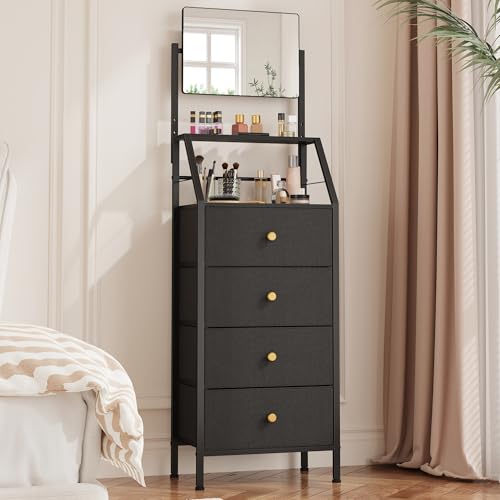
What Is a Small Vanity Dresser with Mirror?
A small vanity dresser with mirror is a compact dresser that includes an integrated or matching mirror, designed to function as both a storage piece and a personal grooming station. Unlike full-size dressers, these models usually measure under 40 inches wide, making them a good fit for small bedrooms, apartment dressing nooks, and walk-in closets that need a usable surface and reflective area.
The mirror is often the defining feature. Some models use a permanently mounted mirror with a wooden frame that matches the dresser finish. Others pair the dresser with a detachable mirror that can be repositioned or replaced later. Both approaches work, but they suit different room layouts. If your space is fixed and you want a unified look, an attached mirror is usually the simpler choice. If you prefer flexibility, a separate mirror gives you more control over placement and lighting angles.
Compared with a standalone dressing table, a vanity dresser adds drawer storage that a slim table often lacks. That combination is why these pieces are popular in guest bedrooms, primary bedrooms with limited square footage, and multi-purpose rooms where furniture must earn its floor space. If you are comparing formats, our guide to a small dressing table with storage explains where a table-style piece may be the better fit.
Who Should Consider a Compact Vanity Dresser?
This furniture category suits a specific set of buyers. You are likely in the right place if any of the following describes your situation:
- You have a small bedroom and need storage plus a mirror without adding two separate pieces of furniture.
- You are setting up a dressing corner in a walk-in closet, guest room, or hallway alcove.
- You want a dedicated grooming area for jewelry, cosmetics, and accessories, separate from your main clothing storage.
- You are furnishing an apartment or rental where furniture must be compact and easy to reposition.
- You prefer a coordinated look and want the mirror and dresser to share the same finish and hardware.
If your main need is clothing storage in a tight room, a standard small dresser for a small bedroom may be more practical. A vanity dresser shines when the mirror and grooming surface are part of the plan.
Key Buying Factors for a Small Vanity Dresser
Before comparing individual models, evaluate the factors below. They determine whether a dresser will feel useful or cramped in daily use.
1. Dimensions and Room Fit
Measure the available wall space, then account for clearance around the dresser. You need enough room to open drawers fully and to stand comfortably in front of the mirror. A typical compact vanity dresser is 30 to 40 inches wide and 15 to 18 inches deep. Height varies, but the mirror top should sit at or slightly above eye level when you are standing.
Depth matters more than many buyers expect. A dresser that is too shallow will struggle to hold folded clothing, while an overly deep model may block walking paths. If your room is especially tight, compare options in our small space dresser guide for layout ideas that preserve floor clearance.
2. Mirror Type and Placement
Mirror configuration affects both function and style. Common setups include:
- Attached rectangular mirror: The most common configuration. It creates a unified silhouette and eliminates alignment work.
- Detachable mirror: Offers flexibility to reposition the mirror for better lighting or to replace it later.
- Framed versus frameless: A framed mirror adds visual weight and can reinforce a style direction, while a frameless mirror keeps the piece visually lighter.
- Tri-fold or hinged mirror: Less common on compact dressers, but useful if you want multiple viewing angles.
Check how the mirror is secured. A well-mounted mirror should be reinforced at the back, especially on taller models where tipping risk is higher. If safety is a priority, look for anti-tip hardware and follow the manufacturer's anchoring instructions.
3. Drawer Layout and Internal Depth
Drawer count alone does not tell you how useful a dresser will be. The mix of shallow and deep drawers matters more. A practical layout for a small vanity dresser often includes:
- One or two shallow top drawers for jewelry, cosmetics, and small accessories.
- One or two medium-depth drawers for folded tops, sleepwear, and personal items.
- Optionally, a deeper lower drawer for bulkier clothing or linens.
Drawer slides are equally important. Metal ball-bearing slides with a smooth pull and a soft-close mechanism feel more refined and tend to last longer than basic roller slides. Dovetail joints at the drawer corners indicate sturdier construction than stapled or glued joints. If you plan to store heavier items, look for reinforced drawer bottoms.
4. Materials and Construction Quality
Material choice affects durability, visual warmth, and long-term maintenance. The main categories are:
- Solid wood: Oak, walnut, pine, and maple offer the most durable construction and can be refinished. Solid wood typically sits in the mid-range to premium tiers depending on the species and joinery.
- Engineered wood: MDF and particleboard with quality veneers can deliver a consistent finish and are common in entry-level to mid-range models. Check that edges are sealed and hardware is reinforced.
- Metal accents: Steel frames and stainless steel drawer slides add strength, especially in modern designs.
If you are weighing solid wood against engineered options, our comparison of solid wood versus engineered furniture breaks down the trade-offs in durability and maintenance. For a natural wood look, a small wood dresser guide can help you narrow down species and finishes.
5. Finish, Style, and Hardware
The finish should suit the room and hold up to daily use. Painted finishes are easy to coordinate with existing decor, while natural wood tones add warmth and hide minor wear more gracefully. Hardware is a practical detail as well as a style cue: knobs are simple and compact, while pulls offer a firmer grip on larger drawers.
Popular style directions for compact vanity dressers include:
- Mid-century modern: Tapered legs, clean lines, and warm wood tones.
- Traditional: Framed mirror, molded edges, and classic hardware.
- Farmhouse and cottage: Painted finishes, beadboard details, and simple knobs.
- Contemporary: Minimalist silhouettes, integrated handles, and matte finishes.
If you lean toward a specific look, a mid-century modern small dresser or a small painted chest of drawers can anchor the rest of your room's design.