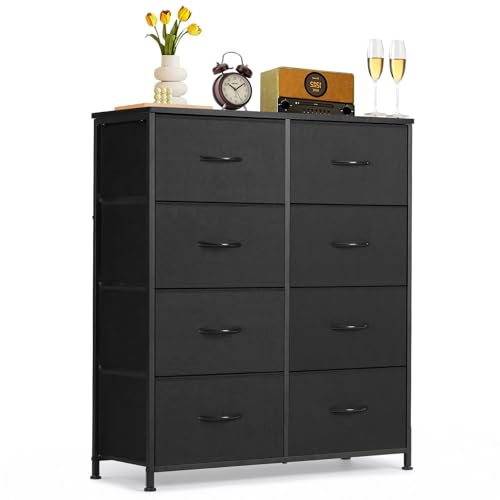
Cube Storage Dresser: Smart Modular Bedroom Storage
A complete research guide to cube storage dressers — how modular cube layouts work, which materials hold up over time, and how to match a cube organizer to your bedroom, dorm, or small space.
Quick answer: A cube storage dresser is a modular storage unit built from square compartments (cubes) rather than traditional wide drawers. Each cube can hold a fabric bin, a woven basket, a pull-out drawer insert, or open display items. This makes cube dressers exceptionally flexible for renters, students, and anyone organizing a compact bedroom where storage needs change over time.
What Is a Cube Storage Dresser?
A cube storage dresser — sometimes called a cube organizer dresser or modular cube dresser — replaces the conventional row of full-width drawers with a grid of evenly sized square cubbies. Instead of a single drawer front, each cube opening accepts a removable insert: a fabric drawer, a woven basket, a solid wood drawer box, or nothing at all if you prefer open shelving for books and decor.
That modular design is the core appeal. Where a traditional storage dresser locks you into a fixed drawer configuration, a cube dresser lets you reorganize the interior whenever your needs shift. A cube that holds socks this season can hold craft supplies, charging cables, or folded linens next season — using the same frame.
Most cube dressers are built on a simple grid: 2×2, 3×2, 3×3, 4×2, or larger. A 3×2 layout with six cubes is one of the most common bedroom configurations, while a 4×2 layout with eight cubes suits shared rooms and dorms. If you need a taller, narrower footprint, a tall skinny dresser configuration in cube form works well in closets and narrow wall gaps.
How a Cube Dresser Is Built: Frame, Cubes, and Inserts
Understanding the anatomy of a cube dresser helps you evaluate quality before you buy. Most units are made from three components:
- The frame and grid: Vertical and horizontal panels form the cube openings. Thicker panels and reinforced joinery resist sagging, especially when cubes are loaded with heavy bins.
- The inserts: Fabric bins are the most common and the most flexible. Woven baskets add texture and airflow. Solid drawer inserts behave more like traditional drawers and are better for items you want hidden and dust-free.
- The back panel and feet: A rigid back panel keeps the grid square and prevents racking. Adjustable feet or a plinth base protect floors and help the unit sit level on uneven surfaces.
Because the inserts are removable, the effective drawer count of a cube dresser is whatever you decide it is. A six-cube unit can function as a six-drawer dresser, a three-drawer-plus-display shelf, or a fully open bookshelf-and-bin hybrid. That adaptability is why cube dressers are often recommended alongside a dresser bookshelf for rooms that need both closed storage and visible display.
Materials: What to Look For in a Cube Dresser
Cube dressers are sold across a wide range of construction quality, and the material is the single biggest factor in how long the unit stays square and stable.
Engineered Wood and Laminate
Particleboard and MDF with a laminate or melamine finish are the most common cube dresser materials. Well-made engineered units with thick panels, cam-lock or dowel joinery, and a solid back panel can serve reliably for years. Thinner panels and minimal bracing are the usual weak points — they flex under load and loosen over time.
Solid Wood
Solid wood cube frames — pine, oak, birch, or rubberwood — are heavier, sturdier, and repairable. They resist the sagging that plagues thin engineered grids and can be refinished. A solid pine dresser or an oak dresser in cube form sits at the upper end of the durability range. Expect tighter joinery and more consistent cube dimensions, which matters if you plan to buy fitted drawer inserts.
Metal and Wire Frames
Steel cube grids with wire or mesh panels are a different category: lighter, more industrial in look, and often used as closet organizers. They are strong for their weight but offer less concealment unless paired with fabric bins. Wire cube grids work best inside closets or as open shelving rather than as a primary bedroom dresser.
Fabric and Collapsible Bins
The bins themselves range from thin non-woven fabric to structured canvas and woven wicker. Structured bins with reinforced bases hold their shape when pulled in and out; flimsy bins collapse and wear at the handle. If airflow matters — for linens or shoes — a wicker dresser style with woven baskets is a practical choice.
Cube Dresser Tiers: Entry-Level to Premium
Because cube dressers span a broad quality range, it helps to classify them by construction tier rather than by any single specification. The table below groups them by build quality and intended use.
| Tier | Typical Construction | Best For |
|---|---|---|
| Entry-level | Thin engineered panels, basic cam-lock joinery, light fabric bins | Dorms, first apartments, temporary or rental setups |
| Mid-range | Thicker engineered panels, reinforced back, structured fabric or wood-veneer inserts | Primary bedrooms, kids' rooms, everyday long-term use |
| Premium | Solid wood frames, dowel or mortise joinery, solid drawer inserts, quality hardware | Main bedrooms, design-focused interiors, long-term investment |
| Luxury | Hardwood frames, hand-finished surfaces, fitted dovetail drawer inserts, custom hardware | Statement furniture, custom bedroom layouts, collector-grade pieces |
A mid-range unit with a reinforced back panel and structured inserts usually delivers the best balance for a bedroom that sees daily use. Entry-level grids are fine when the load is light and the unit stays in one place; premium and luxury tiers make sense when you want the cube dresser to be a permanent anchor of the room.
Advantages and Trade-Offs of Cube Storage Dressers
Why They Work Well
- Modular by design: Swap bins, baskets, and drawer inserts as needs change.
- Space-efficient: Cube grids fit narrow walls, alcoves, and under-window gaps.
- Multi-purpose: One unit can serve as a dresser, bookshelf, and display shelf simultaneously.
- Easy to move: Many units ship flat and reassemble; lighter than solid casegoods.
- Expandable: Some systems let you stack or join units side by side as storage needs grow.
Trade-Offs to Consider
- Dust and visibility: Open cubes expose contents unless you use closed bins or drawer inserts.
- Depth limits: Cube openings are usually shallower than traditional deep dresser drawers.
- Load limits: Thin engineered grids can sag if bins are overloaded or the unit is moved while full.
- Insert dependency: The dresser function depends on the quality of the bins and drawer inserts you pair with the frame.
- Stability: Tall cube stacks should be anchored to the wall, especially in homes with children.
If you need deep, full-width drawers for bulky clothing, a wide dresser with deep drawers or a chest of drawers with shelves may suit you better. Cube dressers shine when flexibility and compact footprints matter more than raw drawer depth.
How to Choose the Right Cube Dresser for Your Room
Choosing a cube dresser comes down to four practical questions: footprint, cube count, insert type, and anchoring.
1. Measure the Footprint First
Cube dressers are often chosen for tight spaces, so measure the wall length, available depth, and the swing of nearby doors before deciding on a grid size. A 3×2 grid is a versatile bedroom choice; a 2×2 grid suits a small chest of drawers for office use or a bedside area. For narrow wall gaps, a shallow dresser for small bedroom footprint in cube form is a practical fit.
2. Match Cube Count to Your Storage Load
Count the categories you actually store: socks, underwear, t-shirts, loungewear, gym clothes, linens, accessories. Each category generally wants its own cube or bin. A six-cube unit covers most single-adult wardrobes; a 4×2 eight-cube unit suits couples or shared rooms. If you need dedicated jewelry and small-item storage, look for a dresser with hidden jewelry storage or pair the cube unit with a jewelry tray.
3. Choose Inserts by What You Want to See
Open cubes are best for display and frequently accessed items. Fabric bins hide clutter and are gentle on delicate fabrics. Solid drawer inserts feel more like a traditional dresser and keep dust out. A mixed layout — two open cubes for books, four drawers for clothing — is one of the most practical arrangements.
4. Plan for Stability and Safety
Tall cube stacks and grid units should be secured to the wall with the supplied anti-tip hardware. Keep the heaviest bins in the bottom row, and avoid placing a fully loaded cube unit on thick carpet without leveling feet. In children's rooms, a children's dresser in cube form should always be anchored, with bins that are easy for small hands to pull out.
Where a Cube Dresser Works Best
The modular nature of cube storage makes it adaptable to nearly every room, but a few placements stand out:
- Bedrooms: A 3×2 or 4×2 grid against a free wall, paired with a mirror or lamp on top. Cube units also work as a low-profile option — see low profile dresser layouts for under-window placements.
- Dorms and small apartments: A vertical 2×4 stack saves floor space and doubles as a nightstand-height surface. A dorm dresser in cube form is easy to move between semesters.
- Closets: Cube grids slot neatly into closet interiors to organize folded clothing, shoes, and accessories. A tall skinny dresser for closet arrangement maximizes vertical space.
- Entryways and living areas: A cube unit with baskets can serve as a catch-all console, similar to a dresser cabinet in function.
- Nurseries: Cube dressers with fabric bins are a common nursery choice; pair with a nursery dresser setup and anchor everything to the wall.
Cube Dresser vs. Traditional Dresser: Which Should You Choose?
The choice comes down to how much flexibility you need versus how much deep, concealed storage you want.
A traditional dresser with full-width drawers offers deeper storage, smoother gliding drawers, and a more finished furniture look. A cube dresser offers modularity, a lighter visual footprint, and the ability to change configuration without buying new furniture. For a primary bedroom with a full wardrobe and a need for concealed storage, a traditional chest or a six drawer dresser is often the stronger pick. For renters, students, small bedrooms, and multi-use rooms, the cube format is usually more practical.
A useful middle path is a hybrid: a cube frame with solid drawer inserts in the lower rows and open cubes or baskets above. You get the concealed storage of a traditional dresser with the modularity of a cube grid.
Care and Maintenance for Cube Dressers
- Check fasteners periodically: Cam locks and screws loosen over time, especially in units that are moved or heavily loaded. Tighten them every few months.
- Rotate heavy bins: Keep dense items in the bottom row and rotate bin positions occasionally to distribute wear.
- Clean fabric bins by material: Most non-woven bins wipe clean with a damp cloth; canvas bins may be spot-cleaned; wicker benefits from occasional dusting with a soft brush.
- Protect the finish: Wipe laminate and wood surfaces with a soft, slightly damp cloth. Avoid abrasive cleaners that dull the finish.
- Reinforce the back panel: If a unit feels wobbly, adding a thin rigid back panel or corner braces restores squareness and rigidity.
Frequently Asked Questions About Cube Storage Dressers
Is a cube storage dresser strong enough for daily bedroom use?
Yes, provided you choose a mid-range or higher unit with thick panels and a reinforced back. Entry-level grids are fine for light loads but can flex under heavy bins. Keep dense items in the bottom row and avoid overloading individual cubes.
Can I use a cube dresser without bins?
Absolutely. Open cubes work well for folded clothing stacks, books, display items, and accessories. Many people use a mix — bins in some cubes, open display in others — which is one of the format's main advantages.
How many cubes do I need for one person's clothing?
For most single adults, a six-cube unit (3×2) covers socks, underwear, t-shirts, loungewear, and a couple of accessory bins. If you also store linens or gym clothes, an eight-cube (4×2) unit gives more breathing room.
Are cube dressers good for small bedrooms?
They are one of the best small-space options because the grid footprint is compact and often available in narrow depths. A vertical 2×4 stack uses very little floor space and can double as a bedside surface. For very tight gaps, explore shallow depth dressers for small spaces in cube form.
Do cube dressers need to be anchored to the wall?
Tall stacks and any unit in a home with children should be anchored using the supplied anti-tip hardware. Even shorter grids benefit from wall anchoring in high-traffic rooms or on uneven floors.
What is the difference between a cube dresser and a cube organizer?
They are essentially the same product. "Cube organizer" is the broader term for any grid-based cube shelving; "cube storage dresser" specifically refers to a cube unit used for clothing and bedroom storage, usually with drawer or bin inserts.
Ready to Compare Cube Dresser Options?
Browse our recommended cube storage dressers and modular storage units below, then check availability and feature details for the configuration that fits your space.
View Recommended Cube Dressers