
Short Dresser for Closet: Smart Storage That Fits Tight Spaces
Maximize every inch of your closet with a low-profile dresser designed to slide under hanging clothes, shelving, and awkward gaps. Here is everything you need to know before you choose one.
START EXPLORINGWhy a short dresser belongs in your closet: A short dresser for the closet solves a problem that full-height furniture cannot. It captures the unused floor space beneath your hanging rod and transforms it into accessible storage for folded clothing, linens, and accessories. This guide explains the dimensions, drawer layouts, and materials that make a short dresser genuinely useful in a confined closet rather than merely present.
What Counts as a Short Dresser for a Closet?
A short dresser for a closet is a low-profile storage unit, generally standing between 24 and 36 inches tall, designed to occupy the lower zone of a closet without interfering with hanging garments or upper shelving. Unlike a standard bedroom dresser that anchors a room, a closet short dresser is a functional insert: it fits beneath a rod, slides into a narrow gap, and keeps daily essentials within easy reach.
This category overlaps with several related furniture types, but the distinction matters when you are measuring a confined space. A short dresser is defined primarily by its height, whereas a shallow chest of drawers is defined by its depth. The ideal closet piece often combines both traits: low and shallow. If your closet is unusually tight, a skinny dresser for small spaces can complement a short unit by adding vertical storage without consuming floor area.
Buyers researching this category usually already know they need compact storage. The remaining questions are about exact dimensions, how many drawers are realistic, which materials tolerate an enclosed environment, and how to keep the dresser from blocking closet doors or walkways. The sections below address each of those questions in turn.
Why Choose a Short Dresser for Closet Storage?
Closet floor space is frequently wasted because standard dressers are too tall to sit beneath a hanging rod and too deep to allow the door to close. A short dresser corrects both problems at once. Its low height places the top surface below the rod, and its compact body leaves clearance for doors, drawers, and foot traffic.
- Recovers dead space: The area under hanging clothes is often empty. A short dresser turns that zone into organized drawer storage.
- Keeps essentials visible: Folded shirts, workout wear, and undergarments become easier to reach than if they were stored on a high shelf.
- Improves closet organization: Drawers separate categories of clothing, reducing clutter on rods and shelves. Pair a short dresser with a deliberate dresser organization guide approach and the closet stays orderly longer.
- Preserves walk-in access: A low, shallow unit leaves the center of the closet open, which matters in a walk-in where you need room to move.
- Works with existing fixtures: Because it does not require wall mounting in most cases, a short dresser can be repositioned as your storage needs change.
Key Dimensions: Height, Width, and Depth
Height alone does not determine whether a short dresser fits. Three measurements decide the outcome: the height of the unit, the clearance beneath your closet rod, and the depth of the floor space relative to the door swing.
Height Considerations
Most closet short dressers fall between 24 and 36 inches tall. A 24-inch unit fits comfortably beneath nearly any hanging rod and still offers two or three usable drawers. A 30- to 36-inch model provides more drawer capacity but requires verifying that the top surface sits below the lowest hanging garment. Measure from the floor to the rod, then subtract several inches for garment clearance and drawer-top access.
Width and Drawer Configuration
Width determines how much drawer frontage you gain. A narrow 24- to 30-inch unit suits a reach-in closet with limited floor space, while a 40- to 48-inch wide model suits a walk-in. Wider units typically offer three to six drawers across two or three columns. If width is the constraint rather than height, a short wide dresser distributes storage horizontally and keeps the profile low.
Depth and Door Clearance
Depth is the measurement most often overlooked. A unit that is 18 inches deep leaves more floor clearance than one at 22 inches, and in a reach-in closet that difference can decide whether the door closes. Verify the drawer extension distance as well: a deep drawer that pulls out 16 inches needs that much open floor in front of it. Shallow-depth designs are specifically built for this constraint, which is why a shallow dresser for small bedroom layouts often translates well to closet use.
| Dimension | Typical Range | What to Verify |
|---|---|---|
| Height | 24–36 inches | Clearance below the closet rod and top-surface access |
| Width | 24–48 inches | Floor space between closet walls and door frame |
| Depth | 15–22 inches | Drawer pull-out distance and door swing clearance |
| Drawer count | 3–6 drawers | Balance between folded-clothing volume and ease of access |
Measurement tip: Measure your closet in three places: floor to rod, wall to wall at floor level, and wall to door edge. Use the smallest figure in each direction. If you are also furnishing the bedroom, the same method applies when selecting a short dresser for bedroom placement.
Drawer Layouts That Work in a Closet
The number of drawers matters less than whether their sizes match what you store. A closet short dresser is usually tasked with folded clothing, socks, undergarments, and occasionally linens. That mix calls for a combination of shallow and deeper drawers rather than a single uniform depth.
Three-Drawer Configuration
A three-drawer short dresser typically offers two shallow drawers and one deeper bottom drawer. This works well for a single person's folded tops and bottoms, or for a guest closet that holds spare linens and towels. The low drawer count keeps the unit compact and the price tier entry-level to mid-range.
Four- to Six-Drawer Configuration
Four to six drawers allow separation by category: socks and undergarments in the top shallow drawers, folded shirts in the middle, and bulkier items below. In a shared closet, a six-drawer unit with two columns lets each person claim a side. If your closet doubles as a full wardrobe, pairing a short dresser with a small 3 drawer dresser for closet placement strategy can divide storage without adding height.
Drawer Glides and Hardware
Drawer hardware receives little attention until it fails. Look for metal ball-bearing glides or side-mounted rollers with a smooth, full-extension action. Entry-level units often use basic nylon rollers that work fine for light loads, while mid-range and premium models add soft-close mechanisms and reinforced drawer boxes. In a closet, where drawers are opened frequently, the glide quality determines how long the unit feels solid. If you are considering a retrofit, sliding drawer hardware heavy duty components can upgrade a basic unit.
Materials and Construction for Closet Environments
Closets are enclosed spaces with limited airflow. Humidity from adjacent bathrooms or exterior walls can affect wood over time, so construction quality matters more than it might in an open bedroom.
Solid Wood
Solid wood, particularly oak, maple, or pine, offers durable construction and can be refinished if the finish dulls. It handles seasonal humidity shifts better than low-grade composites. A Shaker dresser in solid wood is a classic example of a clean-lined, low-profile piece that suits closet interiors without visual clutter.
Engineered Wood
High-grade engineered wood with sealed edges provides a stable, cost-effective alternative. The key is the seal: unsealed particleboard absorbs moisture and swells. Mid-tier and premium engineered units use laminated or veneered surfaces that resist this problem. Check the drawer box material as well, since thin composite boxes flex under weight.
Metal and Mixed Materials
Metal frames with wood or laminate drawers offer a slim profile and resist humidity well. They suit modern and industrial interiors. For a warmer look, a rattan dresser or a bamboo dresser brings texture while remaining lightweight and easy to reposition inside a closet.
How to Choose the Right Short Dresser for Your Closet
Work through these factors in order. Each one narrows the options and prevents a purchase that fits on paper but fails in practice.
- Measure the available floor zone. Record height to the rod, wall-to-wall width, and depth to the door edge. Note whether the closet door swings inward or slides.
- Decide on drawer count by category. Count how many clothing categories you plan to store in drawers. Three drawers suit one or two categories; six drawers suit a full wardrobe split.
- Confirm drawer extension clearance. Add the drawer's pull-out depth to the dresser depth. The total must not block the doorway or walkway.
- Choose a material tier that matches the environment. Humid or poorly ventilated closets favor solid wood or sealed engineered wood; dry, stable interiors allow more flexibility.
- Select a style that reduces visual noise. A closet is a working space. Clean lines and neutral finishes keep it calm. A Scandinavian dresser with light wood and simple hardware is a practical default.
- Check stability and safety. Ensure the unit sits level on the closet floor and includes an anti-tip bracket. In a reach-in closet, a tip-over is a real hazard when drawers are fully extended.
- Plan for airflow. Leave a small gap between the dresser back and the closet wall to reduce moisture buildup.
If your closet doubles as a dressing area and you need additional surface space, a short chest of drawers for closet arrangement can be combined with a wall-mounted mirror or a slim valet hook. The goal is to keep the floor clear while adding function at a comfortable height.
Style Options for Closet Short Dressers
A short dresser in a closet does not need to match a bedroom suite, but it should feel intentional. The most versatile options lean toward clean silhouettes and finishes that hide minor scuffs from daily use.
Modern and Minimalist
Flat-front drawers, integrated handles, and matte finishes define the modern short dresser. These units are easy to wipe down and visually recede in a small space. A modern dresser in white, black, or natural wood keeps a closet feeling open.
Traditional and Farmhouse
Raised panel fronts, turned feet, and warm wood tones suit traditional and farmhouse interiors. A farmhouse dresser in a painted finish adds character without requiring a large footprint. If your closet is part of a rustic bedroom, a rustic dresser in reclaimed-look wood ties the spaces together.
Retro and Mid-Century
Tapered legs and warm wood grains give a mid-century feel while keeping the profile low. A retro dresser or a mid-century dresser works well in a walk-in closet that is visible from the bedroom.
Specialty Finishes
For a softer palette, a sage green dresser or a white dresser brightens a dim closet. A ribbed dresser adds texture through vertical fluting, which reads as detail without pattern. These finishes matter in closets with limited natural light, where dark furniture can make the space feel cramped.
Placement and Organization Inside the Closet
Placement determines whether a short dresser improves or obstructs the closet. The most reliable layout places the unit against the back wall or a side wall, beneath the shortest section of hanging rod, with enough clearance in front for drawers to open fully.
Organize the drawers by frequency of use. Items worn daily belong in the top drawers, which are easiest to reach when bending slightly. Seasonal items belong in the bottom drawers. Drawer dividers keep socks and undergarments from migrating, and a small tray inside a top drawer corrals jewelry or accessories. If you also maintain a bedroom dresser, keep the division clear: closet drawers for folded clothing, bedroom drawers for accessories and items that need a mirror or surface nearby.
For closets with shelving above the rod, confirm that the dresser top does not collide with the lowest shelf. If the gap is tight, a shallower unit or a rolling design allows easier access. A rolling dresser can be pulled forward when needed and pushed back to free floor space.
Recommended Short Dressers for Closet Storage
⚠️ AFFILIATE DISCLOSURE: This website contains affiliate links. As an Amazon Associate, we earn from qualifying purchases. If you make a purchase through these links, we may receive a small commission at no additional cost to you. Read our full affiliate policy.

SONGMICS Dresser for Bedroom, Wide Dresser with 5 Fabric Drawers | Chest of Drawers with Steel Frame, for Closet & Entryway, Ink Black and Ebony Black, BELLAH Collection ULGS322B01S
Check price on Amazon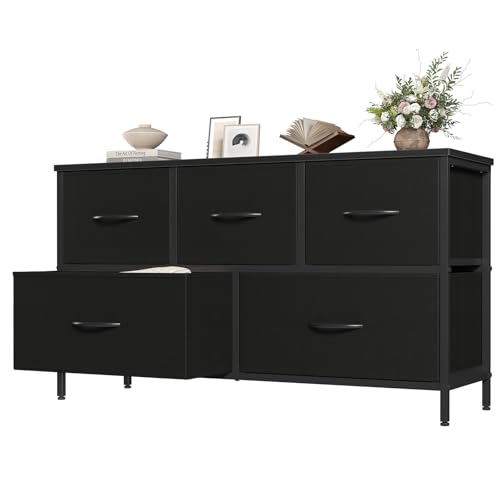
OLIXIS 5 Drawer Black Dresser for Bedroom, Closet Chest Organizer Furniture | TV Stand for Living Room Hallway, Wide Fabric Storage Tower with Wooden Top and Metal Frame
Check price on Amazon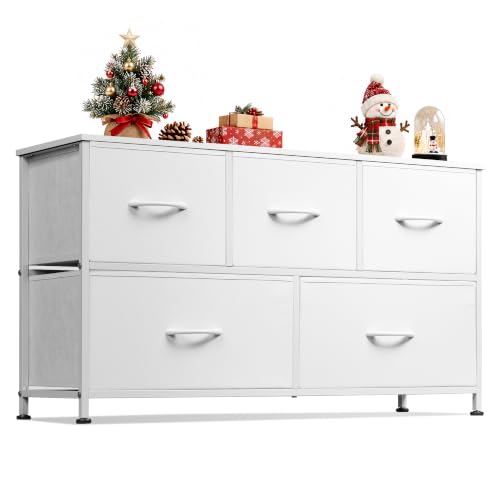
WLIVE Dresser for Bedroom, Wide Dresser with 5 Fabric Drawers, White | Chest of Drawers with Sturdy Steel Frame and Smooth Wood Tabletop, for Closet and Entryway
Check price on Amazon
BOLUO Stackable Storage Drawers Closet Organizers and Storage Fabric White 2 Drawer Dresser for Bedroom 2 Packs Modern
Check price on Amazon
SONGMICS Dresser for Bedroom, Wide Dresser with 5 Fabric Drawers | Chest of Drawers with Steel Frame, for Closet & Entryway, Ink Black and Rustic Brown, BELLAH Collection ULGS322B02S
Check price on Amazon
Smoproper 2 Pack Stackable Storage Drawers, Closet Drawers, White | Closet Organizers and Storage Dresser for Closet with Fabric Drawers Ideal for Bedroom & Dorm Storage Clothes Storage
Check price on AmazonFinal Checklist Before You Buy
Run through this list before committing to a short dresser for your closet. Each item corresponds to a common source of regret after delivery.
- Height measured against the closet rod with garment clearance included.
- Width measured at floor level, not at shelf level, since walls often taper.
- Depth plus drawer extension measured against the door swing.
- Drawer count matched to the number of clothing categories you store.
- Glide type confirmed as metal or reinforced roller, not thin nylon.
- Material sealed against humidity, especially in bathrooms-adjacent closets.
- Anti-tip bracket included or available.
- Finish and style coordinated loosely with the adjacent bedroom.
A short dresser is a small investment in closet efficiency. When the dimensions, drawer layout, and material are chosen deliberately, it becomes the most-used storage piece in the room. For related compact options, explore our guides to the small bedroom dresser ideas and the slim dresser for small bedroom to compare layouts across rooms.
Frequently Asked Questions
What height qualifies as a short dresser for a closet?
A short dresser for a closet typically stands between 24 and 36 inches tall. This low-profile height keeps the top surface accessible while allowing the unit to sit beneath hanging clothes, shelves, or a closet rod without blocking movement.
How many drawers should a closet short dresser have?
Most closet short dressers offer between three and six drawers. Three-drawer models suit folded shirts and linens, while four- to six-drawer versions accommodate socks, undergarments, and accessories more efficiently within a compact footprint.
Can a short dresser fit inside a reach-in closet?
Yes, a short dresser can fit inside a reach-in closet when its depth and width are measured carefully against the available floor space. Look for shallow-depth models with a low profile that leave clearance for the closet door to open and close freely.
What materials work best for a closet short dresser?
Solid wood and high-grade engineered wood with reinforced joinery offer the most durable construction for closet use. These materials resist humidity changes and daily wear better than particleboard, especially in enclosed spaces.
Should a closet short dresser be anchored to the wall?
Anchoring is recommended whenever the manufacturer supplies an anti-tip bracket. In a reach-in closet, fully extended drawers shift weight forward, and anchoring prevents tip-over. If wall anchoring is not possible, choose a unit with a wide base and load heavier items in the bottom drawers.