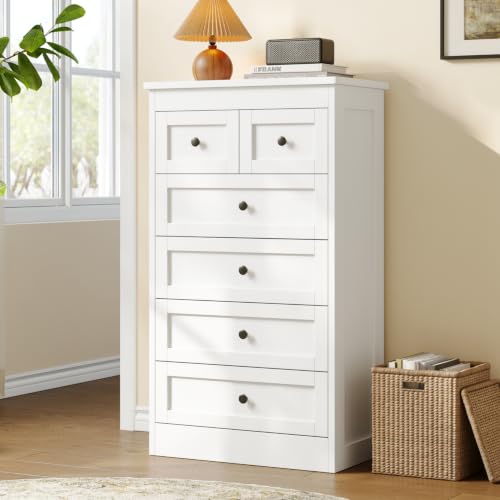
Slim Dresser for Small Bedroom
Discover space-saving dressers designed for compact bedrooms. Learn how to choose the right width, depth, and drawer configuration without sacrificing storage.
Why a slim dresser matters: In a small bedroom, every inch of floor space counts. A standard dresser can crowd walkways, block closet doors, or make the room feel cramped. A slim dresser solves this by offering the same storage capacity in a narrower, shallower footprint — so you can keep your room organized without sacrificing comfort or flow.
What Makes a Dresser "Slim"?
A slim dresser is defined by its reduced width and depth compared to standard bedroom dressers. While a typical dresser measures around 60 to 72 inches wide and 20 inches deep, a slim dresser typically falls into these ranges:
- Width: 30 to 48 inches — narrow enough to fit against short walls or between doorways.
- Depth: 15 to 18 inches — shallow enough to keep walkways clear and reduce the visual weight of the piece.
- Height: 30 to 50 inches — taller configurations compensate for reduced width by adding vertical storage.
The goal of a slim dresser is not just to be smaller, but to be efficient. A well-designed slim dresser uses vertical space, internal dividers, and smart drawer layouts to maximize what you can store in a compact footprint. This makes it an ideal choice for studio apartments, guest rooms, kids' bedrooms, and any space where furniture competes with living area.
Key Dimensions to Consider
Before you start shopping, measure your room carefully. The right dimensions depend on where the dresser will go and how much clearance you need around it.
Width: How Narrow Is Narrow Enough?
Width is the most critical dimension in a small bedroom. A dresser that is too wide can block traffic flow or prevent doors from opening fully. Consider these guidelines:
- Under 30 inches: Best for tight corners, narrow walls, or as a secondary storage piece. Often works as a tall chest with 3 to 4 drawers.
- 30 to 40 inches: The sweet spot for most small bedrooms. Provides enough drawer width for folded clothes while remaining compact.
- 40 to 48 inches: Suitable for medium-small rooms where the dresser can serve as the primary storage unit without overwhelming the space.
Depth: Why Shallow Matters
Depth affects how much floor space the dresser consumes. A standard 20-inch depth can protrude into walkways, especially in rooms under 100 square feet. Shallow dressers at 15 to 18 inches are ideal because they:
- Leave more room for foot traffic between the bed and the wall.
- Reduce the risk of stubbed toes and bumped hips.
- Make the room feel larger by reducing visual bulk.
- Fit better in alcoves, closets, and narrow wall segments.
Height: Go Vertical
When width and depth are limited, height becomes your ally. Tall slim dressers — sometimes called tallboys or narrow chests — offer 4 to 6 drawers in a footprint that takes up minimal floor space. Just ensure the top drawers remain accessible and the unit is stable. A height of 40 to 50 inches is manageable for most adults, while taller units may require a step stool for the top drawer.
Types of Slim Dressers
Not all slim dressers are created equal. The right type depends on your storage needs, room layout, and style preferences. Here are the most common categories:
Narrow Chests (Tall and Thin)
Narrow chests are the classic solution for tight spaces. They typically measure 24 to 36 inches wide and 40 to 50 inches tall, with 4 to 6 drawers stacked vertically. They work well in corners, beside beds, or against short walls. The trade-off is that drawer width is limited, so they are best for folded clothes, accessories, and smaller items rather than bulky bedding.
Shallow Dressers (Wide but Thin)
If you have more wall width but limited floor depth, a shallow dresser is a smart choice. These models are typically 48 to 60 inches wide but only 15 to 18 inches deep. They provide generous drawer width for folding clothes flat and can double as a console or media stand in multi-use rooms. Just check that the drawers still slide smoothly at the reduced depth.
Skinny Dressers for Small Spaces
Skinny dressers are the most compact option, often under 24 inches wide. They are essentially tall, narrow towers with 3 to 5 drawers. These are ideal for studio apartments, dorm rooms, or as a secondary storage piece in a larger bedroom. Many skinny dressers are designed with metal frames or engineered wood to keep them stable despite the narrow base.
Sliding Door Dressers
Sliding door dressers replace hinged doors with sliding panels, which means you do not need clearance space in front of the unit to open it. This is a major advantage in tight bedrooms where every inch of floor space is used. Sliding door dressers often combine open shelving with concealed storage, making them versatile for clothes, accessories, and small items.
Materials and Construction Quality
A slim dresser has less mass than a full-size unit, so construction quality matters even more. A poorly built narrow dresser can wobble, sag, or tip over. Here is what to look for:
Solid Wood
Solid wood dressers — oak, maple, walnut, pine — offer the best durability and stability. They are heavier, which reduces tipping risk, and can be refinished or repaired over time. Solid wood is a long-term investment that holds up well in small bedrooms where the dresser may see daily use.
Engineered Wood with Durable Veneers
High-grade engineered wood (MDF or plywood) with quality veneers is a solid mid-range option. It is lighter than solid wood but can still be stable if the construction includes reinforced joints and a solid back panel. Avoid particleboard with thin veneers, which can swell or chip in humid conditions.
Metal Frames and Mixed Materials
Metal-frame dressers with wood or fabric drawers are lightweight and stable. They are often used in modern or industrial-style bedrooms and work well for temporary or rental spaces. Look for powder-coated steel frames and reinforced drawer glides to ensure smooth operation.
Drawer Glides and Hardware
Smooth drawer operation is essential in a slim dresser, where drawers may be narrower or shallower than standard. Look for:
- Metal ball-bearing glides for smooth, quiet operation.
- Full-extension slides so you can access the entire drawer, not just the front half.
- Sturdy handles or knobs that are easy to grip and securely attached.
- Drawer stops to prevent drawers from pulling out completely and falling.
Storage Strategy for Small Bedrooms
A slim dresser offers less total storage volume than a full-size dresser, so you need a strategy to make every drawer count. Here is how to maximize your slim dresser's capacity:
Use Vertical Folding Techniques
Instead of stacking clothes flat, fold them vertically (also called the KonMari method). This lets you see every item at a glance and fits more into narrower drawers. It also reduces the depth needed per drawer, which is perfect for shallow dressers.
Add Drawer Dividers
Drawer dividers keep small items organized and prevent them from sliding around in narrower drawers. Use dividers for socks, underwear, accessories, and folded t-shirts. Adjustable dividers are best because you can reconfigure them as your storage needs change.
Rotate Seasonal Clothing
Store out-of-season clothing in under-bed bins or closet boxes, and keep only the current season's items in your slim dresser. This reduces clutter and makes it easier to find what you need without overstuffing drawers.
Use the Top Surface Wisely
The top of a slim dresser is valuable real estate. Use it for a small lamp, a jewelry tray, or a mirror. Avoid piling it with clutter, which can make a small room feel even more cramped. Wall-mounted shelves above the dresser can add extra storage without taking up floor space.
Placement and Layout Tips
Where you place your slim dresser can make or break the flow of a small bedroom. Consider these placement strategies:
Against a Short Wall
The most common placement for a slim dresser is against a short wall segment — perhaps between a doorway and a closet, or on the wall opposite the bed. Measure the wall width and leave at least 6 inches of clearance on each side for easy access to drawers and to avoid a cramped look.
Beside the Bed as a Nightstand Alternative
A very narrow dresser (under 24 inches wide) can double as a bedside table with extra storage. This is a smart choice for rooms where a separate nightstand would crowd the bed. Just ensure the top surface is at a comfortable height for a lamp and alarm clock.
In an Alcove or Nook
If your bedroom has an alcove, recessed wall, or unused corner, a slim dresser can turn that dead space into functional storage. Measure the alcove width and depth carefully, and choose a dresser that fits with a small gap for ventilation and easy removal.
Under a Window
A shallow dresser (15 to 18 inches deep) can sit under a window without blocking light or airflow. This is a great way to use wall space that might otherwise go unused. Just avoid placing a tall dresser in front of a window, as it can make the room feel closed in.
Safety Considerations
Slim dressers can be more prone to tipping than wider models because they have a smaller base relative to their height. Safety should be a top priority, especially in homes with children or pets.
- Always use anti-tip hardware. Most dressers come with wall-anchoring kits. If yours does not, purchase a kit separately and install it according to the manufacturer's instructions.
- Distribute weight evenly. Place heavier items in lower drawers and lighter items in upper drawers to lower the center of gravity.
- Avoid overloading drawers. Overstuffed drawers can cause the dresser to become unstable, especially if the drawer is pulled out fully.
- Check safety certifications. Look for dressers that meet voluntary safety standards, such as ASTM F2057, which tests for tip-over resistance.
- Keep items off the top. Avoid placing heavy objects on top of a tall slim dresser, as this raises the center of gravity and increases tipping risk.
Safety Tip for Nurseries
If you are using a slim dresser in a nursery, choose a model with rounded edges, secure drawer stops, and a changing pad that attaches firmly to the top. Always anchor the dresser to the wall, even if it feels stable.
Buying Checklist
Use this checklist to evaluate slim dressers before you make a decision:
- Measure your space: Width, depth, and height of the intended spot, plus clearance for doors and walkways.
- Choose the right width: Under 30 inches for tight corners, 30 to 40 inches for most small bedrooms, 40 to 48 inches for medium-small rooms.
- Prioritize shallow depth: 15 to 18 inches is ideal for compact bedrooms.
- Check drawer count and layout: 4 to 6 drawers for vertical storage; full-extension glides for easy access.
- Evaluate construction: Solid wood or high-grade engineered wood with reinforced joints and a solid back panel.
- Test stability: A wider base and lower center of gravity reduce tipping risk; anti-tip hardware is a must.
- Consider style and finish: Choose a finish that complements your bedroom decor and is easy to clean.
- Read reviews: Look for feedback on drawer smoothness, stability, and assembly difficulty.
Slim Dresser Tier Comparison
| Tier | Best For | Typical Construction |
|---|---|---|
| Entry-level | Guest rooms, dorms, temporary setups | Engineered wood, basic glides, minimal reinforcement |
| Mid-range | Primary small bedrooms, kids rooms | High-grade engineered wood or mixed materials, ball-bearing glides |
| Premium | Long-term use, design-focused bedrooms | Solid wood, dovetail joints, full-extension soft-close glides |
| Luxury | High-end interiors, statement pieces | Hardwood, custom hardware, hand-finished details |
Ready to Find Your Slim Dresser?
Explore our curated selection of space-saving dressers and storage solutions designed for small bedrooms.
View Recommended OptionsFrequently Asked Questions
How wide should a slim dresser be for a small bedroom?
A slim dresser typically measures 30 to 48 inches in width. For very tight spaces, narrow options under 30 inches work well, while 36 to 44 inches suits most small bedrooms without dominating the room.
What is the ideal depth for a dresser in a compact bedroom?
Shallow dressers with a depth of 15 to 18 inches are ideal for compact bedrooms. Standard dressers are often 20 inches deep, so choosing a shallow model frees up valuable floor space and keeps walkways clear.
How many drawers does a slim dresser need?
Most slim dressers offer 3 to 6 drawers. A 4 to 5 drawer configuration balances vertical storage with a compact footprint, while tall narrow chests maximize drawer count without increasing width.
Can a slim dresser be used in a nursery or kids room?
Yes, slim dressers work well in nurseries and kids rooms, but they must be anchored to the wall with anti-tip hardware. Look for models with safety certifications and avoid stacking heavy items in upper drawers.
What materials work best for a slim dresser in a small bedroom?
Solid wood and high-grade engineered wood with durable veneers offer the best stability for narrow dressers. Metal frames and mixed-material designs are also strong options that resist tipping and handle daily use well.
Final Thoughts
A slim dresser is one of the most practical furniture investments you can make for a small bedroom. By choosing the right width, depth, and drawer configuration, you can keep your space organized without sacrificing comfort or style. Prioritize stability and safety, measure your room carefully, and use smart storage techniques to make every drawer count.
Whether you need a narrow chest for a tight corner or a shallow dresser that doubles as a bedside table, the options above will help you find a piece that fits your space and your life. Explore our recommended picks below to start your search.