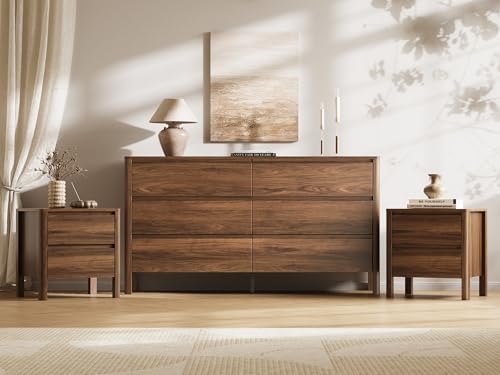
Mid Century Modern Dresser and Nightstand: The Complete Buyer's Guide
A matching mid century modern dresser and nightstand set anchors a bedroom with clean lines, warm wood tones, and effortless function. This guide walks you through the defining features of mid century design, how to pair a dresser with a nightstand, material and sizing considerations, and the practical details that separate a lasting piece from a short-lived one. By the end, you will know exactly what to look for before committing to a set.
What Makes a Dresser Mid Century Modern
Mid century modern design emerged from the 1940s through the 1960s and continues to influence bedroom furniture today. A mid century modern dresser is recognizable by a handful of consistent traits: clean horizontal lines, tapered or splayed legs, minimal surface ornamentation, and a deliberate balance between form and everyday function. The style favors warm wood grain over heavy carving, and it integrates hardware so that handles feel like part of the composition rather than an afterthought.
The low, wide profile is one of the most distinctive characteristics. Where traditional dressers often rise vertically, a mid century modern wide dresser spreads outward, keeping sightlines low and making a room feel more open. This horizontal emphasis pairs naturally with the low platform beds and streamlined case goods common in the same era.
Clean Lines
Straight edges and uncluttered fronts keep the silhouette calm and easy to integrate into modern bedrooms.
Tapered Legs
Angled or tapered legs lift the piece off the floor, adding visual lightness and a signature retro profile.
Warm Wood Tones
Walnut, teak, oak, and maple bring natural grain forward as the primary decorative element.
Integrated Hardware
Recessed pulls, slim bar handles, and sculpted knobs blend into the drawer front rather than stand out.
If you want to explore the broader category before narrowing down, the mid century modern dresser overview is a useful starting point, and the mid century modern style dresser page covers how the aesthetic translates across different room settings.
The Dresser's Role in the Bedroom
In a mid century modern bedroom, the dresser does more than store clothing. It acts as a visual anchor, often placed opposite the bed or along a long wall where its horizontal proportions can be appreciated. The drawer configuration you choose depends on how you organize clothing and how much floor space the room allows.
A mid century modern 6 drawer dresser is a common middle ground for couples, offering enough capacity for shared folded clothing without overwhelming the room. For smaller spaces or single occupants, a mid century modern 4 drawer dresser keeps the footprint compact while still providing structured storage. If you need more room for linens, sweaters, and accessories, a mid century modern 8 drawer dresser expands capacity while preserving the horizontal style.
Vertical options also exist within the style. A mid century modern tall dresser or mid century modern tallboy dresser suits narrow walls and small bedrooms where floor area is limited, while a mid century modern vertical dresser offers a more compact column of drawers. For rooms that need maximum surface area, a mid century modern triple dresser or mid century modern double dresser provides a long, low profile that doubles as a display surface.
Placement tip: Leave at least 30 inches of clearance in front of the dresser so drawers can open fully without blocking walkways. In smaller rooms, a mid century modern lateral file style can serve dual purposes as both storage and a compact workspace.
Choosing the Right Nightstand
A nightstand in the mid century modern tradition follows the same design principles as the dresser: clean lines, tapered legs, and restrained hardware. Its primary job is to keep essentials within reach—a lamp, a book, a glass of water, and perhaps a charging cable—while contributing to the room's visual rhythm.
The most important practical consideration is height. A nightstand top should sit within a few inches of the mattress top so that items are easy to reach without stretching. For most standard beds, that places the nightstand surface between roughly 22 and 28 inches from the floor. Depth matters too: a nightstand that is too deep can crowd the bed, while one that is too shallow may not hold a lamp securely.
Storage configuration varies. A single-drawer nightstand with an open shelf below is common in mid century sets, offering a place for a book and a closed drawer for personal items. Two-drawer nightstands provide more concealed storage for smaller bedrooms where every drawer counts. If you prefer a unified look, a matching dresser and nightstand pairing ensures the leg style, wood tone, and hardware align.
For a deeper look at coordinated bedroom furniture, the matching dresser and nightstand set guide explains how to evaluate sets as a whole, and the mid century dresser and nightstand set page focuses specifically on this style.
How to Pair a Dresser and Nightstand
Matching furniture does not have to mean identical pieces. The goal is cohesion—shared design language that makes the dresser and nightstand feel like they belong in the same room. Three elements do most of the work: wood tone, leg style, and hardware finish.
Wood Tone
Keep the primary wood species consistent. A walnut dresser paired with a walnut nightstand will read as a set even if the drawer counts differ. If you are mixing species deliberately, stay within the same warmth range—teak and walnut sit comfortably together, while a pale maple nightstand next to a dark walnut dresser can feel disconnected unless another element ties them together.
Leg Style
Tapered legs are the signature of mid century modern design. Whether the taper is straight, splayed, or slightly angled, matching the leg profile between dresser and nightstand creates a visual through-line. A mid century modern chest of drawers with the same leg treatment as the nightstand reinforces the set effect without requiring identical drawer layouts.
Hardware Finish
Hardware is the smallest detail with the largest visual impact. If the dresser uses brushed brass pulls, the nightstand should either repeat that finish or use a deliberately complementary one. The mid century modern dresser pulls guide covers the common pull profiles, and the mid century modern dresser drawer pulls page narrows the options further. For a darker look, the mid century modern cabinet pulls black selection shows how black hardware shifts the tone of the same wood.
| Pairing Approach |
Best For |
What to Match |
| Exact matching set |
Formal bedrooms, cohesive new purchases |
Wood, legs, hardware, drawer style |
| Same collection, different sizes |
Rooms needing varied storage |
Wood tone, leg profile, hardware |
| Complementary pairing |
Collected, layered interiors |
Warmth of wood, leg height, metal finish |
A mid century modern dresser set removes most of the guesswork, while a mid century modern dresser assembled option appeals to buyers who prefer to avoid flat-pack construction. If you are building the room around an existing piece, the matching dresser and night stand guide offers a practical checklist.
Materials and Wood Types
The material of a mid century modern dresser determines not only its appearance but also its durability and how it ages. Solid wood is the benchmark for longevity, and the most common species in this style each bring a distinct character.
Walnut
Walnut is the most iconic mid century wood. Its rich, chocolate-brown grain and fine texture give dressers a warm, grounded presence. A mid century modern solid wood dresser in walnut is a long-term investment when the construction is sound. The mid century modern dresser caramel finish shows how a lighter, warmer walnut treatment reads in brighter rooms.
Teak
Teak offers a golden-brown tone with a slightly more golden warmth than walnut. A mid century modern teak dresser is a classic choice for Scandinavian-influenced bedrooms, and its natural oils make it relatively resilient to humidity changes.
Oak and Maple
Oak brings a pronounced grain and a lighter, more neutral palette. A mid century modern light wood dresser in oak or maple suits bedrooms that lean toward a brighter, airier look. The mid century modern solid wood dresser category covers construction differences across these species.
Not every piece is solid wood, and that is not automatically a flaw. High-quality veneers over engineered cores can be stable and visually consistent, especially on large flat surfaces. The key is honest construction: well-bonded veneer with solid wood edges and legs will perform well, while thin veneer over particleboard with poor joinery will not. The mid century modern chest of drawers solid wood page compares solid and veneered options in more detail.
Material check: Look at the drawer sides and back panel. Solid wood or high-grade plywood drawer boxes hold up far better than particleboard, especially in humid bedrooms.
Sizing and Room Fit
Mid century modern dressers come in a range of widths and heights, and choosing the right size is as important as choosing the right style. Measure the wall where the dresser will sit, account for door and drawer swing, and leave breathing room on either side.
As a general rule, a dresser should occupy roughly two-thirds of the wall width it sits against. A mid century modern wide dresser suits a long wall in a primary bedroom, while a mid century modern large dresser may be better for a shared room where storage capacity matters more than wall balance. A mid century modern 7 drawer dresser is a flexible middle option for couples who need a balance of width and capacity.
Nightstand sizing is more forgiving, but proportion still matters. A nightstand that is too tall next to a low platform bed will look top-heavy, while one that is too small can disappear beside a large dresser. Aim for a nightstand that is roughly one-third to one-half the width of the bed it sits beside.
| Dresser Type |
Typical Use Case |
Wall Space Consideration |
| 4-drawer |
Small bedrooms, single occupants |
Compact wall segment |
| 6-drawer |
Couples, standard primary bedrooms |
Medium to long wall |
| 8-drawer |
Shared storage, linens included |
Long wall or dedicated storage wall |
| Tall / tallboy |
Narrow rooms, limited floor area |
Vertical wall space |
For a broader sizing framework, the mid century modern dresser overview includes dimension ranges, and the mid century 6 drawer dresser page covers a commonly requested configuration in detail.
Hardware and Drawer Mechanics
Hardware and drawer mechanics are where mid century modern dressers differ most in quality. The visible pulls set the aesthetic tone, but the hidden drawer slides determine how the piece feels every day.
Pulls and Knobs
Original mid century hardware often used recessed pulls carved into the drawer front, slim bar handles, or sculpted wood knobs. Reproductions may use metal pulls that mimic these shapes. The mid century modern dresser pulls guide covers profile options, and the mid century cabinet pulls page extends the discussion to other case goods. If you are replacing hardware, the mid century modern dresser drawer pulls selection includes hole-spacing guidance.
Drawer Slides
Wood-on-wood slides are traditional but require maintenance and tend to stick in humid conditions. Metal ball-bearing slides are smoother and more consistent, especially on larger drawers. Soft-close mechanisms reduce wear and noise. If you need a low-profile dresser with robust slides, the low profile heavy duty drawer slides guide explains what to look for.
Pull Design and Weight
The mid century modern dresser pulls page notes that pull shape affects grip and leverage: slim bar pulls work well for drawers up to about 30 inches wide, while wider drawers benefit from two pulls or a single wide pull to distribute force evenly.
Hardware test: Open and close each drawer several times during inspection. A smooth glide with minimal side-to-side wobble indicates better slides and a well-aligned drawer box.
Quality Signals to Check
A mid century modern dresser and nightstand set can last for decades if the construction is sound. These are the signals that separate a durable set from one that will loosen or sag within a few years.
- Joinery: Dovetail or mortise-and-tenon joints in drawer boxes are a mark of durable construction. Staples and glue alone are a warning sign on load-bearing joints.
- Drawer bottoms: Look for drawers with a center support rail on wider drawers. Without it, the bottom will bow over time under the weight of clothing.
- Leg attachment: Tapered legs should be securely joined to the case. If they wobble when the piece is nudged, the attachment is weak.
- Finish consistency: A well-finished dresser has even color across visible surfaces and sealed edges on veneer. Rough or thin finish on drawer fronts signals rushed production.
- Stability: A wide dresser should not rock on a level floor. Adjustable glides are a plus on uneven floors.
Tier descriptors are useful for setting expectations. Entry-level sets often use veneer over engineered wood with basic metal slides. Mid-range sets typically improve the drawer boxes and hardware, while premium and high-end tiers use solid wood construction, better joinery, and smoother slides. The mid century modern furniture dresser overview compares tiers in more depth.
If you are considering a darker finish, the mid century modern dresser black page notes that black finishes can hide veneer seams more readily than light finishes, so inspection matters more. For a warmer natural look, the midcentury modern chest of drawers guide covers finish and grain expectations.
Frequently Asked Questions
What defines a mid century modern dresser?
A mid century modern dresser is characterized by clean lines, tapered legs, minimal ornamentation, and a balance of form and function. It often features warm wood tones, integrated handles, and a low, horizontal profile that reflects the design movement of the 1940s through 1960s.
Should a dresser and nightstand match exactly?
They do not need to match exactly, but they should share a consistent design language. Matching wood tone, leg style, and hardware creates cohesion, while slight variation in size or model can add visual interest without breaking the overall aesthetic.
How tall should a nightstand be next to a mid century bed?
A nightstand top should sit within a few inches of the mattress top, typically between 22 and 28 inches from the floor for most standard beds. This height keeps essentials within easy reach and maintains visual balance beside the bed.
What woods are common in mid century modern furniture?
Walnut, teak, oak, and maple are common woods in mid century modern furniture. Walnut and teak are especially prized for their warm grain and rich tone, while oak and maple offer lighter, more neutral options that suit a range of bedroom palettes.
Ready to Compare Mid Century Modern Options?
Browse curated dresser and nightstand sets, check availability, and read feature breakdowns before you decide.
Explore Recommendations