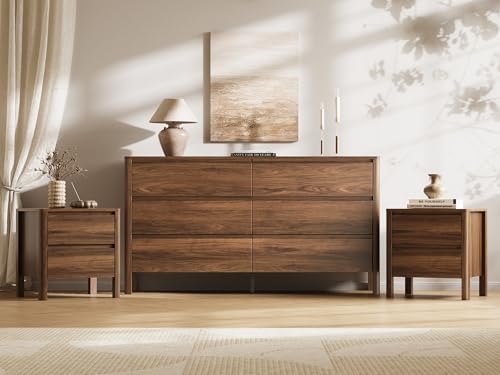
Mid Century Dresser and Nightstand Set: The Complete Buyer's Guide
A mid century dresser and nightstand set pairs clean, tapered lines with practical bedroom storage. This guide explains what makes a set genuinely mid century modern, how to judge drawer construction and wood choices, which dimensions suit which rooms, and how to match a dresser with its nightstand so the bedroom feels intentional rather than assembled piece by piece. By the end, you will know exactly what to inspect before ordering and which quality tier fits your project.
Why a Matching Mid Century Set Works So Well
Mid century modern design grew out of a simple idea: furniture should be honest in its materials, low in visual clutter, and built around human proportions. A dresser from this school typically sits on tapered legs, uses a flat or subtly chamfered front, and relies on warm wood grain instead of heavy ornament. When the matching nightstand repeats those same cues — same leg angle, same wood tone, same handle profile — the bedroom reads as one composition.
A coordinated set also solves practical problems. The nightstand height lines up with the mattress, the drawer fronts repeat the dresser's proportions, and the finish matches across both pieces even years later. If you want to expand the room further, a matching solid wood bedroom dresser set lets you carry the same design language across a wider footprint.
What Defines a Genuine Mid Century Dresser
Not every dresser with angled legs is mid century. The authentic markers are structural and stylistic at once. Use this checklist when you evaluate a listing or view a piece in person:
- Tapered or splayed legs. Legs narrow toward the floor and often angle outward slightly, giving the piece its characteristic lift.
- Low, horizontal profile. Most mid century dressers are wider than they are tall, keeping sightlines open across the bedroom.
- Flat drawer fronts with minimal trim. Decoration comes from grain, edge detail, or hardware — not from molding or carving.
- Warm wood tones. Walnut, teak, oak, and cherry dominate, usually finished with a low-sheen oil or lacquer rather than a glossy coat.
- Thoughtful hardware. Recessed pulls, slim bar handles, or simple round knobs in wood, brass, or blackened metal.
- Proportional nightstand. The companion piece mirrors the dresser's leg style and drawer rhythm at a smaller scale.
If you are comparing a low, wide piece against a taller chest, our breakdown of dresser vs chest of drawers explains when each format makes more sense in a bedroom layout.
Dresser and Nightstand Dimensions That Actually Fit
Mid century furniture tends to be lower than conventional bedroom storage, which is an advantage in smaller rooms but requires planning. The table below maps typical proportions to room scenarios so you can shortlist the right footprint before measuring your wall.
| Configuration | Typical Dresser Footprint | Typical Nightstand Footprint | Best For |
|---|---|---|---|
| Compact set | Around 40–50 inches wide, 18 inches deep | Around 18–22 inches wide | Guest rooms, apartments, and tight primary bedrooms |
| Standard set | Around 56–64 inches wide, 18–20 inches deep | Around 22–26 inches wide | Most primary bedrooms with a queen or king bed |
| Wide set | Around 66–72 inches wide, 19–20 inches deep | Around 24–28 inches wide | Large bedrooms and rooms that need a visual anchor |
| Tall companion | Around 36–44 inches wide, 18 inches deep | Around 20–24 inches wide | Closets with limited floor space and vertical storage needs |
If your room is unusually tight, a shallow dresser for a small bedroom keeps the mid century look without crowding the walkway. For narrow walls beside a bed, a tall skinny dresser can replace a standard-width companion piece.
Wood and Finish: What to Look For
The wood choice drives both the look and the longevity of a mid century set. Walnut is the signature material of the era, prized for its chocolate-brown heartwood and open grain. A walnut wood dresser with a matching nightstand delivers the most recognisable mid century character, though it sits in the higher tiers of the market. Oak offers a lighter, more neutral alternative and takes stain and paint well. Teak, cherry, and ash also appear frequently.
Check how the piece is built, not just what it is called:
- Solid wood or quality veneer over a stable core. Both are legitimate; thick veneer over plywood is often more dimensionally stable than solid planks.
- Dovetail or doweled drawer boxes. Look for interlocking joints at the drawer corners rather than staples or glue alone.
- Metal drawer glides or waxed wood runners. Either works; test that the drawer travels smoothly and closes flush.
- Consistent finish across both pieces. Confirm the nightstand shares the dresser's stain and sheen so the pair does not drift apart visually.
Our guide to high quality solid wood dresser construction goes deeper into joinery and frame stability if you want to evaluate a set like a furniture maker would.
Quality Tiers in the Mid Century Market
Mid century dresser and nightstand sets span a wide range of construction and material quality. Rather than tracking shifting market figures, it helps to sort options into stable quality tiers and compare features within each tier.
Entry-Level Tier
Particleboard or thin veneer construction, stapled drawer boxes, and basic metal glides. Best for guest rooms, dorm spaces, or short-term staging where the look matters more than decades of service.
Mid-Range Tier
Thicker veneer over engineered wood or partially solid frames, doweled or nailed drawer boxes, and smoother glides. A balanced tier that suits most primary bedrooms and holds up well with normal use.
Premium Tier
Solid wood drawer fronts and frames, dovetail joinery, soft-close or waxed wood runners, and hand-finished surfaces. Built as a long-term investment for a bedroom you plan to keep.
Luxury Tier
Workshop-built or designer pieces in solid walnut or teak, matched grain across the set, and custom hardware. Reserved for buyers treating the bedroom as a signature space.
If you are weighing tiers against each other, our dresser budget guide reframes the decision around how long you intend to keep the piece and how heavily it will be used.
Matching the Set to Your Bedroom Layout
A mid century dresser and nightstand set should respond to the room, not fight it. Consider these layout patterns before you commit:
- Symmetrical flanking. Place the nightstands on either side of the bed and the dresser on the opposite wall. This is the cleanest arrangement and works with almost any mid century piece.
- Dresser as focal wall. Put a wide dresser on the longest uninterrupted wall and centre a mirror or artwork above it. A dresser with mirror can reinforce the mid century look if the frame matches the wood tone.
- Closet-adjacent placement. If the room is small, a tall skinny dresser for closet keeps folded clothing close to where it is worn.
- Bed-adjacent storage. In very tight rooms, a white beside table and dresser pairing shows how a lighter finish can keep a compact arrangement from feeling heavy.
How to Evaluate a Set Before Ordering
Photos can flatter poor construction, so use this sequence to separate a well-built set from a lookalike:
- Ask for drawer-box photos. A seller who can show corner joints and glide hardware is usually selling a better-built piece.
- Confirm the finish is matched, not merely similar. Two pieces ordered separately can arrive in noticeably different stain batches.
- Check leg attachment. Legs should be bolted or mortised into the frame, not screwed into a thin base panel.
- Verify back-panel and dust-board construction. A rigid back panel keeps the case square and protects clothing from dust.
- Read the assembly requirements. Flat-pack sets vary widely in how much hardware and time they demand on arrival.
Common Mistakes Buyers Make
Three errors account for most mid century set returns. First, buying a dresser and nightstand from different product lines and assuming the wood tone will match — order the pair together whenever possible. Second, underestimating the dresser's depth in a narrow room; an 18-inch-deep case plus an open drawer can consume a surprising amount of floor. Third, choosing a glossy finish when the rest of the bedroom is matte; mid century furniture almost always looks better with a low-sheen surface.
If you are still narrowing the format, our collection of six drawer dresser options shows how drawer count changes the visual weight of a low, wide case.
Frequently Asked Questions
Should the dresser and nightstand be the same height?
No — the nightstand should sit near mattress height for reachability, while the dresser is usually taller. What should match is the leg style, wood tone, and hardware so the two pieces read as a family.
Is walnut always the best choice for a mid century set?
Walnut is the most recognisable mid century material, but oak, teak, and cherry are equally valid. Choose based on the room's existing wood tones and light level rather than assuming one species is superior.
Can I buy the nightstand later?
You can, but finish batches change. If you plan to add the nightstand later, ask the seller whether the finish is a stock colour that will remain available, and keep a sample of the dresser's wood tone for comparison.
How many drawers should a mid century dresser have?
Most mid century dressers use three to six drawers, with six being common in wide formats. Fewer, deeper drawers suit bulky clothing; more, shallower drawers suit folded tops and accessories.
Do I need to anchor the dresser to the wall?
Yes. Any dresser taller than about 30 inches should be secured with the supplied anti-tip strap, and a nightstand in a child's room should be anchored as well. This is a safety requirement, not an optional upgrade.