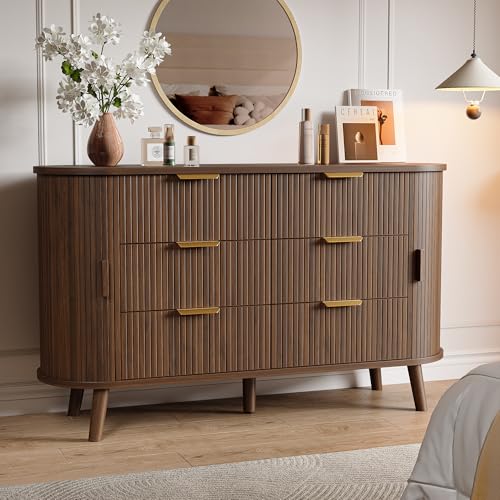
Mid Century Modern Wide Dresser: The Complete Buying Guide
A wide dresser is the quiet workhorse of a mid century bedroom. Learn how to choose the right proportions, drawer layout, wood species, and styling approach so your storage piece looks intentional, not crowded.
Explore Buying FactorsWhy a wide dresser? The mid century modern aesthetic favors long, low furniture that keeps sightlines clear and makes a room feel larger. A wide dresser delivers two things at once: a substantial amount of storage and a broad, display-ready top surface.
If you are researching mid century modern wide dressers before purchasing, this guide walks through what makes the form distinctive, how to measure your space correctly, which materials hold up over time, and how to arrange drawers so the piece earns its place for years.
What Defines a Mid Century Modern Wide Dresser?
Mid century modern design is usually associated with walnut and teak furniture from the middle of the twentieth century. The wide dresser variant is a specific expression of that style: horizontal, understated, and deliberately low to the ground.
Horizontal Proportion
Wide dressers run noticeably longer than they are tall. This creates a low visual profile that works well under windows, along long walls, or opposite the foot of a bed.
Splayed or Tapered Legs
Angled or tapered legs lift the body off the floor, adding lightness and making the piece easier to clean underneath. This detail is a signature of authentic mid century dresser construction.
Clean Case Lines
Unadorned faces, flush drawers, and minimal ornamentation keep attention on the wood grain and the geometry of the drawer grid.
Functional Drawer Grids
Six to nine drawers arranged in even columns is typical. The wide format means each drawer is longer, which suits folded clothing, linens, and accessories.
Compared with a tall, narrow chest, the wide format spreads storage across a longer footprint. That makes it easier to sort clothing by category rather than stacking everything in vertical layers. If you want to understand how the wider format relates to other variants, see our overview of the mid century modern double dresser.
Key Buying Factors for a Wide Mid Century Dresser
Before you commit, work through the following factors in order. They matter more than brand names when determining whether a piece will fit your room and your routine.
1. Measure Width, Depth, and Clearance
Wide dressers are long by design, so wall length is the first constraint. Measure the available wall segment, then subtract clearance for door swings, nightstand gaps, and walking paths. A piece that technically fits but leaves no room to open drawers is a poor fit. Depth matters too: mid century styles often sit at a moderate depth, which keeps the room from feeling crowded.
- Confirm the drawer extension depth so you know how far drawers project when fully open.
- Check wall outlets and baseboard heights before finalizing placement.
- Account for ceiling height and window sill placement if the dresser sits below a window.
2. Choose the Drawer Layout
Drawer count on a wide dresser usually ranges from six to nine. More drawers mean finer categorization; fewer, larger drawers suit bulkier items. Think about what you actually store before selecting a layout.
| Drawer Layout | Best For | Tier Consideration |
|---|---|---|
| 6 large drawers (2 columns x 3) | Folded clothing, linens, bulky knitwear | Entry-level and mid-range models commonly use this layout |
| 8-9 mixed drawers (3 columns) | Accessories, socks, undershirts, smaller items | Premium and luxury tiers often add felt-lined top drawers |
| Wide top row plus deep lower drawers | Display items up top, clothing below | Feature-rich for its class; common in top-tier builds |
If your storage needs skew toward small items, a finer grid is the better choice. For reference on how drawer count changes the feel of a piece, compare our guide to the mid century modern 8 drawer dresser with the mid century modern 6 drawer dresser.
3. Evaluate Materials and Construction
Mid century style is closely tied to wood, and the material choice determines both appearance and longevity. Solid wood in walnut, teak, oak, or maple is the classic expression. Engineered wood cores with high-grade veneers can achieve a similar look and are common in entry-level and mid-range tiers. What matters is consistency: a solid build with stable drawer boxes and smooth glides will outlast a lighter construction.
Inspect the following when comparing pieces:
- Drawer boxes: Dovetail or reinforced joinery is more durable than stapled construction.
- Glides: Metal side-mount or under-mount slides feel smoother and last longer than basic wood-on-wood runners.
- Finish: A consistent, sealed finish protects the grain and resists everyday wear.
- Leg attachment: Tapered legs should be firmly joined, not simply screwed into a thin panel.
For a closer look at how wood choice changes character, see our guides to walnut dressers and maple dressers. If you prefer a lighter tone within the same era, the mid century modern light wood dresser is a good reference point.
4. Match the Finish to the Room
Mid century wide dressers come in warm woods, painted finishes, and two-tone treatments. A warm walnut tone suits rooms with natural light and neutral walls. A painted finish, such as the mid century modern dresser black, reads more graphic and pairs well with lighter bedding and rugs. A caramel finish is a middle ground that works in both warm and cool palettes.
5. Check Drawer Hardware
Small hardware details carry a lot of the style. Slim bar pulls, recessed finger pulls, and angled handles are all period-appropriate. If you plan to update hardware later, confirm the existing hole spacing so replacements fit without drilling. Our notes on mid century modern dresser pulls explain the common spacing patterns.
6. Consider Safety and Stability
Wide dressers have a lower center of gravity than tall chests, but anti-tip anchoring is still recommended, especially in homes with children or pets. Check that the piece includes a wall-anchoring kit and that the back panel is sturdy enough to support the strap. This is a practical point that many buying guides skip, but it directly affects long-term safety.
How Tiers Compare Across the Market
Instead of focusing on numbers, it helps to understand what each quality tier typically delivers. The descriptors below are relative positions in the market, not absolute labels.
| Tier | Typical Construction | Best For |
|---|---|---|
| Entry-level | Engineered wood with veneer, basic side-mount glides | First apartments, guest rooms, temporary setups |
| Mid-range | Mixed solid and engineered construction, smoother glides, felt-lined top drawers | Primary bedrooms used daily |
| Premium | Solid wood cases, dovetail drawer boxes, under-mount soft-close slides | Long-term primary bedroom furniture |
| Luxury | Hand-finished solid hardwood, premium hardware, heirloom-grade joinery | Design-focused rooms and long-term investment pieces |
Across tiers, the practical differences show up most in drawer smoothness, finish consistency, and the rigidity of the case. A well-built mid-range piece often feels closer to premium than to entry-level once the drawers are loaded.
Styling a Wide Dresser in a Mid Century Bedroom
The long top surface is an advantage if you style it with restraint. A wide dresser can become a focal wall or a functional display, but a cluttered top undermines the clean lines that define the style.
- Balance the length: Use one large mirror or a pair of lamps rather than many small objects spread evenly.
- Respect the low profile: Keep tall decor to a minimum so the horizontal line of the dresser stays visible.
- Layer texture: A tray, a small plant, and a textile runner add warmth without adding visual noise.
- Coordinate with the bed: A matching set, such as a mid century dresser and nightstand set, creates cohesion without requiring identical pieces everywhere.
If the dresser sits opposite the bed, it can act as a secondary surface for a vanity or a reading lamp. Our ideas for a master bedroom dresser cover layout options for larger rooms, while mid century dresser with mirror explains how a mirror changes the visual weight of a wide piece.
Using a Wide Dresser as a Vanity
Because a wide dresser offers a long, stable surface, it can double as a makeup station. A low-profile mirror and a small organizer are enough to make it functional. If that is your plan, our guide to a makeup dresser and notes on a makeup organizer for dresser top will help you keep the surface usable.
Wide Dresser vs Other Mid Century Layouts
The wide format is one option among several. Understanding the alternatives helps you choose with confidence.
- Wide vs tall: A mid century modern tall dresser uses vertical space and suits narrow walls, while a wide dresser spreads storage horizontally and doubles as a display surface.
- Wide vs large: A mid century modern large dresser may increase both width and depth; the wide format specifically prioritizes length.
- Wide vs chest: A mid century modern chest of drawers tends to be taller and narrower, which changes how the piece reads in a room.
Frequently Asked Questions
What makes a wide dresser different from a standard dresser?
A wide dresser is defined by its horizontal proportions rather than height. Wide mid century modern dressers typically emphasize long, low silhouettes with generous drawer widths, while standard dressers often balance width and height more evenly.
What drawer layout should I look for in a wide mid century dresser?
Most wide mid century modern dressers use six to nine drawers arranged in two or three columns. A mix of shallow top drawers for accessories and deeper lower drawers for clothing offers the most practical everyday storage.
Which materials suit a mid century modern wide dresser?
Walnut, teak, oak, and maple are classic mid century materials. Solid wood with a warm finish and tapered legs is the defining look, while engineered wood cores with high-grade veneers can deliver a similar appearance in entry-level and mid-range tiers.
How do I style a wide dresser in a bedroom?
Keep the long top surface balanced with a single mirror, a lamp, and a small tray. Because wide dressers sit low, they can double as a display surface and even anchor a makeup or vanity setup.
Ready to Narrow Down Your Options?
Use the recommendations below to compare wide mid century dressers across tiers, drawer layouts, and finishes. Each listing links to current product details so you can verify dimensions and construction before deciding.
View Recommended DressersContinue Exploring Mid Century Dressers
These related guides cover the wider family of mid century dresser styles and configurations.
- Mid century modern dresser — the core style overview.
- MCM dresser — shorthand for the same aesthetic with a broader furniture context.
- Mid century modern vertical dresser — the tall counterpart to the wide format.
- Mid century modern triple dresser — an extra-wide configuration for larger rooms.
- Mid century modern solid wood dresser — construction-focused buying notes.
- Mid century modern style dresser — how contemporary pieces interpret the look.
- Mid century dresser — a broader historical and design perspective.