What Exactly Is a Mid Century Modern Double Dresser?
A double dresser is a wide storage cabinet with two parallel columns of drawers placed side by side. It typically measures somewhere between 55 and 72 inches across, which makes it noticeably broader than a standard single-column dresser. Because the drawer bank is divided into two vertical stacks, a double dresser usually offers six or eight drawers while keeping the overall height relatively low.
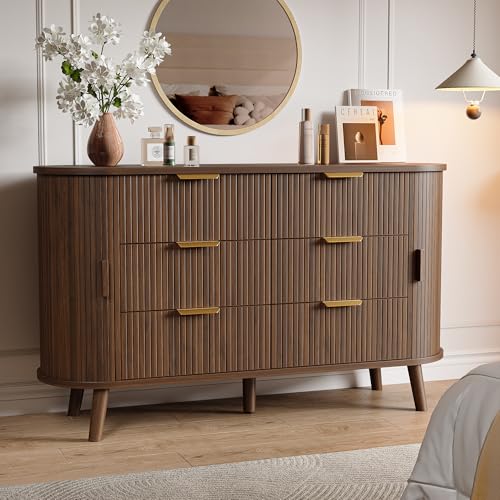
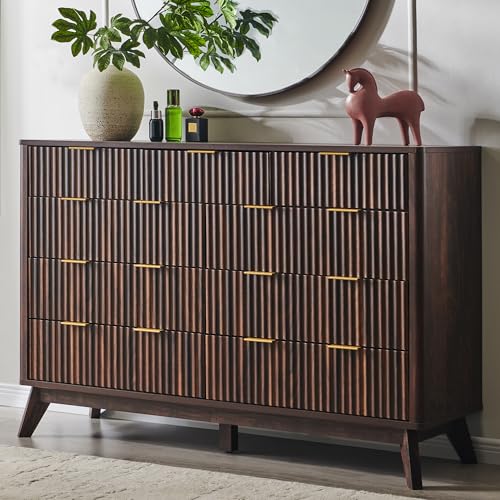
The mid century modern interpretation of this form adds a distinct design language: clean horizontal lines, tapered or splayed legs, flush drawer fronts, and a strong emphasis on natural wood grain. The result is a piece that feels airy rather than bulky — an important quality in bedrooms where a tall, heavy cabinet can dominate the room.
If you are exploring the broader category first, the full mid century modern dresser guide covers the entire family of styles, from tallboys to triple dressers. This page focuses specifically on the double-width format and what makes it work in a real bedroom.
Why the Mid Century Modern Double Dresser Stands Out
Mid century modern design, often shortened to MCM, emerged in the middle of the twentieth century and has never really left the furniture market. Its durability as a style comes from a simple premise: form follows function, but function should still look beautiful. A double dresser in this idiom delivers several practical benefits.
- Wide top surface: The broad top works as a staging area for a mirror, a tray, a lamp, or everyday items without feeling cramped.
- Low visual profile: Because the height is reduced, a double dresser leaves wall space above for art or a mirror, which keeps small rooms feeling open.
- Two-person friendly: Two columns of drawers let couples assign a side each, an underrated advantage in shared bedrooms.
- Timeless silhouette: Clean lines and tapered legs pair well with contemporary, Scandinavian, and even transitional interiors.
- Strong resale appeal: Well-made MCM furniture holds desirability, which makes it a sensible long-term investment for a home.
For a closer look at how the double format compares with narrower and taller options, the mid century modern wide dresser page explains the trade-offs in more depth.
Dimensions and Proportions: Getting the Fit Right
Before you fall in love with a silhouette, measure your room. A double dresser is a substantial piece, and the difference between a comfortable fit and a cramped one often comes down to a few inches. The table below summarizes typical proportions you will encounter across the category. These are general ranges, not specifications for any single product.
| Dimension | Typical Range | What It Means for You |
|---|---|---|
| Width | 55–72 inches | Determines wall fit; leave breathing room on both sides if possible |
| Height | 28–36 inches | Low profile leaves wall space for mirrors and artwork |
| Depth | 18–20 inches | Deeper drawers hold folded knitwear; shallower suits linens |
| Clearance in front | 30–36 inches | Room to open drawers fully without blocking walkways |
| Leg height | 6–10 inches | Higher legs create visual lightness and easier floor cleaning |
A useful rule of thumb: the dresser should occupy roughly two-thirds to three-quarters of the wall it sits against. If it stretches nearly wall to wall, the room will feel closed in. If it is much narrower than the wall, it can look stranded. Also check door swings, closet clearance, and the path to the bed before committing.
Drawer Layouts and Storage Capacity
Most double dressers divide their width into two equal drawer columns. Within that framework, a few common configurations appear again and again:
- Six-drawer layout: Three drawers per column. This is the most common configuration and balances capacity with a clean, uncluttered facade. It suits couples and solo sleepers alike. See the mid century modern 6 drawer dresser guide for a deeper look.
- Eight-drawer layout: Four drawers per column. The extra row adds capacity without adding width, which is helpful if you need more storage in the same footprint. The mid century modern 8 drawer dresser page covers this format.
- Mixed layouts: Some designs combine a few deep drawers with several shallow ones, so you can separate bulky knitwear from socks and accessories. These hybrid layouts are often the most practical for real life.
Think about what you actually store. Socks, underwear, and accessories work best in shallow drawers. Sweaters, jeans, and linens need depth. If a single dresser has to serve two people, look for a layout where each column has at least one deep drawer. A drawer divider set can transform a wide, shallow drawer into a tidy accessory organizer without any permanent modification.
Also check drawer extension. Drawers that pull out fully give you access to the back corners, which matters a lot in a wide dresser. Partial-extension drawers are common at entry-level, while full-extension slides appear more often as you move up the quality tiers. A related upgrade path is documented in the heavy-duty drawer slides guide.
Woods and Materials: What to Look For
The material defines both the look and the longevity of a mid century modern double dresser. MCM furniture is closely associated with a handful of woods, each with a distinct character.
Walnut
Walnut is the signature wood of mid century modern design. Its rich, chocolate-brown tone and dramatic grain give a dresser a warm, sophisticated presence that pairs beautifully with both neutral and saturated wall colors. Solid walnut is a premium material and typically signals the higher tiers of the market. Veneered walnut over a stable core is a common mid-range approach that keeps the look while controlling material use. The mid century modern dresser overview discusses how walnut compares with other finishes.
Teak
Teak was the defining wood of Scandinavian mid century production. It has a golden-brown hue that mellows with age and a fine, straight grain. Vintage teak dressers are highly sought after, and modern reproductions often use teak veneer to capture the look. The mid century modern teak dresser guide explores this finish in detail.
Oak and Maple
Oak is hard, durable, and widely available, with a pronounced grain that suits a more rustic reading of the style. Maple is lighter and finer-grained, often paired with a natural or whitewashed finish. Both are sensible choices if you want a lighter palette. The maple dressers collection shows how the lighter end of the spectrum can still feel distinctly MCM.
Engineered Wood and Veneer
Many mid-tier dressers use engineered wood cores with wood veneer. This is not inherently a compromise — high-quality veneer can be beautiful and stable — but the construction underneath matters. Look for thick, well-bonded veneer, sealed edges, and a sturdy frame. Solid wood tends to be the better long-term investment, while quality veneer is a reasonable balanced-tier choice.
Hardware and Details That Define the Style
Hardware is where mid century modern dressers show their personality. The style favors understated pulls: slim bar pulls, recessed finger grooves, round knobs in wood or metal, and sometimes no visible hardware at all. Finish choices lean toward brass, black, or brushed nickel, each of which reads differently against walnut, teak, or oak.
If you are restoring or refreshing an older piece, the mid century modern dresser pulls guide covers sourcing and compatibility. For black-finish options, the black cabinet pulls page is a useful reference. Swapping hardware is one of the simplest ways to shift a dresser's look without touching the wood.
Other details worth examining include leg shape (tapered round, splayed, or angled), drawer front alignment, and whether the dresser includes a finished back panel. A finished back matters if the piece will be visible from the side or placed freestanding rather than against a wall.
Construction Quality: How to Judge a Dresser Before You Buy
Two dressers can look nearly identical in a listing photo and still differ enormously in how they hold up. The following checklist helps you separate the tiers.
- Joinery: Dovetail joints in drawer boxes are a mark of quality. Box joints and reinforced butt joints are acceptable at mid-tier. Staples alone are a warning sign.
- Drawer bottoms: A sturdy drawer bottom should be set into a groove, not just stapled to the sides. This prevents sagging under the weight of folded clothing.
- Slides: Full-extension metal slides with a smooth glide are the benchmark. Wood-on-wood slides can work well on vintage pieces but require waxing and care.
- Stability: A wide dresser must not wobble. Look for a solid base frame, corner blocks, and a back panel that stiffens the carcass.
- Finish: A consistent, well-sealed finish protects the wood and makes cleaning easier. Uneven or sticky finish suggests rushed production.
- Safety features: Anti-tip hardware is essential for any dresser, and especially for wide, low pieces that children may climb. Check that a wall-anchoring kit is included or available.
If you are comparing a solid wood piece against a veneered alternative, the practical differences usually come down to repairability and long-term stability. Solid wood can be sanded and refinished; veneer cannot be sanded aggressively but is less prone to seasonal movement. Both can be excellent choices depending on the tier and the maker.
Styling a Mid Century Modern Double Dresser
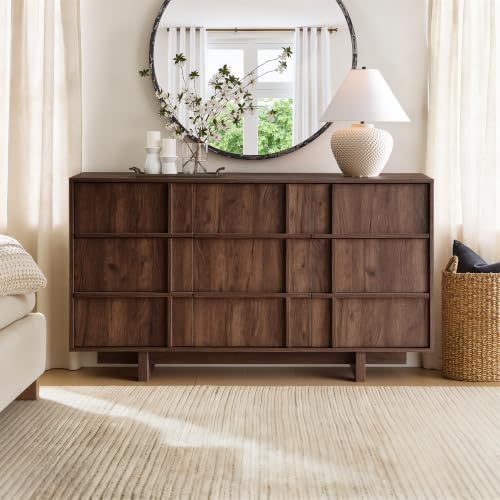
The wide top of a double dresser is a styling opportunity, but restraint is the guiding principle. MCM interiors work best when a few well-chosen objects are given room to breathe.
- Anchor with a mirror: A round or arched mirror above the dresser reinforces the horizontal line of the piece and bounces light around the room. A mid century dresser with mirror setup shows how the pairing works.
- Add a tray: A shallow tray corrals keys, glasses, and small items, keeping the surface visually calm.
- Include one plant: A trailing or upright plant softens the geometric lines and adds a natural accent.
- Layer a lamp: A slim table lamp or a sculptural ceramic lamp adds warmth and practicality.
- Choose one or two art objects: A small sculpture, a stack of books, or a framed print is enough. More than that starts to feel cluttered.
Color matters too. Walnut and teak dressers pair naturally with warm neutrals, olive, mustard, and deep teal. Lighter oak and maple pieces open up the palette for cooler tones. Whatever you choose, avoid covering the wood grain with heavy textiles or dense clusters of objects.
Room Pairing: Making the Double Dresser Work in Your Bedroom
A double dresser rarely stands alone. It has to relate to the bed, nightstands, and the rest of the room. A few pairing principles keep the composition coherent.
If your bed frame is also mid century modern, matching wood tones creates a unified look. The matching dresser and bed frame guide explores this approach. If you prefer a mixed look, keep the dresser as the wood anchor and choose painted or upholstered nightstands so the room does not become monotonous.
For coordinated sets, the mid century dresser and nightstand set page covers options where the dresser and nightstands share the same design language. In smaller rooms, a double dresser can even replace a nightstand on one side, freeing up floor space — an arrangement discussed in the dresser and nightstand pairing guide.
Finally, consider the visual weight of the room. A low double dresser under a window can work beautifully if the height clears the sill. Against a long blank wall, it benefits from art or a mirror above. In a compact bedroom, a double dresser may be too wide, and a narrower single-column piece may be the better fit.
Frequently Asked Questions
What is a mid century modern double dresser?
A mid century modern double dresser is a wide, low storage piece with two side-by-side columns of drawers, typically offering six to eight drawers. It features the clean lines, tapered legs, and warm wood tones characteristic of mid century modern design.
What is the difference between a double dresser and a standard dresser?
A double dresser is wider and lower, with two side-by-side drawer columns. A standard dresser is usually narrower and taller, with a single column of drawers. Double dressers offer a broad top surface and suit larger bedrooms or shared spaces.
What wood is best for a mid century modern double dresser?
Walnut and teak are the most iconic choices, valued for their warm grain and rich tone. Oak and maple are durable alternatives, while solid wood construction generally offers better longevity than veneered engineered wood.
How do I style a mid century modern double dresser?
Keep the top surface uncluttered. A mirror, a low tray, a plant, and one or two books or art objects suit the minimalist spirit of the style. Let the wood grain and clean silhouette remain the focus.
Is a double dresser suitable for a small bedroom?
It can be, if the wall is long enough and the dresser leaves clearance for drawers and walkways. Measure carefully. In very compact rooms, a narrower single-column dresser or a tallboy may be the more practical choice.